Crucifixion
unknown

Basic information
Additionally
- Type
- decorative and applied arts 3D
- Genre
- religious
- Plot
- Crucifixion
- Provenance
- Peremyslivtsi village, Lviv region
Information about author
Object description
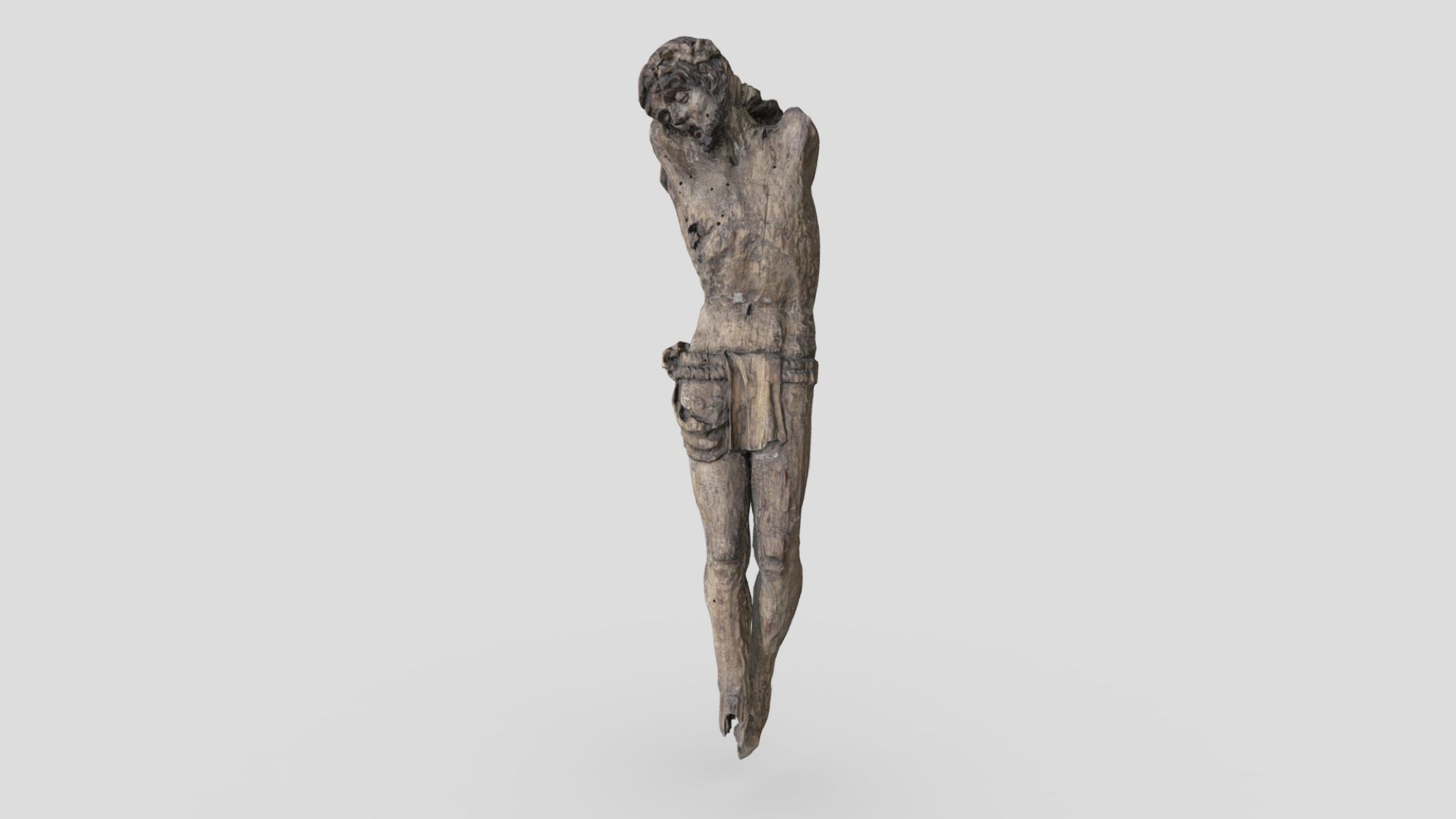
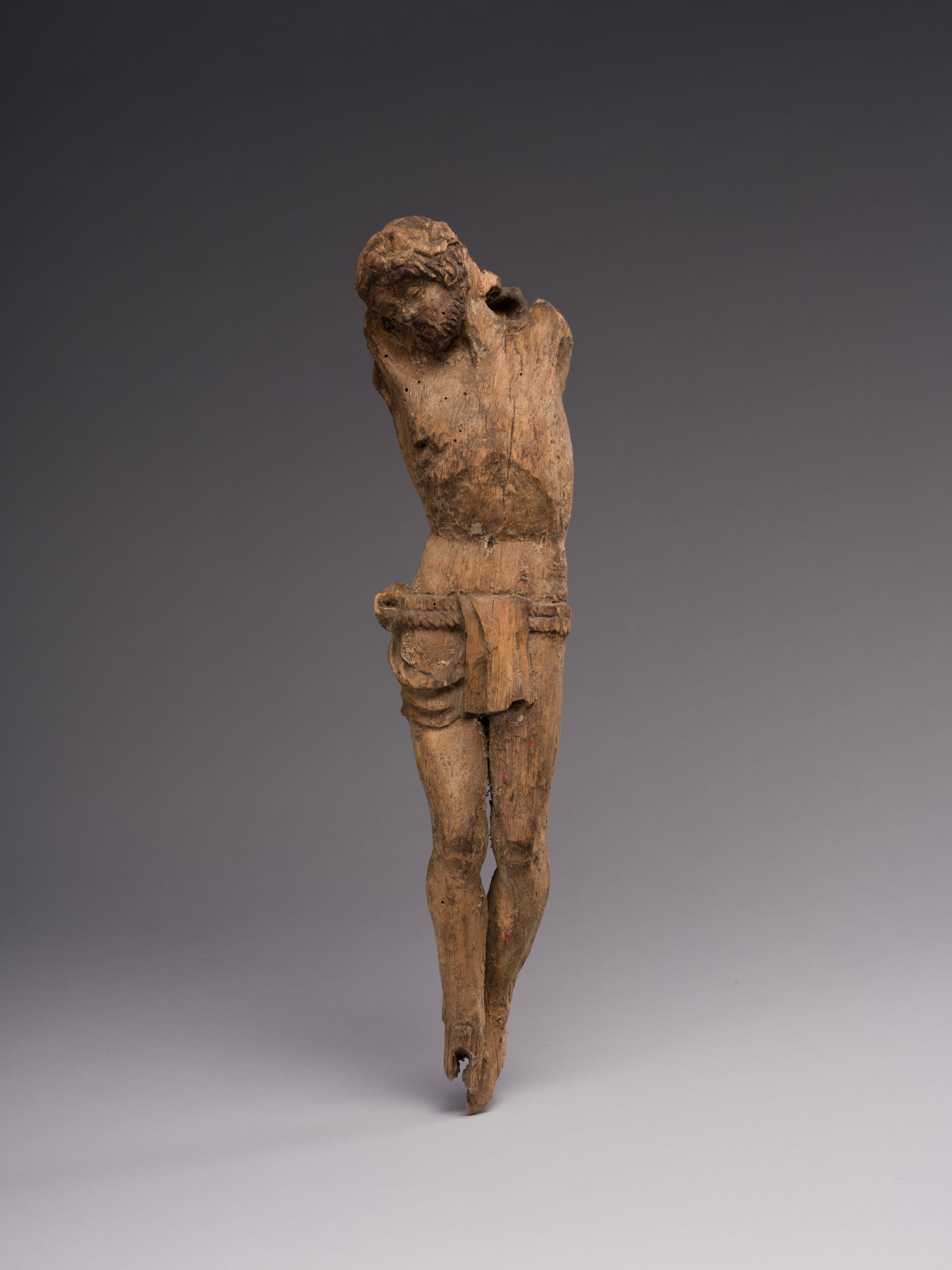
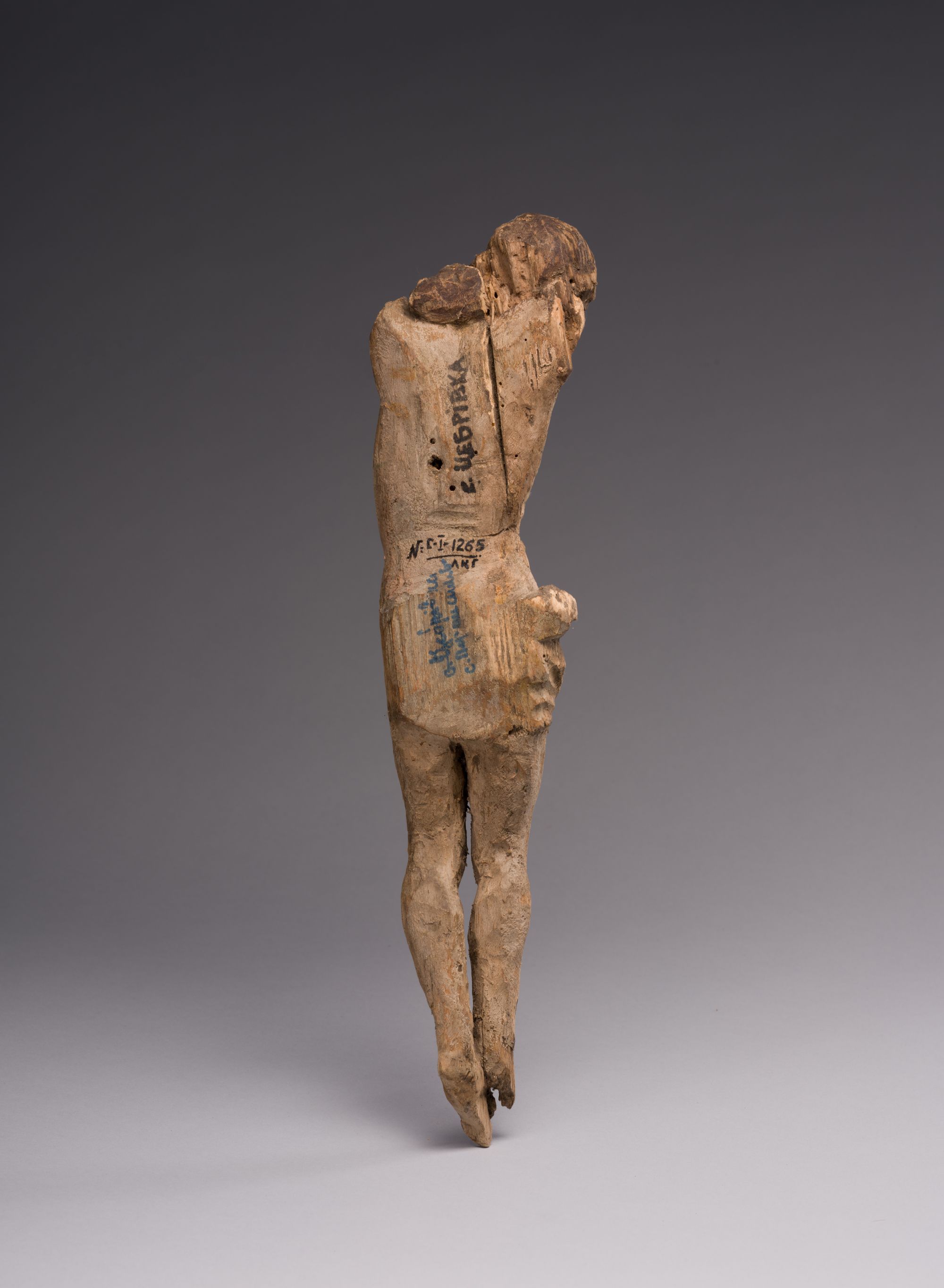
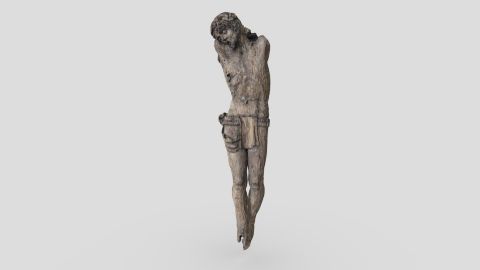
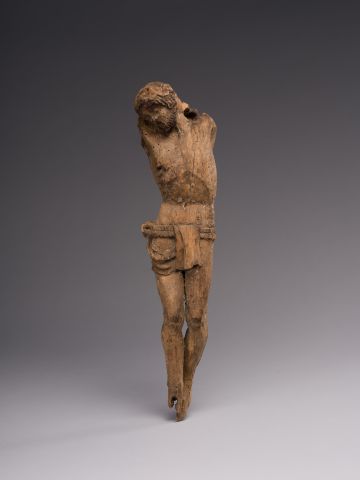
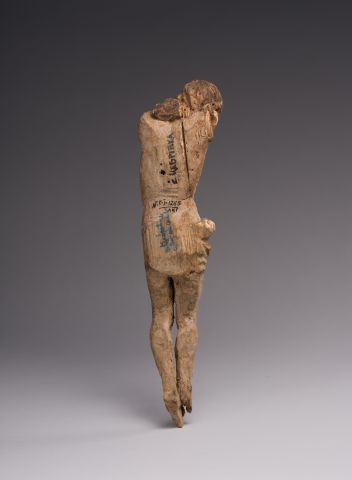
The Crucifixion is one of the significant images in Christian iconography. It combines the motifs of suffering, sacrificial love, death, and future resurrection. The sculptural representation of the Crucifixion has significant damage and losses, yet despite this, the image retains its expressiveness and spiritual meaning. The figure of Christ has survived only partially, with the hands and feet missing. The proportions of the body enhance the impression of exhaustion, while the simplified anatomical modelling deprives the image of outward glorification. The head plays a special role. Its relatively massive volume contrasts with the elongated torso and legs. The textured hair creates a dense, almost ornamental surface. The Saviour's head is tilted towards the right shoulder. The oval face with a wedge-shaped beard is softly modelled, distinguished by recessed areas and irregularities. The holy face is full of sorrow and inner concentration.
The master does not strive for academic correctness of proportions or a naturalistic reproduction of every element of the human body. The author focuses attention on the main sculptural masses, giving the figure of Christ integrity and monumental concentration. The body of Christ is modelled in a generalised manner, without excessive anatomical detail, which is characteristic of folk sacred carving. The sculptural treatment of the body is characterised by a combination of rounded and flat forms. The artistic language of the work tends towards expressive generalisation. Around the hips is a perizoma, a traditional element of Crucifixion iconography. Its treatment demonstrates the master's desire to convey the texture of the cloth wrapping the Saviour's body. The loincloth is formed using embossed bands, folds, and ridges that create an expressive play of light and shadow.
The Crucifixion is stylistically close to folk examples that local craftsmen carved for churches. It combines simplicity of execution with deep spiritual meaning, where the main emphasis is placed on the facial expression and the symbolism of the composition rather than on realistic details. The body of Christ appears not as an idealised classical antique form, but as vulnerable human flesh that has undergone suffering. It is precisely in this that the special emotional power of folk sacred sculpture lies, where spiritual content is conveyed through simple, direct, and easily recognisable forms.
Legal regulation
Borys Voznytskyi Lviv National Art Gallery