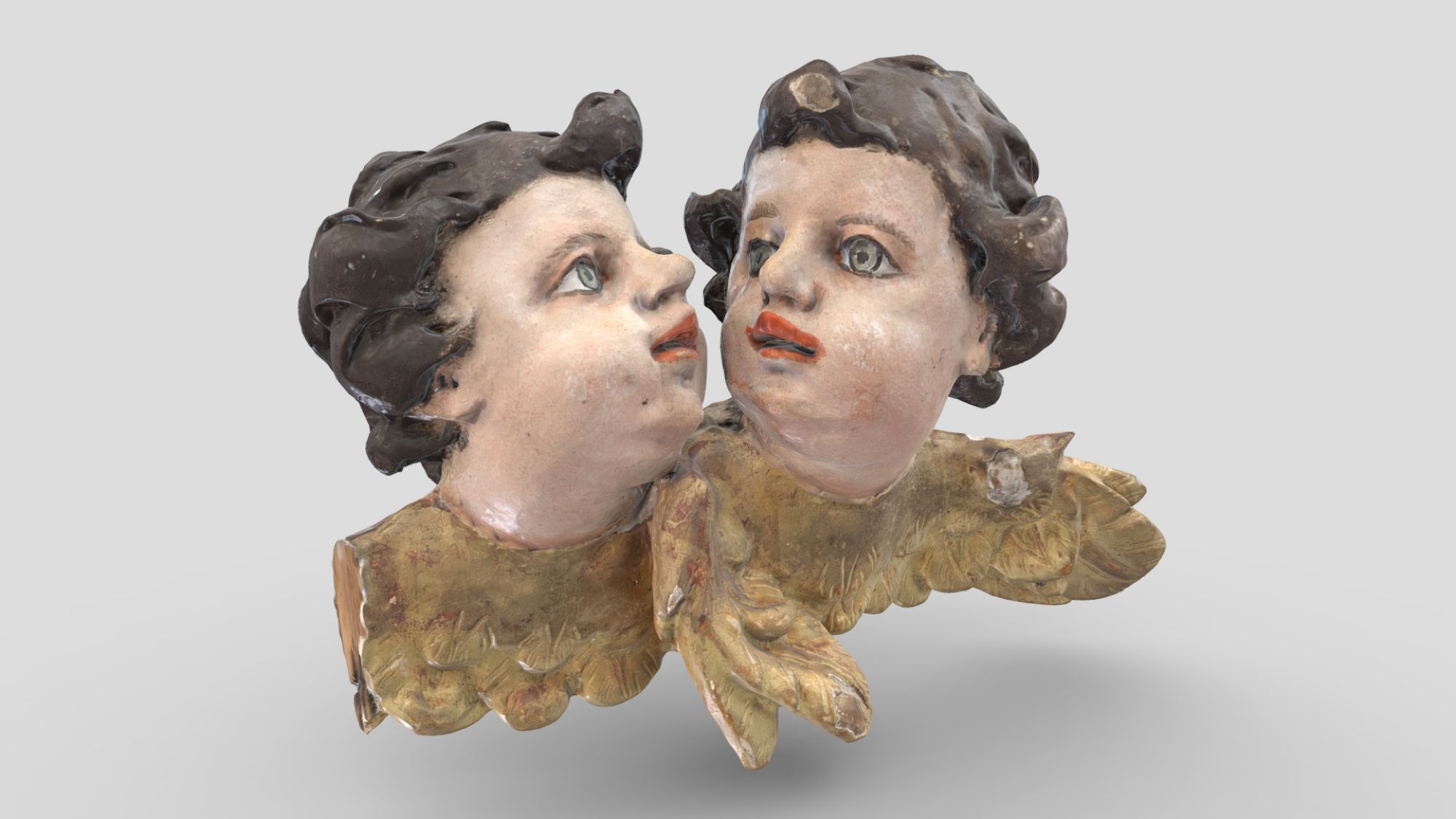
Two Winged Angel Heads
unknown

Basic information
Additionally
- Type
- sculpture 3D
- Genre
- religious
- Plot
- Cherub
- Provenance
- Navariia village, Lviv region
Information about author
Object description
This wooden sculptural depiction of two cherub heads is executed in the technique of carving with the use of polychromy and gilding. The piece serves not only a decorative but also a sacred function, signifying the heavenly origin of the image. The artwork portrays cherubim, who in the Christian tradition personify celestial doxology and the unceasing contemplation of God's glory.
This paired composition of heads was evidently a fragment of an altar or church decoration, where such images filled architectural surfaces, accentuated structural nodes, or complemented compositional groups. The images of the cherubim are rendered in a form characteristic of Baroque plastic arts – as heads framed by outspread wings. This laconic artistic method focuses attention on the face, which is intended to convey luminous contemplation, child-like purity, and innocence. The paired nature of the image creates an internal rhythm within the composition, evoking the idea of a heavenly choir and lending a sense of resonance and harmony to the decoration. A distinct silhouette is formed by the wings framing the heads; their plastic treatment unifies both images into a cohesive decorative whole, enhancing the sensation of lightness and movement.
The carving is modelled through the interplay of light and shadow on recessed and projecting surfaces. The gilding on the wings acts as a symbolic element, producing the effect of a celestial radiance. The polychromy infuses the figures with vitality, fully aligning with the aesthetics of the Ukrainian Baroque, which is characterised by richness of texture, decorativeness, and emotional elevation. The faces of the cherubim are imbued with emotional expressiveness, radiated by the piercing gaze of their striking blue eyes and playful smiles. Their child-like sincerity and spontaneity underscore an innate capacity to express emotions and feelings openly, without fear or artifice.
The stylistics of this sculptural composition bear witness to Western European Baroque influences on the local woodcarving tradition, lending the figures a warm expressiveness and simplicity. While preserving the canonical sacred iconography of the images, the master craftsman infused the cherubs' heads with a profound personal perception.
Legal regulation
Borys Voznytskyi Lviv National Art Gallery