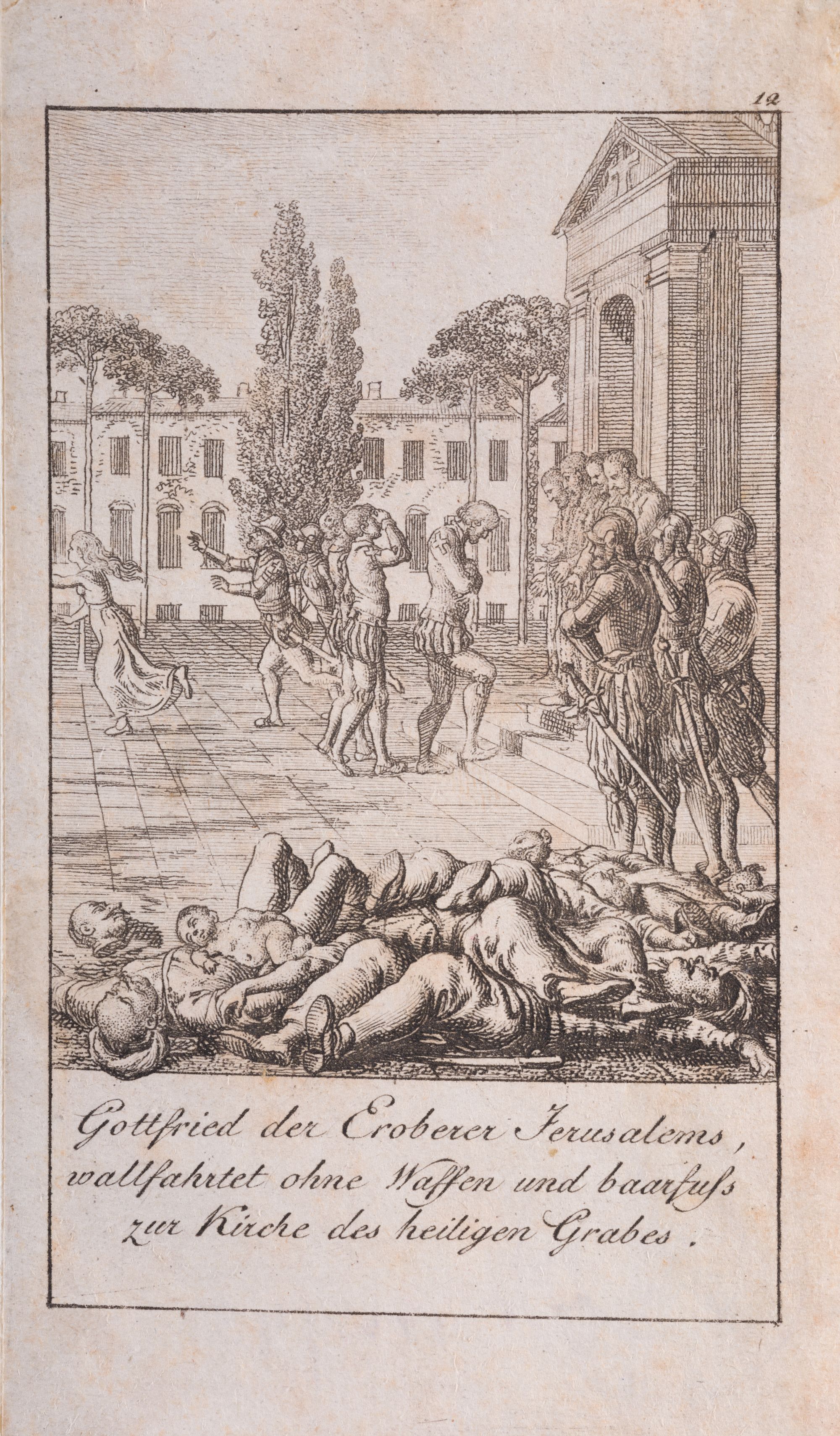
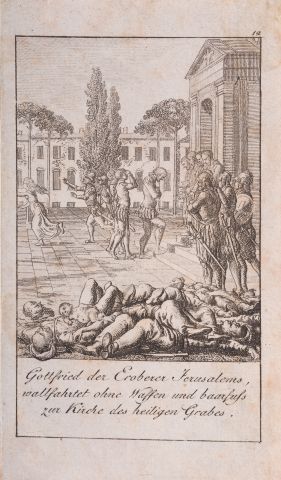
Scene Depicting the Crusades (Godfrey, the Conqueror of Jerusalem, Set Out on a Pilgrimage to the Church of the Holy Sepulchre, Meekly and Unarmed)
Daniel Chodowiecki
Basic information
- ID
- Г-IV-1215
- Author
- Daniel Chodowiecki
- Name
- Scene Depicting the Crusades (Godfrey, the Conqueror of Jerusalem, Set Out on a Pilgrimage to the Church of the Holy Sepulchre, Meekly and Unarmed)
- Date of creation
- late 18th c.
- Country
- Germany
- Technique
- сopper engraving
- Material
- paper
- Dimensions
- 9.7 x 5.7 cm (height x width)
Additionally
Information about author
Object description
On 15 July 1099, following a fierce assault, the Crusader forces captured Jerusalem. On the same day, the Crusade culminated in Godfrey of Bouillon's pilgrimage to the Church of the Holy Sepulchre. The leader of the knights, having removed his armour, walks towards the sanctuary as a sign of deep piety.
However, Chodowiecki harbours no sympathy for this military leader. In the foreground, the engraver depicts a pile of corpses, amongst which a child can be seen. In the background stands Count Godfrey himself, the future ruler of the Kingdom of Jerusalem. Accompanied by two people, he walks barefoot, with his head bowed and arms crossed over his chest, stepping onto the stairs of the church. In front of the building's facade, four people are already standing to greet him. The church, depicted fragmentarily, bears a greater resemblance to a medieval European church.
Armed knights stand on the right. In the distance, not far from the ceremonial procession, another scene is depicted. Against a backdrop of cypress trees and an elongated stone building, two knights are chasing a girl with loose hair. However, none of the participants in the count's pilgrimage pay any attention to this.
Inscriptions
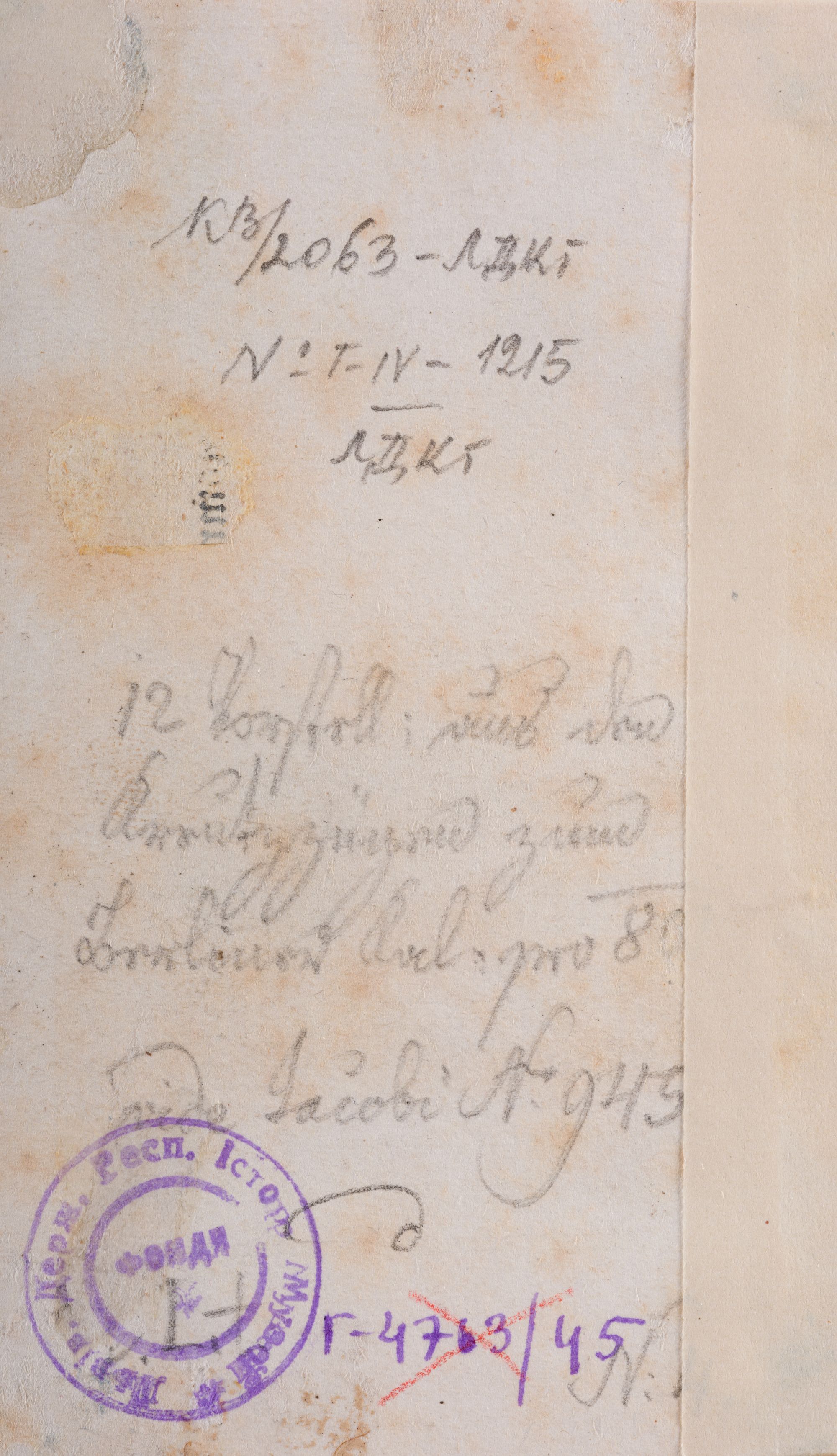
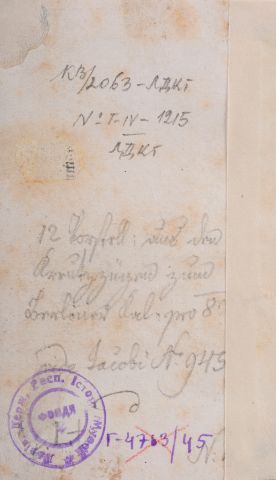
Below the image is the inscription: "Gottfried der Eroberer Jerusalems,/ wallfahrtet ohne Waffen und baarfuls/ zur Kirche des heiligen Grabes". On the reverse, at the top, are the inventory numbers of the Lviv Picture Gallery. Below, in the centre, are the inscriptions: "Do wypraw Krzyżowych", "Jacob. 945/ E. 945/ 3615/ S.O.". At the bottom left is the round seal of the Lviv State Republican Historical Museum's holdings; on the right – the historical museum's inventory number.
Legal regulation
Borys Voznytskyi Lviv National Art Gallery