St John the Baptist
unknown
Basic information
- ID
- Ж-4013
- Author
- unknown
- Name
- St John the Baptist
- Date of creation
- 15th c.
- Technique
- tempera painting
- Material
- wood tempera
- Dimensions
- 82.5 x 41.5 cm (height x width)
Additionally
- Type
- painting
- Genre
- religious
- Plot
- John the Baptist
- Provenance
- Church of the Exaltation of the Holy Cross, Drohobych
- Exposition
- Olesko Castle
Information about author
Object description
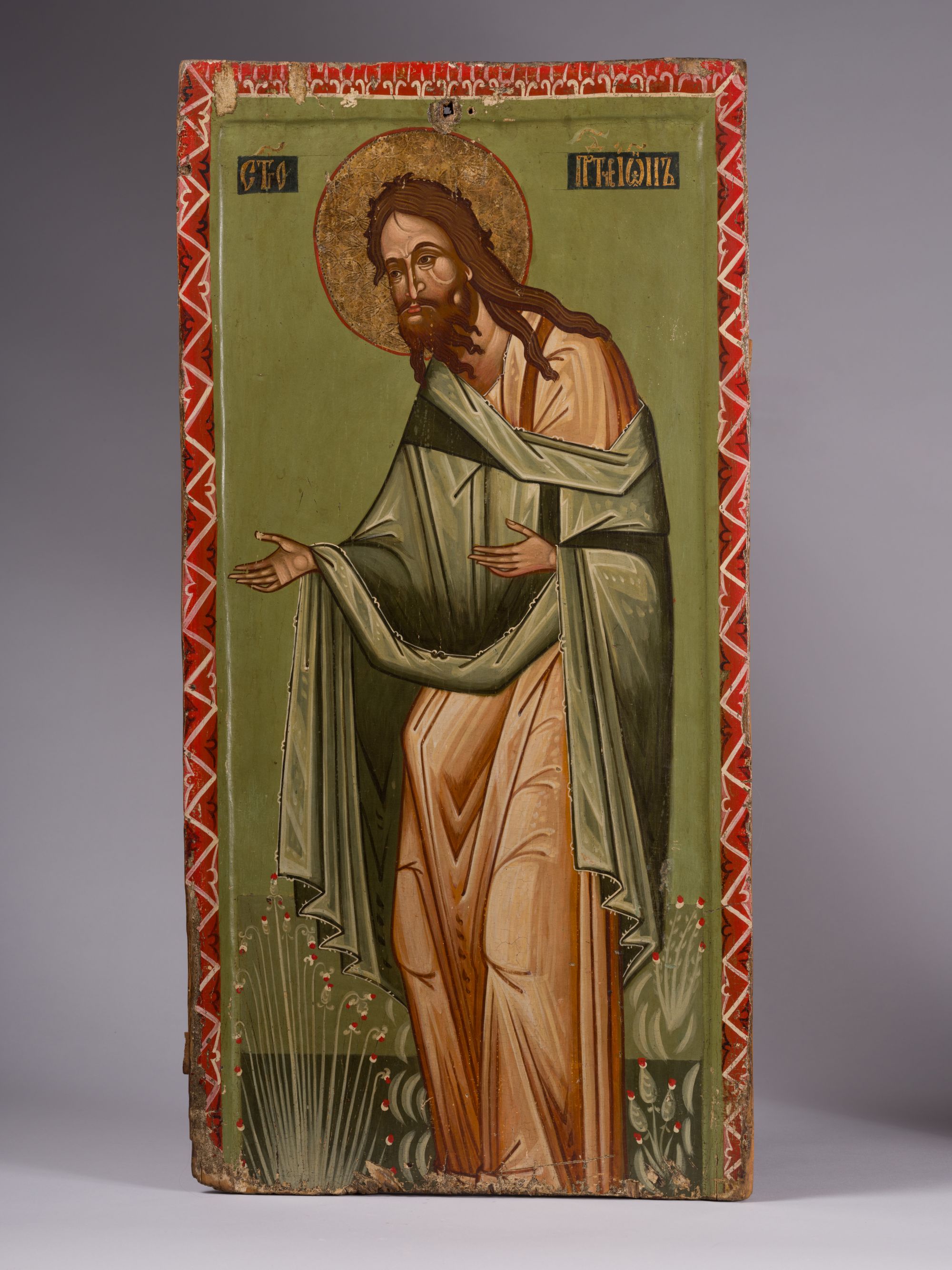
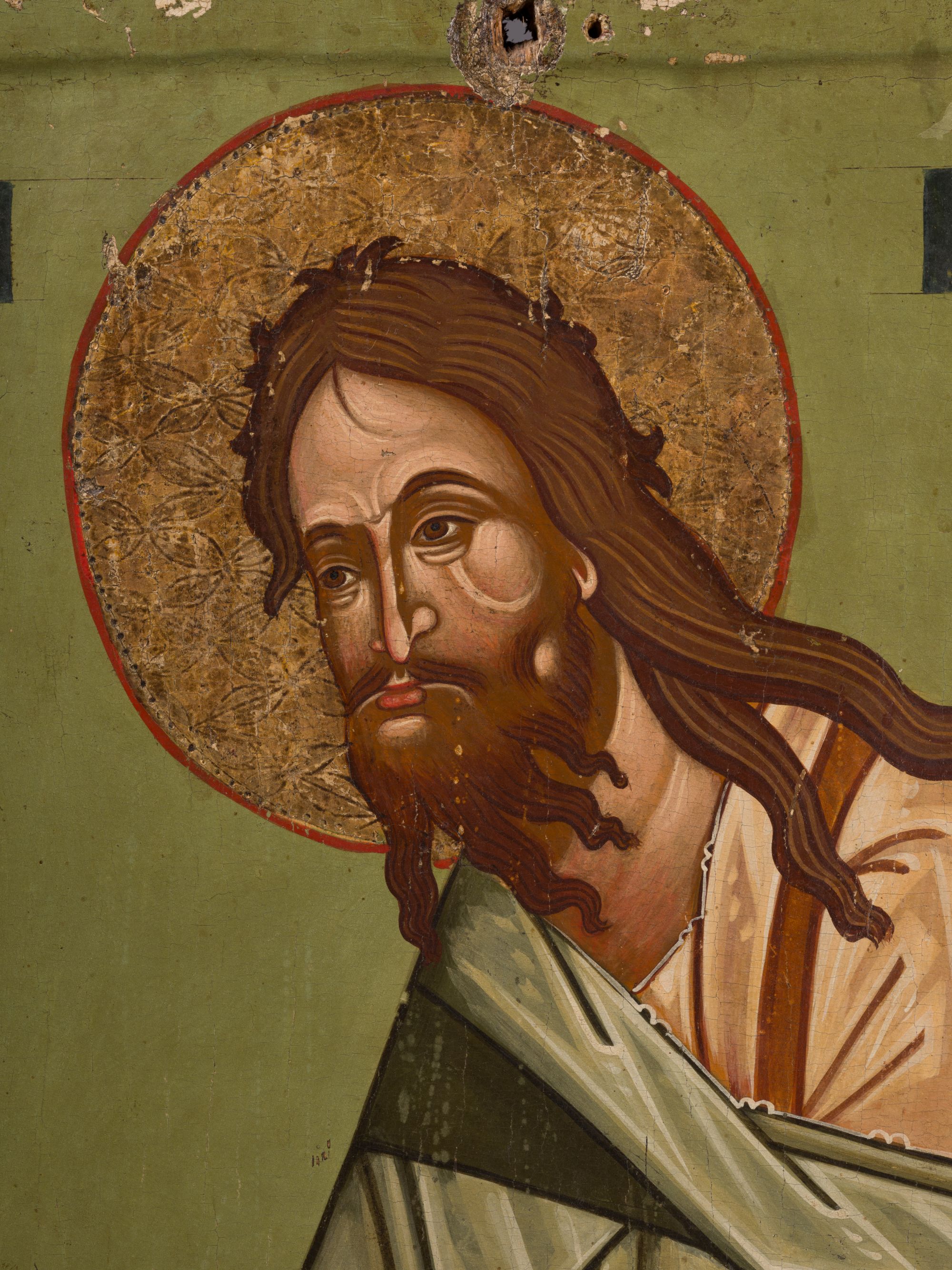
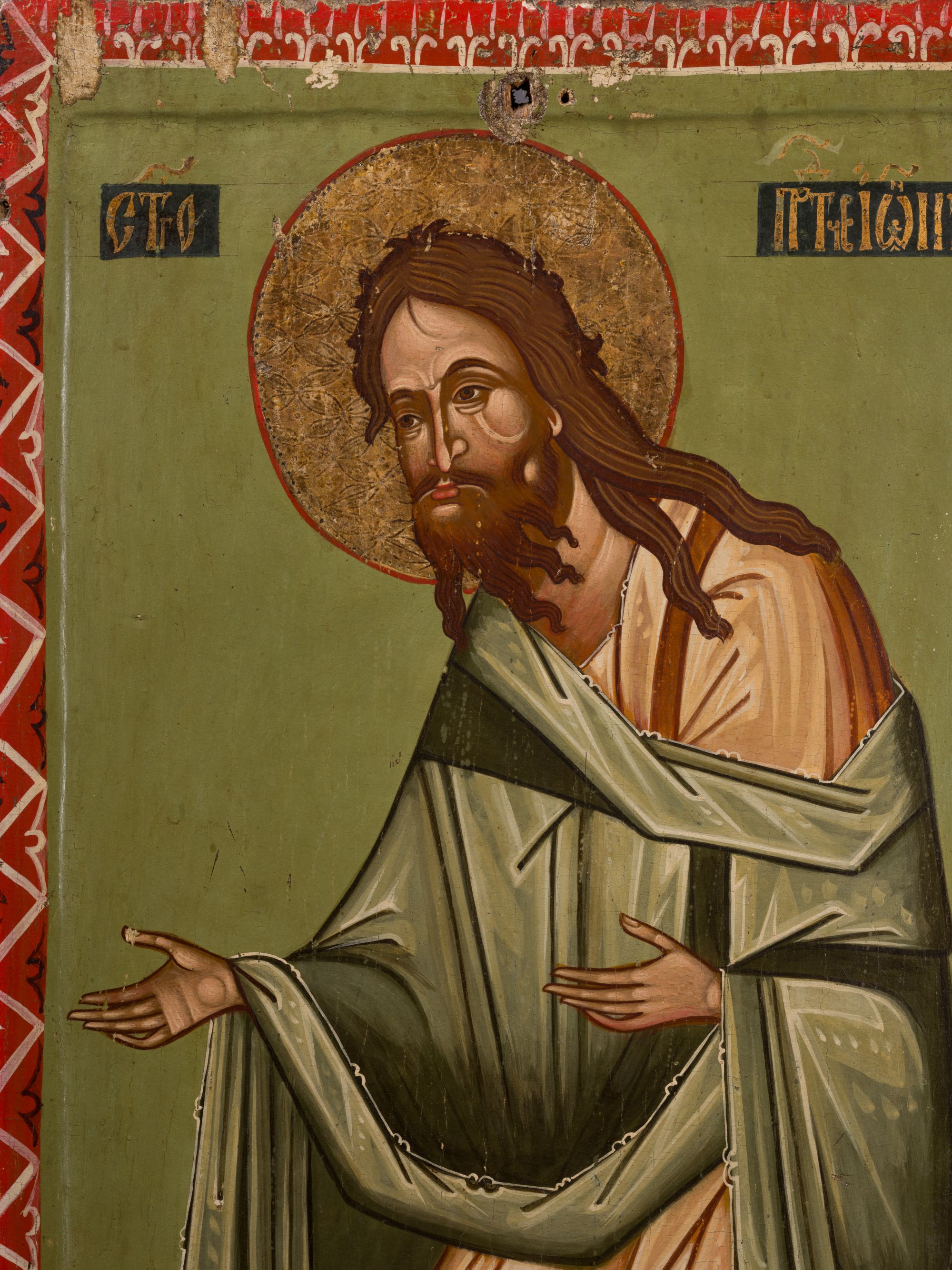
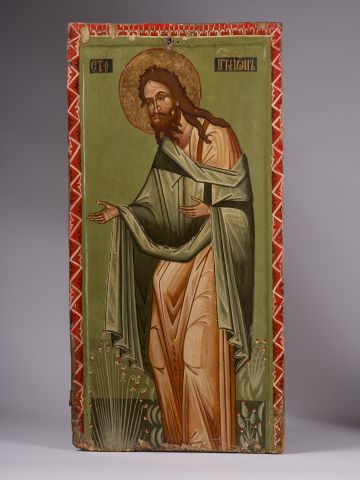
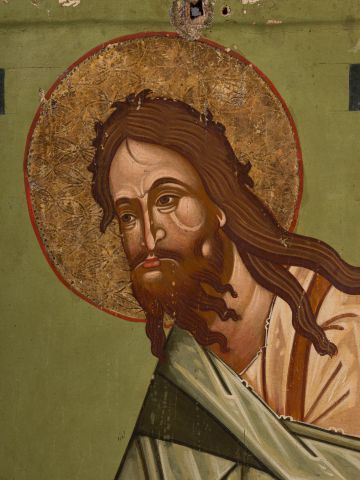
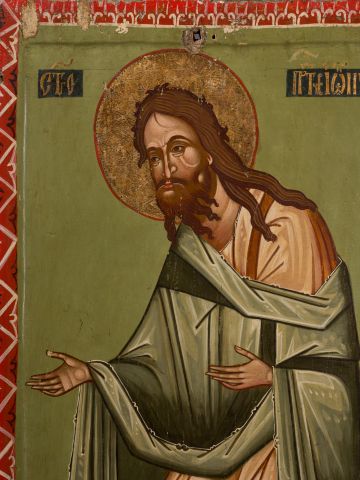
John the Baptist is represented full-length in a three-quarter turn, with the man's body and head tilted to the left and his arms extended in a prayer gesture. The figure is masterfully inscribed into the narrow vertical format of the panel. Despite the ascetic restraint, the composition is dynamic due to the curve of the body and the expressive tilt of the head with dishevelled hair. The figure is presented against a muted green-olive background. The saint is dressed in an ochre-brown chiton, the colour of which traditionally indicates a strict ascetic garment made of camel hair – a hairshirt. Over it is draped a massive, green-tinted himation that falls from the left shoulder.
The folds of the Baptist's clothing are modelled using crisp graphic lines and soft highlights, which convey a sense of rhythm and emphasise the delicate, elongated proportions of the saint's body. The elongated face of the Baptist, his thin nose, deeply set eyes, long unkempt hair and a beard falling onto his chest represent the classic depiction of a hermit.
The expression of the saint's countenance conveys profound spiritual concentration, tragedy and prayerful intercession. On the dark ground of the icon, near the saint's feet, the painter used fine graphic lines to depict grass and flowers, thus symbolically recreating the Judaean Desert, where the Forerunner led his ascetic life.
The decorative ornamental framing of the icon's edges is of particular artistic value. The borders of the panel are decorated with a geometric pattern in the form of triangles ("teeth"). The style of the icon combines strict Byzantine canons with the plasticity and decorativeness inherent in Ukrainian icon painting of the late Middle Ages.
Legal regulation
Borys Voznytskyi Lviv National Art Gallery