Descent into Hell
unknown
Basic information
- ID
- Ж-5018
- Author
- unknown
- Name
- Descent into Hell
- Date of creation
- 16th c.
- Country
- Ukraine
- Technique
- tempera painting
- Material
- wood tempera
- Dimensions
- 90 x 71 cm (height x width)
Additionally
- Type
- painting
- Genre
- religious
- Exposition
- Olesko Castle
Information about author
Object description
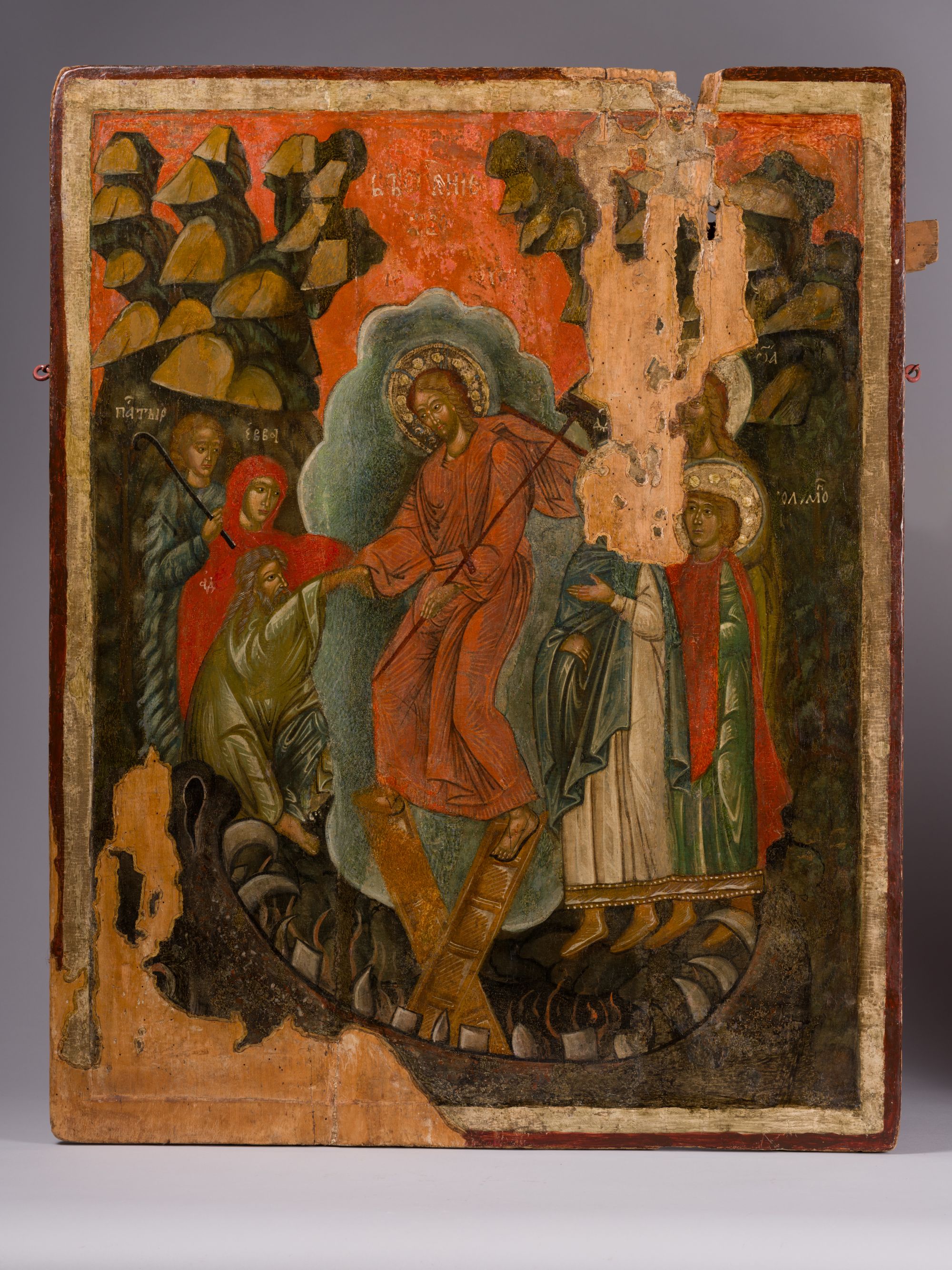
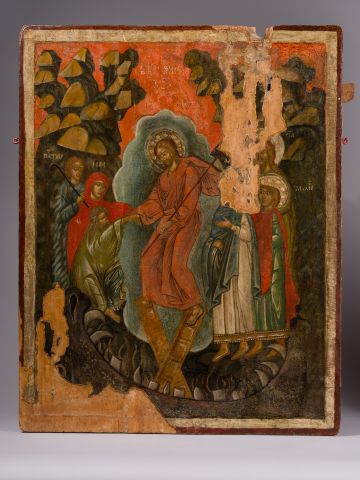
The icon reflects a profound theological narrative of the Byzantine tradition, symbolising Christ's victory over death and the liberation of righteous souls from hell. The composition follows a canonical Eastern Christian scheme characteristic of 16th-century Ukrainian icon painting. The background is rendered in warm, ochre-orange tones, against which a stylised landscape, typical of the Byzantine tradition, clearly emerges. Rather than denoting a specific landscape, it signifies the sacred space of the event.
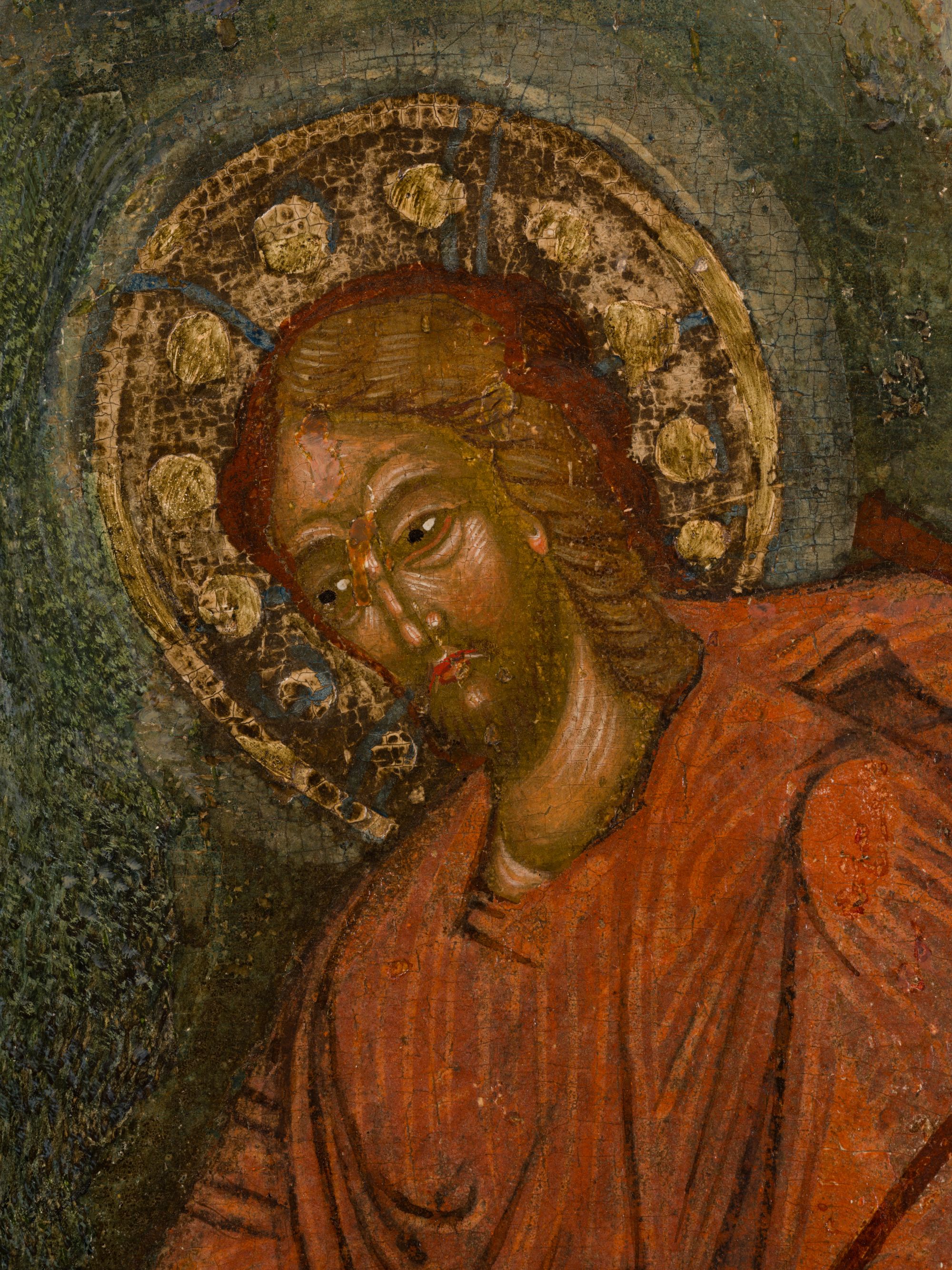
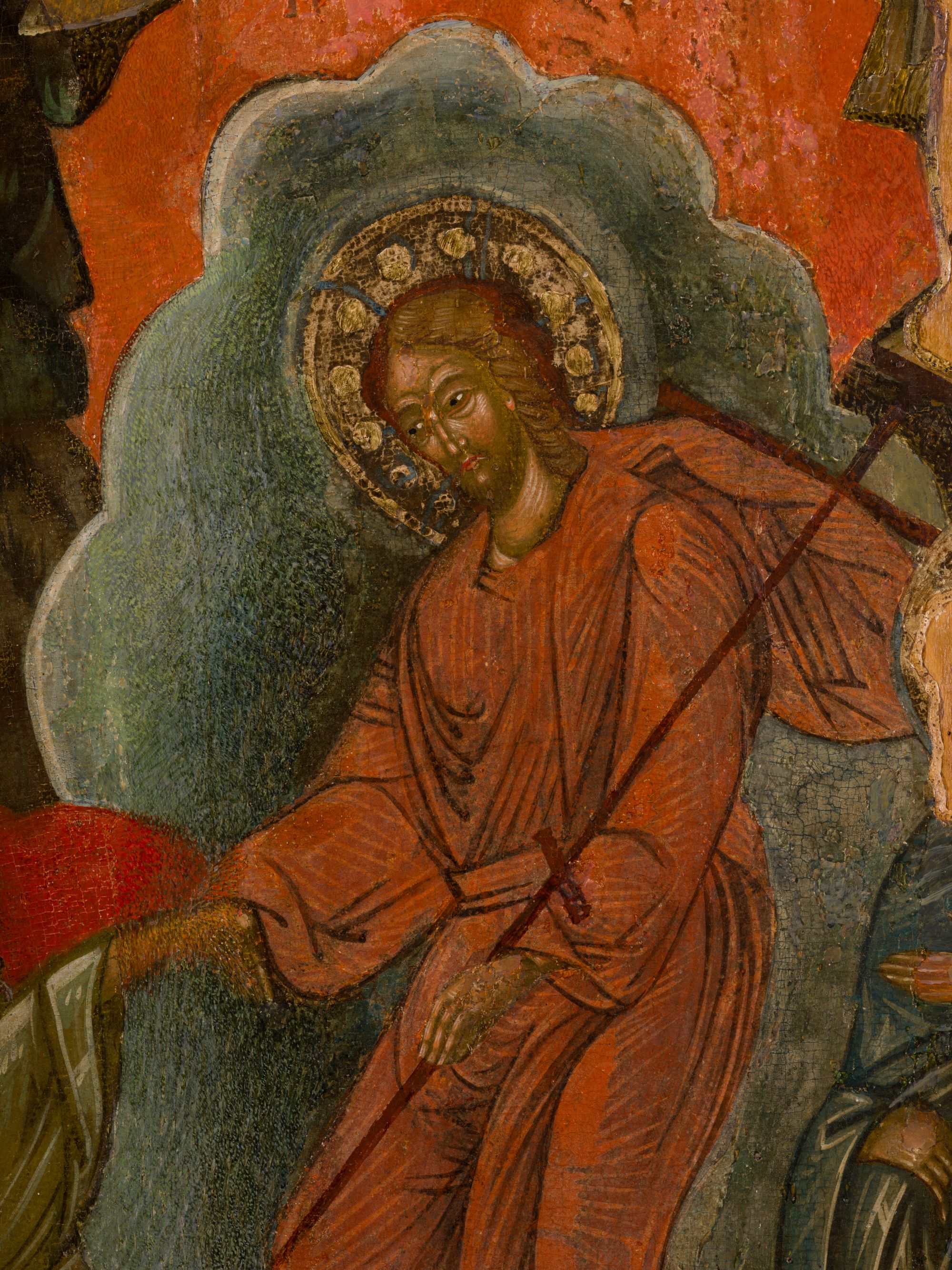
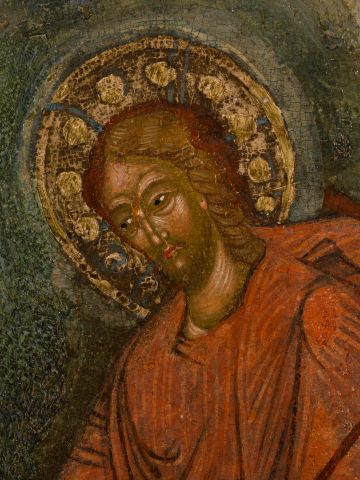
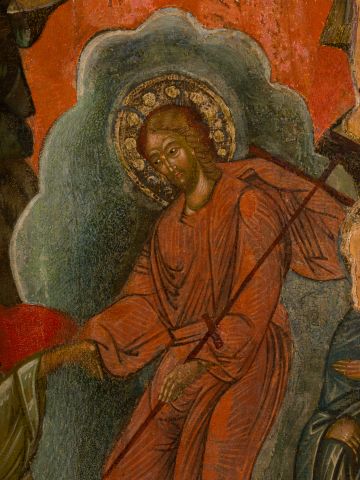
The focus of the composition is the figure of the Saviour in the dynamic motion of a victor. His posture is encircled by the green radiance of a mandorla – a symbol of heavenly light and glory. The divine nature of the image is underscored by a halo around His head, while the colour palette of Christ's garments in an ochre-red tone accents the radiance of the resurrection and the sacrificial essence of His mission. The figure leans sharply forward with the right hand extended downwards, a gesture embodying the moment of the liberation of the righteous.
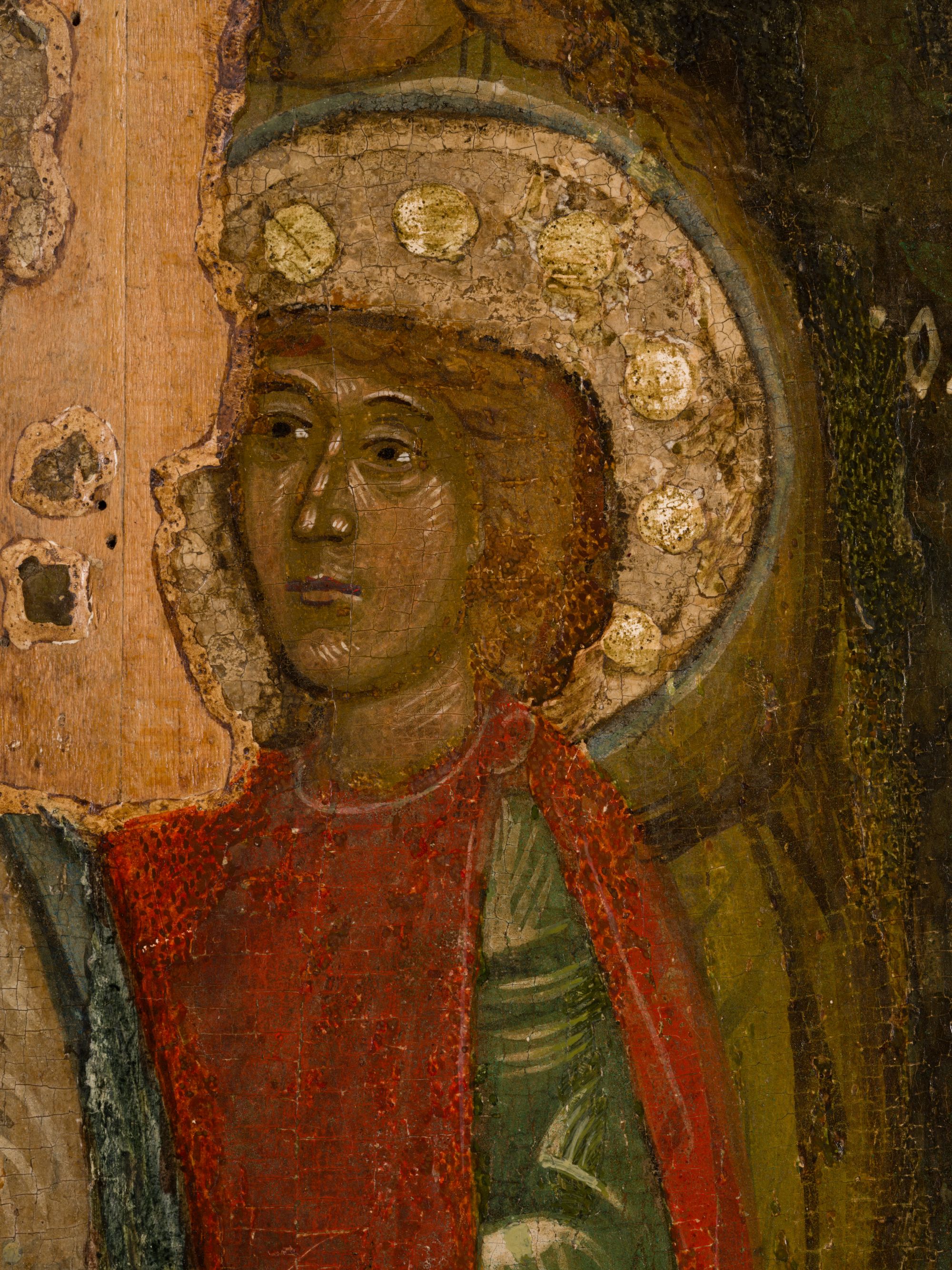
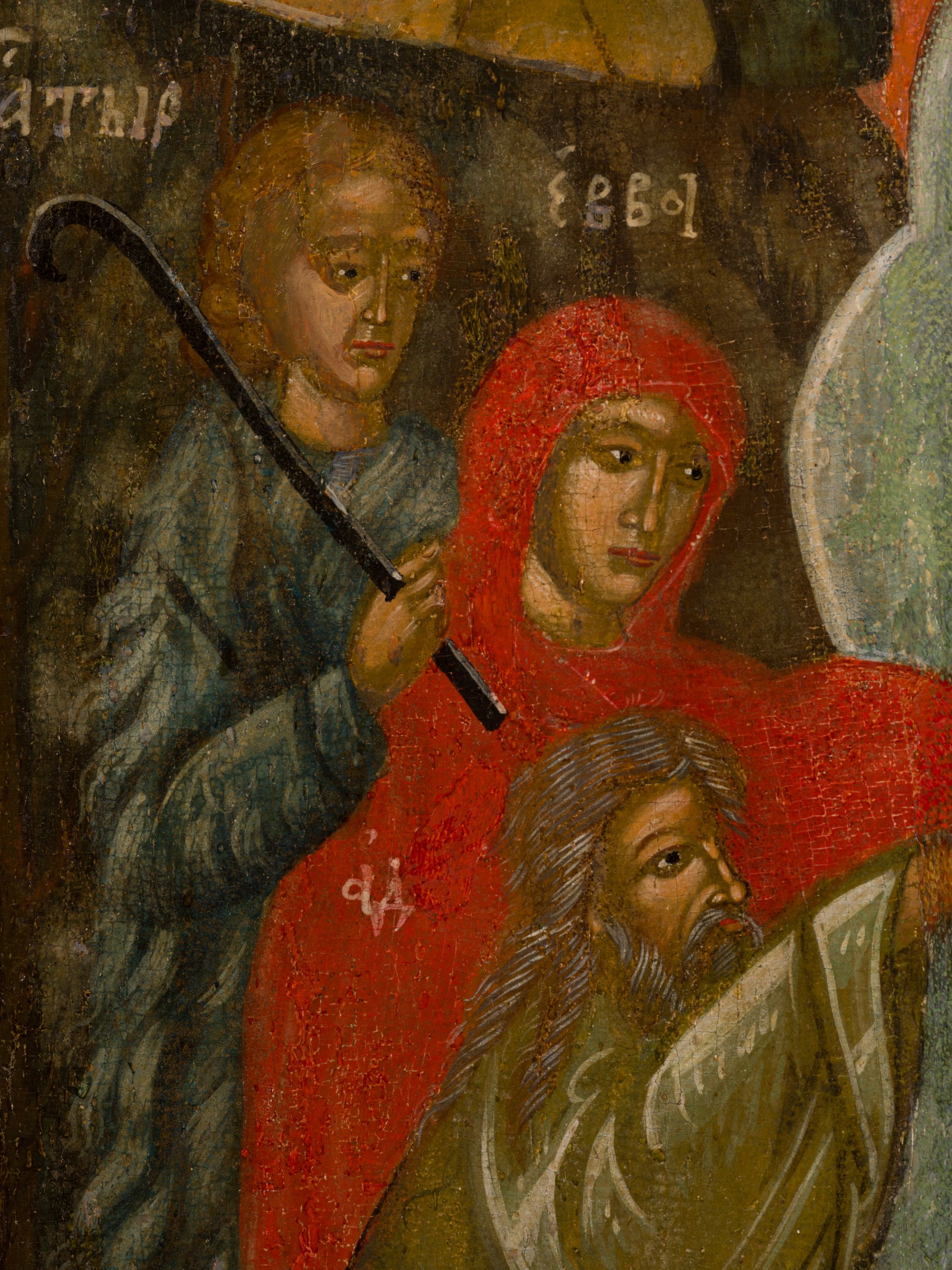
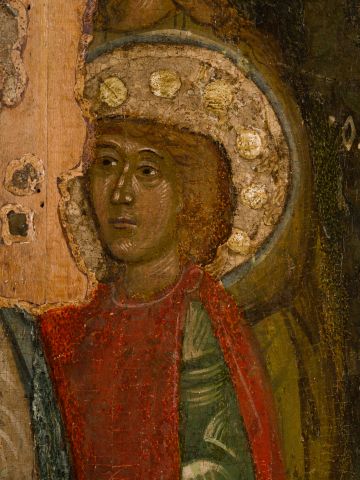
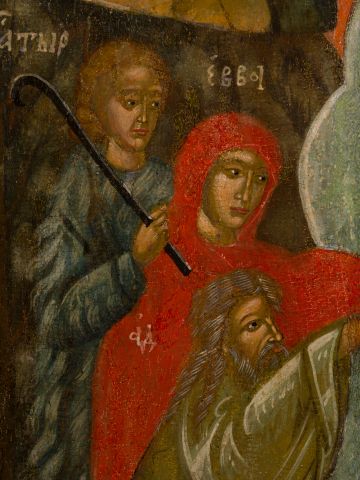
According to the established iconography of the Anastasis, the Saviour stands upon the shattered, cross-shaped gates of Hades, which symbolise the overcoming of death and the destruction of dark forces. Christ holds Adam by the wrist – demonstrating that the salvation of humanity is an exclusively divine act, rather than the result of human effort. Eve is depicted nearby, and on the opposite side stand the figures of Old Testament righteous souls, traditionally featuring Kings David and Solomon. It is this particular part of the icon that has suffered significant losses to its paint layer. The figures of the saints are treated flatly, with a conventionality of proportions and an absence of linear perspective characteristic of icon painting, which is subordinated to the symbolic-dogmatic purpose of the image.
The lower section of the composition features a dark, sinuous form resembling an open maw or cave. This is a traditional allegorical personification of Hades in the guise of a monster's maw – an established iconographic element of the Resurrection narrative in the Eastern Byzantine tradition. The flatness of the forms, the linear manner of modelling the garments, and the solemn stillness of the poses combined with the internal dynamism of the figures characterise the "Descent into Hades" icon, which organically fused the Late Byzantine artistic language with the local school of painting.
Legal regulation
Borys Voznytskyi Lviv National Art Gallery