Archangel Michael
Johann (Jan) Pfister
Basic information
- ID
- С-I-903
- Author
- Johann (Jan) Pfister
- Name
- Archangel Michael
- Date of creation
- c. 1640
- Technique
- carving polychromy gilding
- Material
- wood levkas
- Dimensions
- 106 x 77 x 26 cm (height x width x depth)
Additionally
- Type
- sculpture
- Genre
- religious
- Plot
- Archangel Michael
- Provenance
- Bishche village, Ternopil region, Church of the Assumption of the Virgin Mary
Information about author
Object description
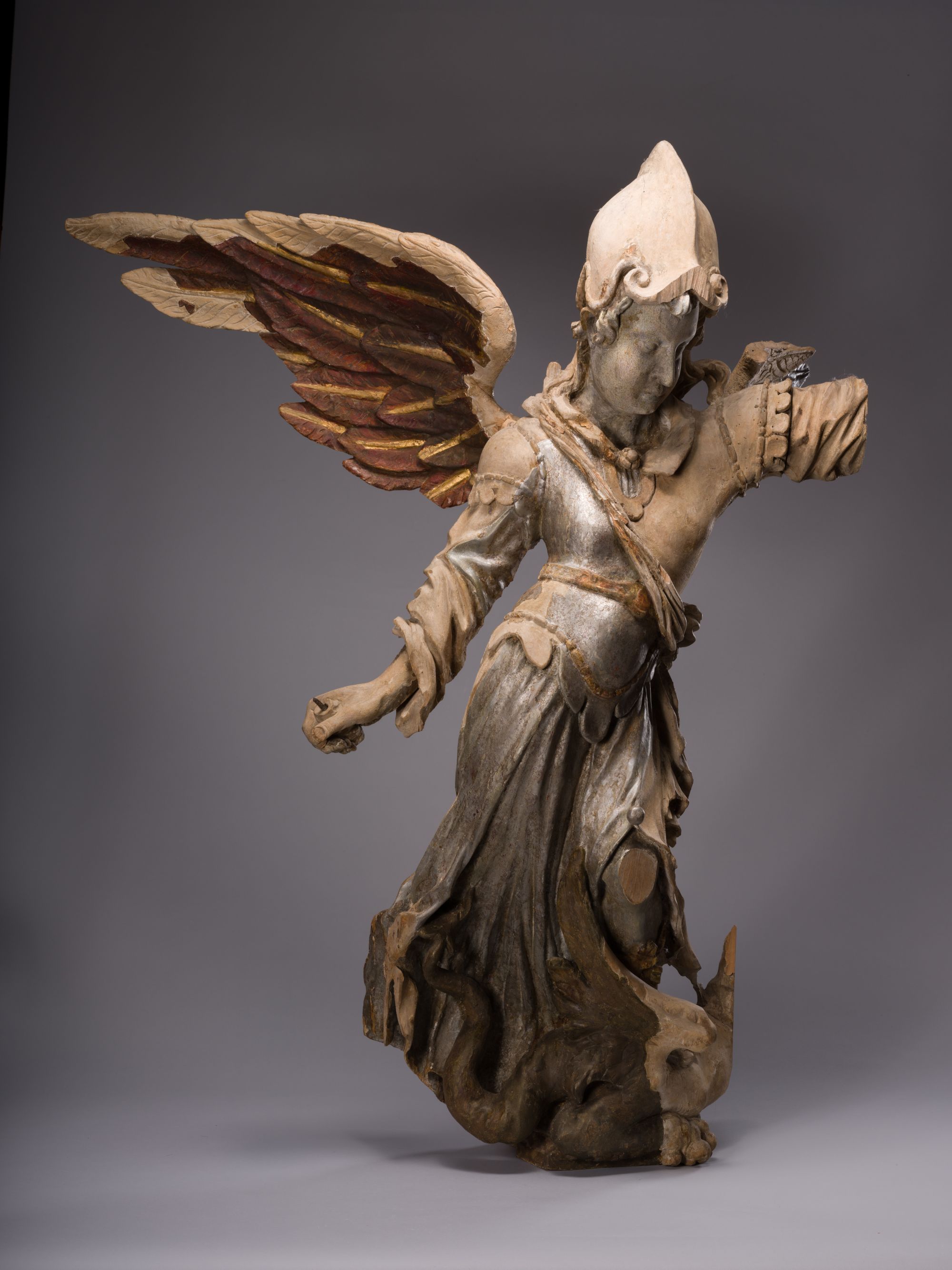
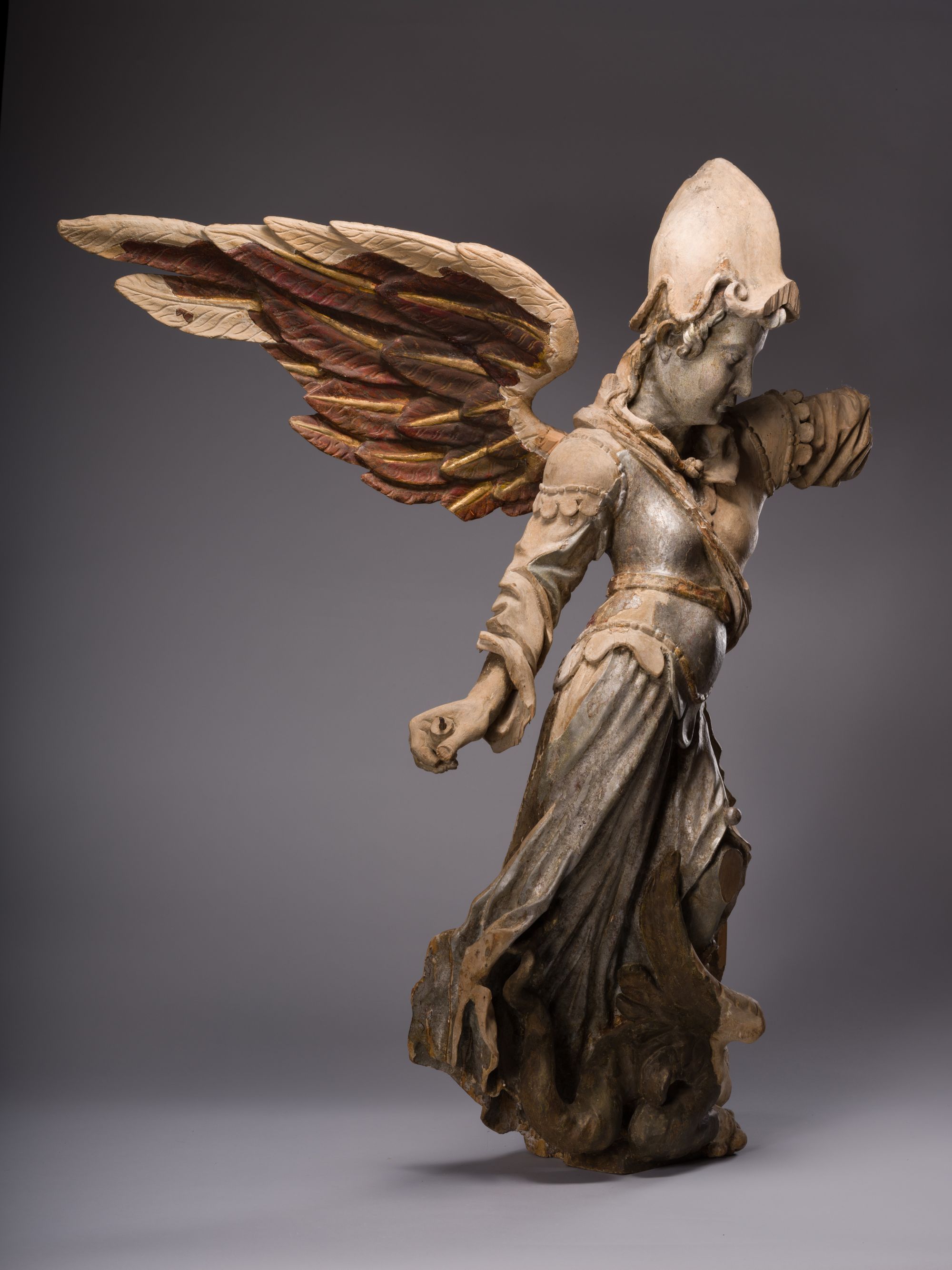
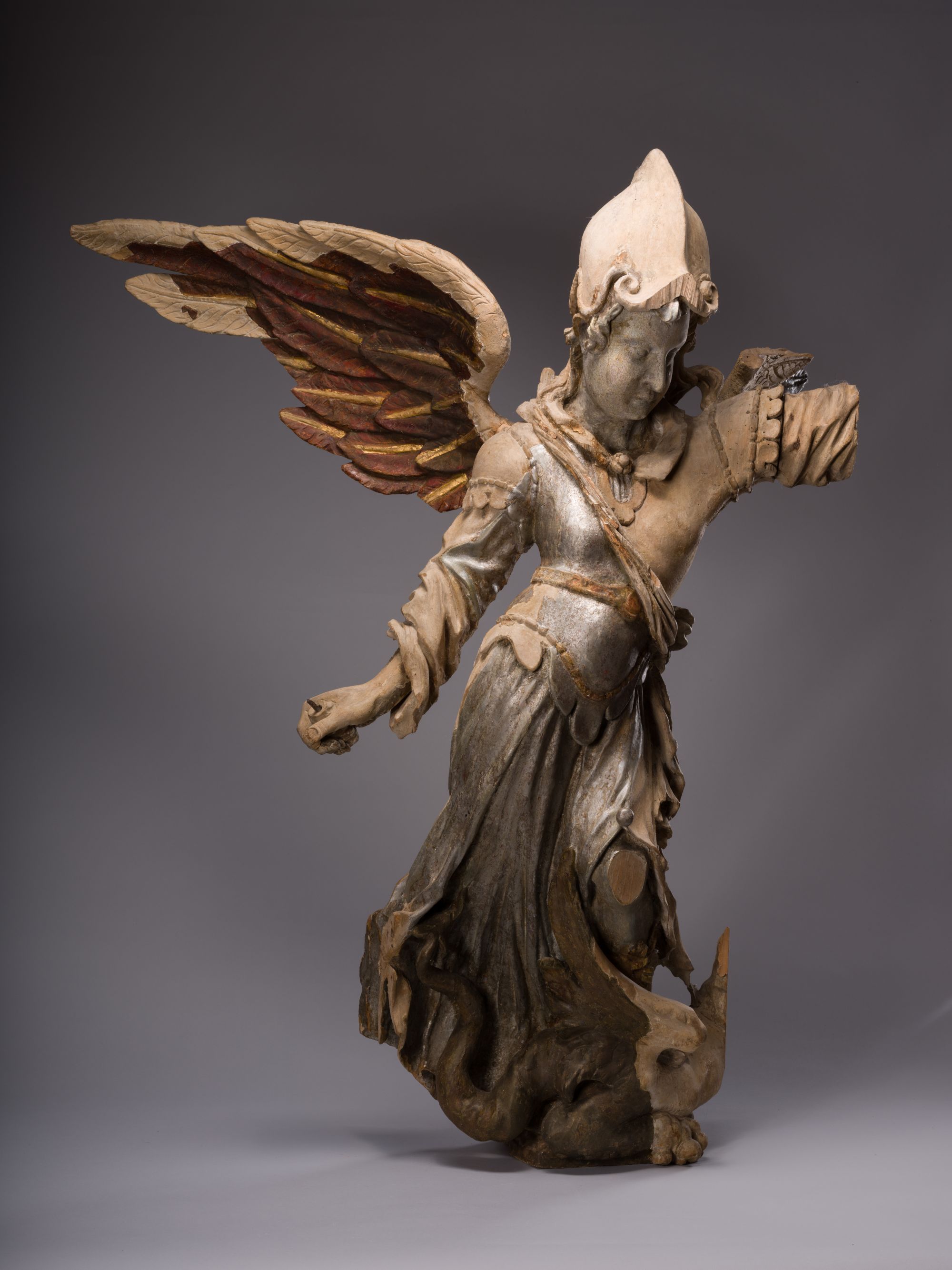
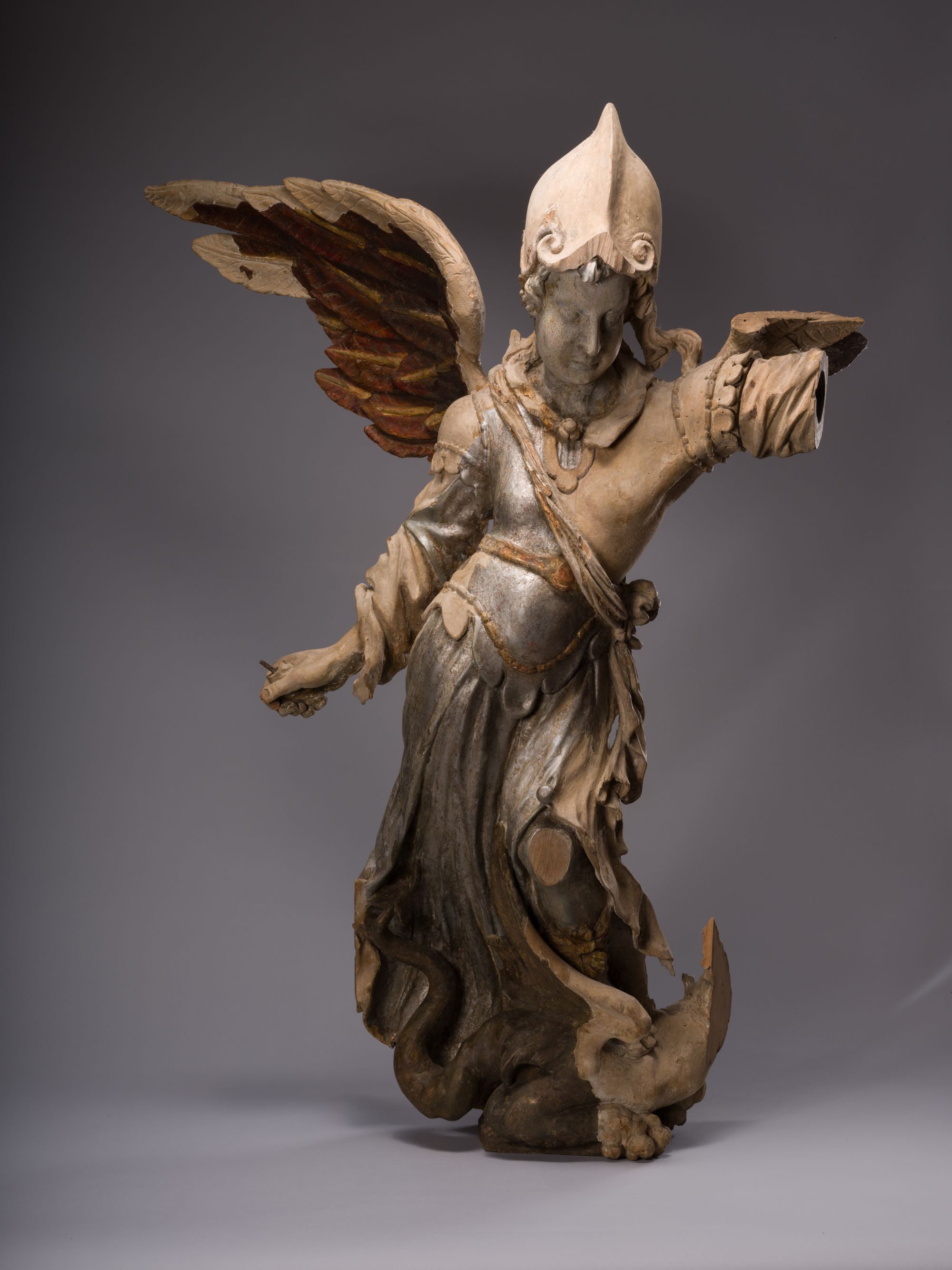
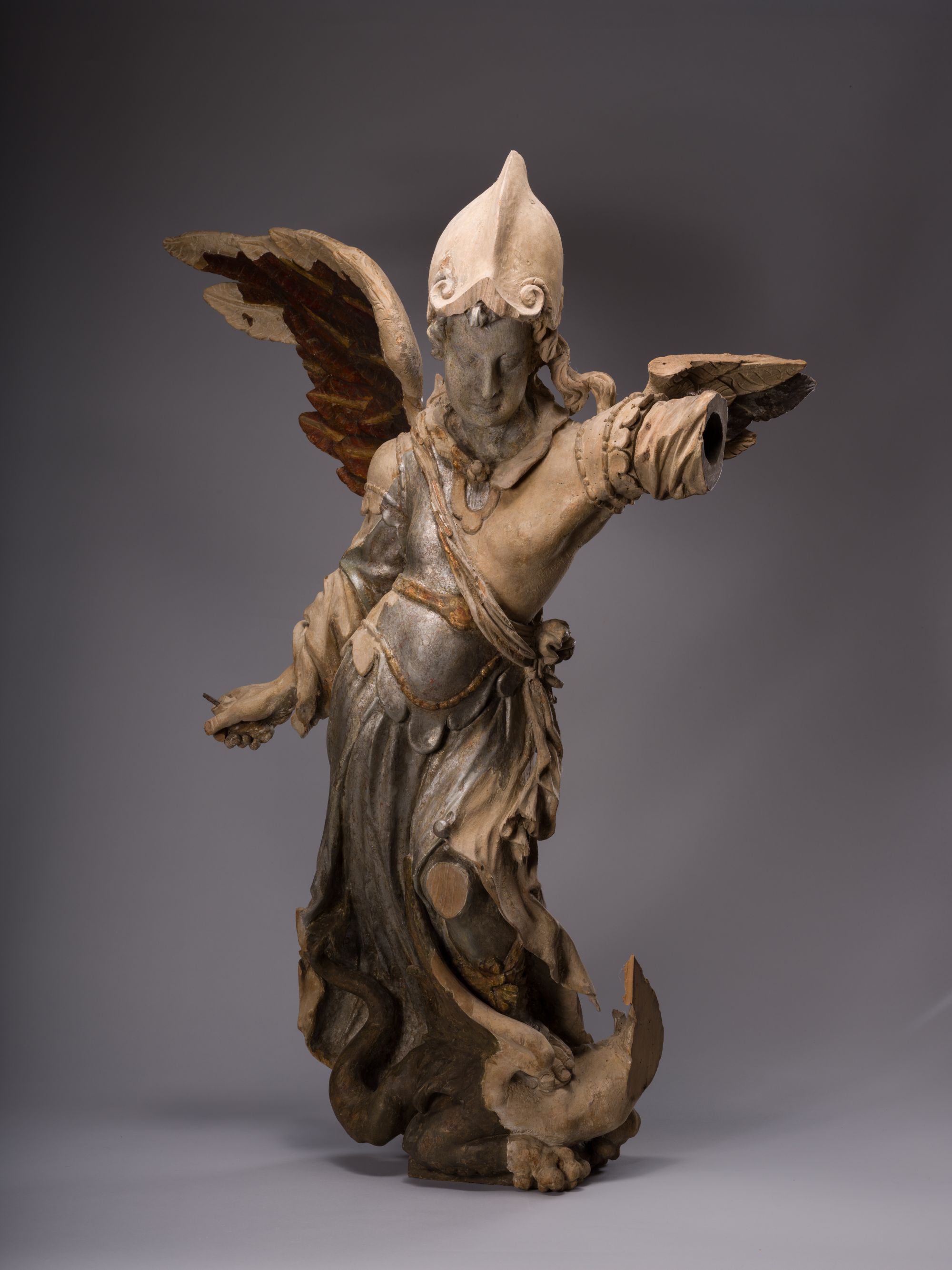
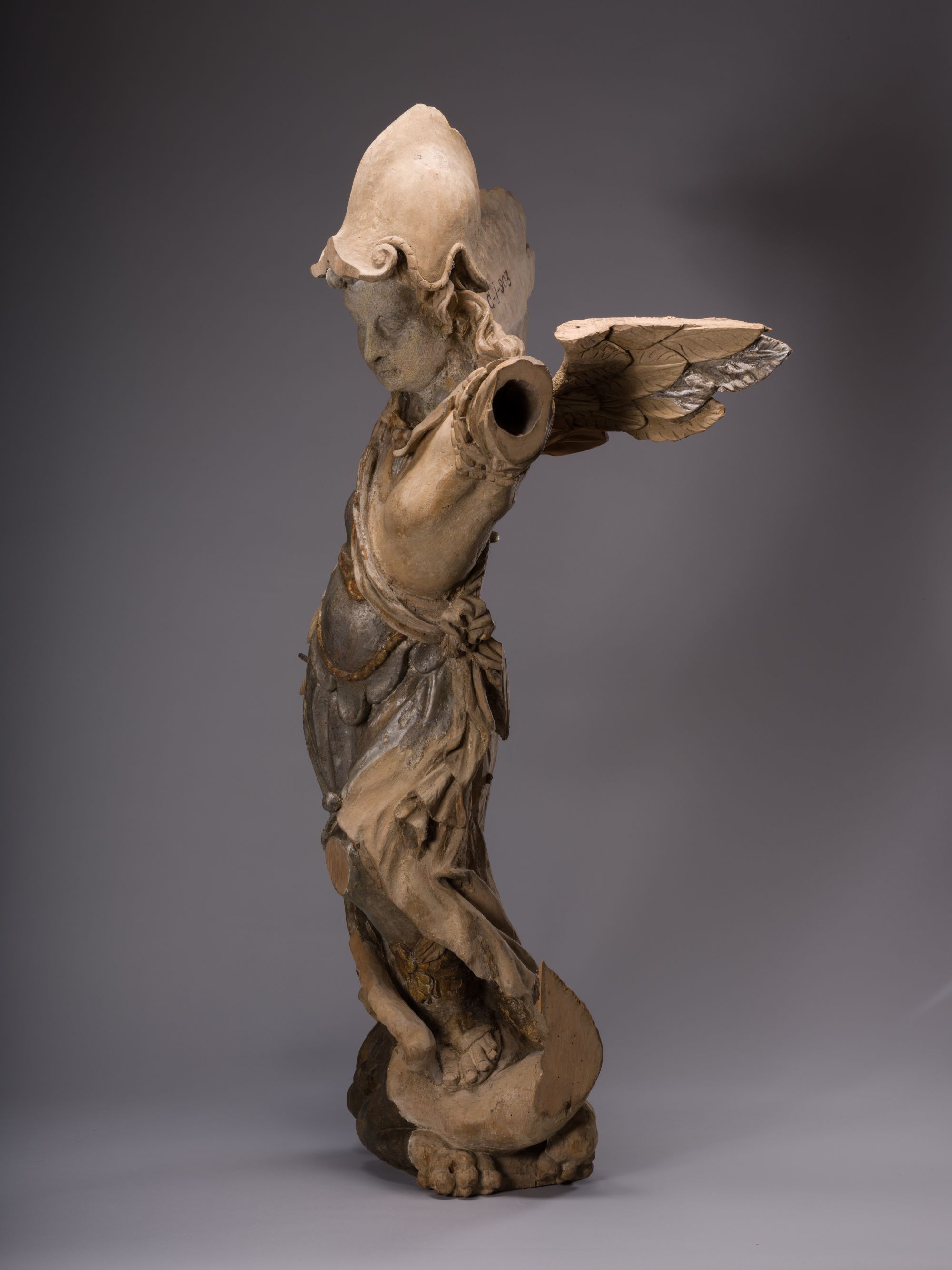
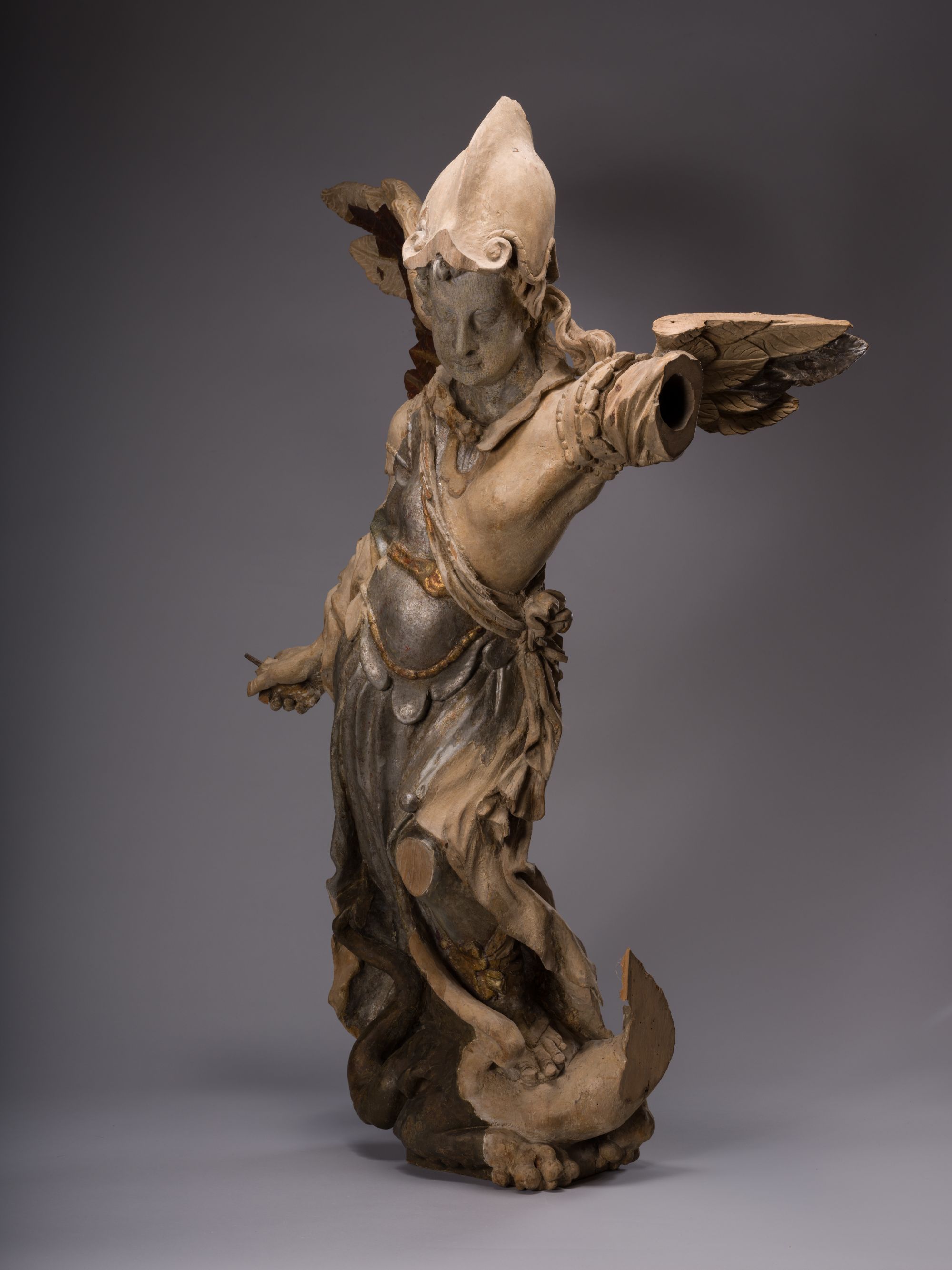
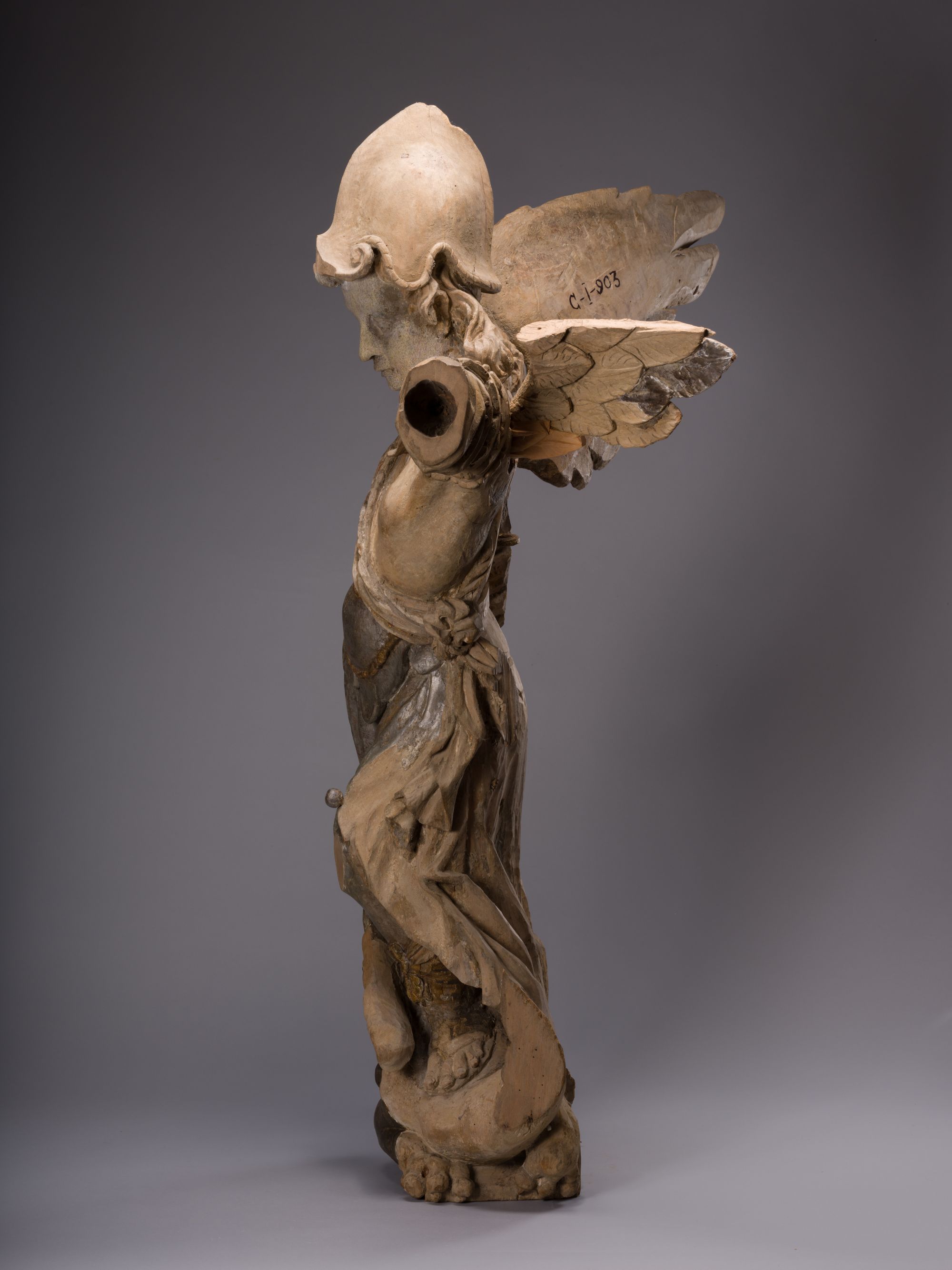
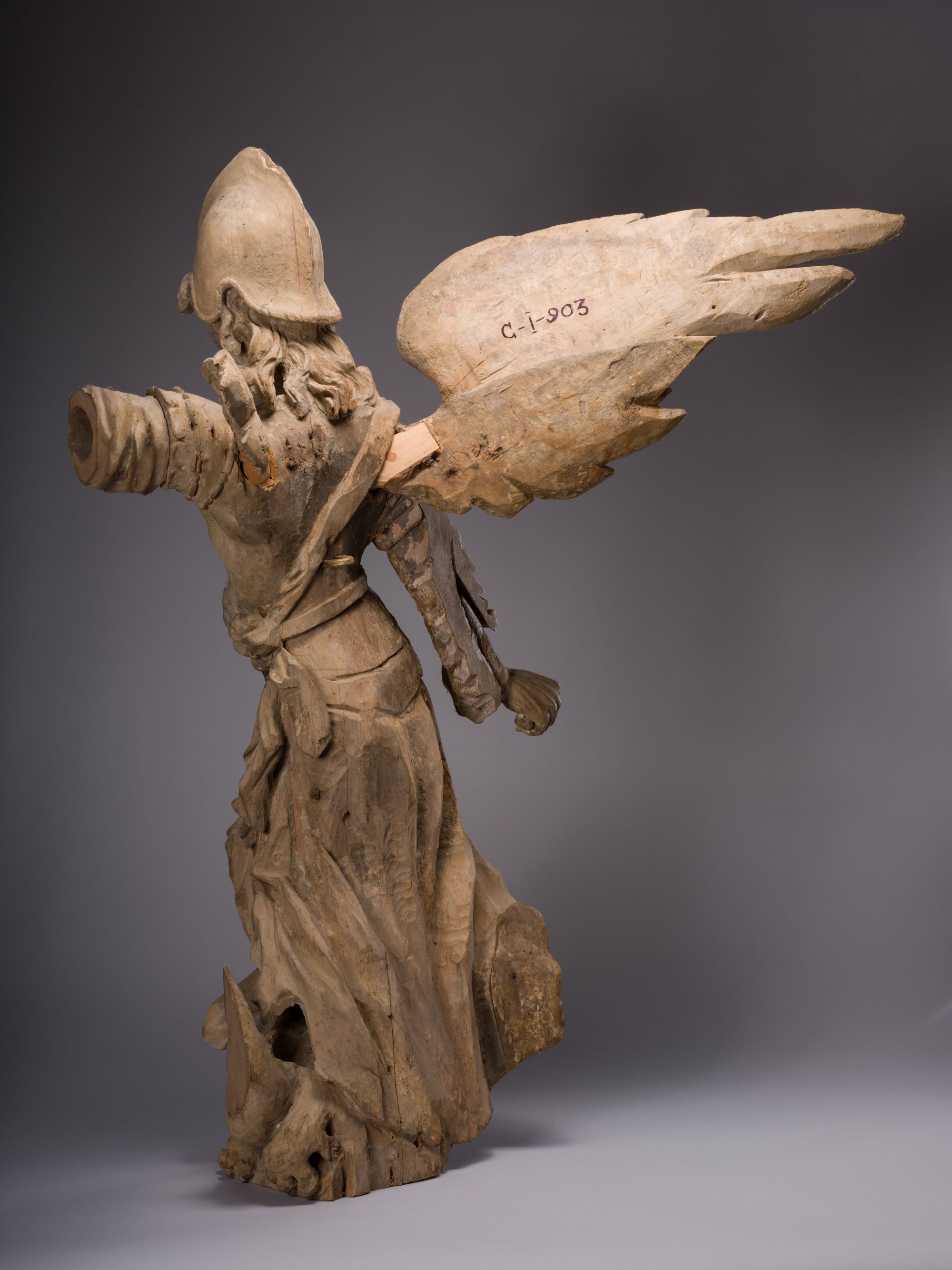
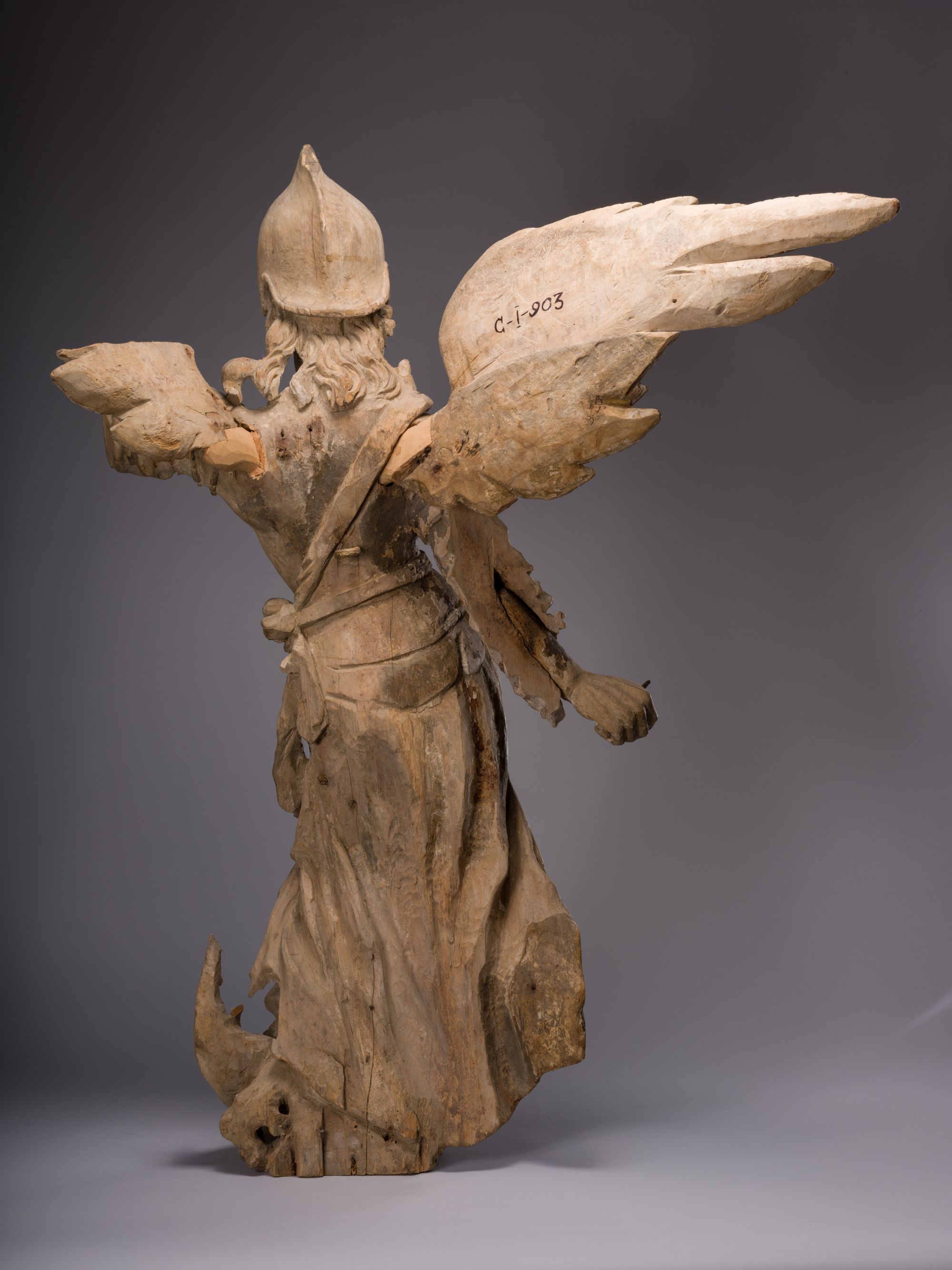
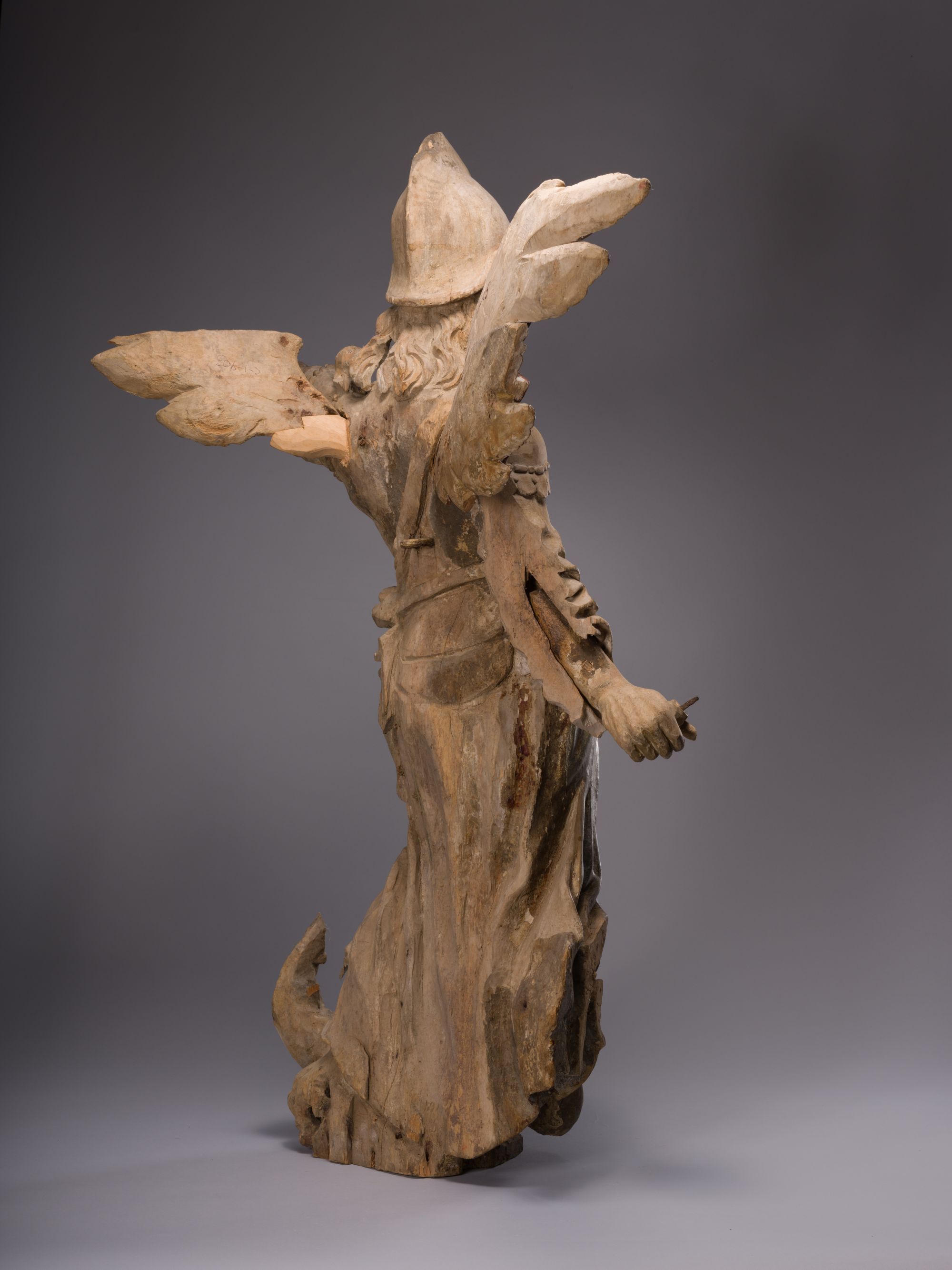
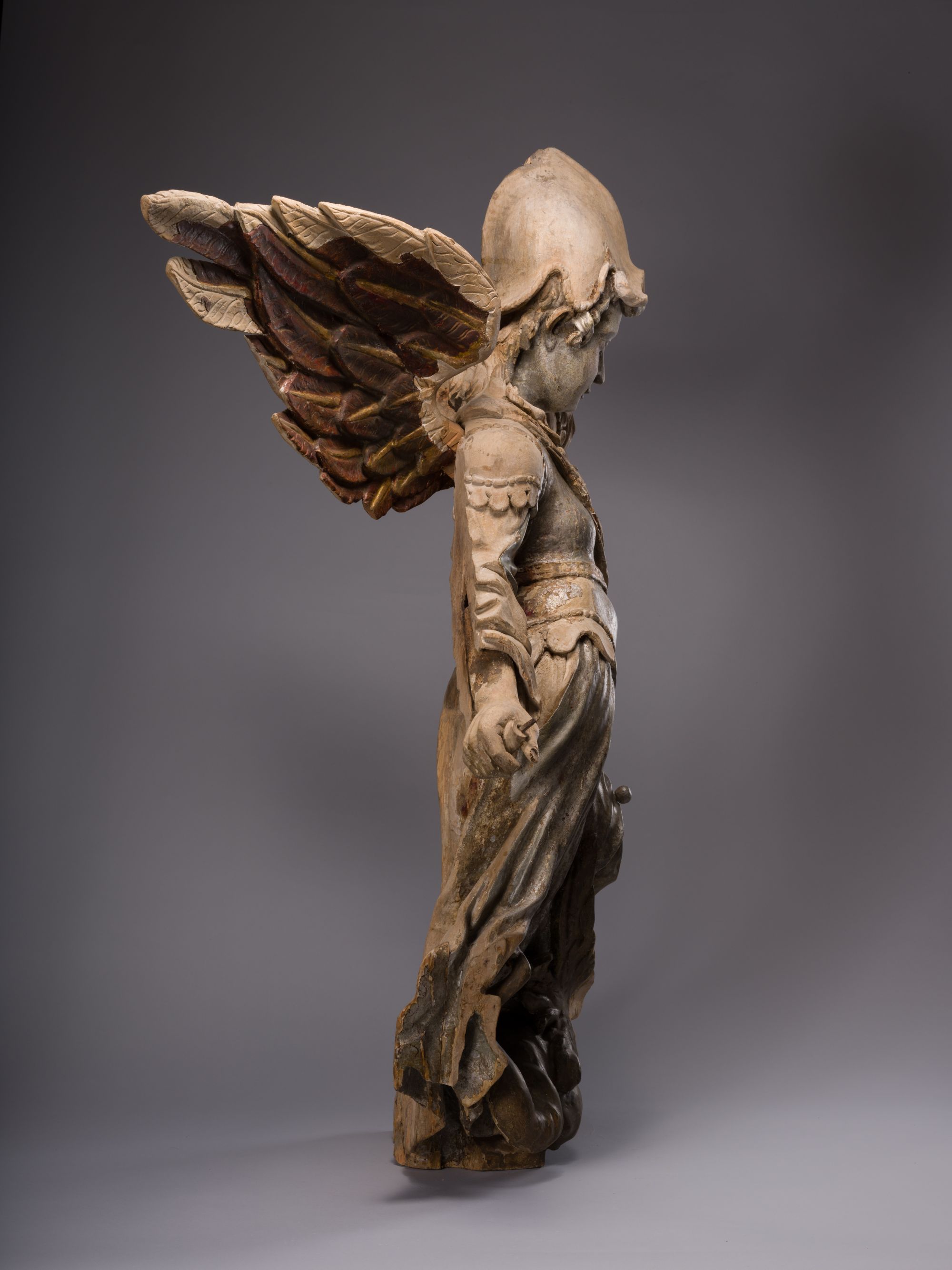
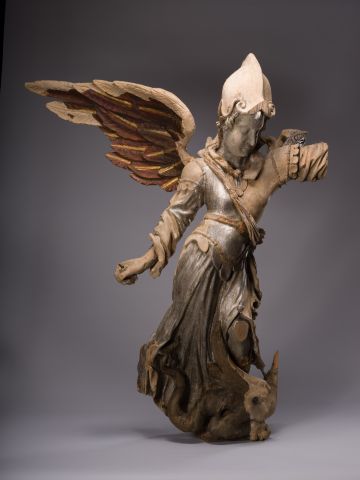
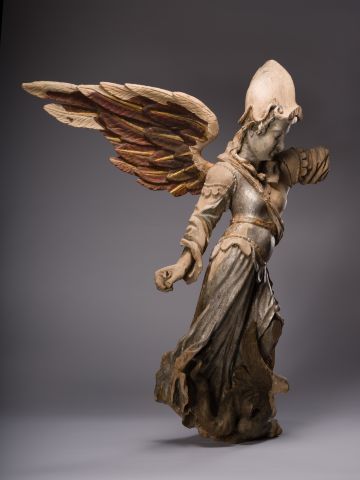
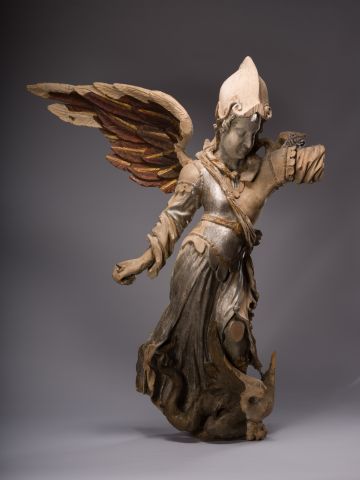
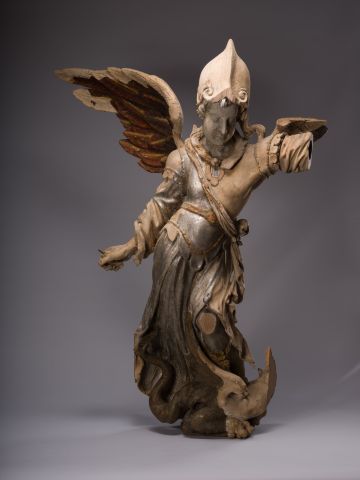
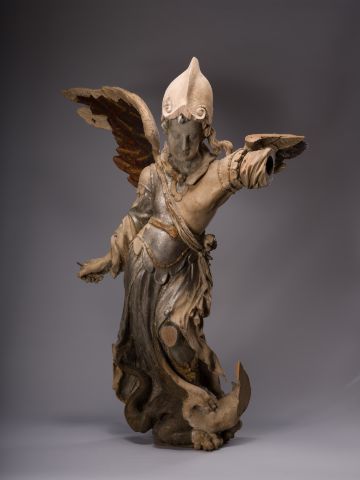
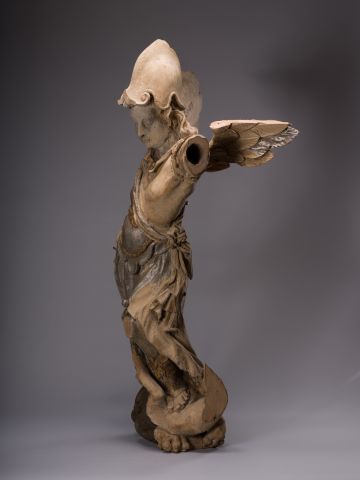
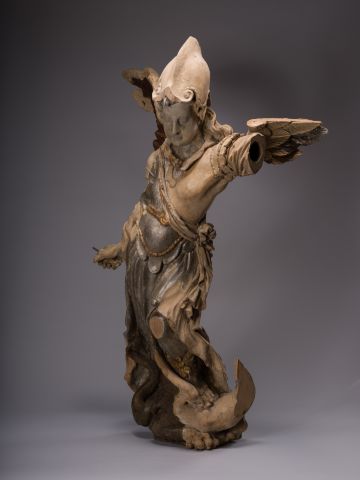
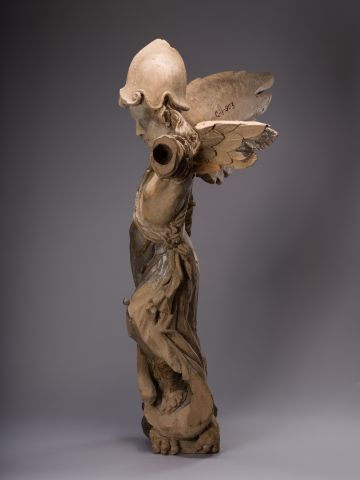
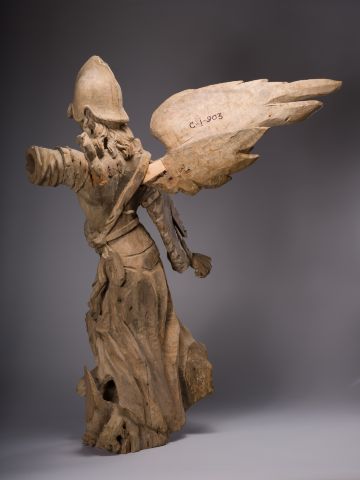
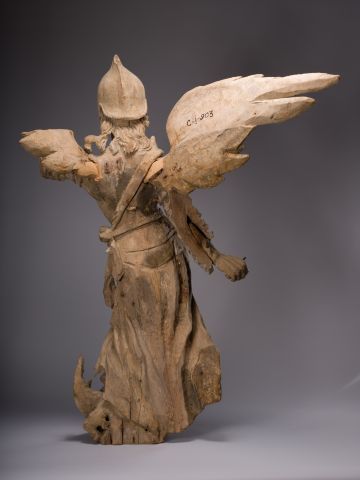
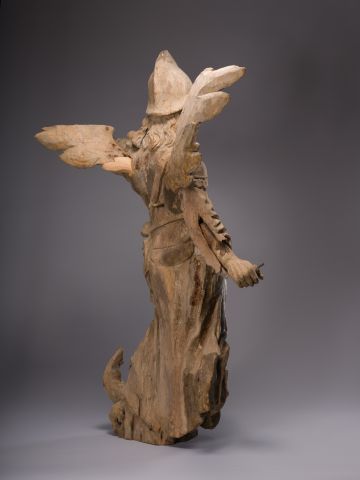
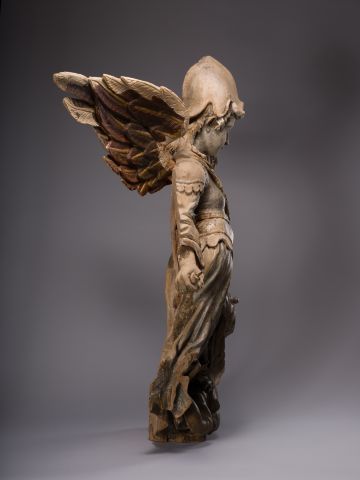
The sculptural image represents a full-length wooden sculpture of Saint Michael the Archangel, serving as a vivid specimen of Western European sacred plastic art from the first half of the 17th century. The saint is presented in the guise of a heavenly warrior during his victory over the forces of evil. The posture of the Archangel is distinguished by an expressive dynamism: the figure is unfurled in space, the torso leans forward, and the right leg, bent at the knee, rests upon the overturned, defeated dragon. A spatial diagonal, which significantly enhances the expressiveness of the artwork, is created by the spread right wing. The continuation of this dynamic composition is manifest in the gestures of the hands: the right is lowered downwards (where a spear, directed into the dragon's maw, was evidently once held), whilst the left is raised aloft.
Michael is clad in a Renaissance-Baroque anatomical cuirass that imitates an idealised male torso. Visible upon the armour are decorative leather strips – pteryges – characteristic of Pfister's distinctive style, which served as an element of antique protective harness. Secured at the waist, they form a kind of skirt designed to protect the thighs. Upon the saint's head is a tall helmet adorned with decorative embellishments.
Particular attention is drawn to the modelling of the Archangel's face, which features refined European traits, voluminous curls emerging from beneath the helmet, and the focused, downward gaze of a victor. The colour scheme is dominated by a noble combination of gold and silver hues.
Legal regulation
Borys Voznytskyi Lviv National Art Gallery