Angel
Johann (Jan) Pfister
Basic information
- ID
- С-I-909
- Author
- Johann (Jan) Pfister
- Name
- Angel
- Date of creation
- 1640s
- Country
- Ukraine
- Technique
- carving
- Material
- wood
- Dimensions
- 61 x 69 x 18 cm (height x width x depth)
Additionally
- Type
- sculpture
- Genre
- religious
- Plot
- Angel
- Provenance
- Bishche village, Berezhany district, Ternopil region
- Exposition
- Olesko Castle
Information about author
Object description
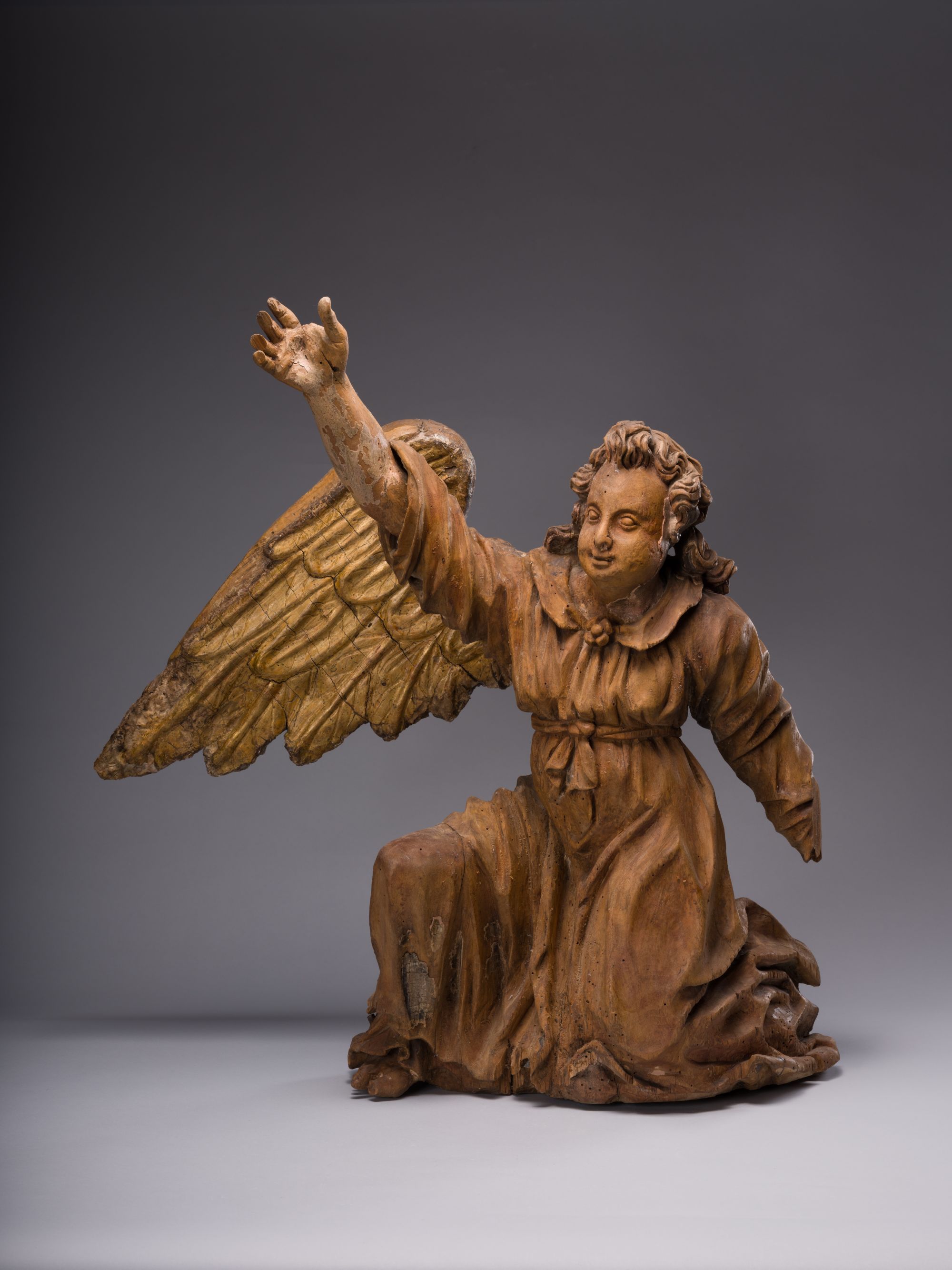
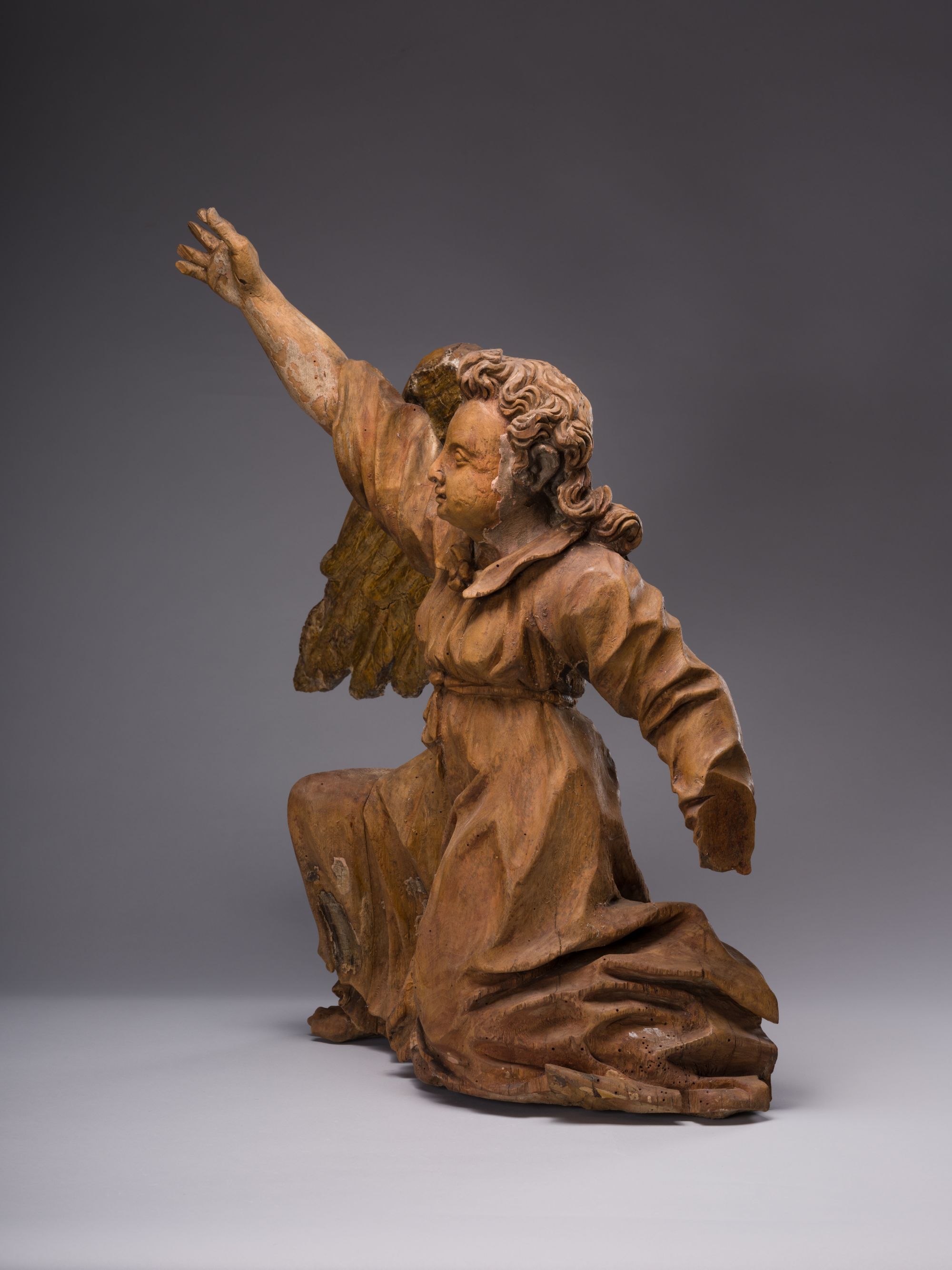
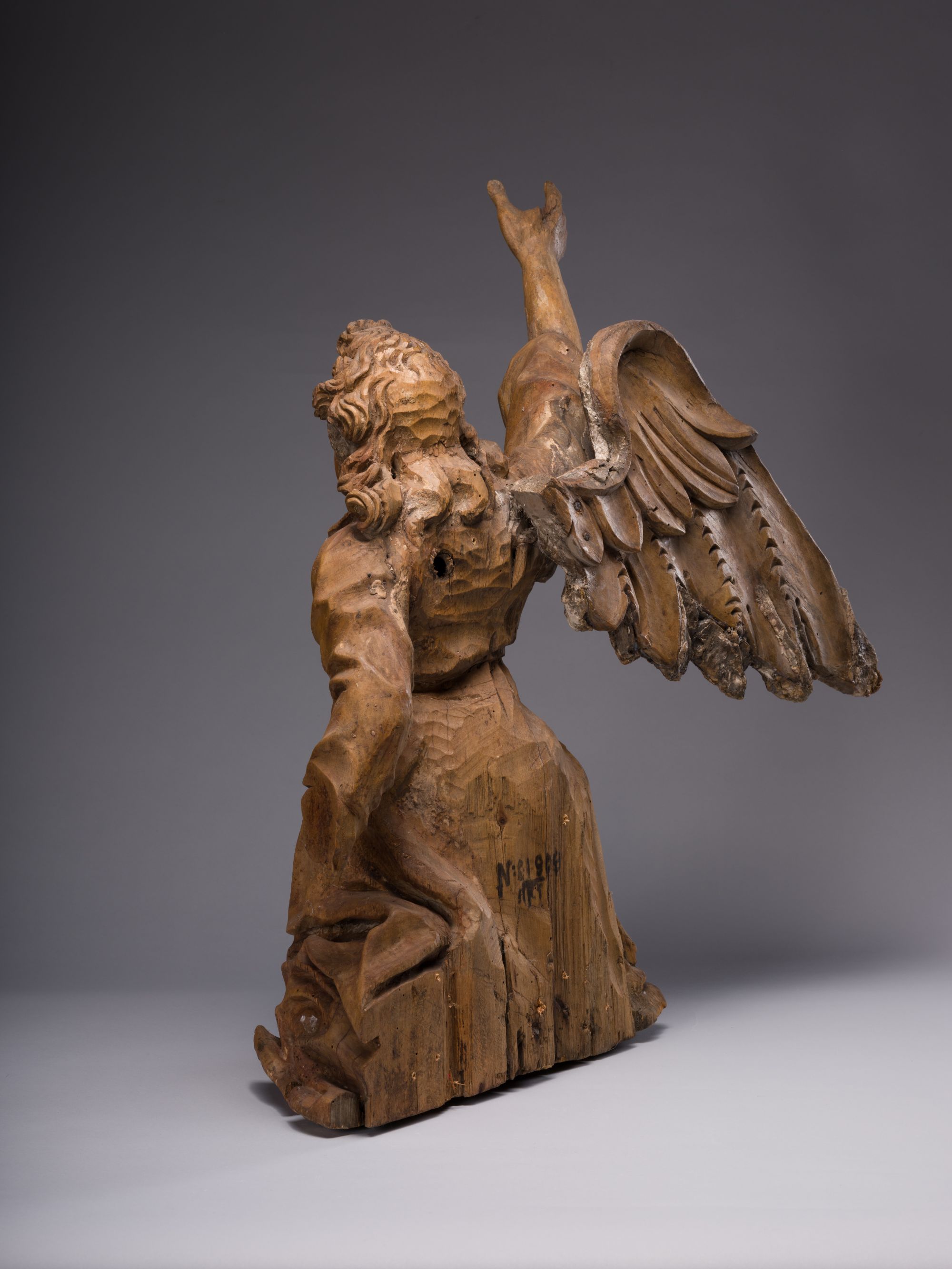
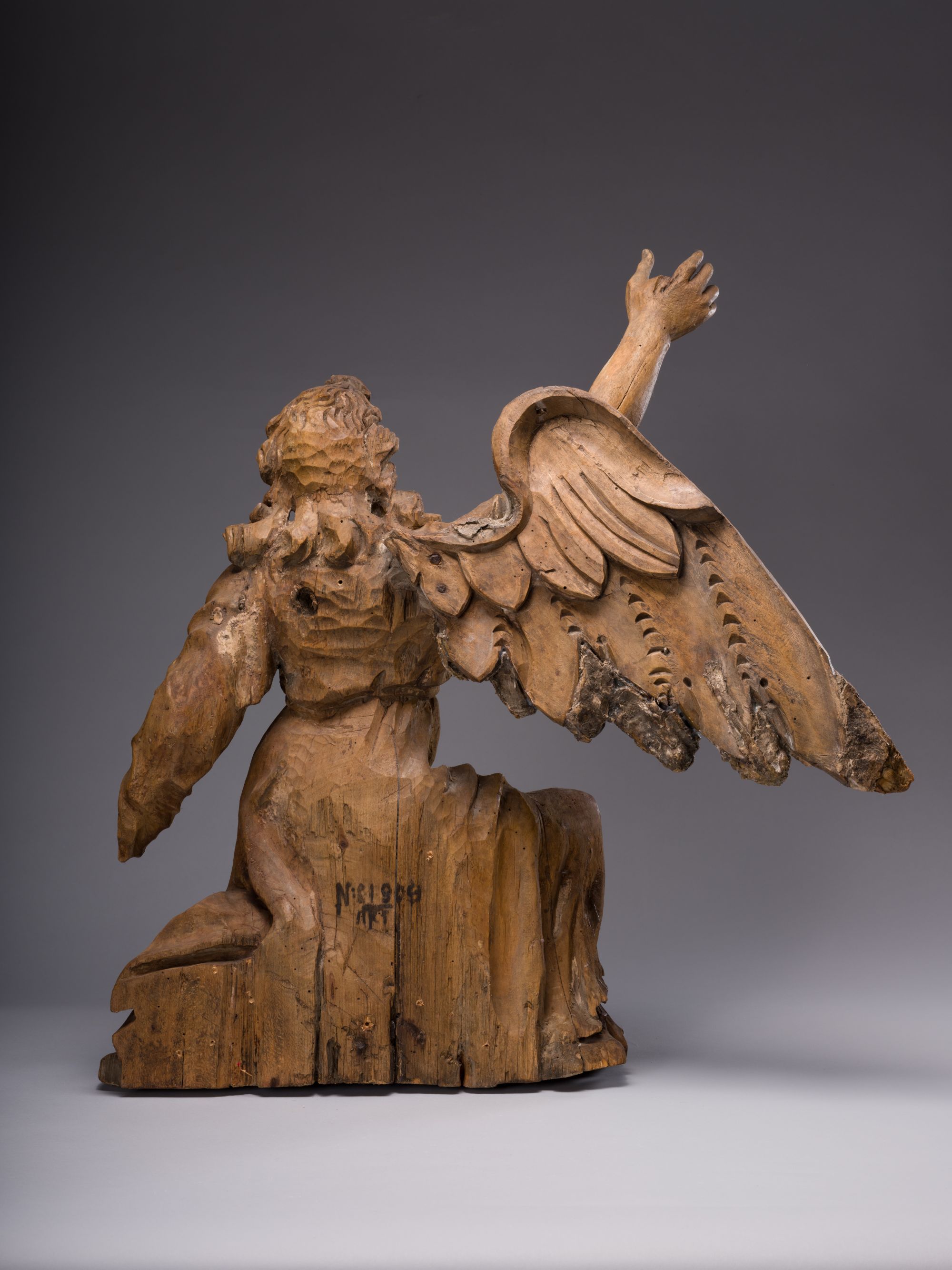
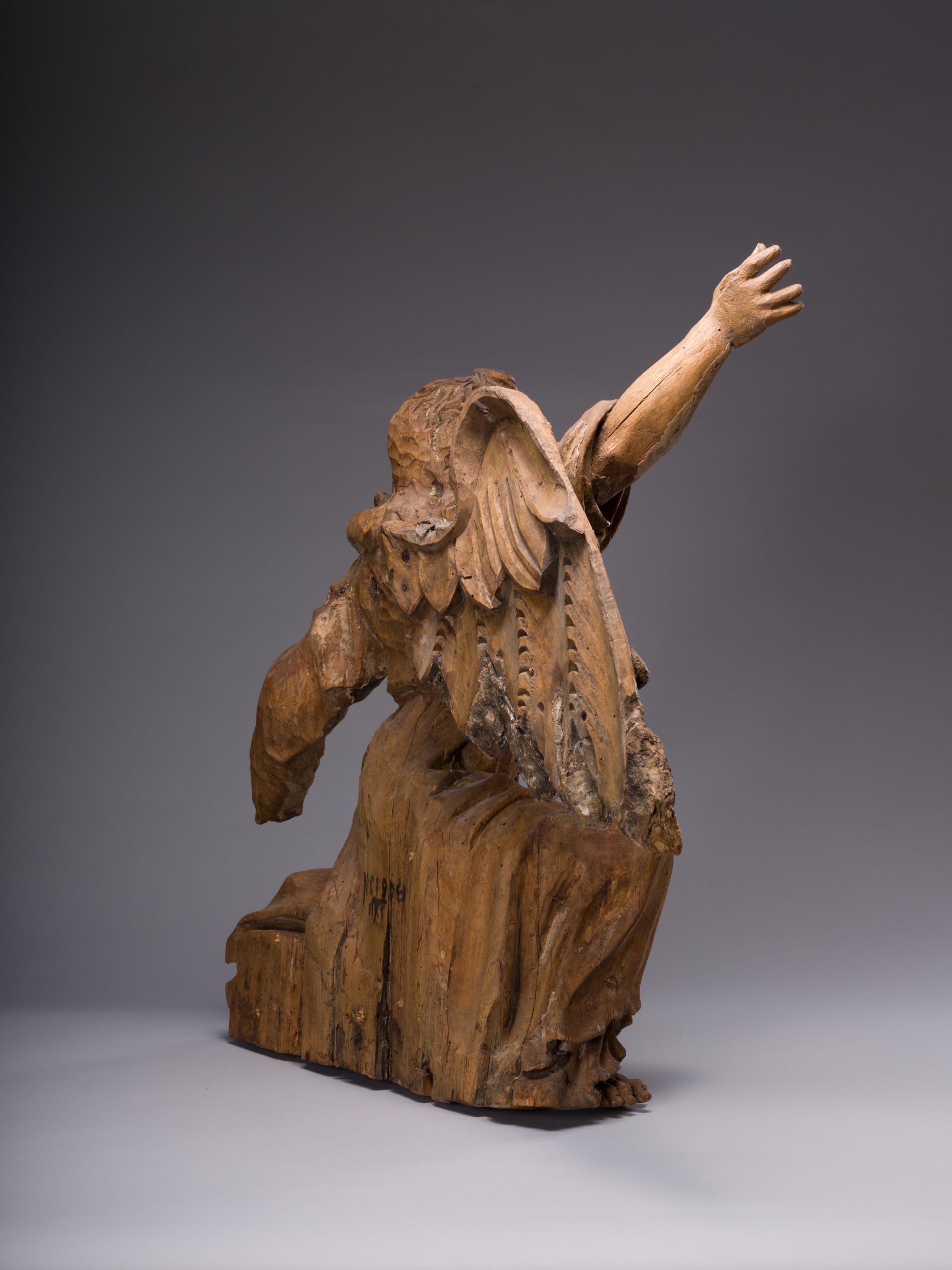
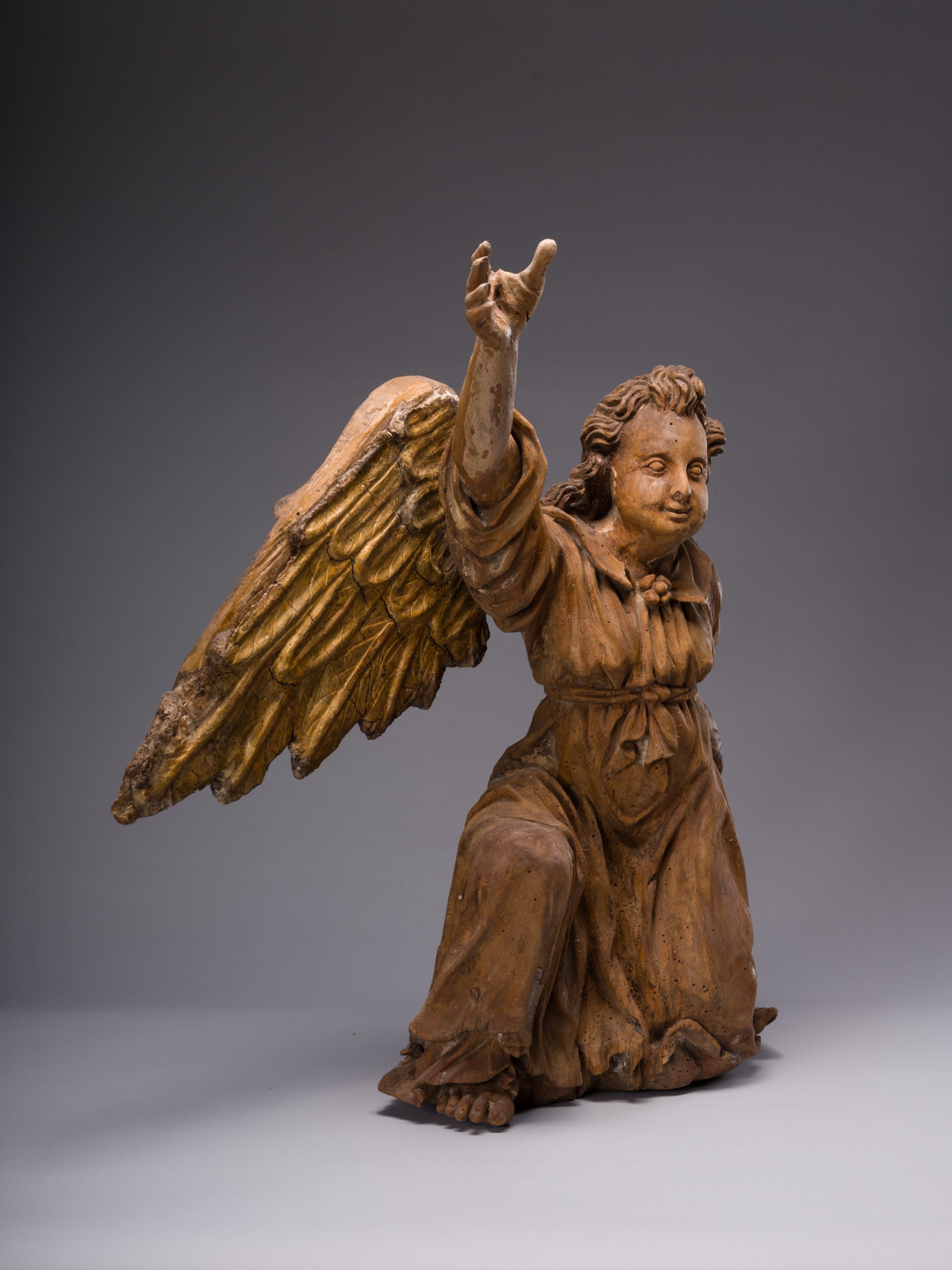
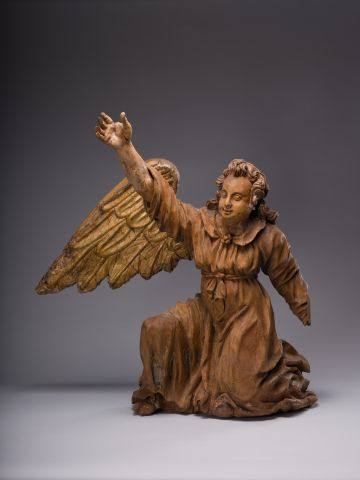
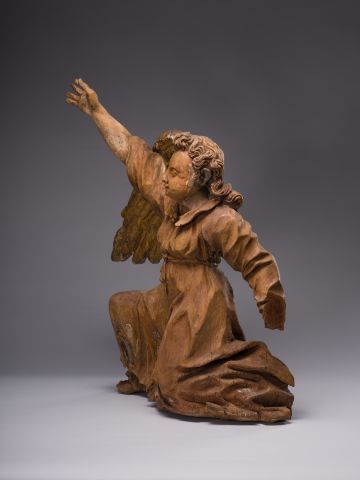
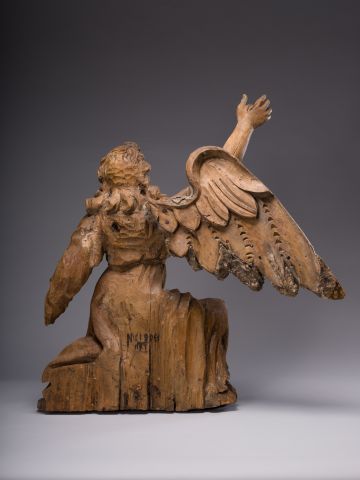
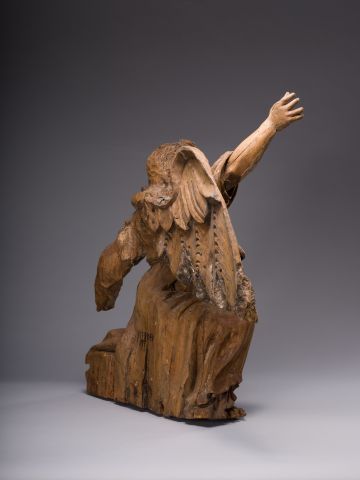
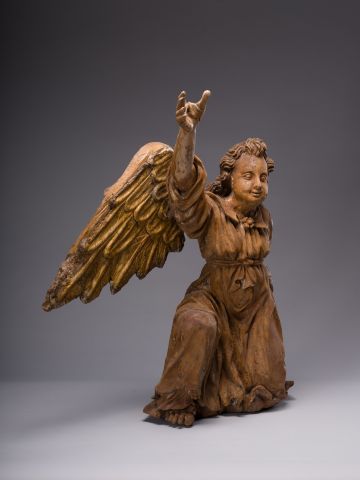
The artwork represents the era of Mannerism with distinct features of Early Baroque, which is characteristic of the works of Johann Pfister. The sculptural image of the angel is presented kneeling, in a dynamic turn and a complex foreshortening. The right hand is raised high aloft in an eloquent, elevated gesture. Such a complex, theatrical posture lends expressiveness and emotional tension to the sculpture. The angel is dressed in a long tunic belted at the waist. Its collar envelops the neck, drawing the viewer's attention to the focal point – the face.
The garments cascade around the legs in complex, dynamic folds. The modelling of the drapery demonstrates a transition from rigid Mannerist creases to more volumetric, fluid, and flexible Baroque forms, creating a rich play of light and shadow. The angel's face is elongated, with rounded cheeks, expressive almond-shaped eyes, a neat nose, and soft lips. His forehead is framed by voluminous, wavy hair gathered into curls characteristic of the author, which emphasise the volume and plastic expressiveness of the form. The facial expression combines prayerful concentration, spiritual elevation, and an ascetic stillness that aligns with the era's religious and philosophical conceptions regarding the incorporeality of heavenly forces.
The sculpture serves as a vivid testament to the high artistic level of Johann Pfister's craftsmanship, in whose work Western European Mannerism acquired an original and expressive resonance within the Ukrainian cultural space.
Legal regulation
Borys Voznytskyi Lviv National Art Gallery