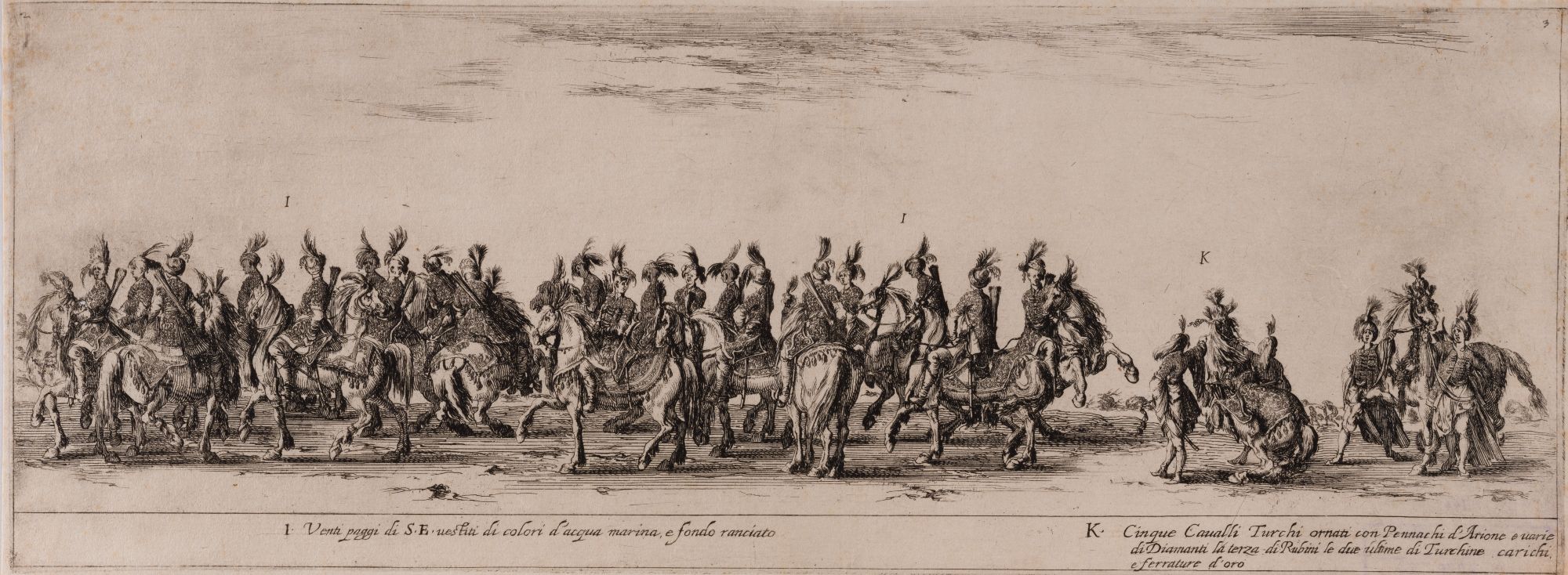
Solemn Entry of Polish Ambassador into Rome in 1633. Plate ІІІ
Stefano della Bella
Basic information
- ID
- Г-IV-852
- Author
- Stefano della Bella
- Name
- Solemn Entry of Polish Ambassador into Rome in 1633. Plate ІІІ
- Country
- Italy
- Technique
- etching
- Material
- paper on cardboard
- Dimensions
- 15.8 x 43 cm (height x width)
Additionally
- Type
- graphic art
- Genre
- history painting
- Provenance
- Received from the Lviv Historical Museum, 1954
Information about author
Object description
This is the third plate of a frieze-panorama consisting of six engravings, marked with the letters "I–K". It continues the composition of the title page and the second plate. The work is dedicated to the magnificent diplomatic procession of Jerzy Ossoliński, Grand Chancellor of the Crown of the Polish-Lithuanian Commonwealth, to Pope Urban VIII in 1633.
On the left, a column of horsemen is depicted. The accompanying inscription in Italian at the bottom reads: "I. Venti paggi di S. E. vestiti di colori d'acqua marina e fondo ranciato" [Twenty pages of His Excellency, dressed in aquamarine colours with an orange lining]. The pages, in magnificent costumes with tall plumes and feathers on their headdresses, ride exquisite horses. The splendour of their attire was intended to emphasise the high status of the Polish delegation.
On the right, a separate group of elite steeds moves, led by handlers. The text at the bottom reads: "K. Cinque Cavalli Turchi ornati con Pennacchi d'Airone e varie di Diamanti la terza di Rubini le due ultime di Turchine carichi e ferrature d'oro" [K. Five Turkish horses, adorned with heron feather plumes and various diamonds, the third with rubies, the last two with turquoise, with full tack and gold horseshoes]. Plate III features only two horses, while the last three are depicted on the subsequent fourth plate.
Inscriptions
On the cardboard mount lower left, inventory number: "№ Г-IV-852/ ЛДКГ".
Legal regulation
Borys Voznytskyi Lviv National Art Gallery