Solemn Entry of Polish Ambassador into Rome in 1633. Plate ІV
Stefano della Bella
Basic information
- ID
- Г-IV-853
- Author
- Stefano della Bella
- Name
- Solemn Entry of Polish Ambassador into Rome in 1633. Plate ІV
- Country
- Italy
- Technique
- etching
- Material
- paper on cardboard
- Dimensions
- 15.8 x 43 cm (height x width)
Additionally
- Type
- graphic art
- Genre
- history painting
- Provenance
- Received from the Lviv Historical Museum, 1954
Information about author
Object description
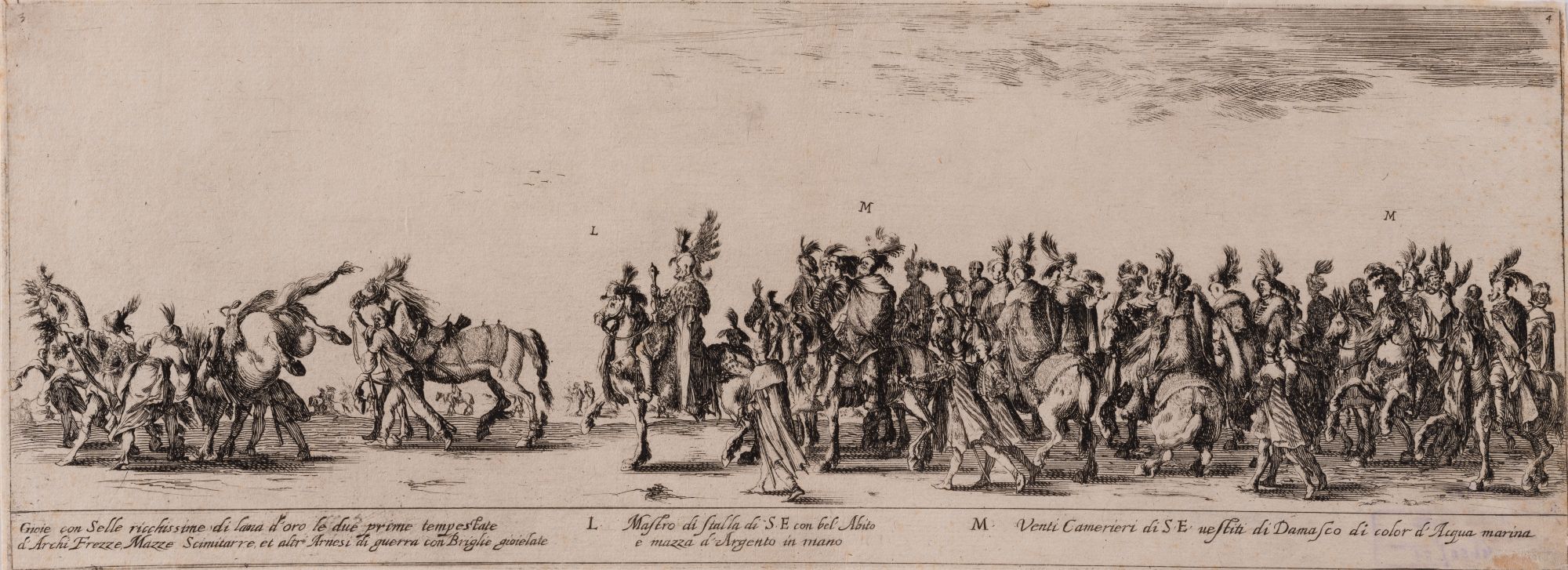
This is the fourth plate of a frieze-panorama consisting of six engravings, marked with the letters "L–M". It continues the composition of the third plate. The work is dedicated to the magnificent diplomatic procession of Jerzy Ossoliński, Grand Chancellor of the Crown of the Polish-Linux-Commonwealth, to Pope Urban VIII in 1633.
On the left, two rearing horses and one calm horse are depicted, held by handlers. Their decorations and tack are described in the inscription under the letter "K" on plate III. On plate IV, the inscription continues with the following words: "Gioie con Selle ricchissime di lana d'oro le due prime tempestate d'Archi Frezze, Mazze Scimitarre, et altri Arnesi di guerra con Briglie gioielate" [Jewels with extremely rich saddles of gold brocade, the first two adorned with bows, arrows, maces, scimitars, and other military equipment, with bridles decorated with precious stones].
In the centre, the figure of the stablemaster (master of the horse) is depicted in formal attire with a mace in his hand (letter "L"). The inscription at the bottom reads: "L. Mastro di Stalla di S.E. con bel ’Аbito e mazza d'Argento in mano" [L. Stablemaster of His Excellency in a fine garment and with a silver mace in his hand].
On the right are 20 mounted and foot attendants of the ambassador (letter "M"). Below is the inscription: "M. Venti Camerieri di S.E. vestiti di Damasco di color d'Acqua marina" [M. Twenty chamberlains of His Excellency, dressed in damask fabric of an aquamarine colour].
Inscriptions
On the cardboard mount lower left, inventory number: "№ Г-IV-853/ ЛДКГ".
Legal regulation
Borys Voznytskyi Lviv National Art Gallery