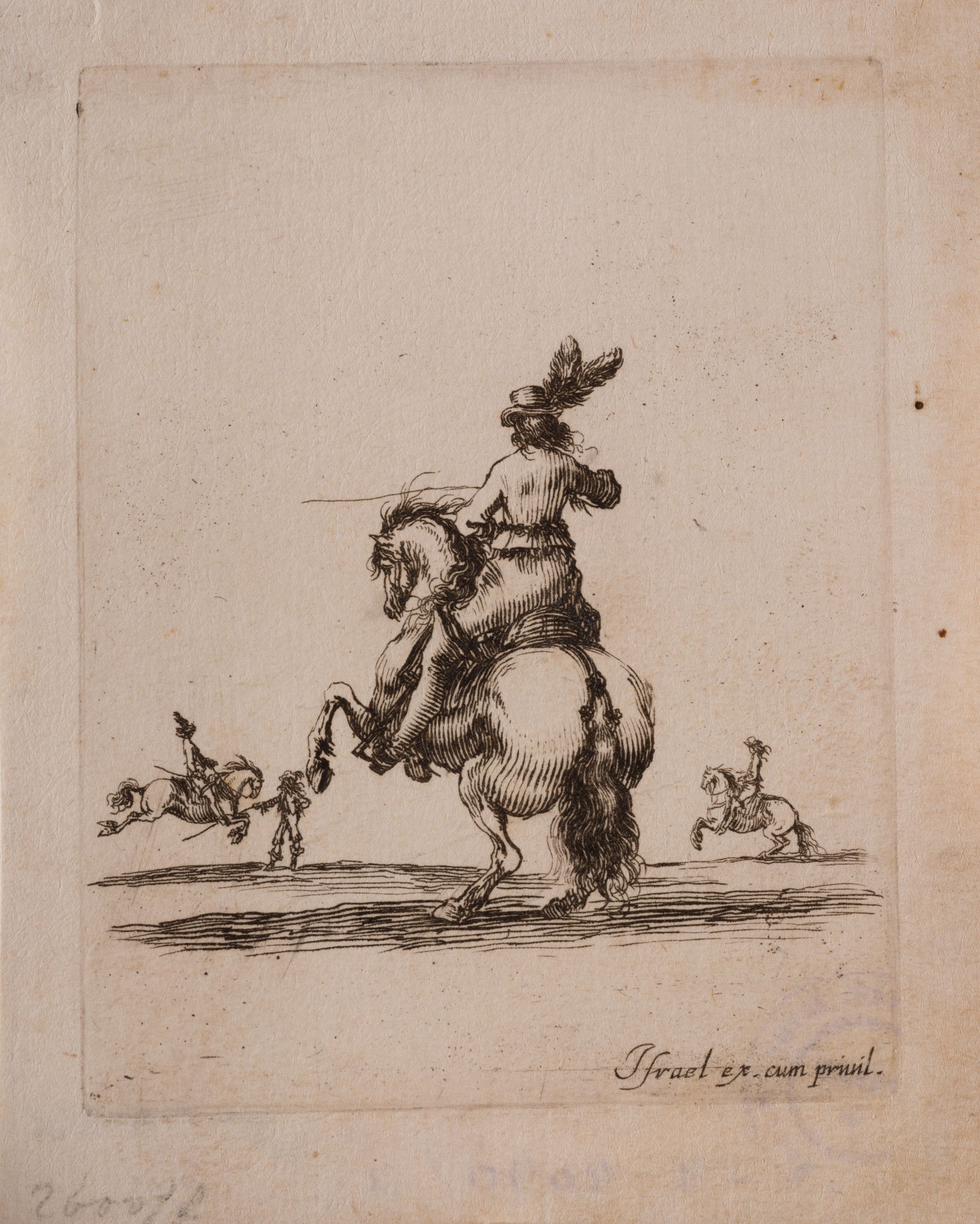
Cavalier Seen from Behind. From the "Various Cavalry Exercises" Suite
Stefano della Bella
Basic information
- ID
- Г-IV-868
- Author
- Stefano della Bella
- Name
- Cavalier Seen from Behind. From the "Various Cavalry Exercises" Suite
- Country
- France
- Technique
- etching
- Material
- paper on cardboard
- Dimensions
- 8.6 x 6.6 cm (height x width)
Additionally
- Type
- graphic art
- Genre
- battle painting
- Provenance
- Received from the Lviv Historical Museum, 1954
Information about author
Object description
In the centre of the composition, a rider on a horse is depicted, turned with his back to the viewer – "Cavalier vu par derrière". The rider, performing an element of High School equitation, coaxes the horse to rear. The man is dressed in 17th-century military or secular attire and a hat adorned with plush feathers. In the background, other figures of horsemen performing manoeuvres in an open area are sketchily indicated with fine lines. This creates a sense of space and scale.
The work is distinguished by a masterly lightness of lines, detailed rendering of the horse's muscles, the texture of its tail and mane, as well as a delicate depiction of chiaroscuro.
The print was published in Paris by the artist's close friend and regular publisher, Israël Henriet. This is evidenced by a characteristic engraved inscription in the bottom right corner of the impression below the image: "Israel ex. / cum privil.", which is an abbreviation for "Israël Henriet excudit cum privilegio" – [Published by Israel Henriet with privilege]. The inscription also indicates that the publisher held a royal privilege for the printing and distribution of Stefano della Bella's works in Paris.
Similar prints are held in the collection of the Metropolitan Museum of Art (New York) and other major graphic collections.
Inscriptions
Engraved bottom right below the image is the name of the suite's publisher: "Israel ex. cum privil". Inscribed in pencil on the bottom left of the sheet is the former number: "2700/5". Inscribed in pencil on the mounting board on the left is the gallery's current inventory number: "№ Г-IV-868/ ЛДКГ".
Legal regulation
Borys Voznytskyi Lviv National Art Gallery