Crucifixion
unknown
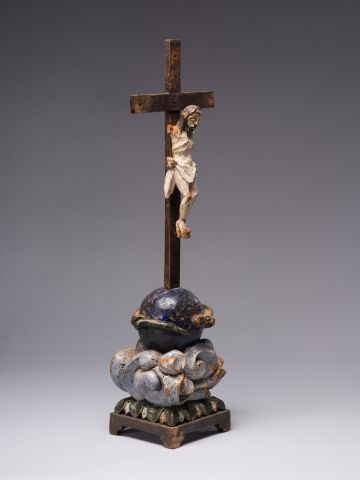
Basic information
- ID
- Ж-5583
- Author
- unknown
- Name
- Crucifixion
- Date of creation
- 18th c.
- Country
- Ukraine
- Technique
- carving polychromy
- Material
- wood
- Dimensions
- 49 x 12 x 12 cm (height x width x depth)
Additionally
- Type
- sculpture
- Genre
- religious
- Plot
- Crucifixion
- Provenance
- Expedition in 1981
- Exposition
- Olesko Castle
Information about author
Object description
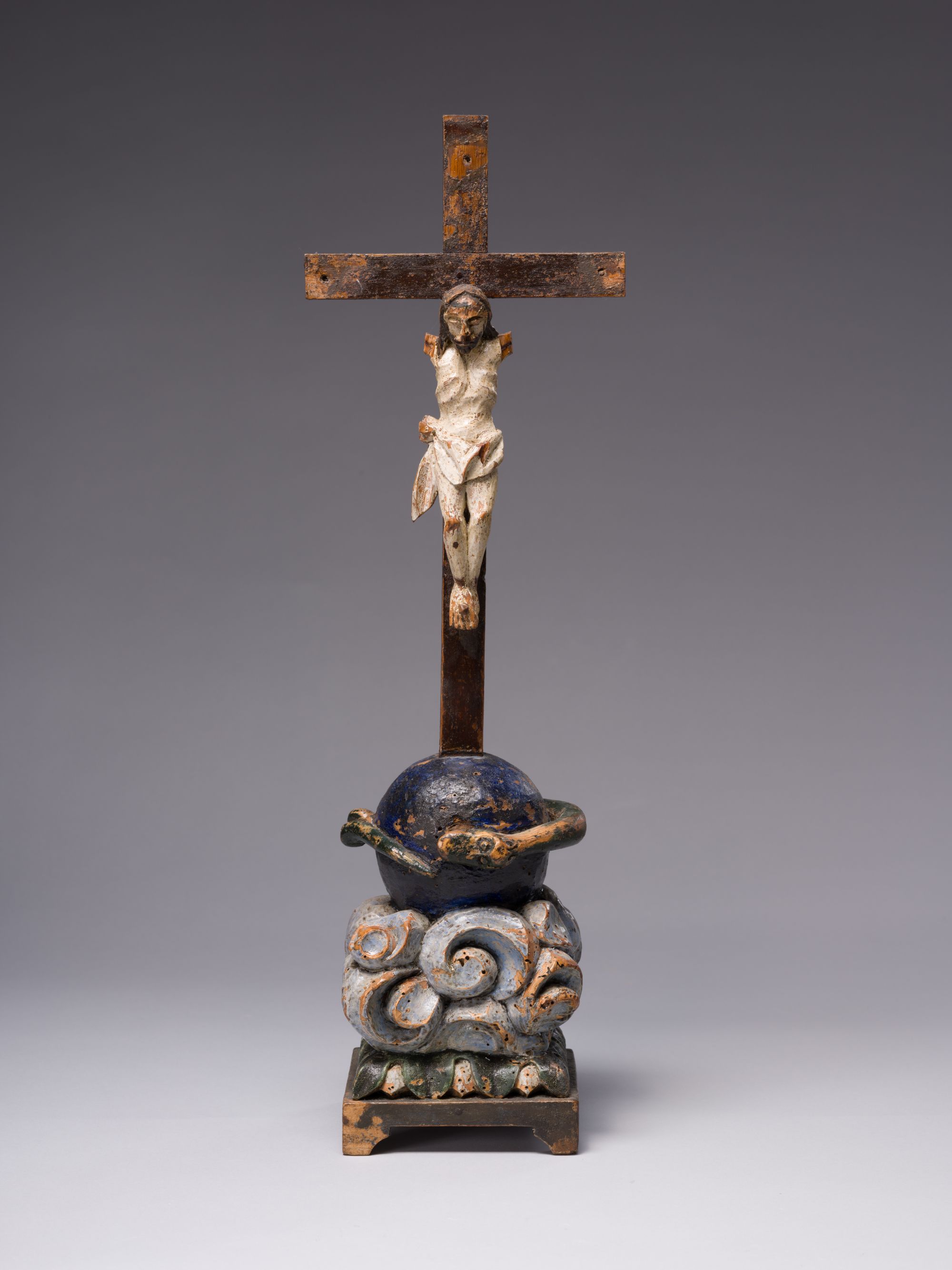
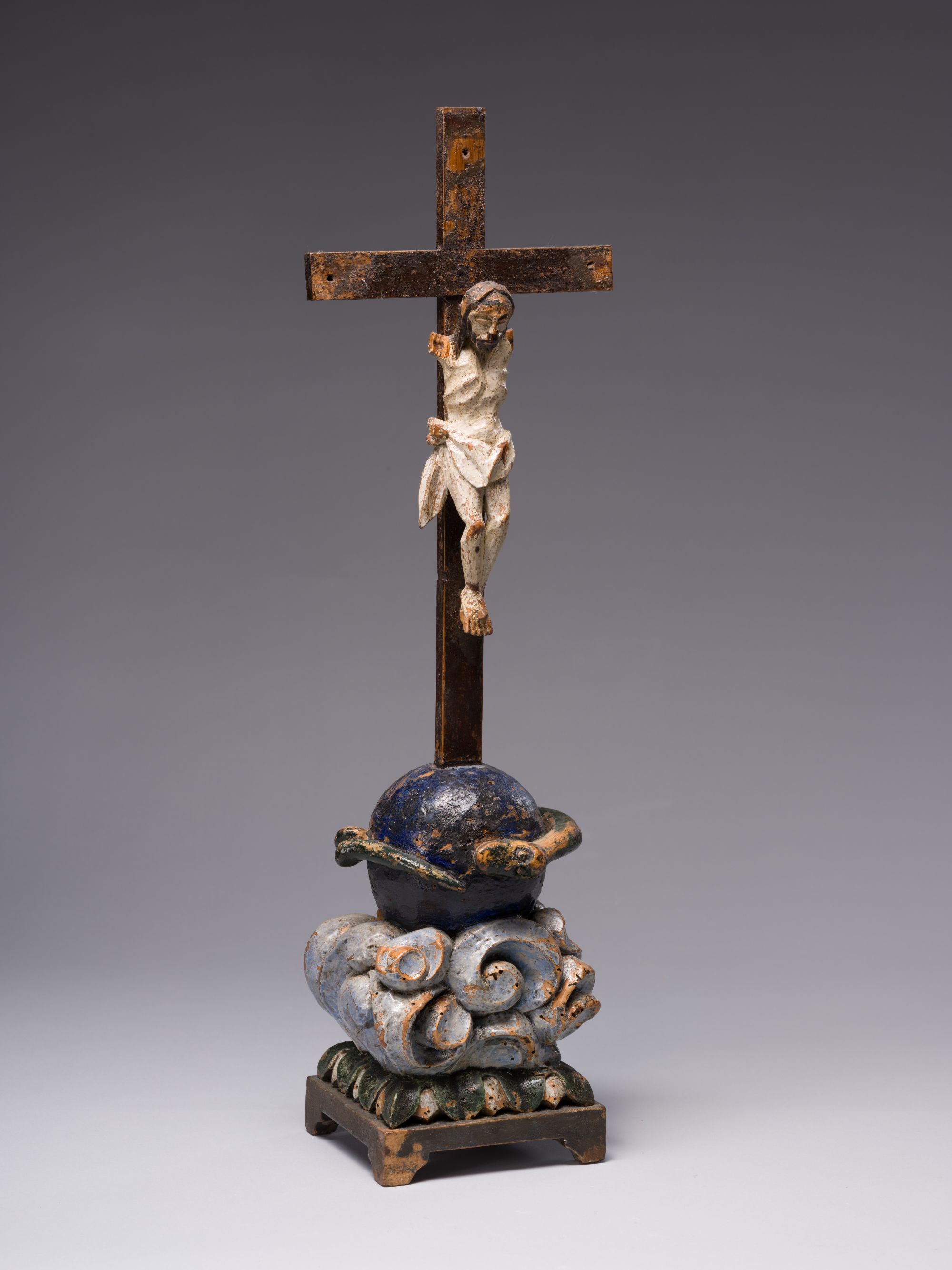
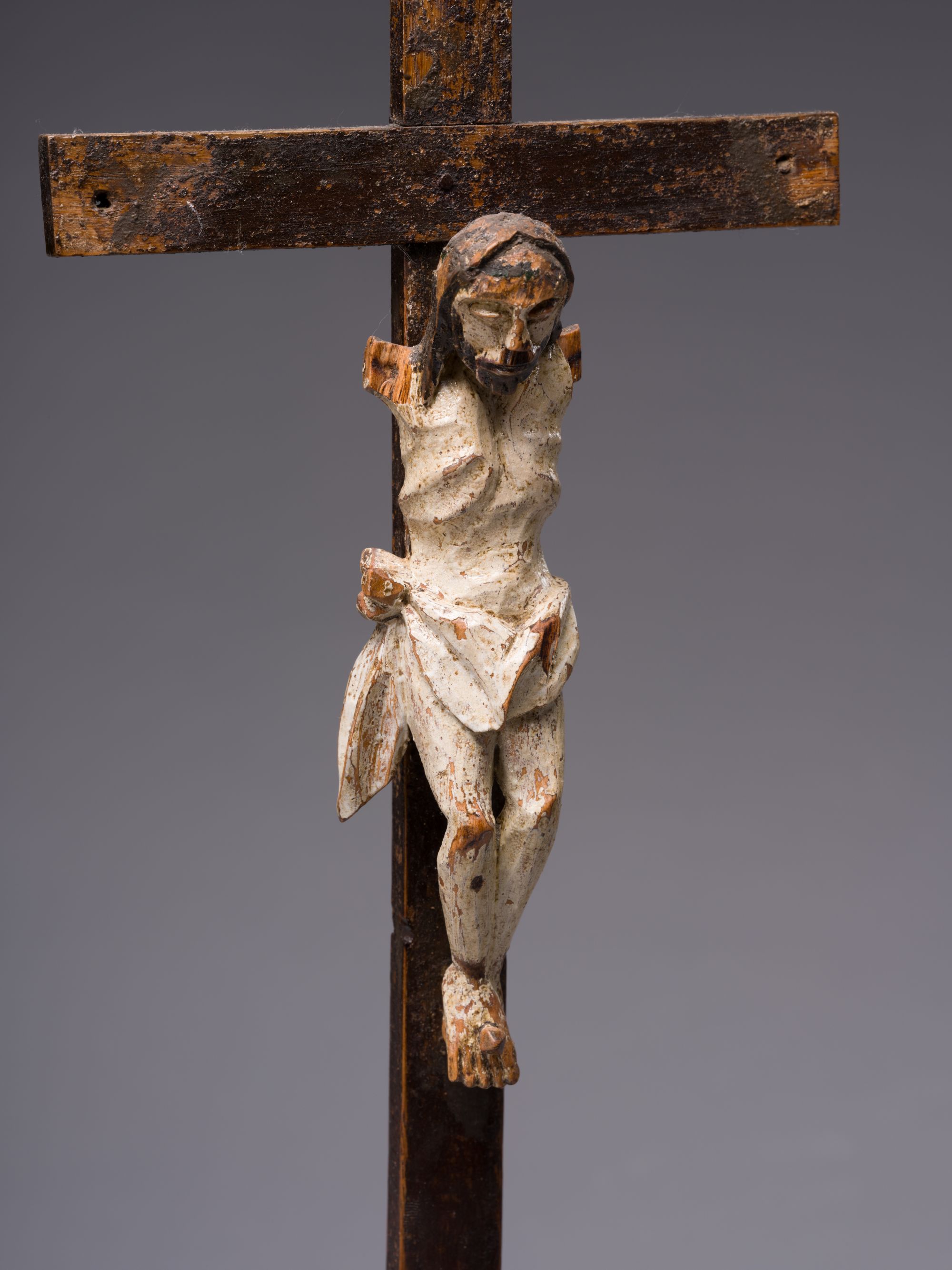
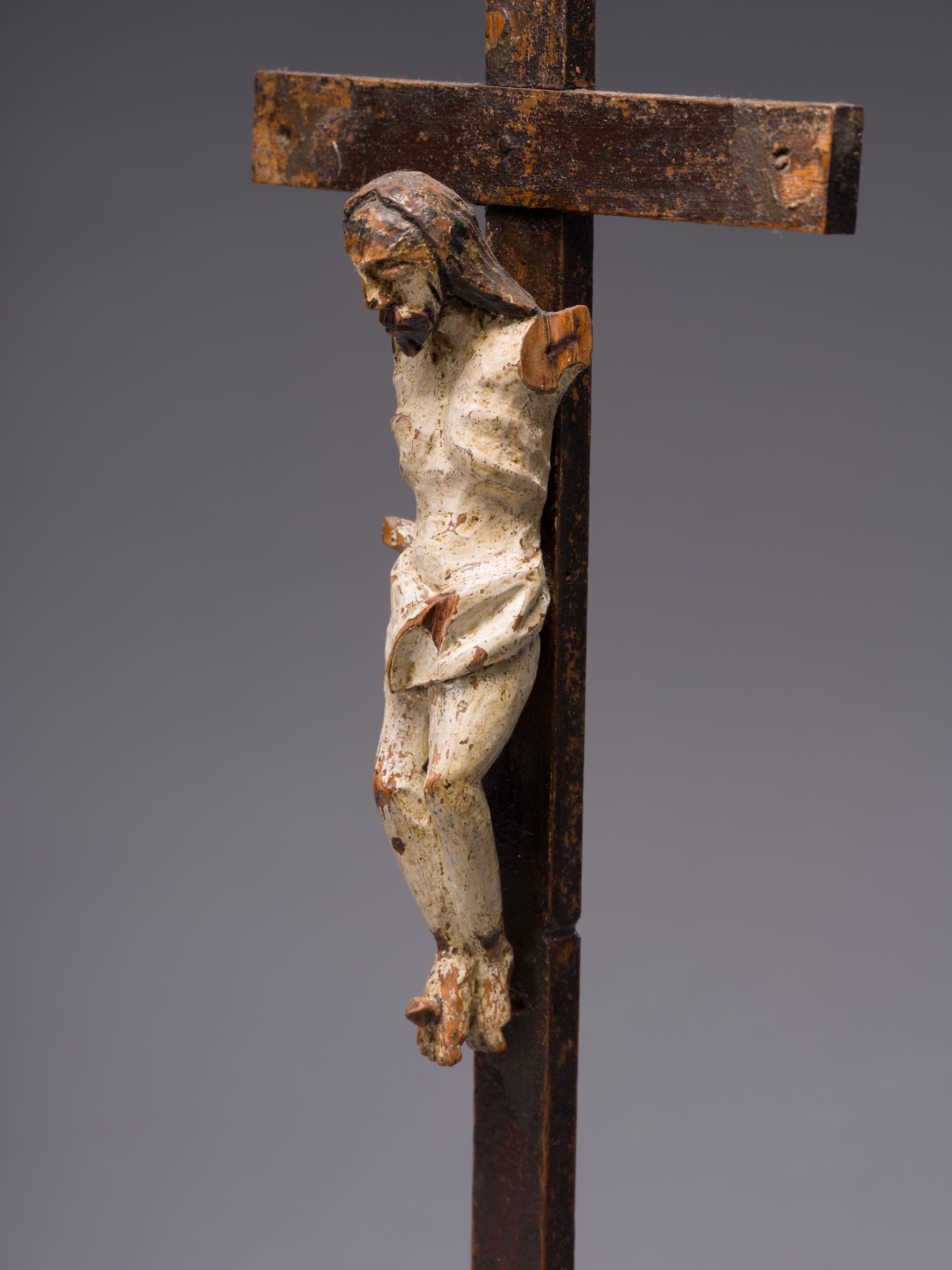
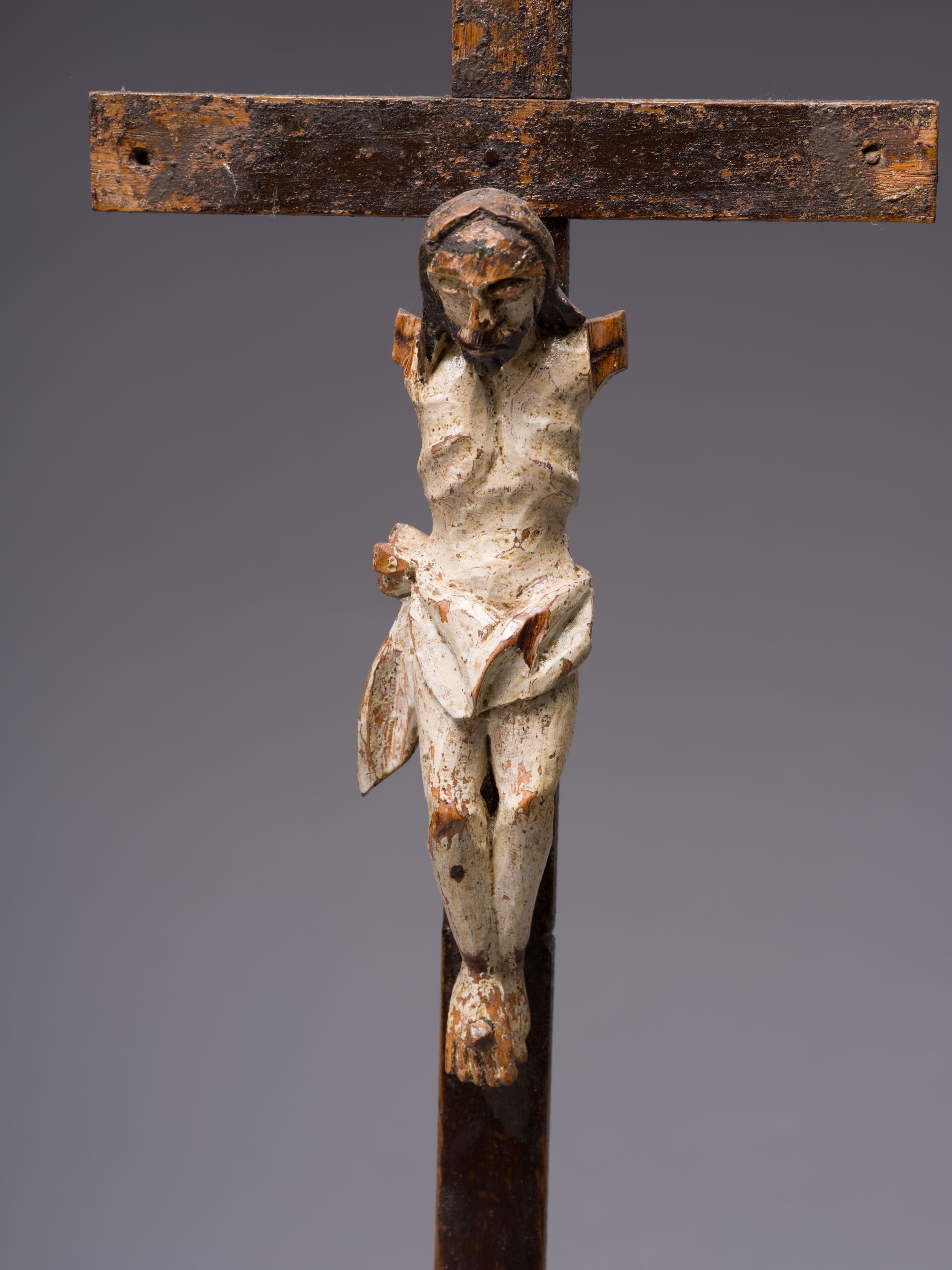
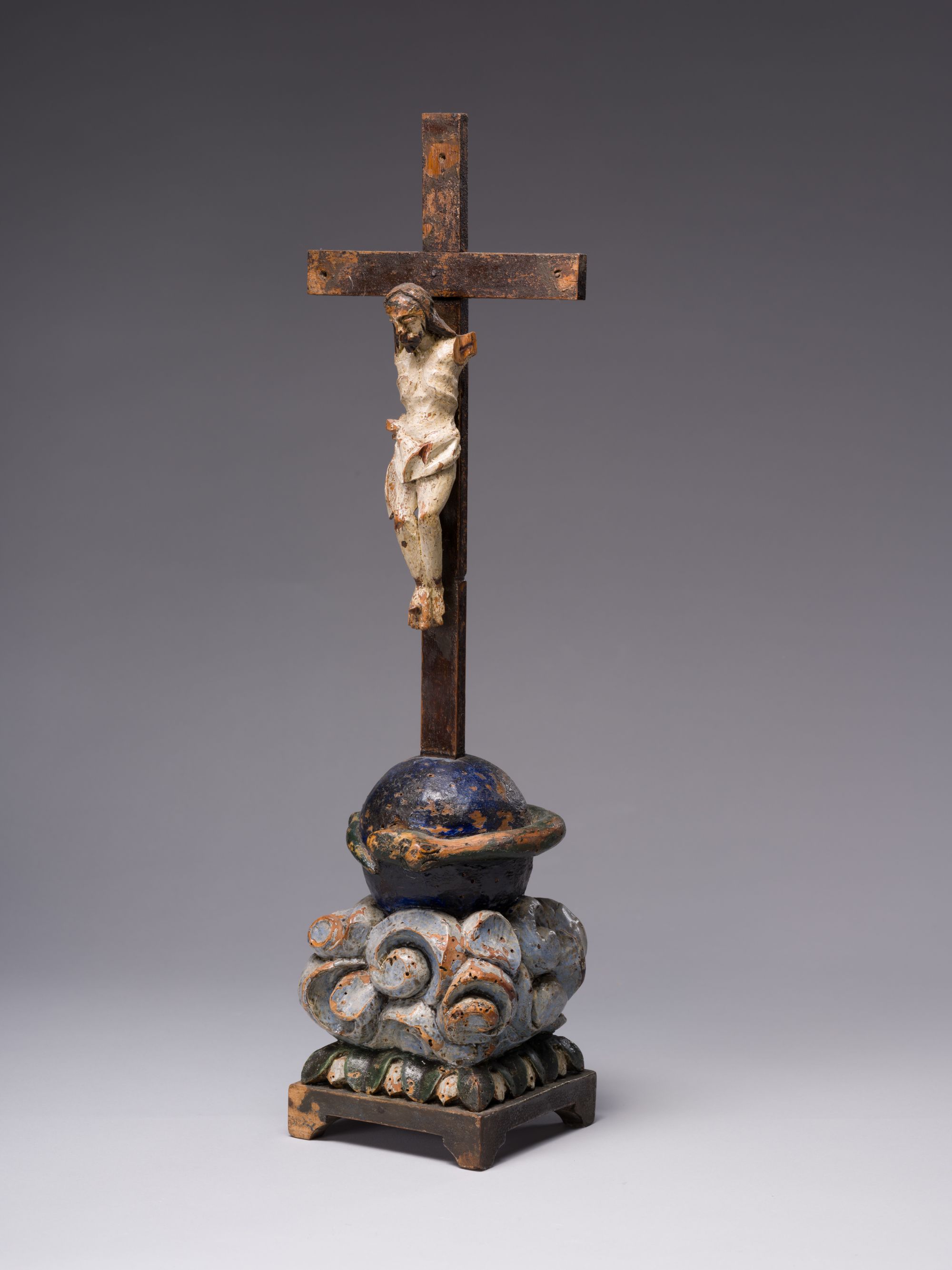
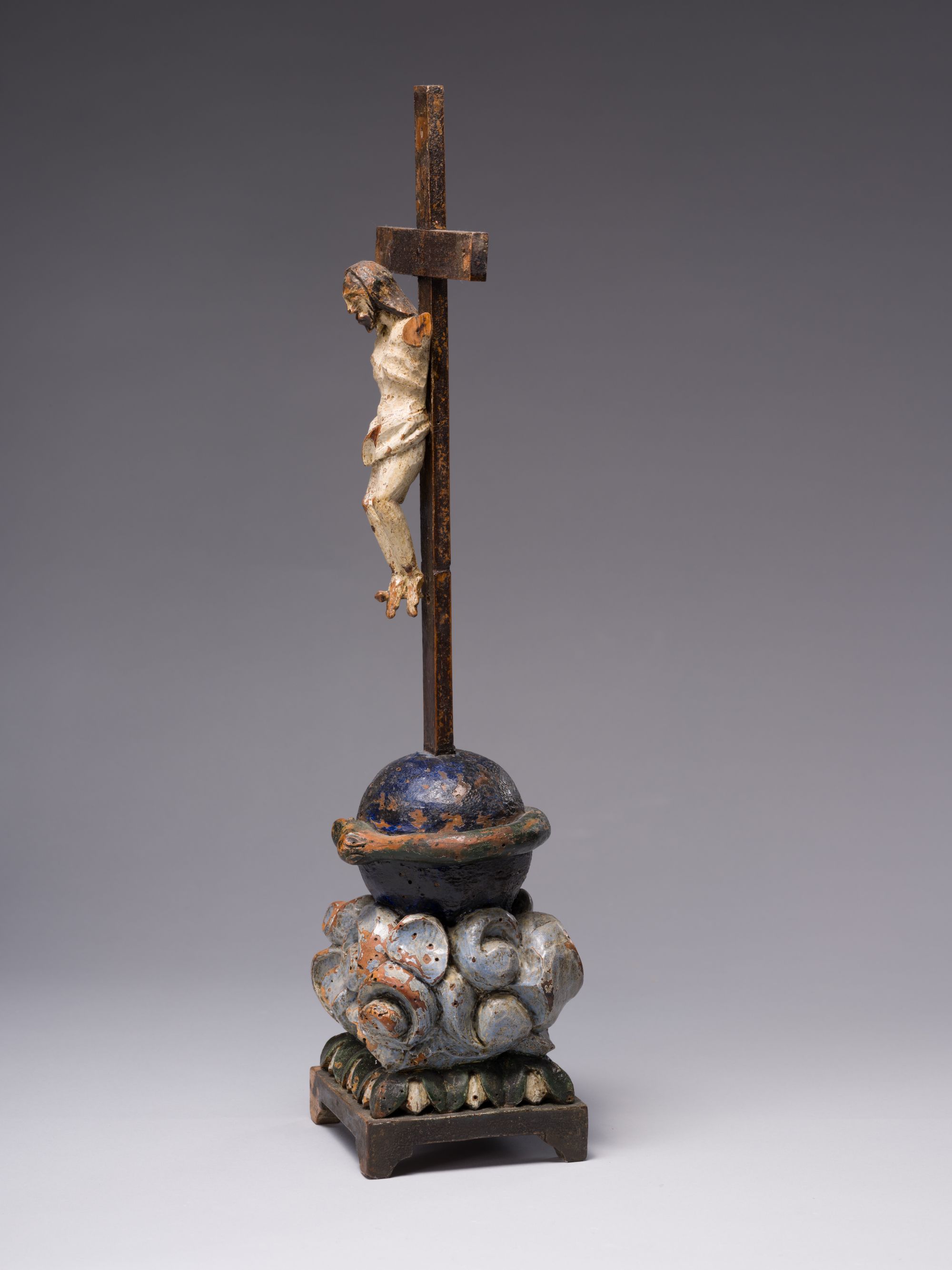
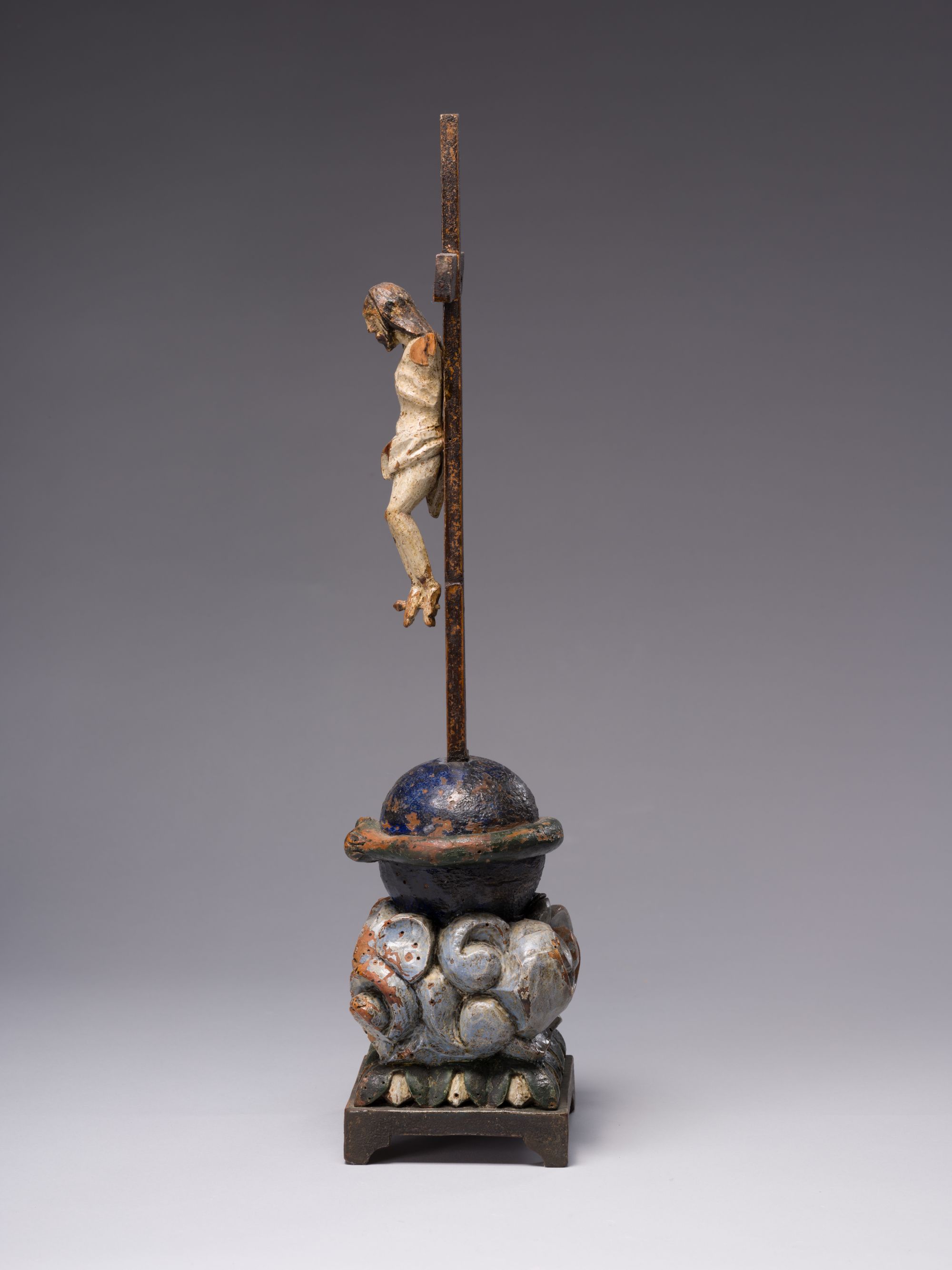
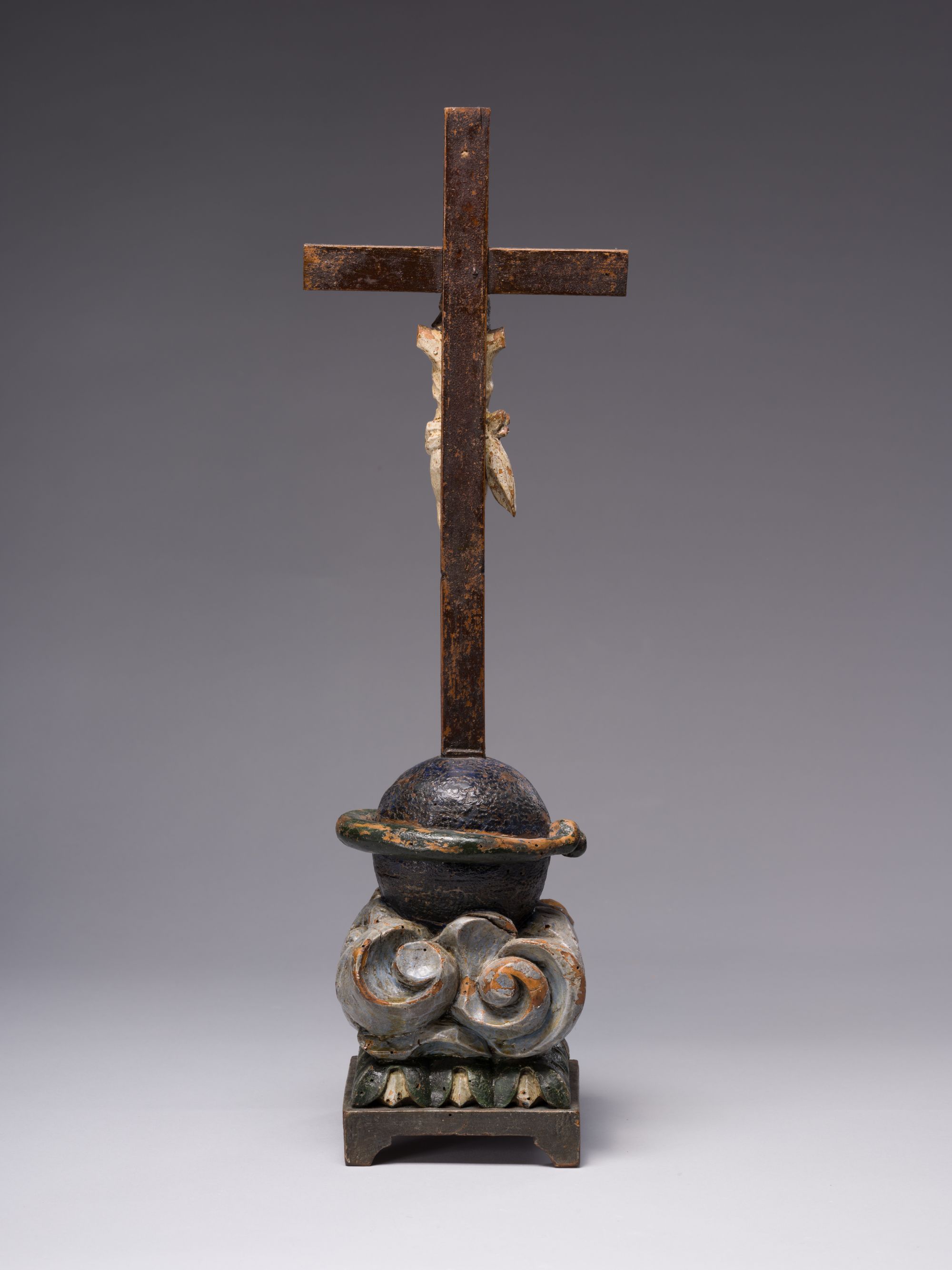
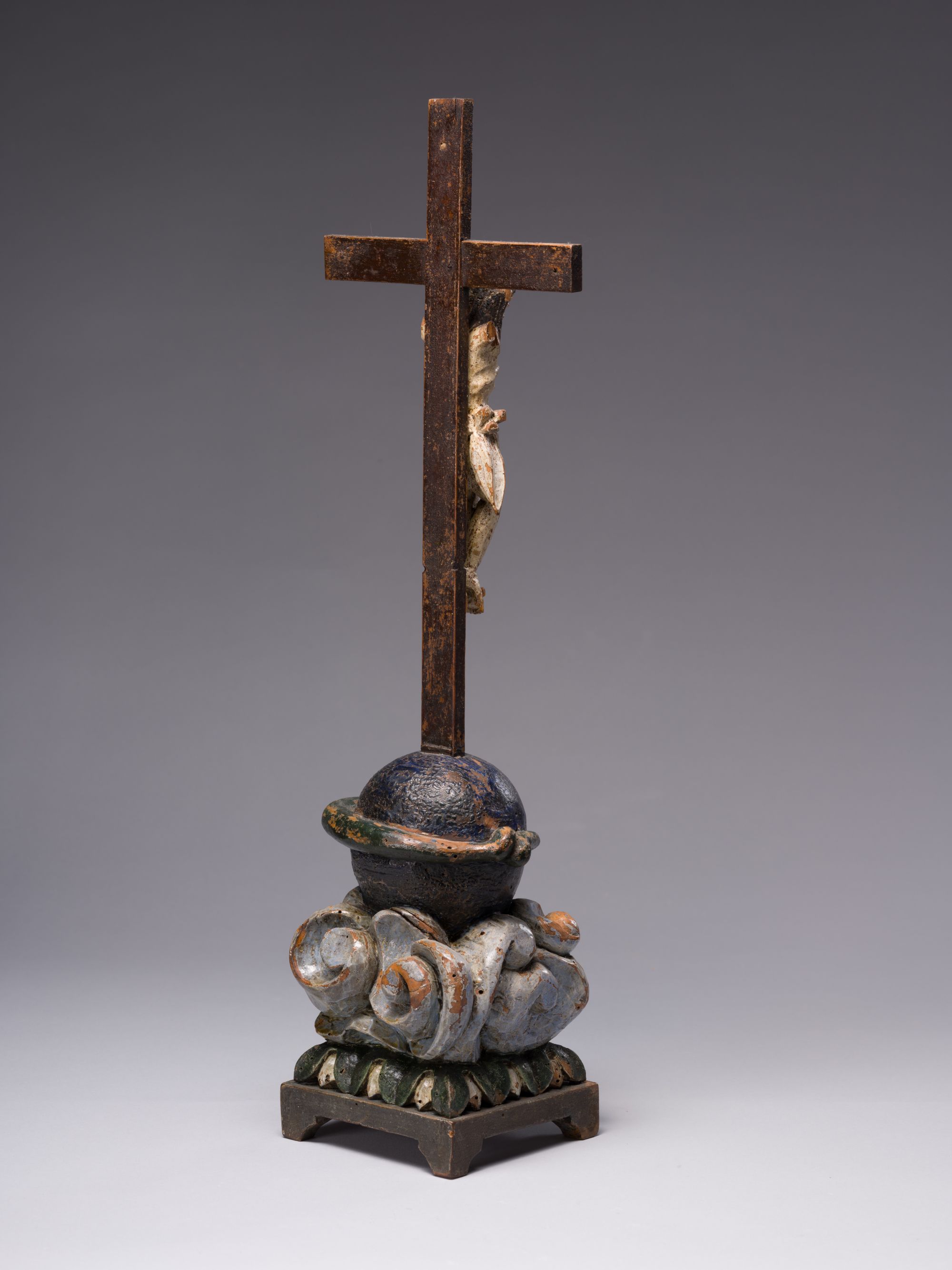
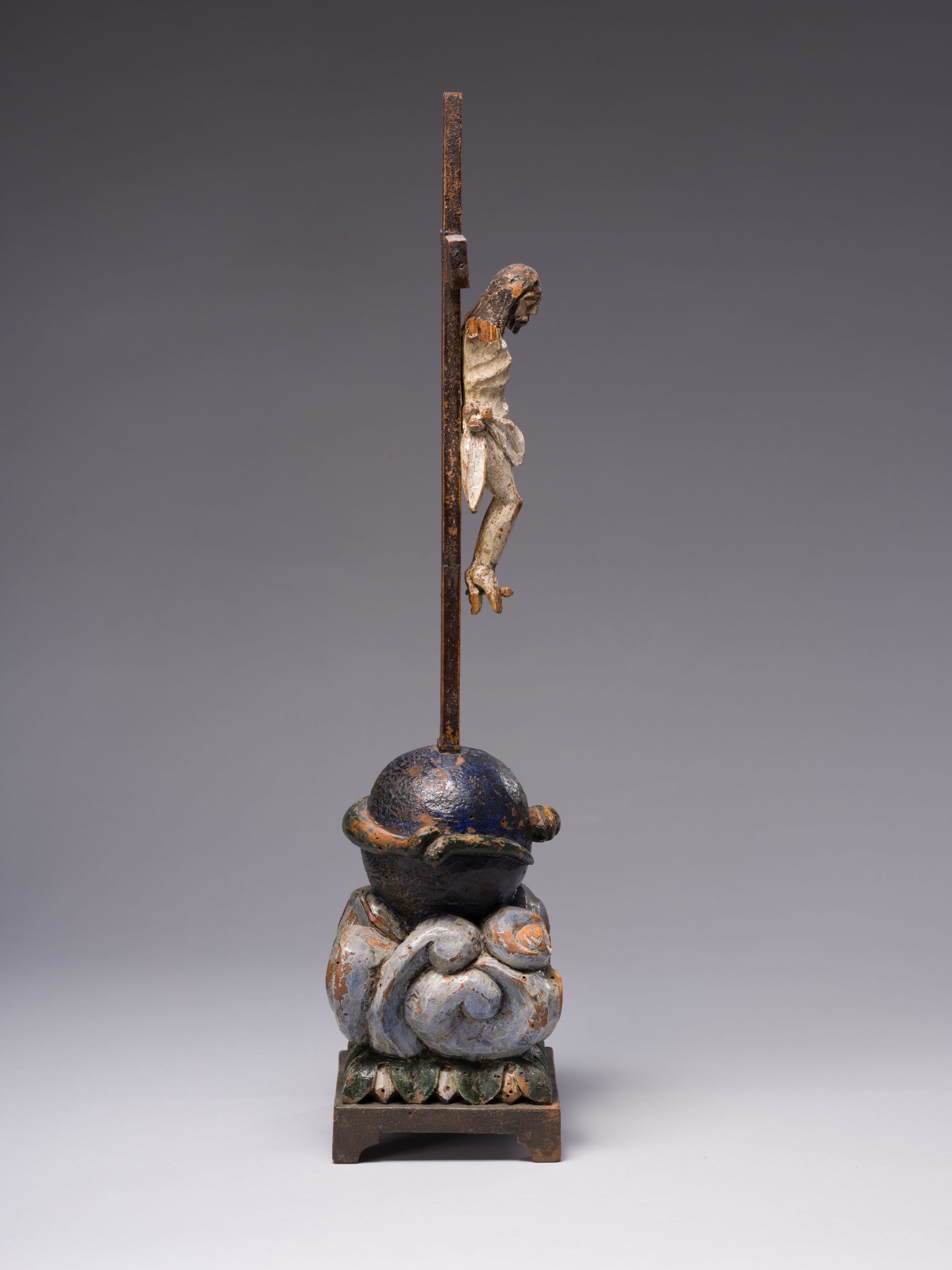
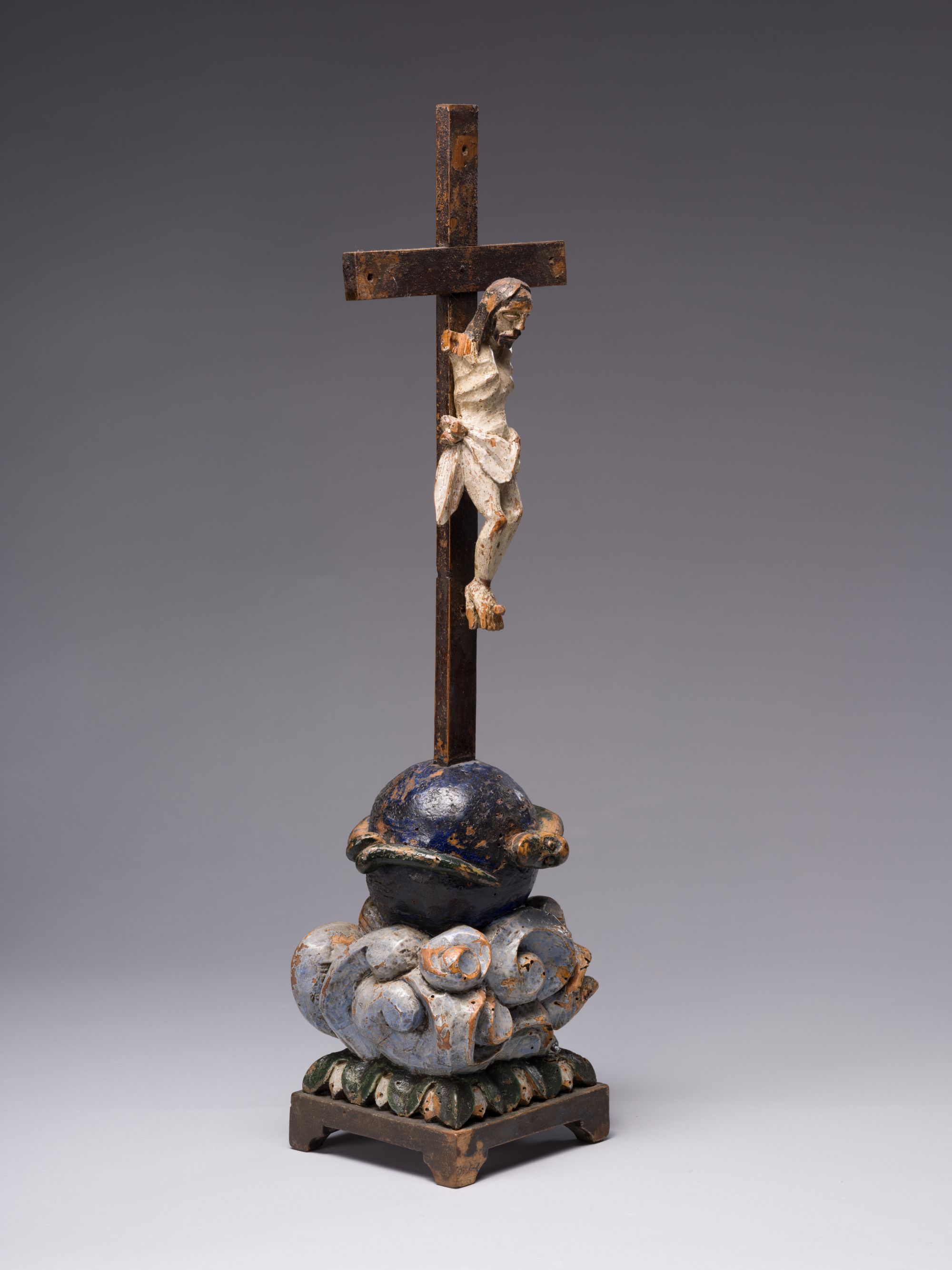
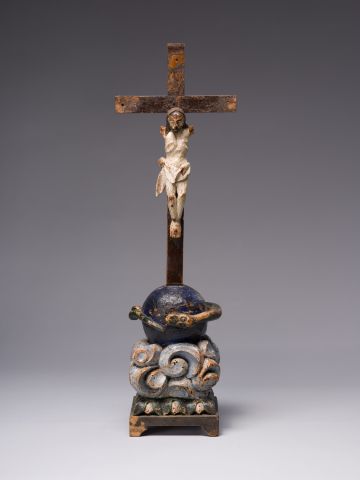
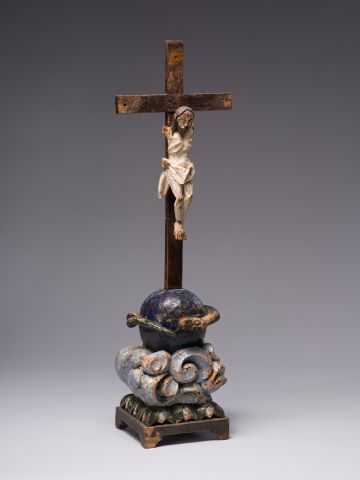
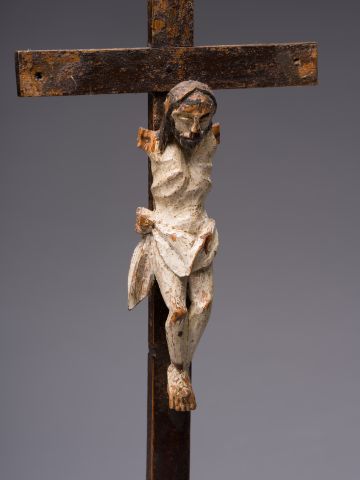
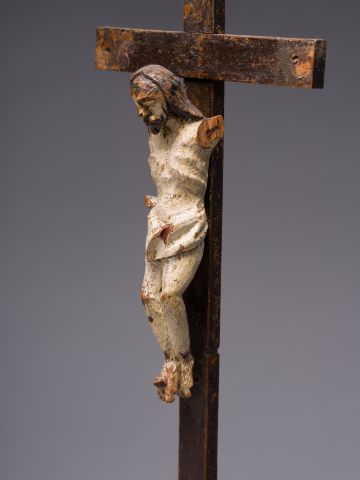
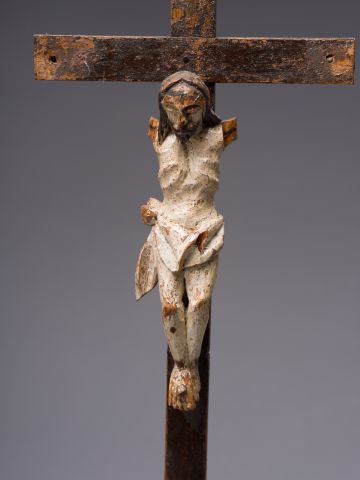
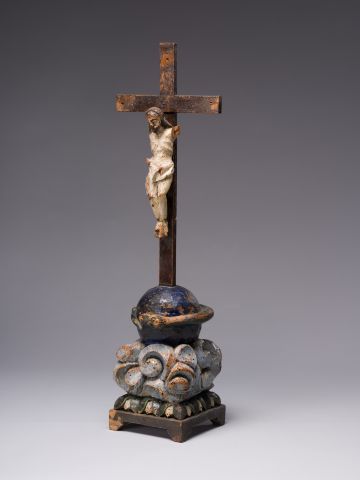
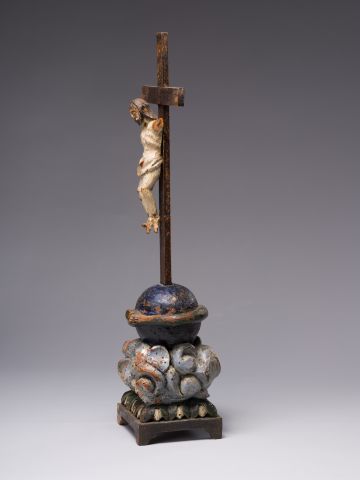
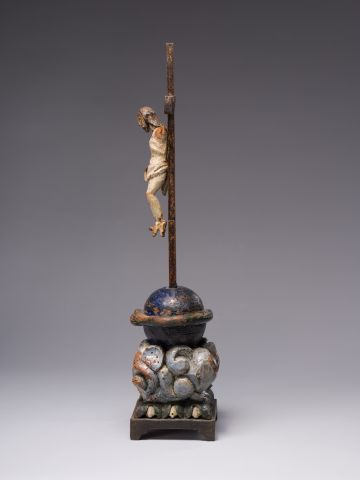
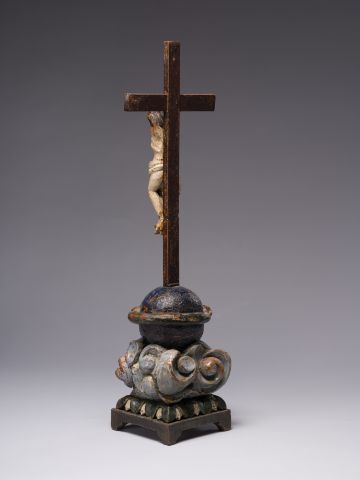
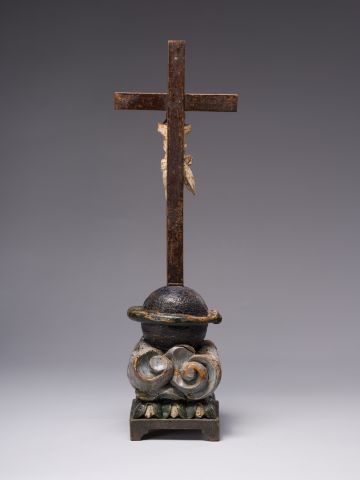
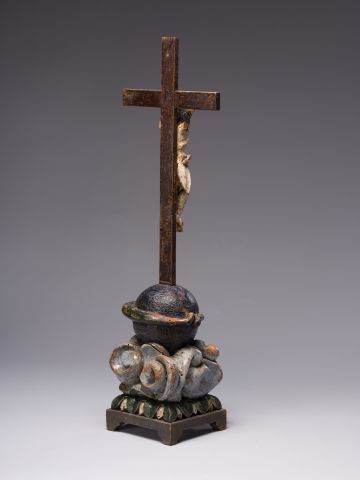
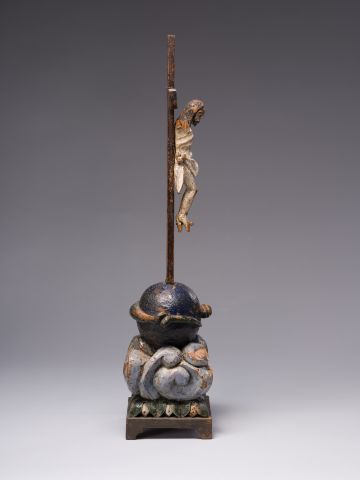
The Crucifix is mounted on a massive wooden decorative base. The sacred composition combines sculptural plastic arts, carving, and polychrome surface treatment. The artwork bears a distinct character of folk religious art. The sculptural depiction of the Crucifixion serves as the compositional centre. The frontal figure of Christ is somewhat squat; following Western iconography, the legs are bent at the knees and fastened with a single nail. The Saviour's head is inclined towards his right shoulder; the face and body are rendered in a generalised manner, without any striving for detailed anatomical accuracy. A short loincloth, tied in a knot, drapes around the hips. The drapery is modelled with folds that form local planes with sharp, ribbed edges, creating a rhythmic play of light and shadow. The facial expression and the nature of the plastic form imbue the image with a focused, sorrowful tone.
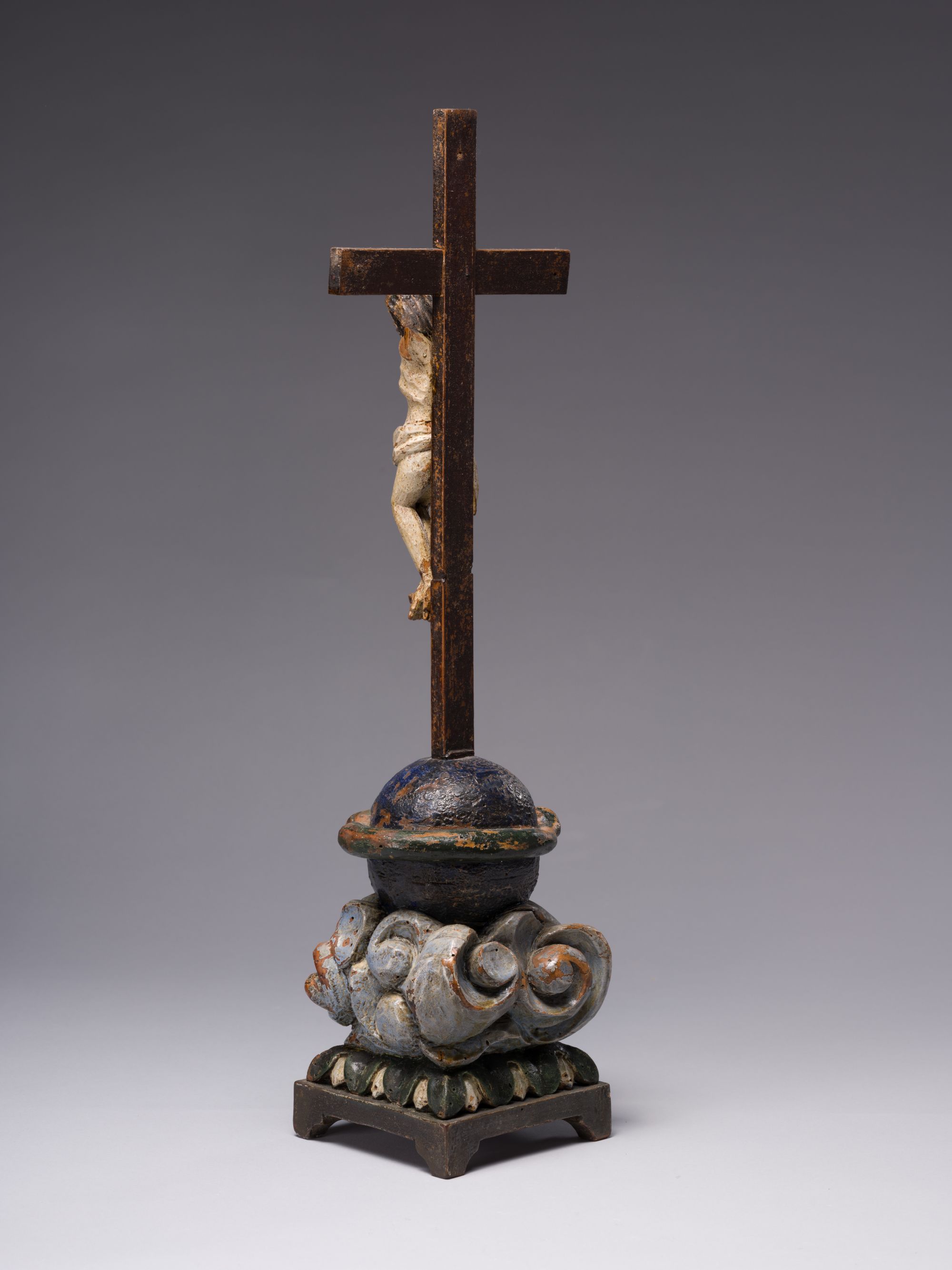
The cross to which the Saviour is nailed has a somewhat crude form, its dark-brown palette contrasting with the fair figure of Christ. The lower decorative part of the composition deserves special attention. Atop stylised clouds, formed from voluminous scrolls and rounded plastic elements, rests a dark-blue sphere with a serpent coiled around it. The sphere creates a transitional link from the vertical cross to the monumental figured stand, the ornamental plastic execution of which is distinguished by asymmetry and abstraction.
The colour scheme of the artwork is built upon a combination of dark-brown, blue, and grey-blue shades. The contrast between the light-toned body of the Saviour and the dark cross reinforces the semantic dominant of the composition. The artistic solution of the work is grounded in the synthesis of Christian symbolism and folk plastic thinking. The sacred image is not separated from its material and ornamental environment – the cross, the figure of the Saviour, and the decorative base form a unified vertical ensemble. The combination of the sorrowful image of the Crucifixion with the decorative, almost fantastical plastic treatment of the base creates a unique emotional tension between the asceticism of the Christian symbol and the decorative richness of folk art.
Legal regulation
Borys Voznytskyi Lviv National Art Gallery