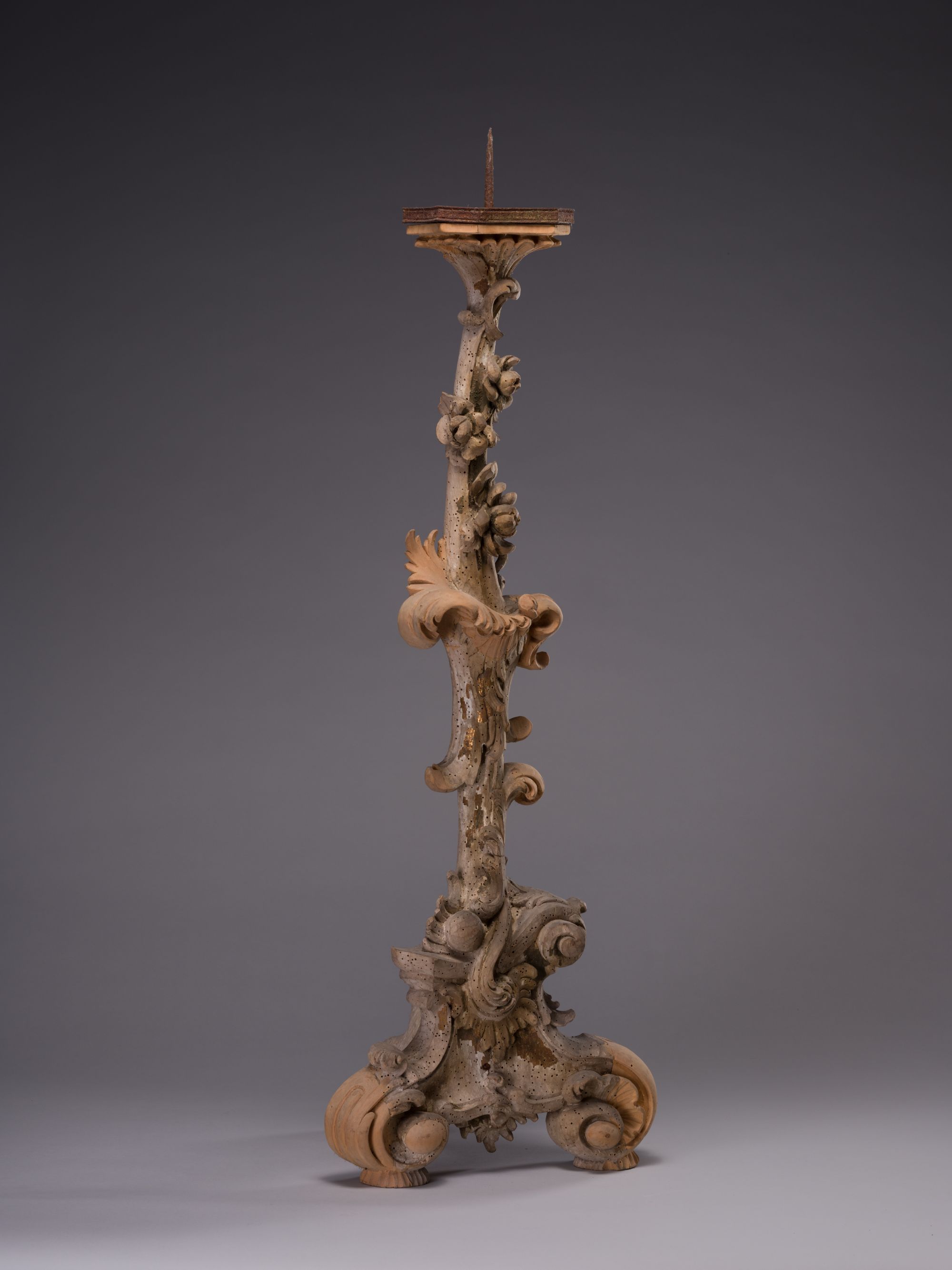
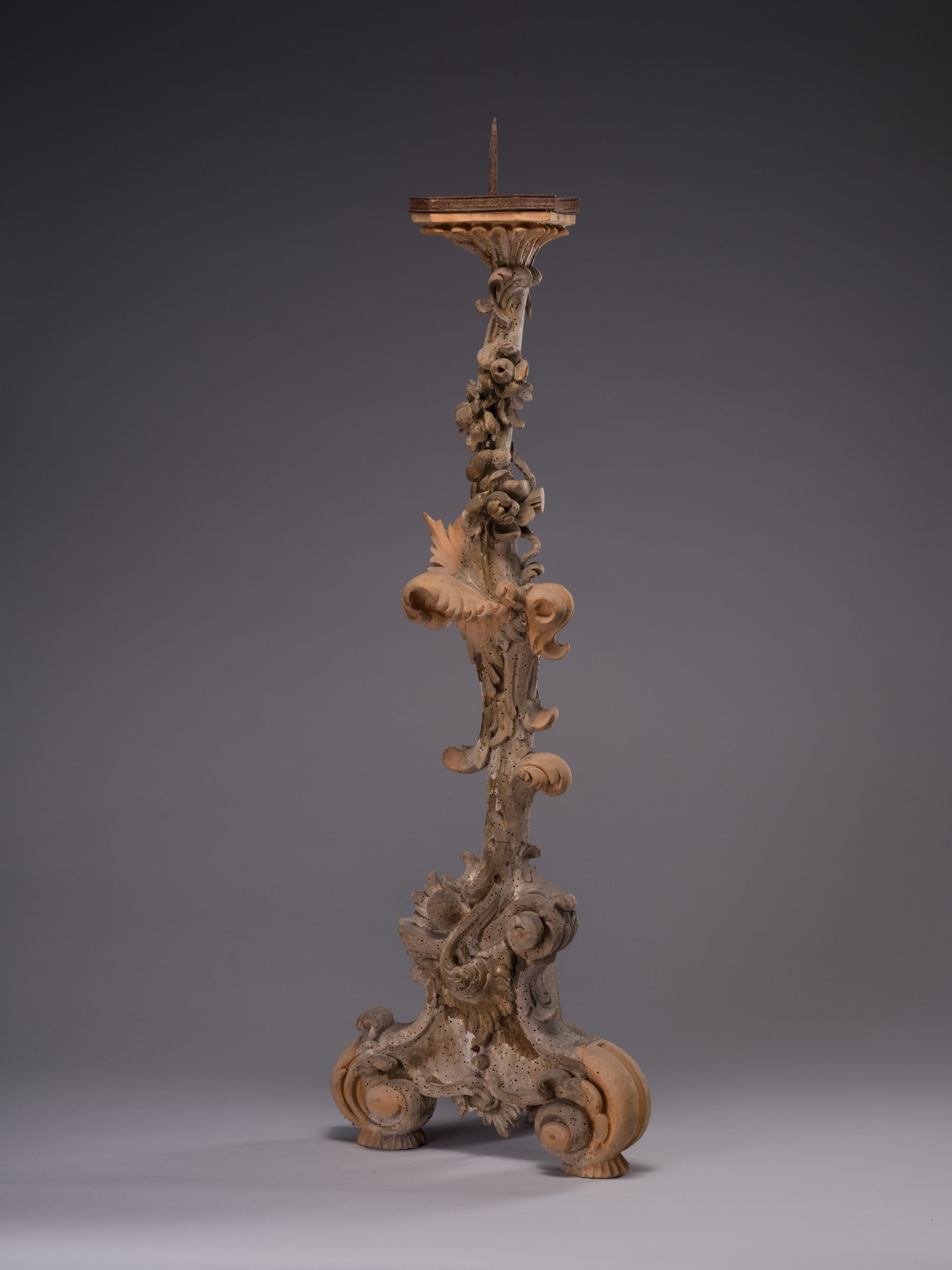
Pricket Candlestick
unknown
Basic information
Additionally
- Type
- decorative and applied arts
- Genre
- religious
- Provenance
- Mykulyntsi village, Terebovlia district, Ternopil region
- Exposition
- Olesko Castle
Information about author
Object description
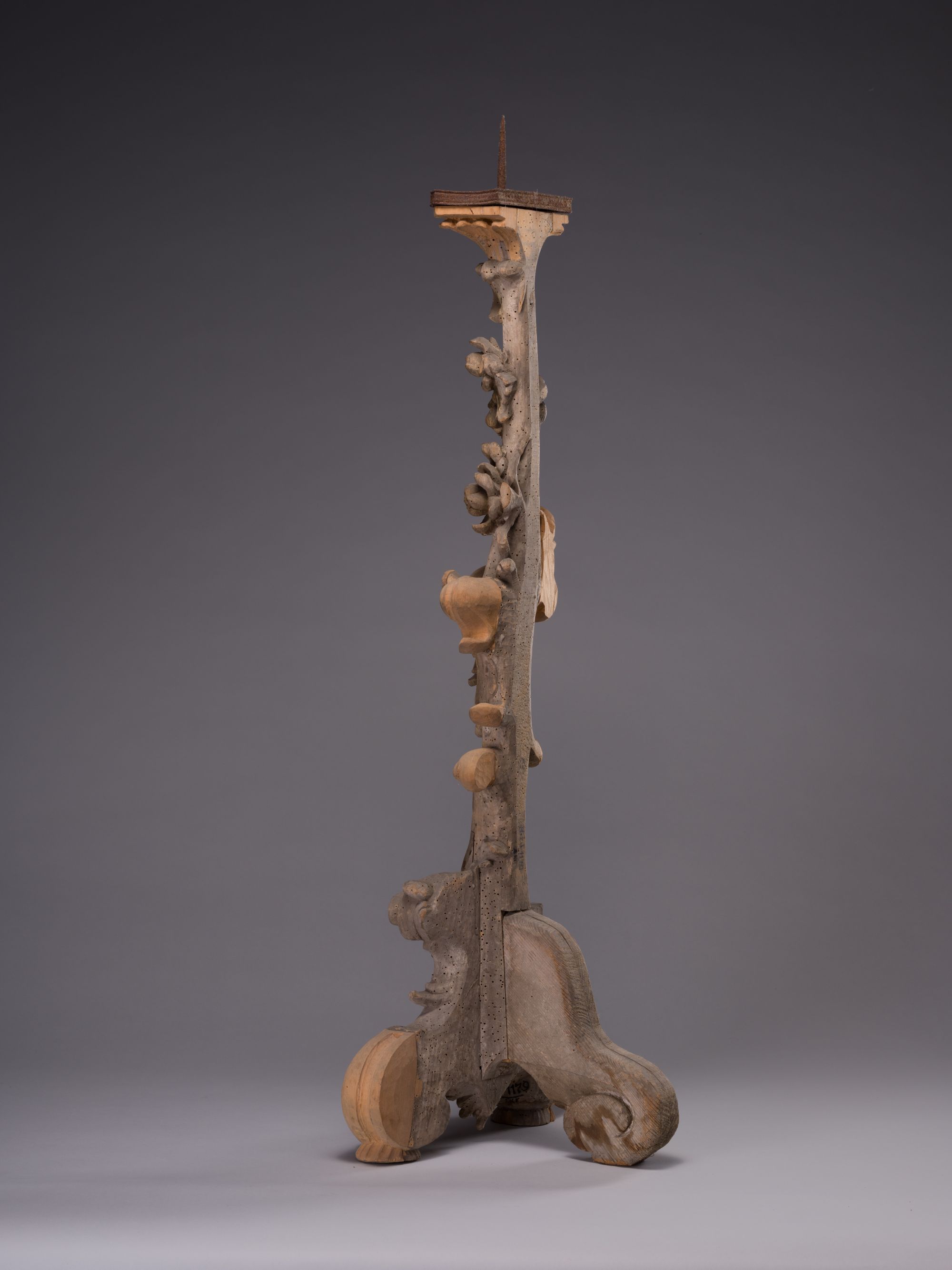
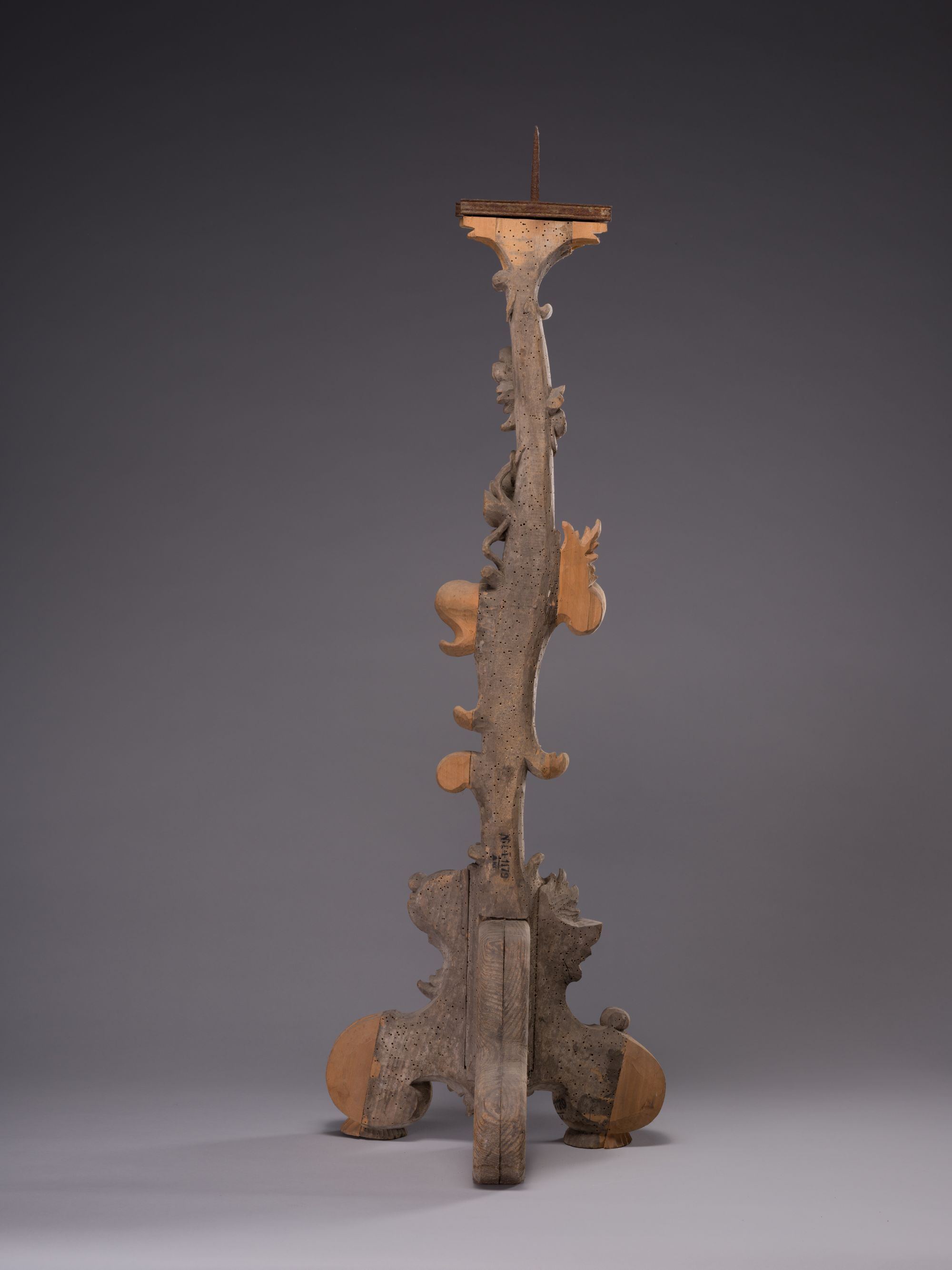
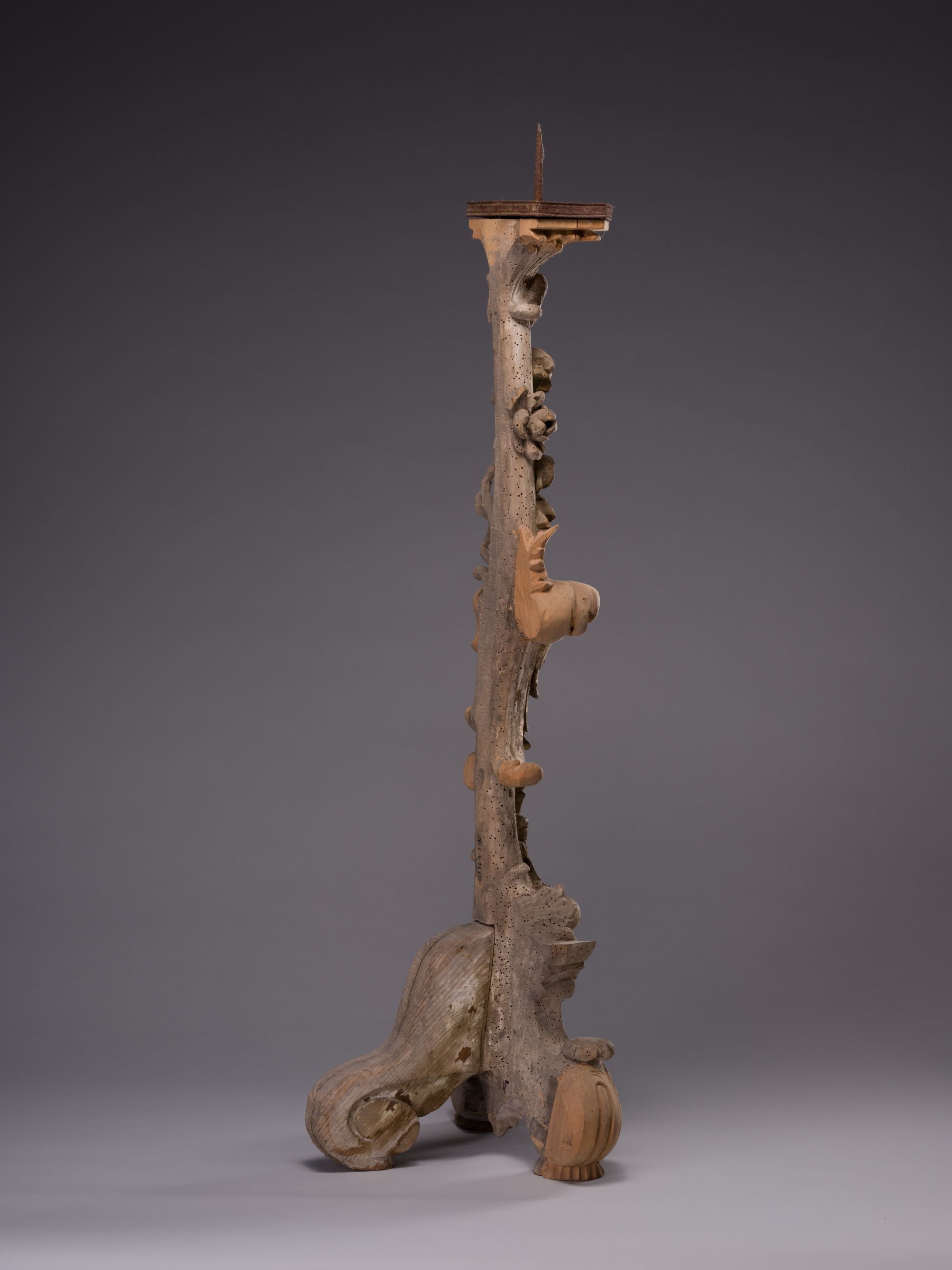
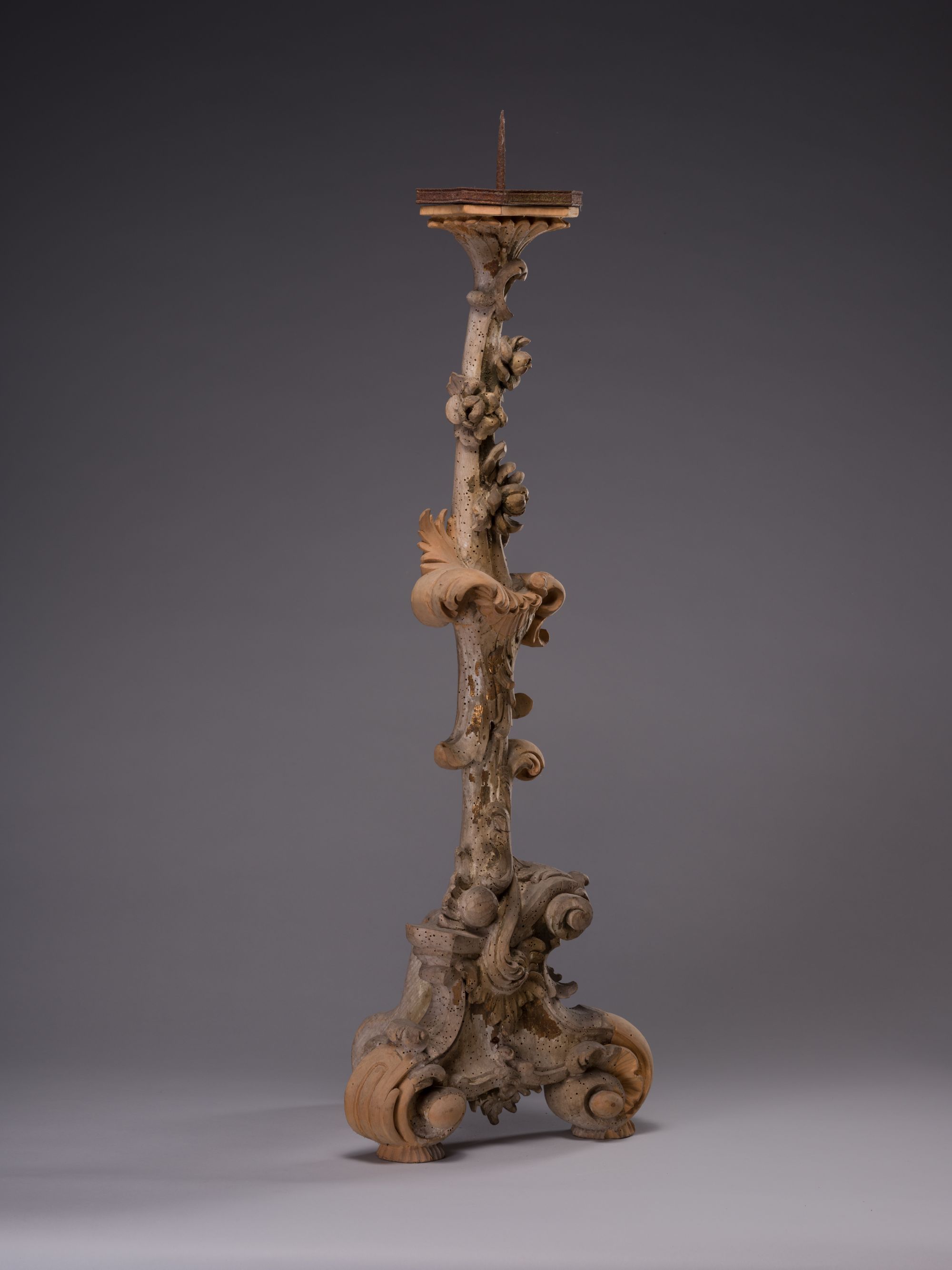
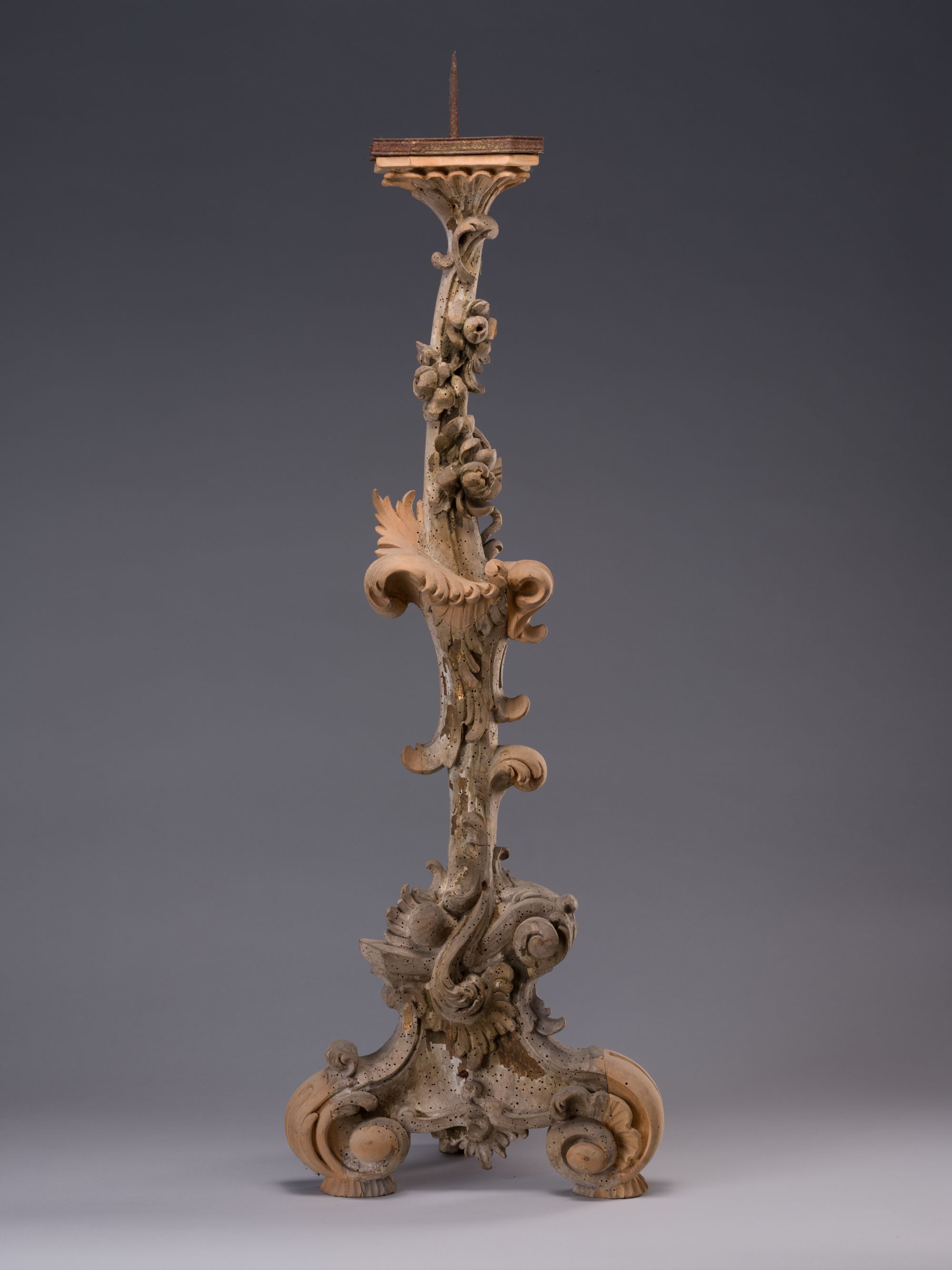
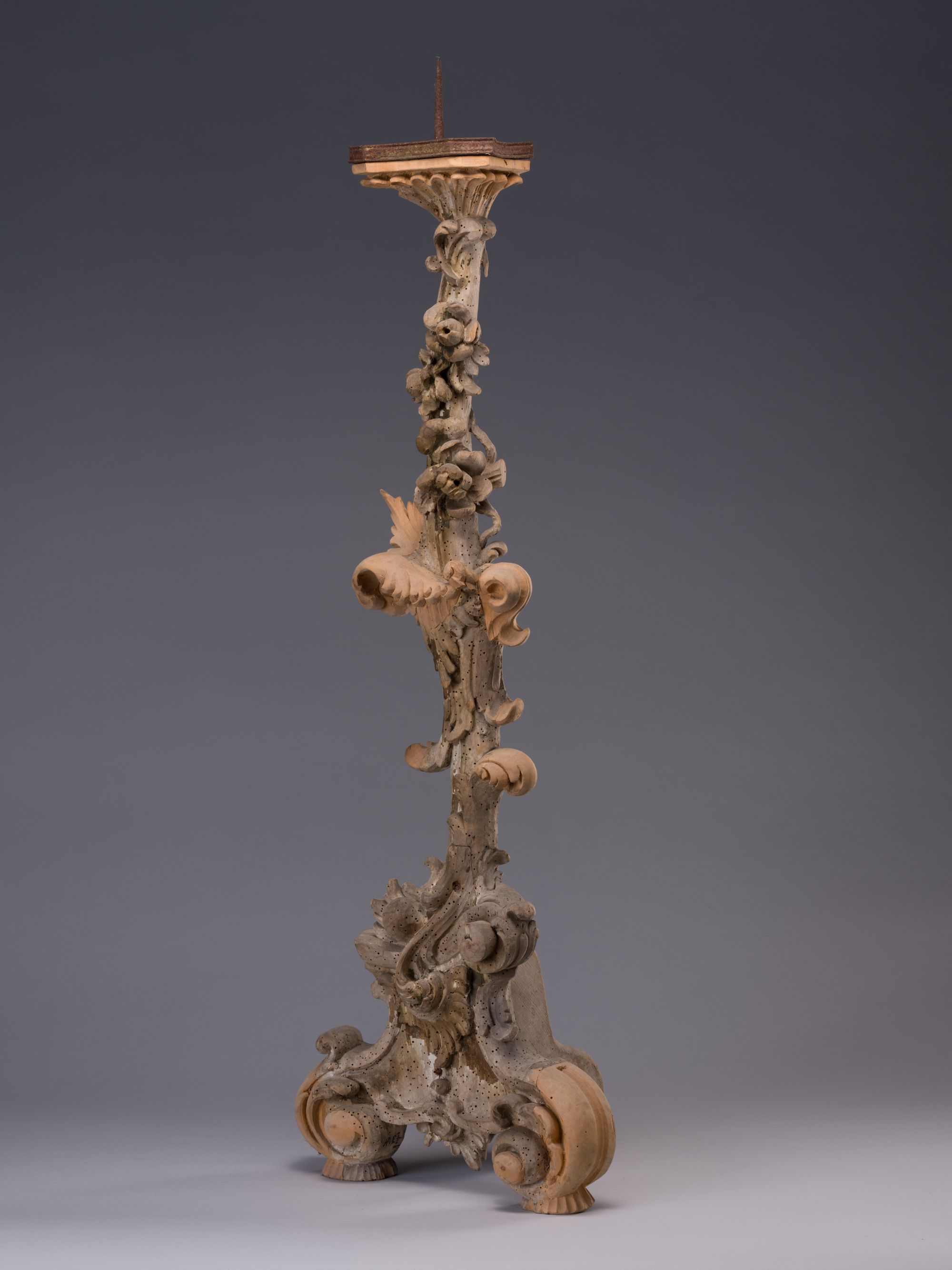
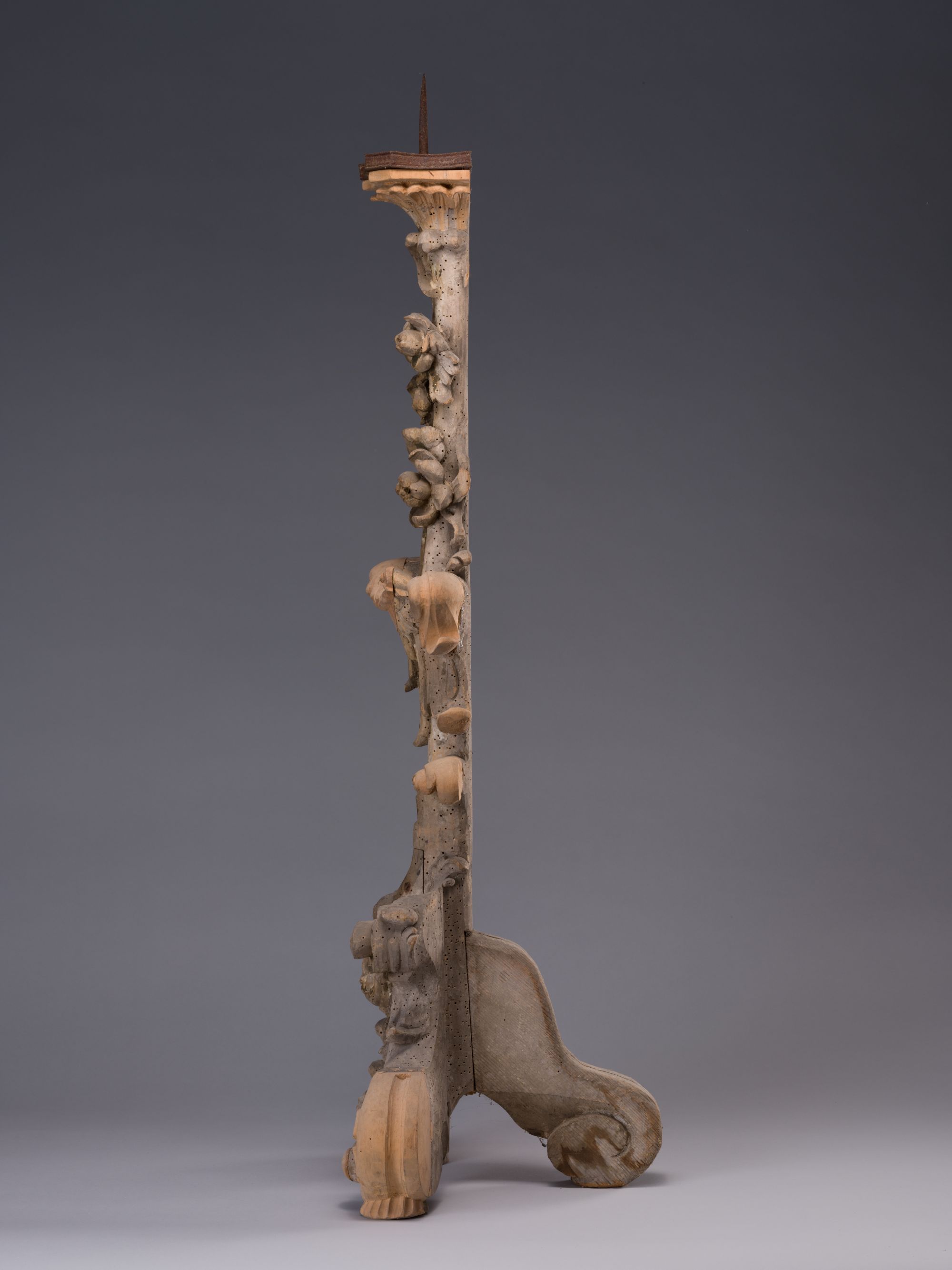
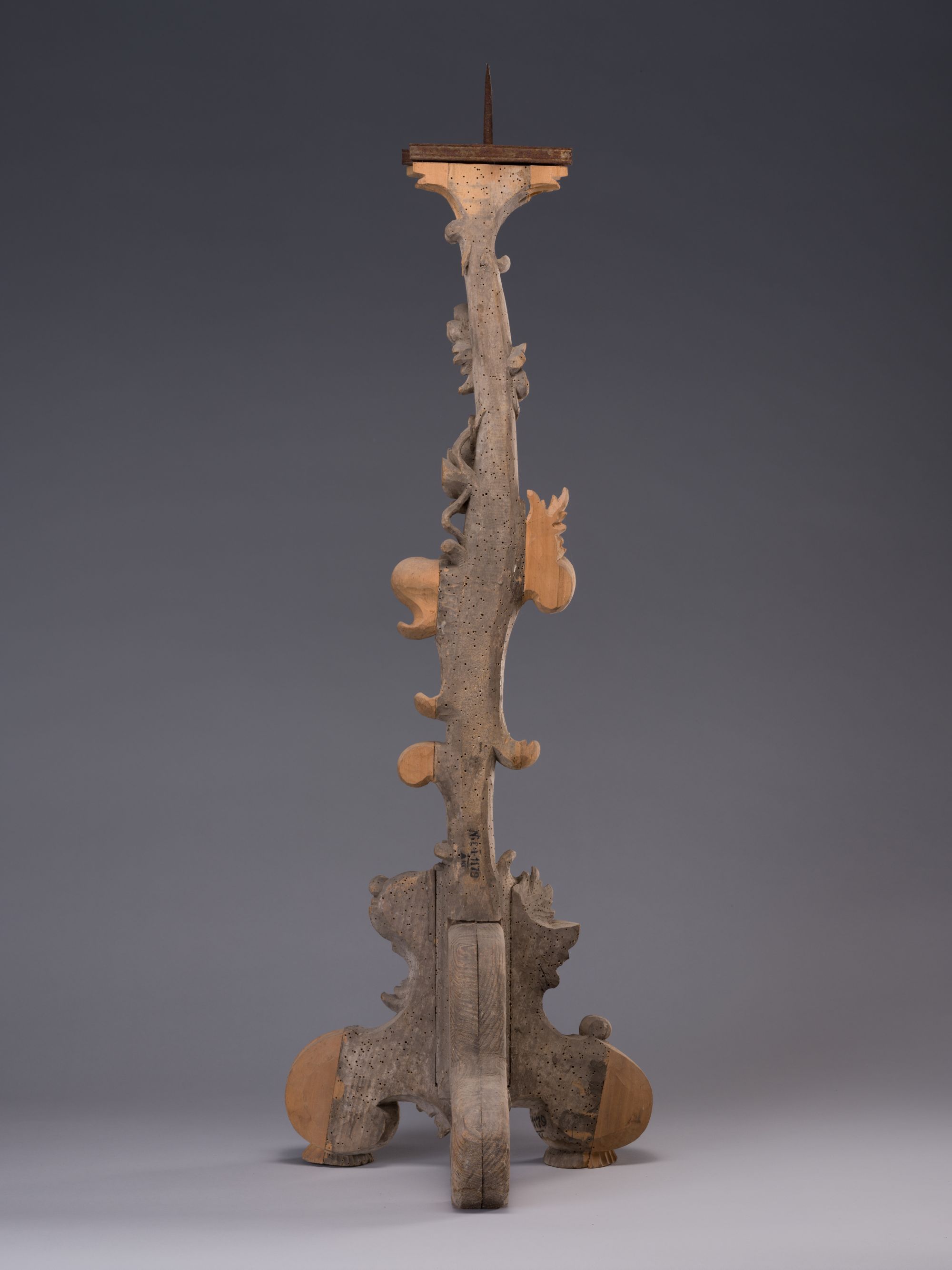
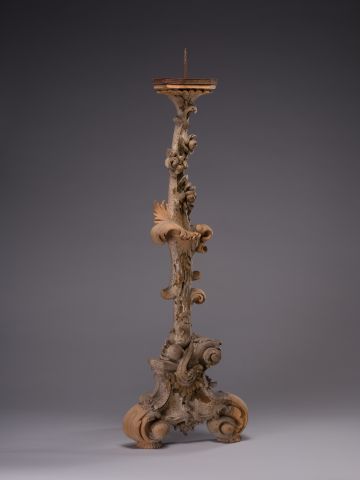
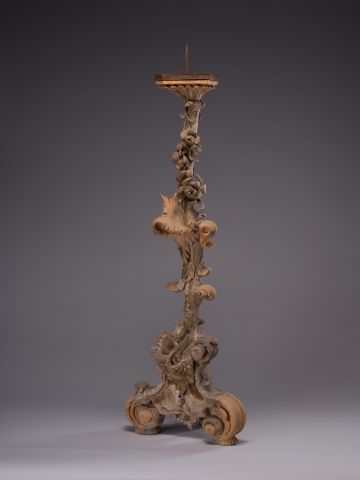
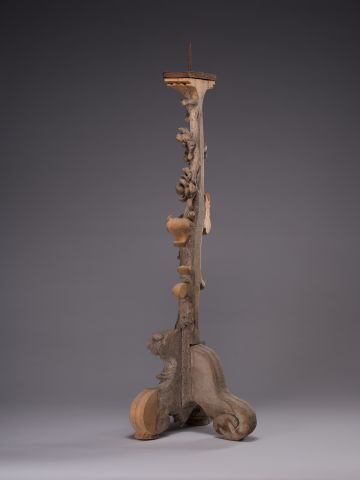
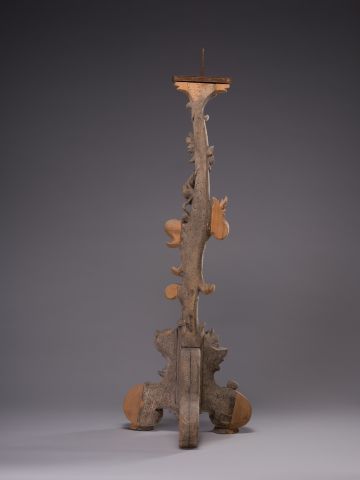
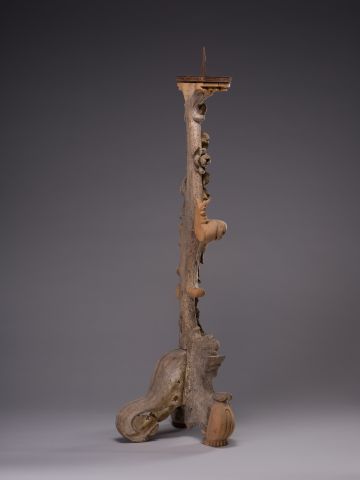
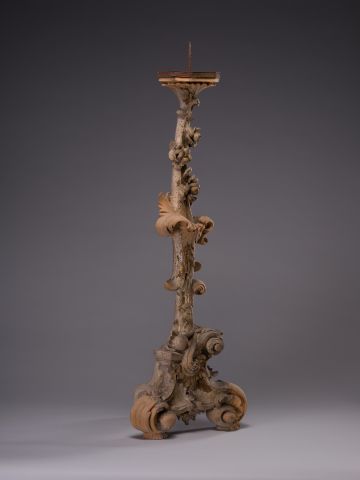
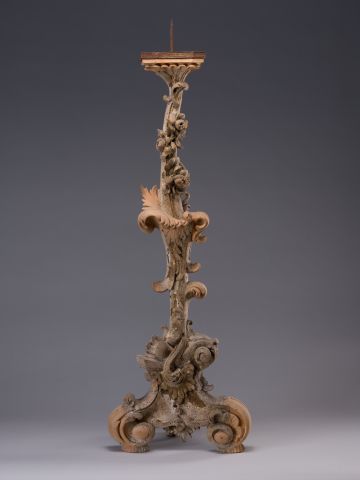
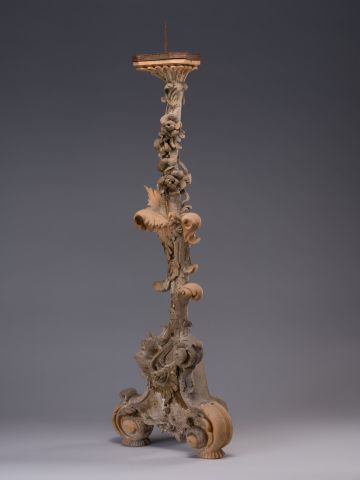
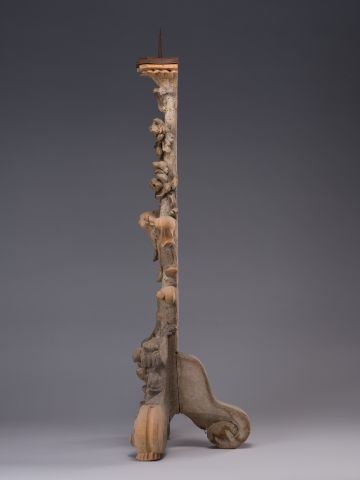
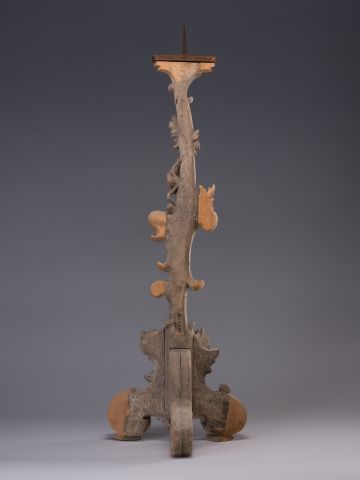
This candlestick is an object of ecclesiastical use in which the artisan masterfully combined practical purpose with the expressive plastic language of the period. This tall, single-light decorative wooden candlestick of a temple type consists of three clearly defined zones. The lower base is a massive, stable, tripartite structure transitioning into a sinuous shaft, which terminates in a small, profiled candle nozzle shaped like a capital. The overall composition is built upon the principle of dynamic vertical ascent: the heavy, opulently decorated lower section gradually tapers, shedding its visual weight, and culminates in a light, almost weightless top.
The artistic execution of the piece is distinguished by an extraordinary profusion of floral ornament. The tripartite base rests on feet shaped as volutes that curl into powerful spirals. Each volute terminates in a round, flattened, hoof-like "heel". The base and the central section of the piece are dominated by spiral forms and S-scrolls characteristic of Baroque plastic art. Nestled between them are carved acanthus leaves, flowers, and shoots that appear to grow out of one another. The decorative embellishment does not merely fill the surface but creates an effect of continuous, organic movement.
The shaft of the candlestick is rendered as an asymmetrically curved stem. The master intentionally rejected symmetry, layering decorative elements upon one another and wrapping them around the core in a spiral manner. The greatest plastic tension is achieved in the midsection, where the carved elements detach from the structural body to form free-standing, three-dimensional plastic forms. Above and below the middle of the shaft, the ornamental motifs slow down and the carving thins out, allowing the viewer's eye to rest. Such a rhythm of condensation and dilution of decor is highly characteristic of craftsmen from the mid-to-late 18th century. The candlestick is perceived not as a static architectural element, but as a dynamic botanical form captured in a rapid upward motion. Its flowers and leaves are directed upwards, and the vertical composition symbolically elevates the gaze from the earthly, heavy base to the luminous top.
Legal regulation
Borys Voznytskyi Lviv National Art Gallery