Figure of an Angel
unknown folk craftsman
Basic information
Additionally
- Type
- sculpture
- Genre
- religious
- Plot
- Angel
- Provenance
- Volosiv village, Nadvirna district, Ivano-Frankivsk region
Information about author
Object description
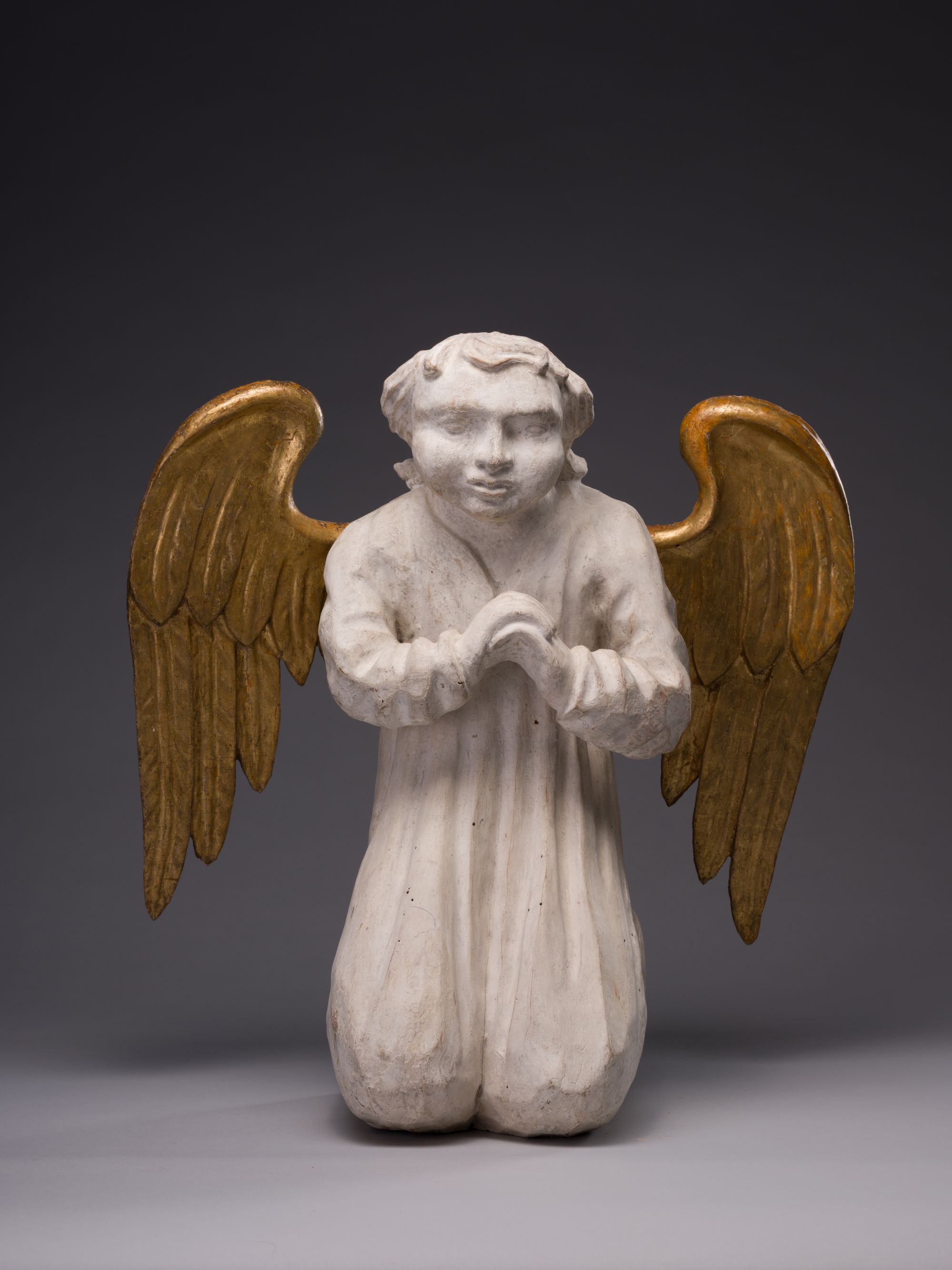
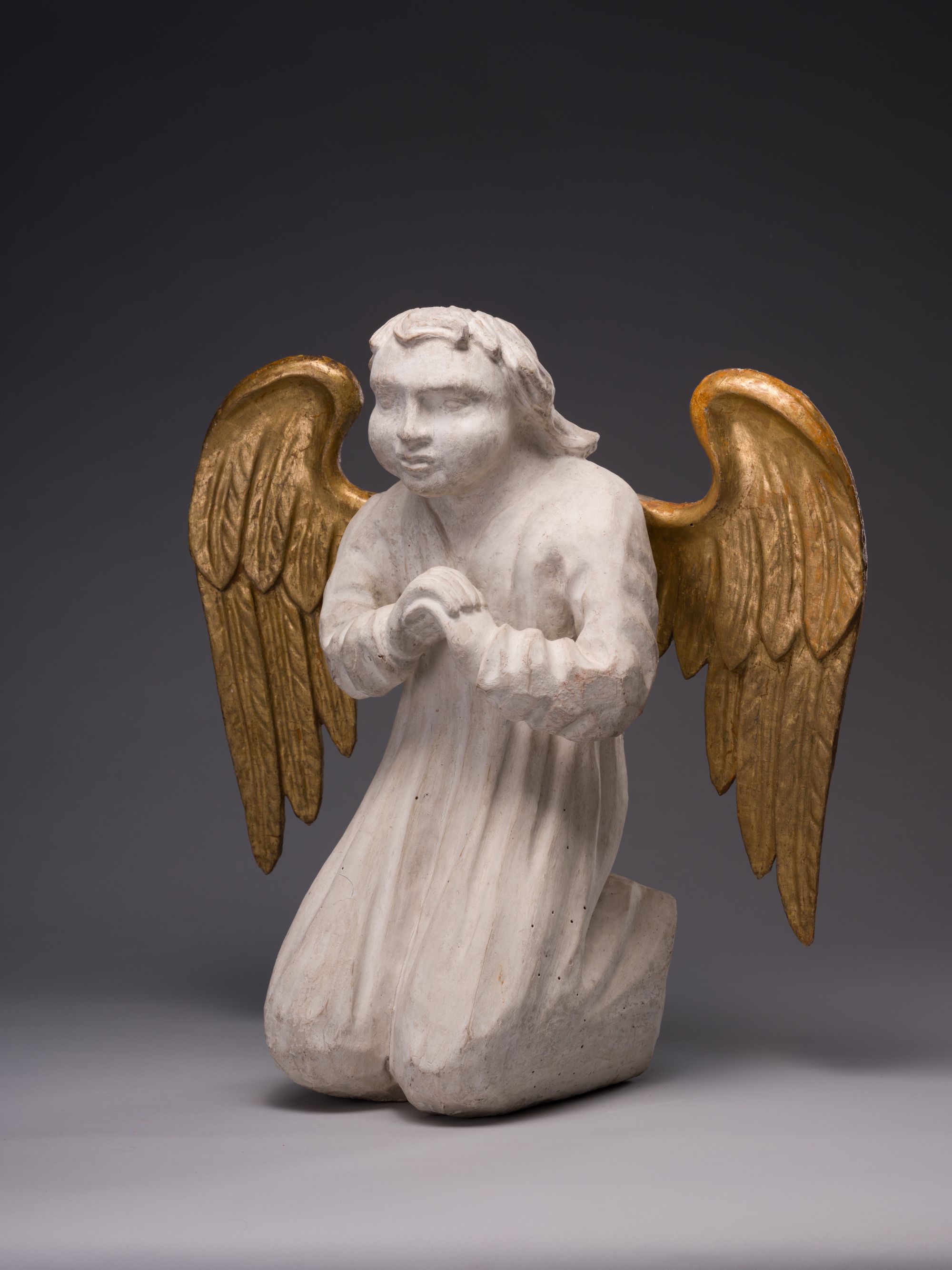
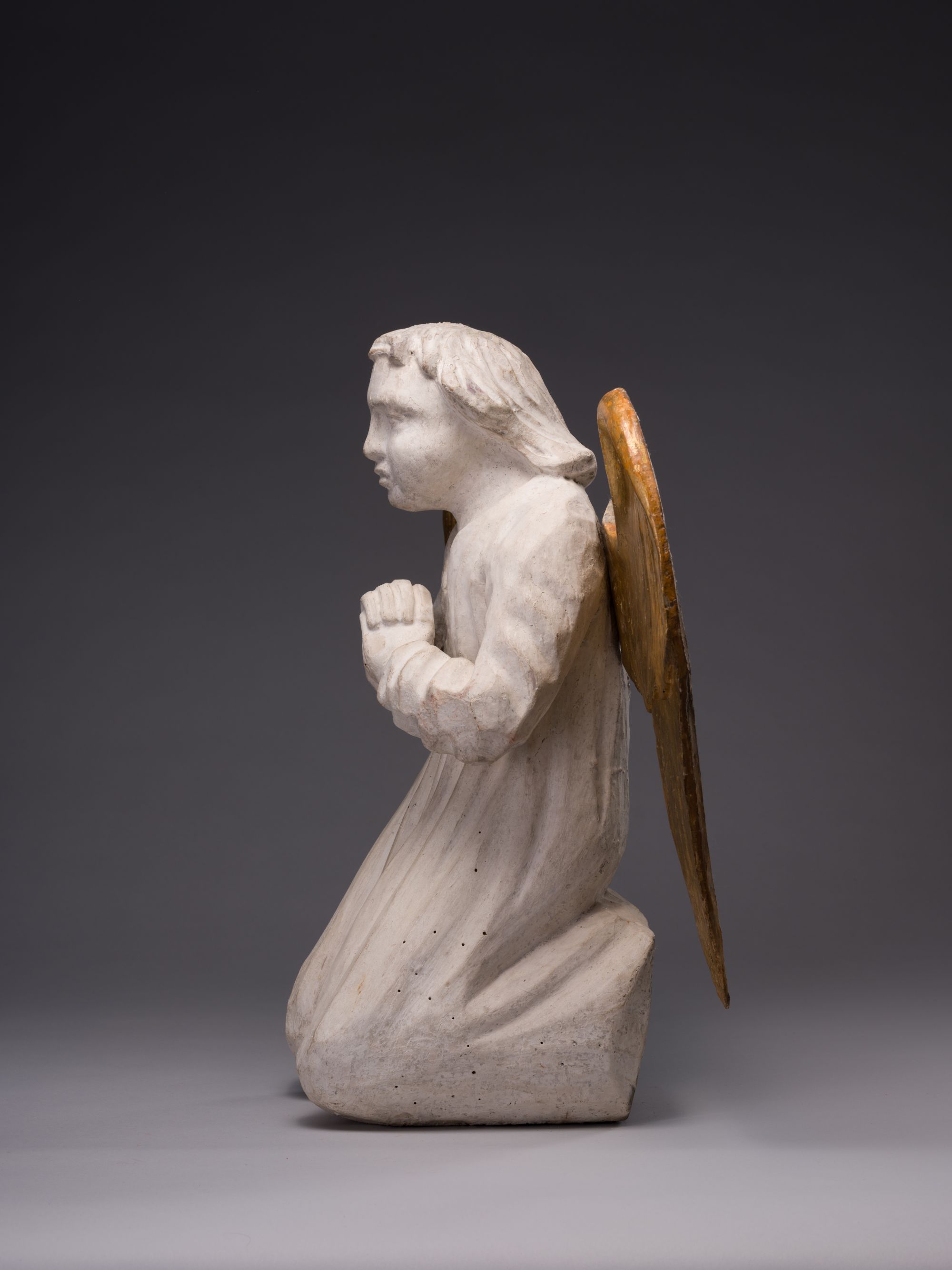
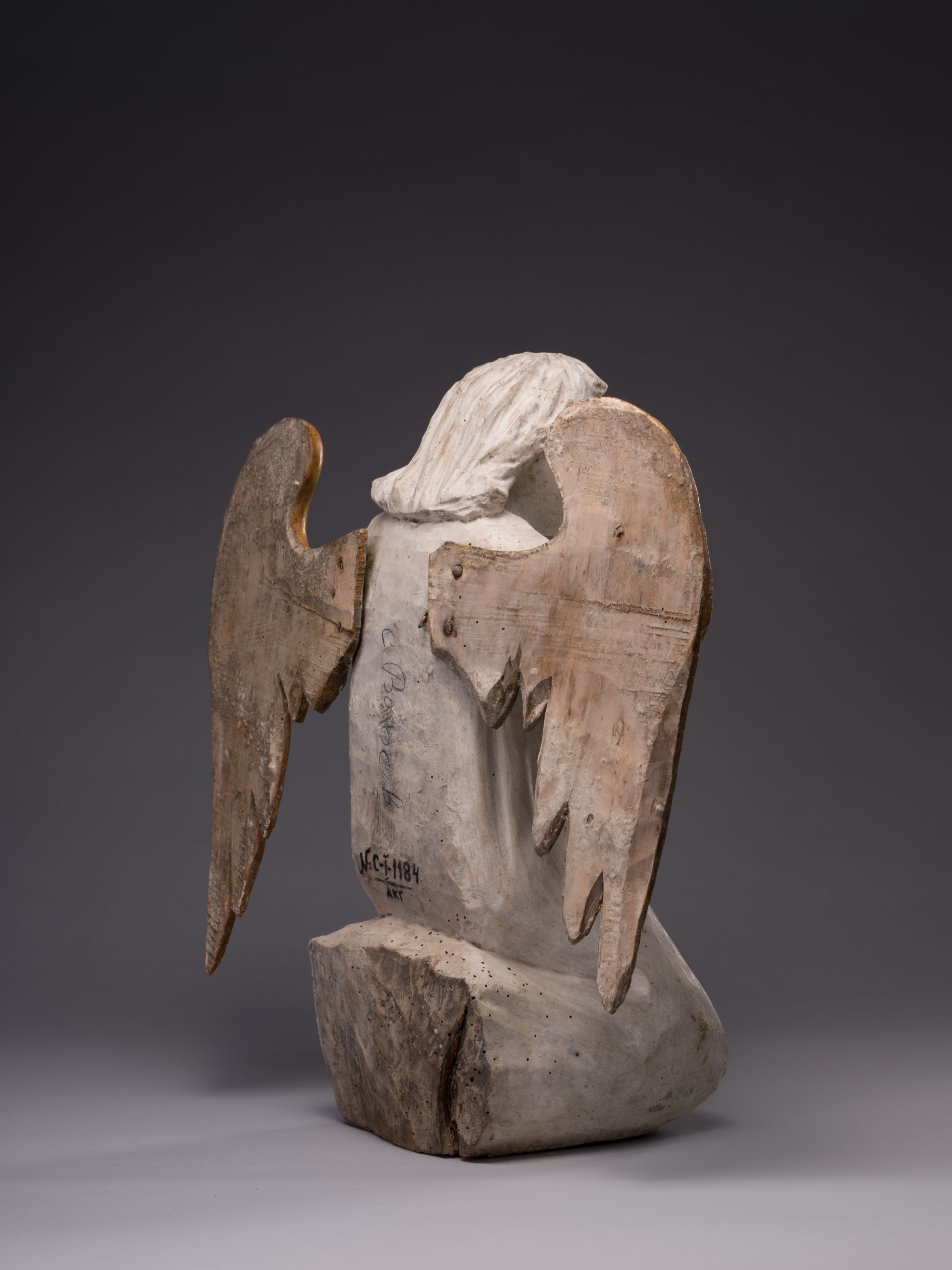
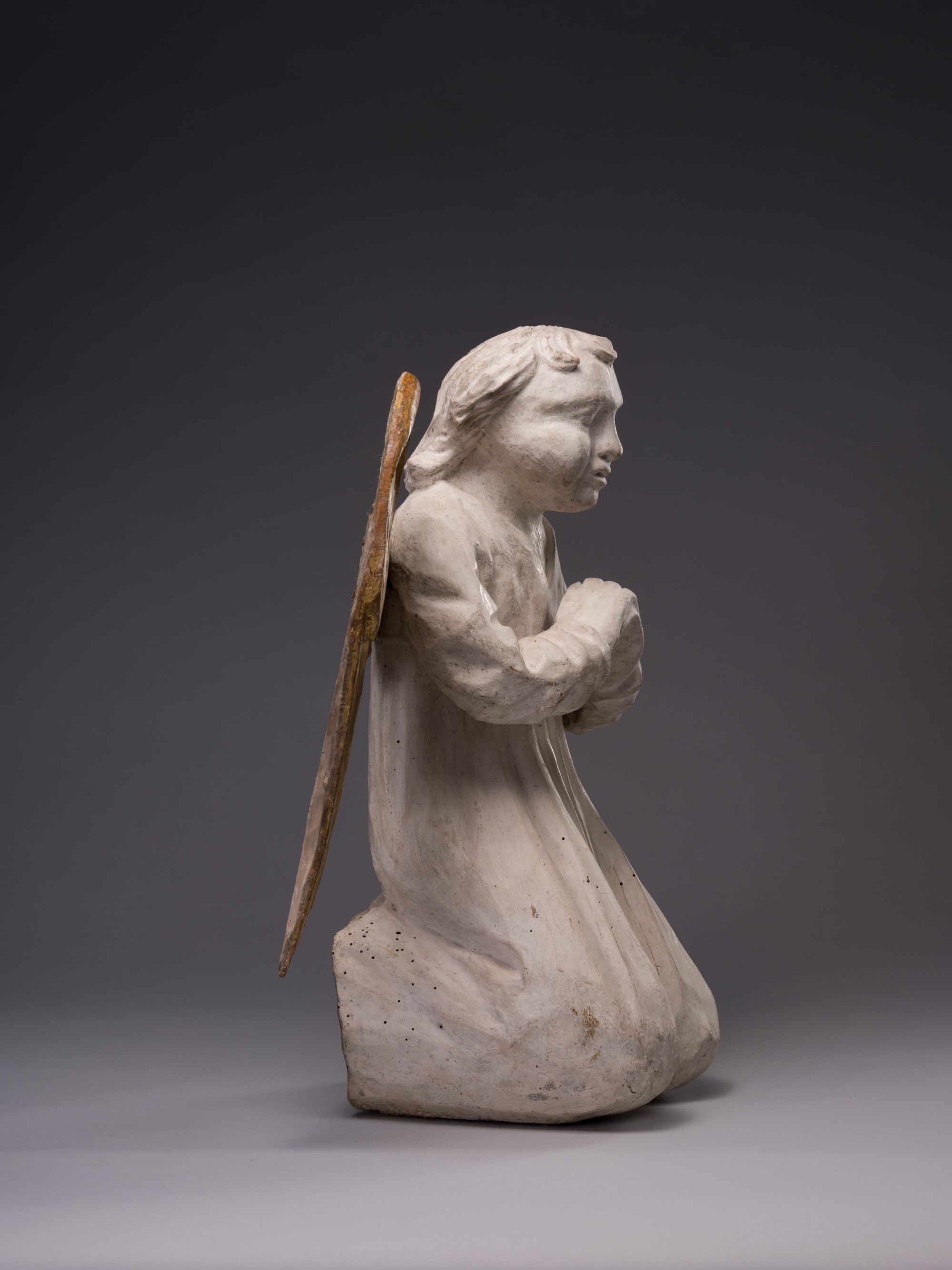
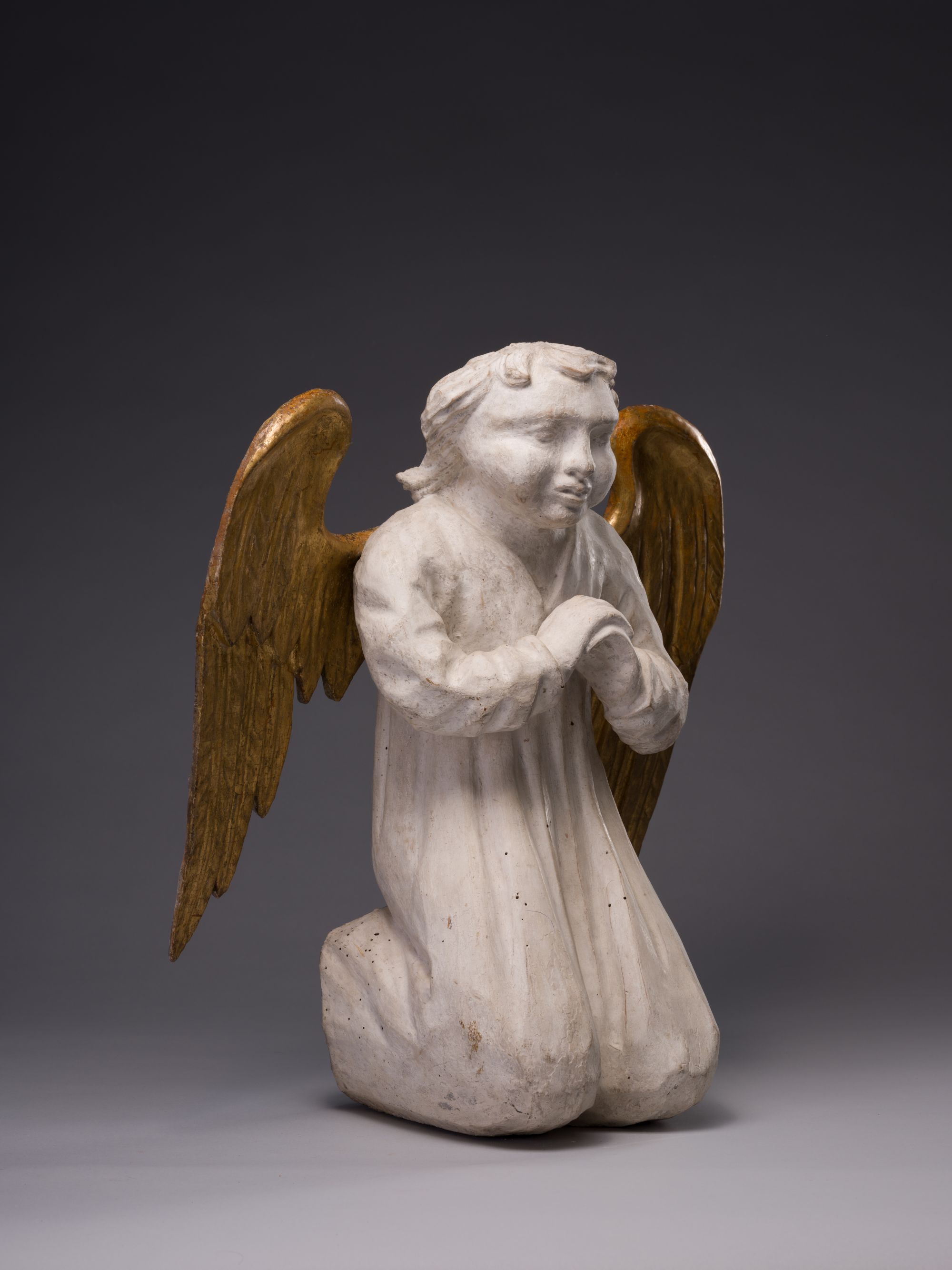
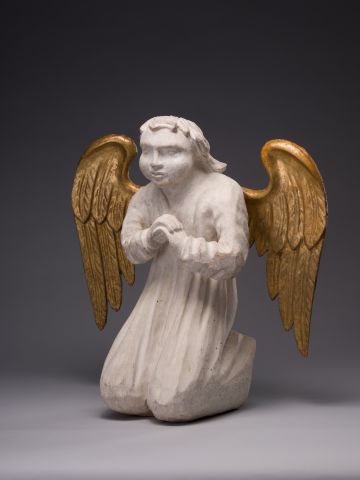
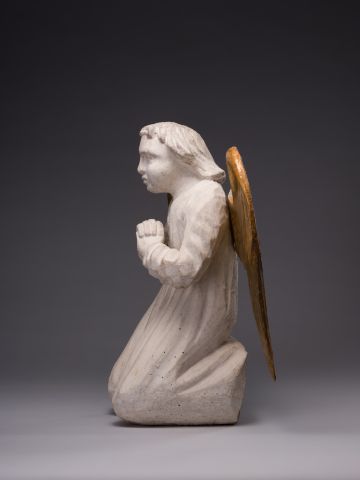
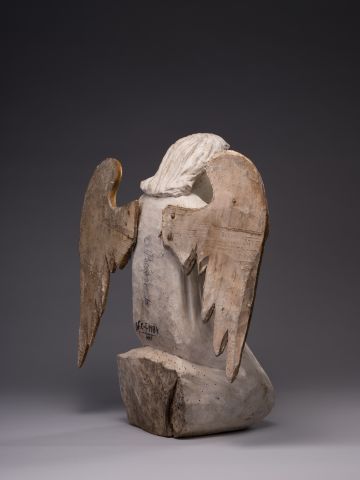
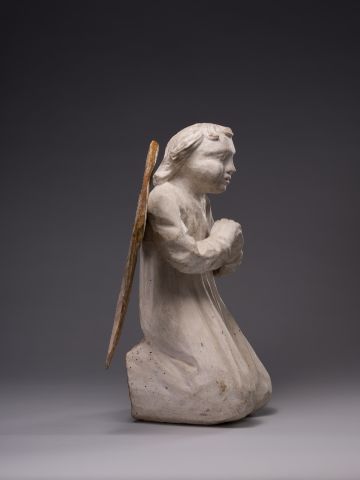
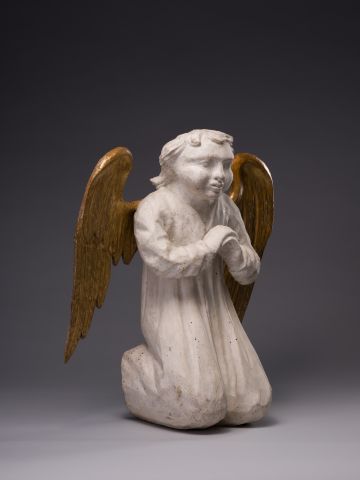
The small-sized wooden sculpture presents a kneeling angel in a frontal prayer pose. The composition is characterised by a clear vertical organization and relative symmetry, which lends the image sturdiness, solemnity, and inner balance. The angel is depicted in a long white tunic. The somewhat elongated proportions of the figure and the smooth, shallowly rendered vertical lines of the folds create a sense of downward movement. The attire is devoid of excessive detail, yet the drapery underscores the volume of the body and forms a rhythmic surface structure.
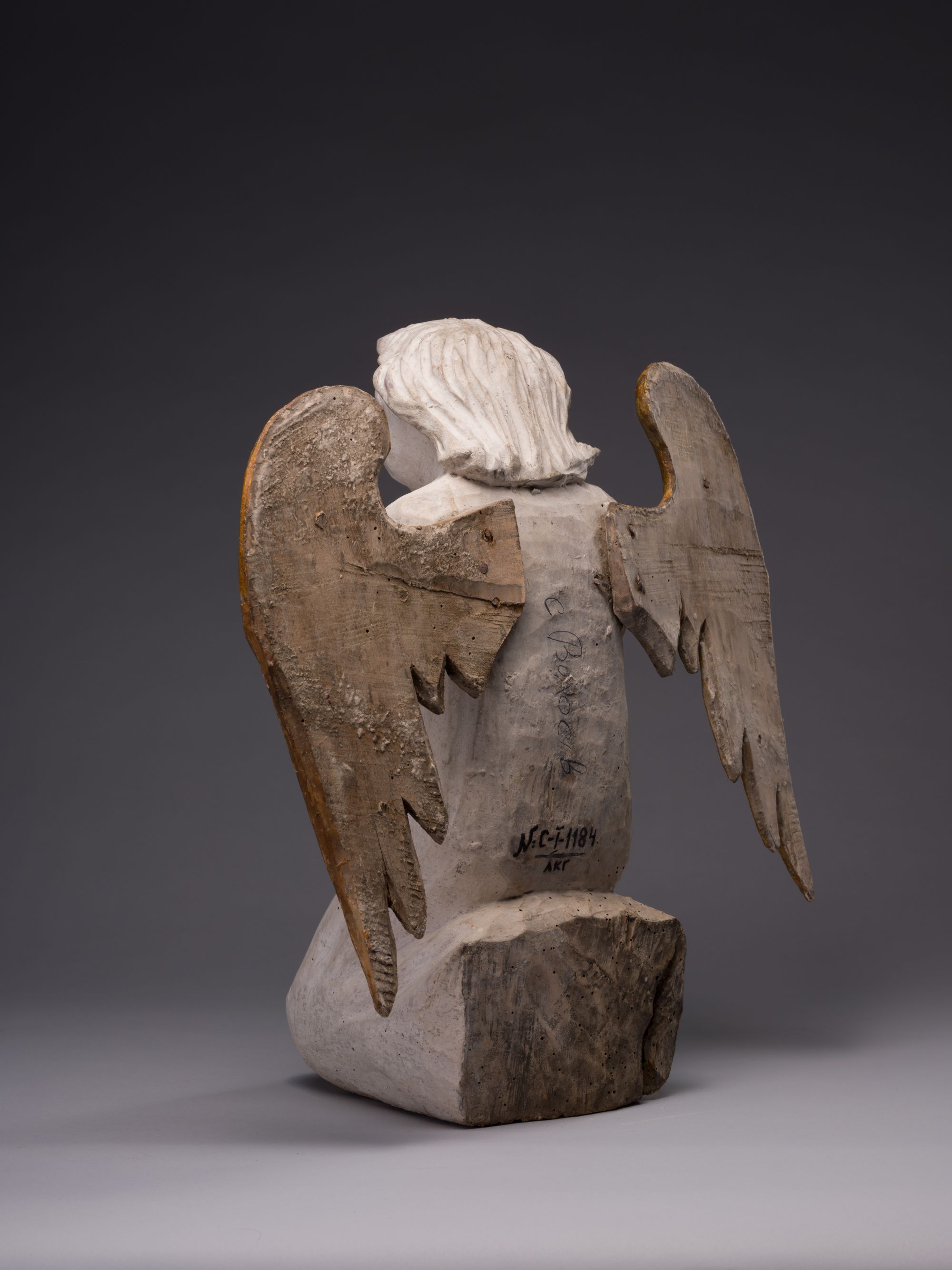
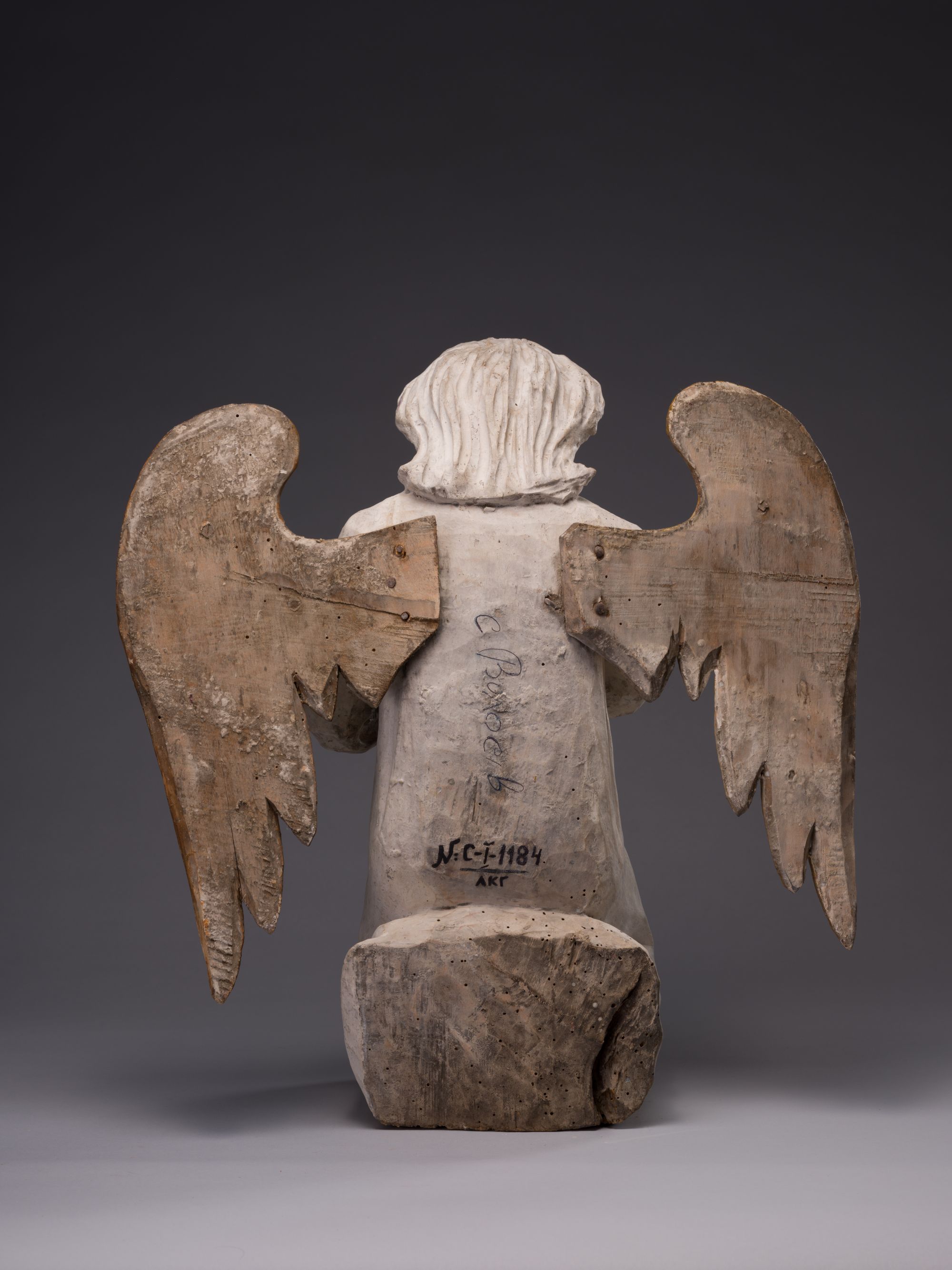
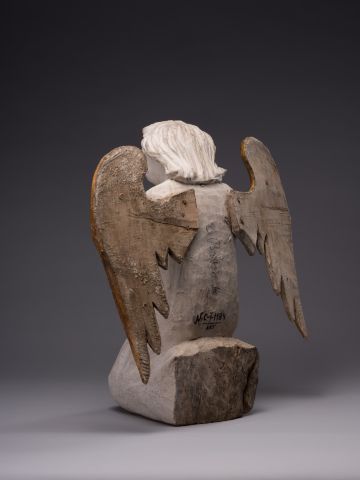
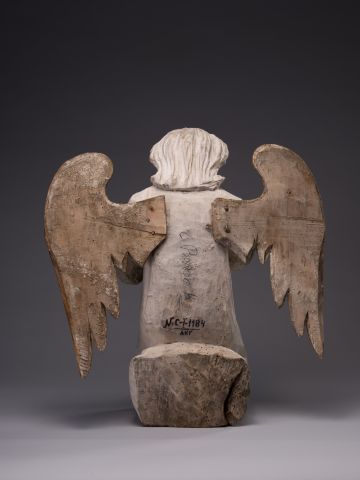
The rounded, childlike face with wide-open eyes, a softly defined upturned nose, and a faint smile on its lips embodies the image of a carefree child. In the iconographic tradition of Baroque and Late Baroque art, this type traditionally symbolises the purity and celestial nature of the angelic order. Dynamic composition is added to the sculpture by the wide-open wings, carved with deep parallel grooves that imitate the texture of feathers. The span of the wings instils the static figure with a sense of gentle flight. The body of the angel is modelled in a generalised manner, without anatomical precision, which is characteristic of folk sacred plastic arts.
The master does not strive for portrait accuracy, but instead seeks to convey the expressiveness of the spiritual image. The colour palette employs a contrast between two pigments – white and gold – which lends the figure of the angel a certain ethereal, spectral quality. The gilded coloration of the wings underscores the sacred, heavenly status of the angel. The piece is the work of a folk master, distinguished by a somewhat naive execution, yet it is deeply sincere and spontaneous in its rendition of the sacred character, where a certain technical imperfection is compensated for by the emotional expressiveness of the image.
Legal regulation
Borys Voznytskyi Lviv National Art Gallery