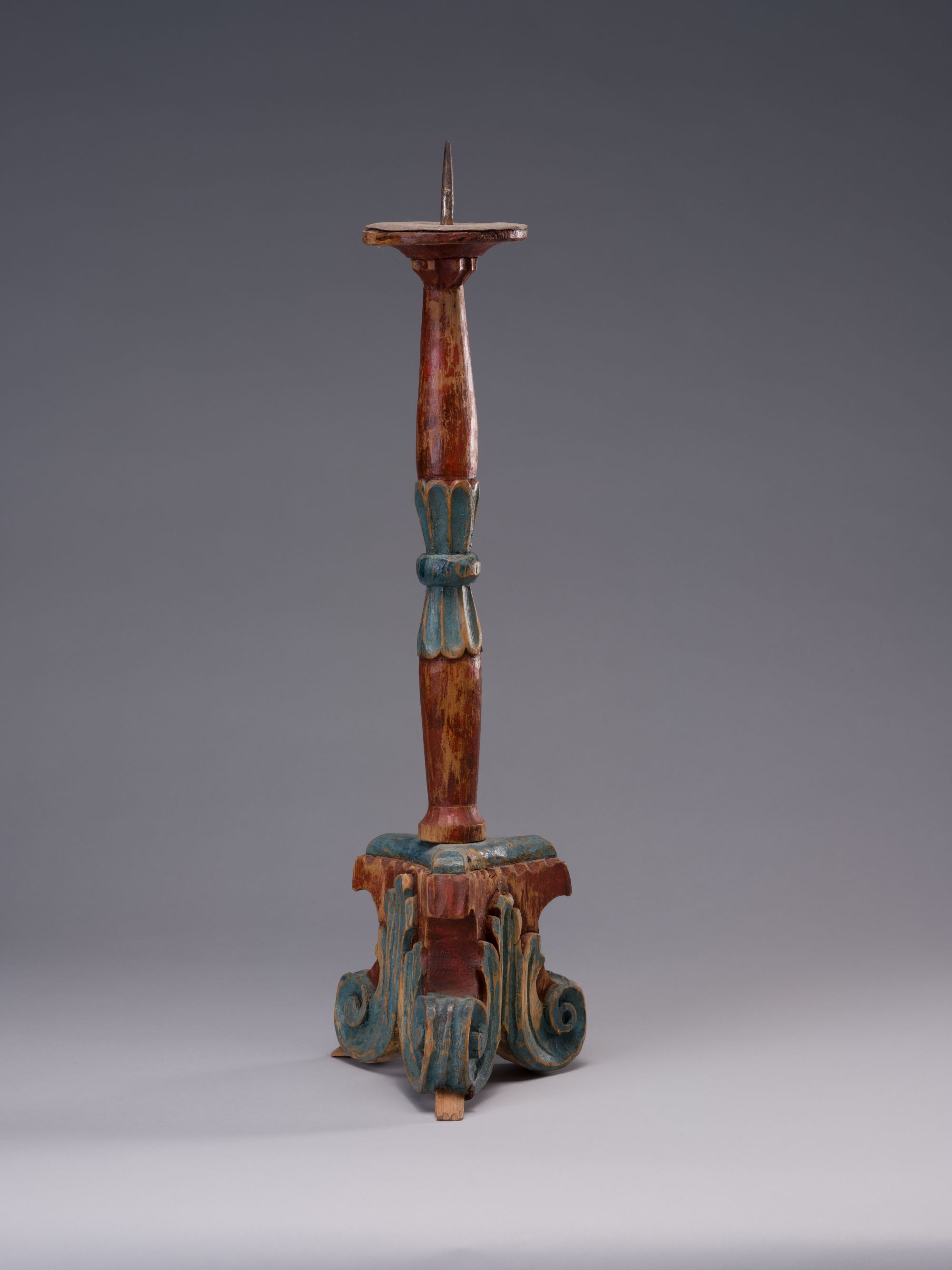
Pricket Candlestick
unknown folk craftsman
Basic information
- ID
- Рз-324
- Author
- unknown folk craftsman
- Name
- Pricket Candlestick
- Date of creation
- 18th c.
- Country
- Ukraine
- Culture
- Folk
- Technique
- carving polychromy
- Material
- wood
- Dimensions
- 75.5 x 21 x 21 cm (height x width x depth)
Additionally
- Type
- decorative and applied arts
- Genre
- religious
- Provenance
- Bolozhyniv village, Busk district, Lviv region
Information about author
Object description
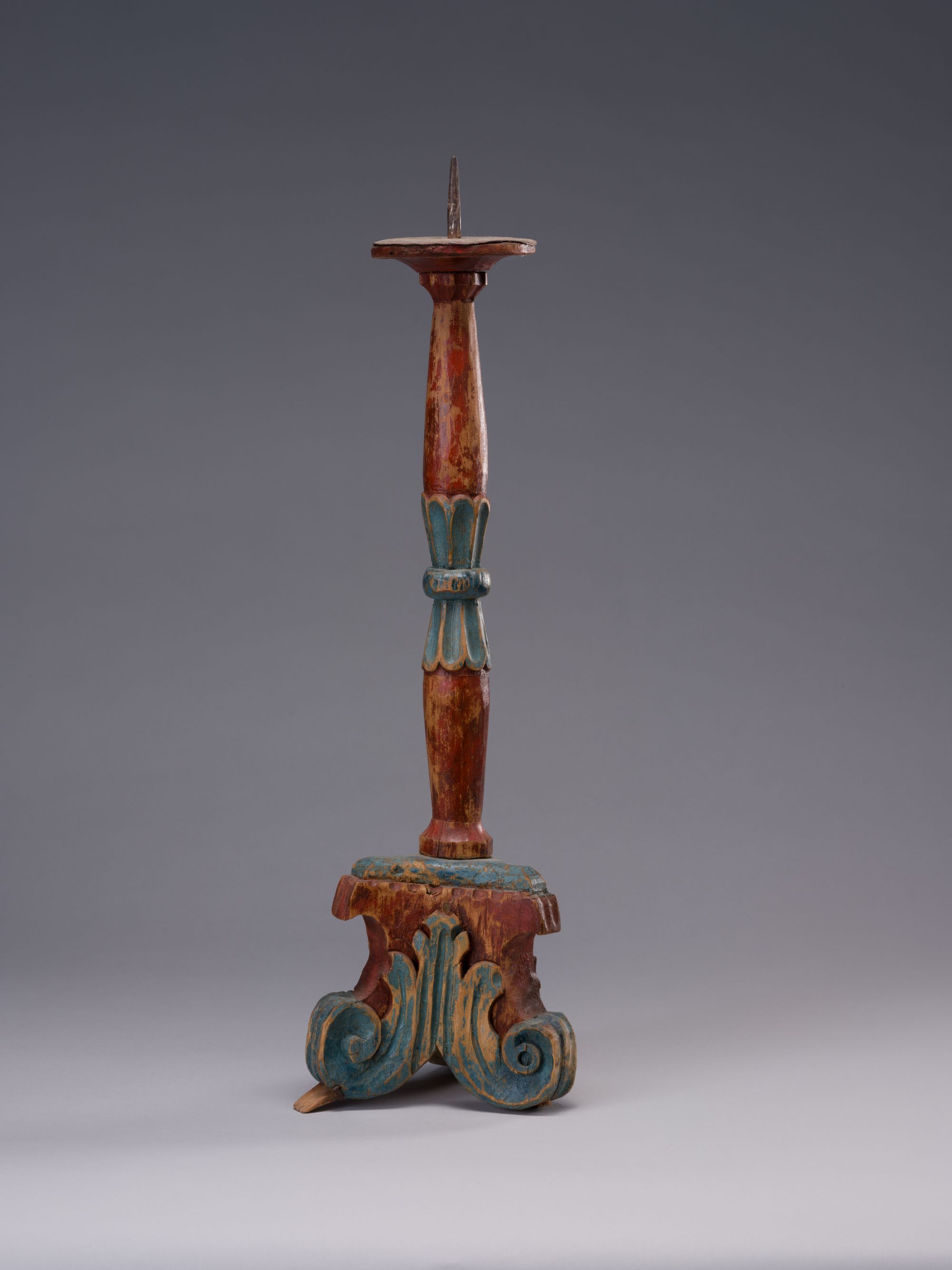
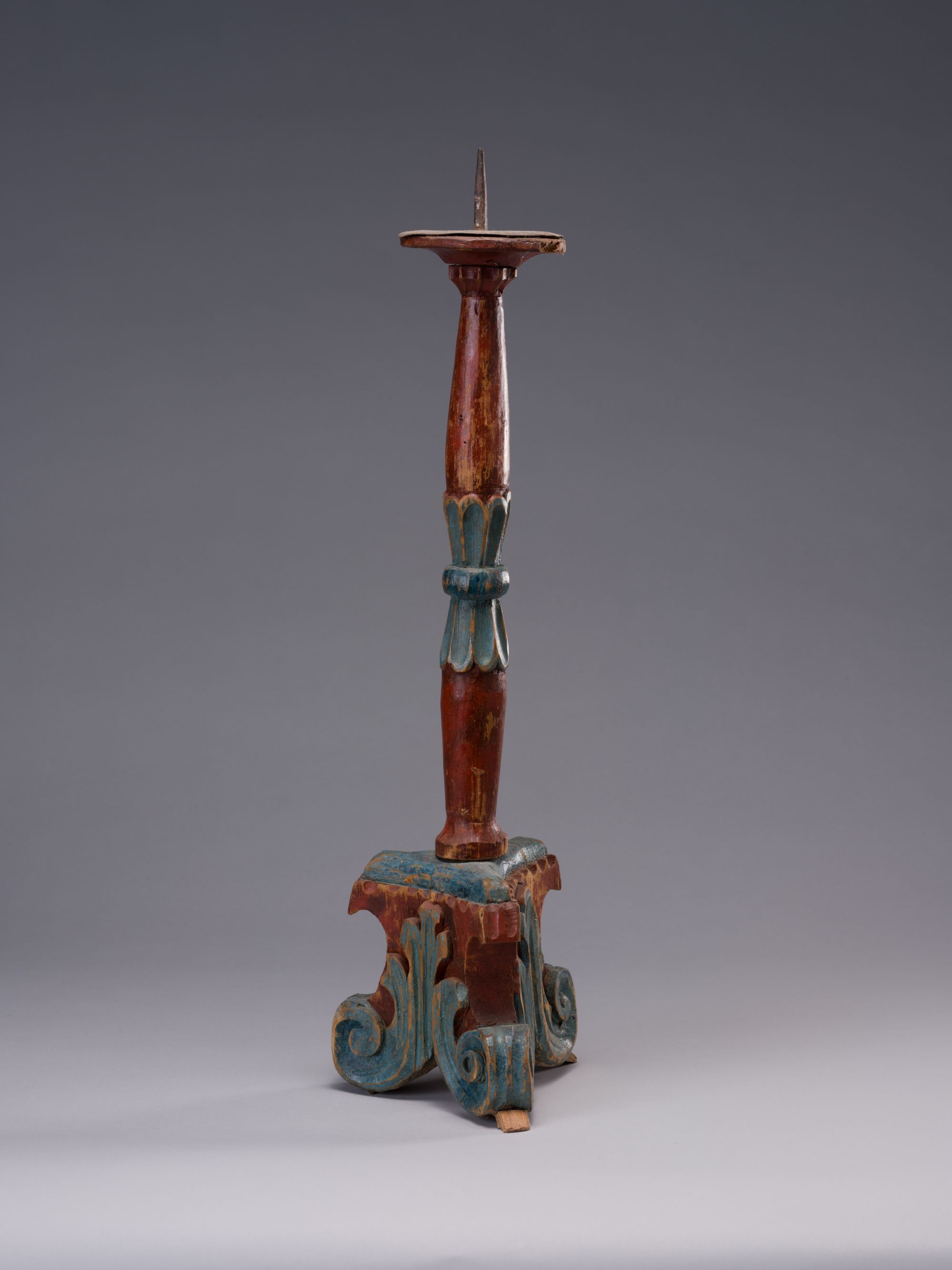
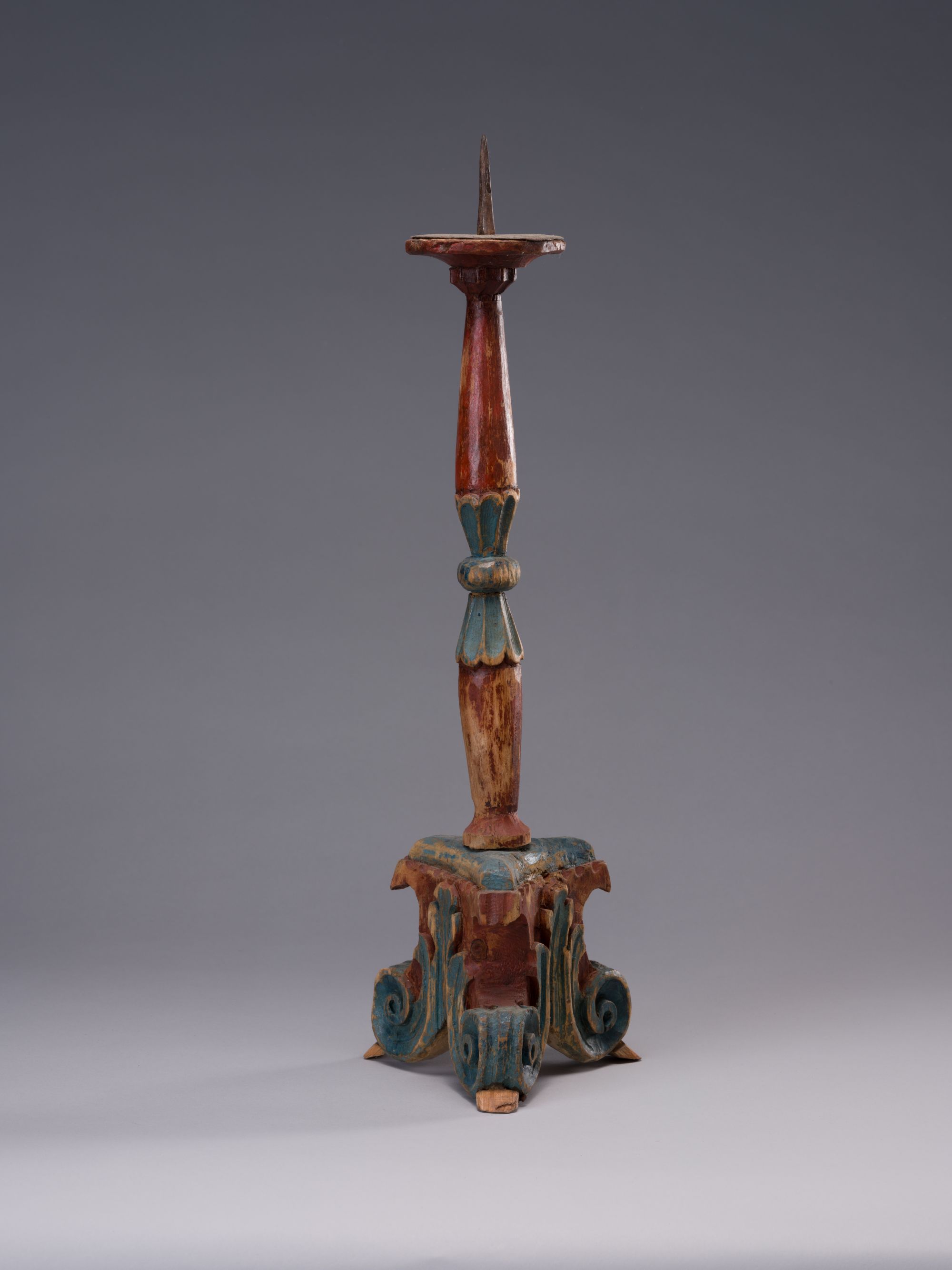
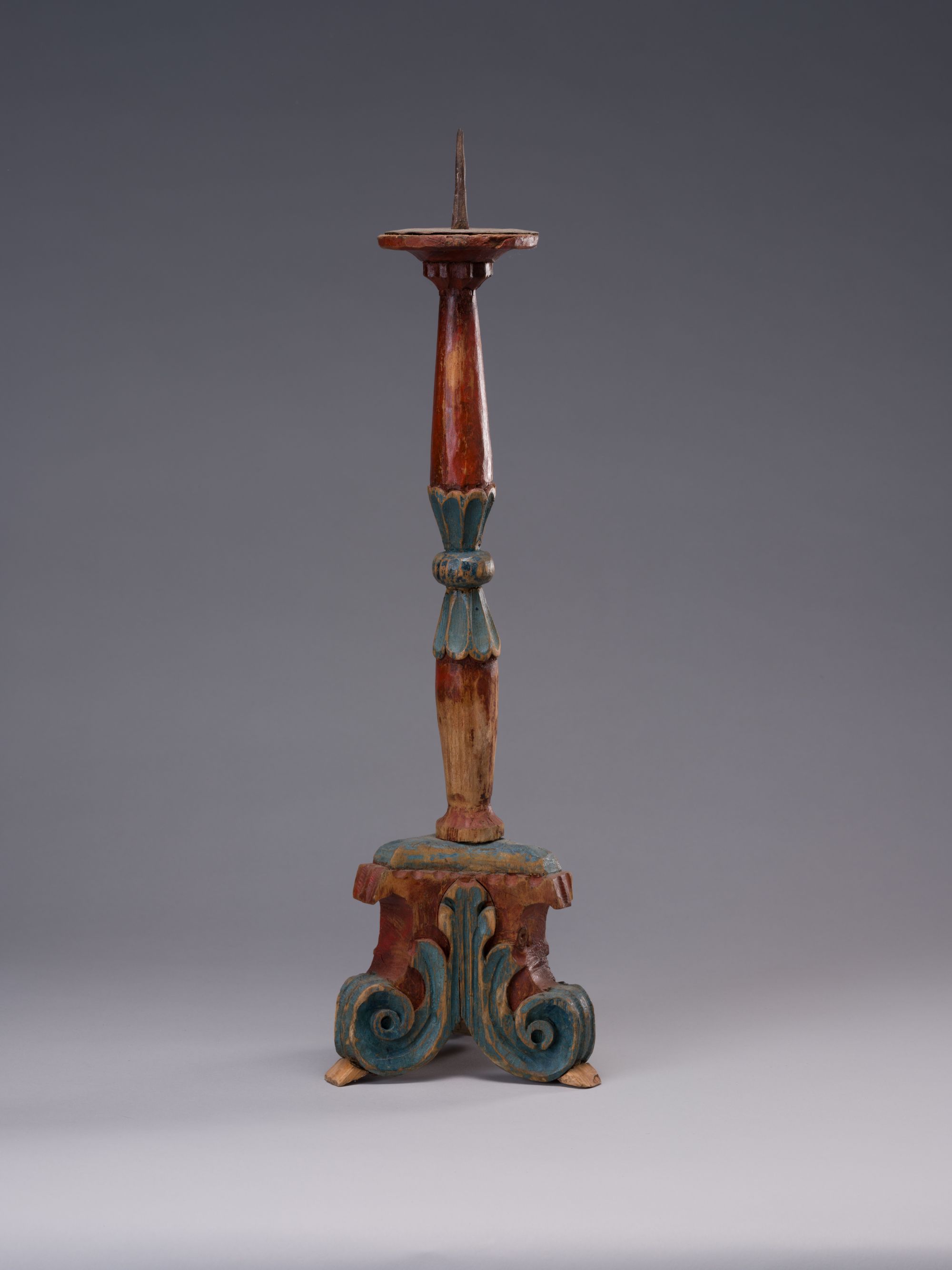
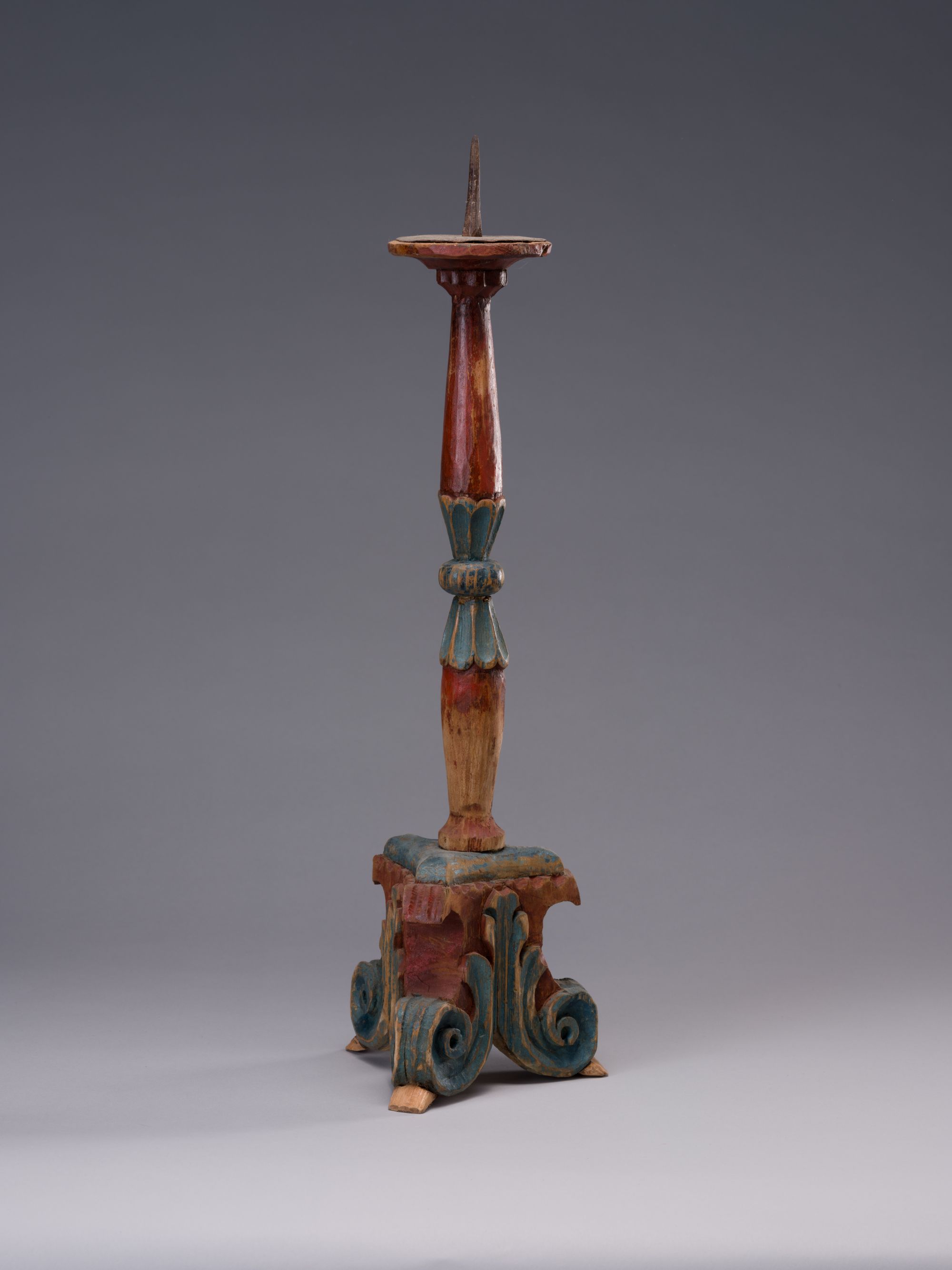
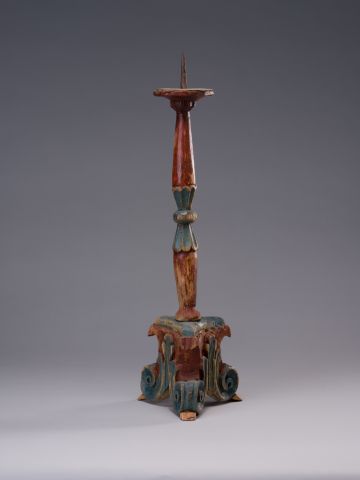
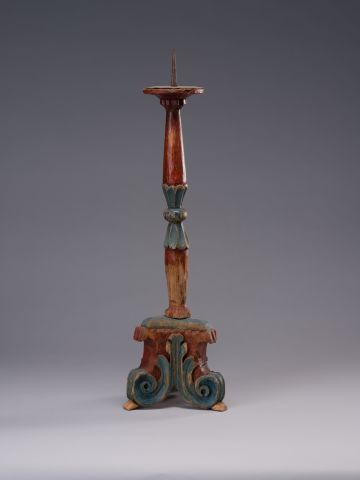
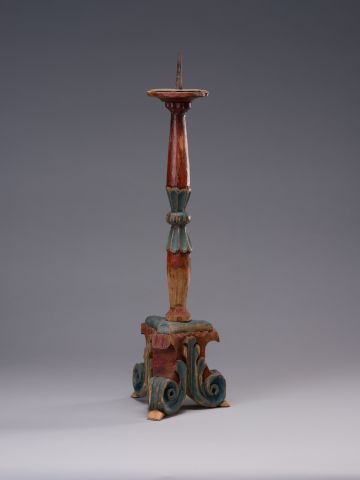
The carved wooden candlestick has a religious purpose. It organically combines structural functionality with the decorative expressiveness characteristic of the Late Baroque period.
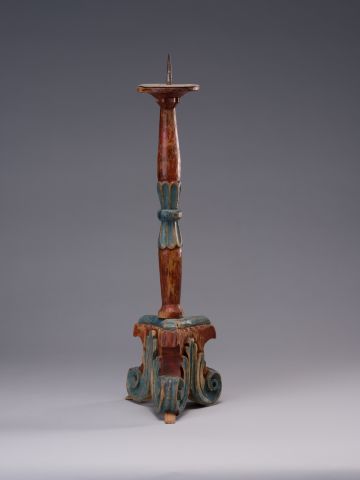
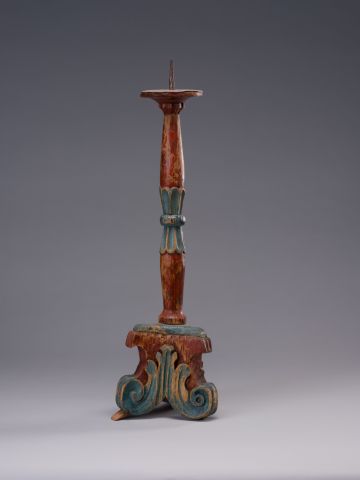
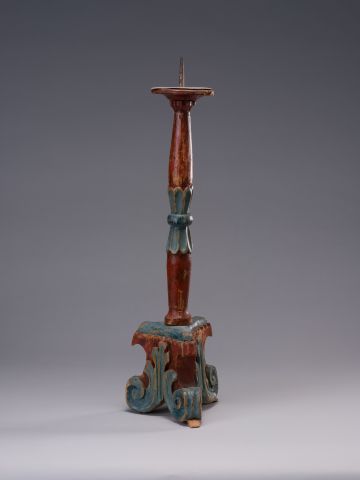
The compositional solution is traditional, divided into three parts: a wide trilobed base, an elongated baluster-shaped stem in the middle, and a profiled candle cup at the top. The base of the candlestick consists of three massive, shaped supports in the form of volutes that radiate from the centre and terminate at the bottom in small heel-like projections that ensure the stability of the object. The three-sided radial composition of the base provides the candlestick with both structural stability and a distinct, complex silhouette line when viewed from any angle.
The stem of the piece has a classic baluster-shaped form. It tapers smoothly from top to bottom, interrupted in the middle by a distinct ring-shaped moulding, below which features a carved motif of elongated vertical petals. This imitates the form of a blooming flower bud, which is a characteristic decorative element of church objects from the Baroque era. The stylised floral pattern softens the rigid structural quality of the stem and lends the work a sense of organic, living plasticity.
The colour scheme of the candlestick is built upon the contrasting combination of a rich red tone with cool blue shades. Such a combination is typical for the sacred folk carving of Galicia from the 18th–19th centuries, where a limited palette of colours is compensated for by their contrasting accentuation.
The single-light candlestick stands not merely as a utilitarian object for church use, but as an independent work of decorative art, in which the structural design of a religious light fixture is enriched by the expressive plasticity of carving and a well-considered colour scheme. The master freely operates with Baroque ornamental forms, adapting them to the local artistic tradition.
Legal regulation
Borys Voznytskyi Lviv National Art Gallery