Pricket Candlestick
unknown folk craftsman



Basic information
- ID
- Рз-742
- Author
- unknown folk craftsman
- Name
- Pricket Candlestick
- Date of creation
- 18th c.
- Country
- Ukraine
- Culture
- Folk
- Technique
- carving polychromy
- Material
- wood
- Dimensions
- 91 x 34 x 38.5 cm (height x width x depth)
Additionally
- Type
- decorative and applied arts
- Genre
- religious
- Provenance
- Expedition to the Lviv region
Information about author
Object description
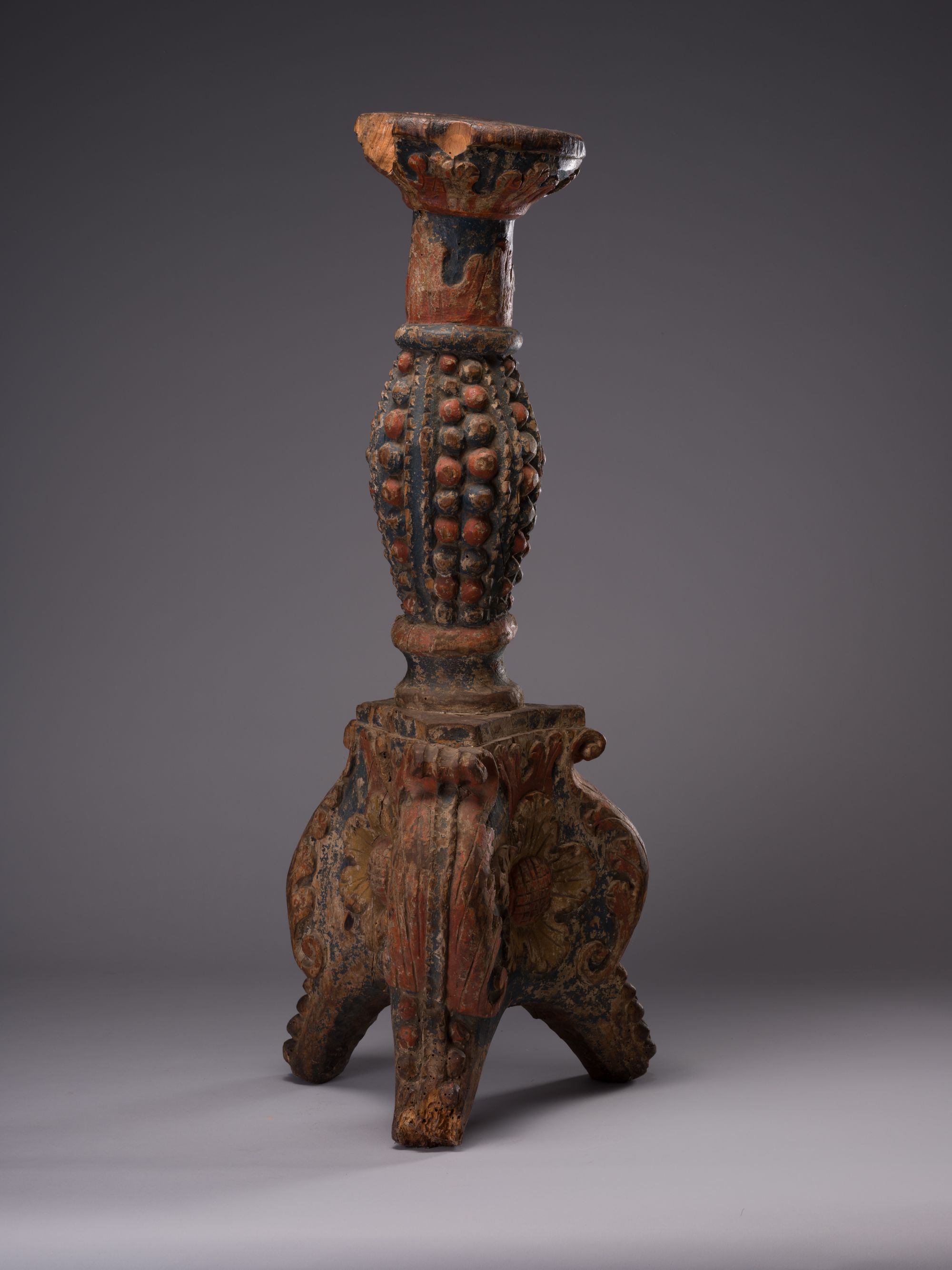
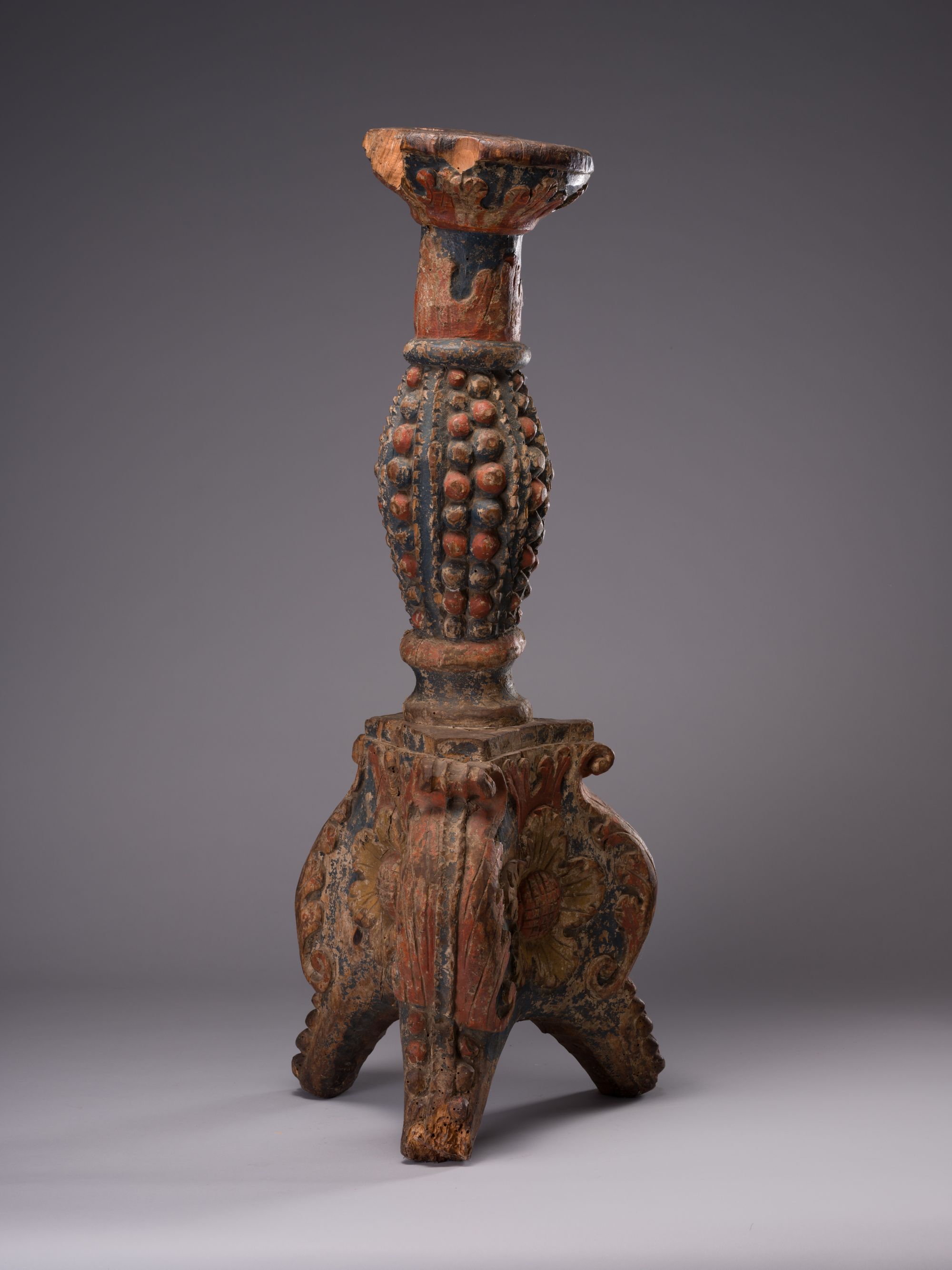
The widespread use of artificial illumination within temples fostered the emergence of fixtures diverse in both typology and design. In church tradition, these are conventionally divided into "portable" and "stationary" light. The presented single-branched wooden floor pricket candlestick typologically belongs specifically to the category of "stationary light".
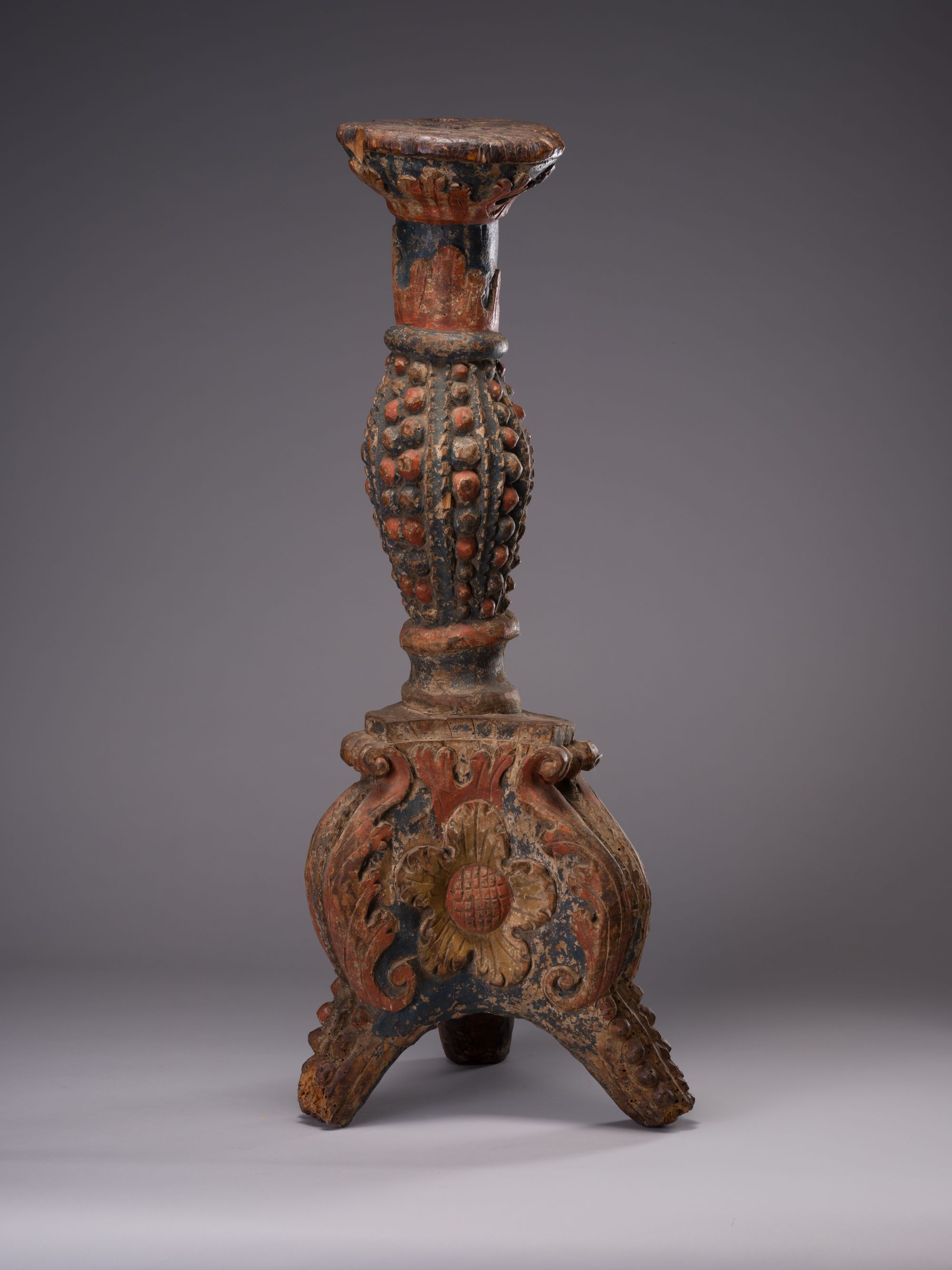
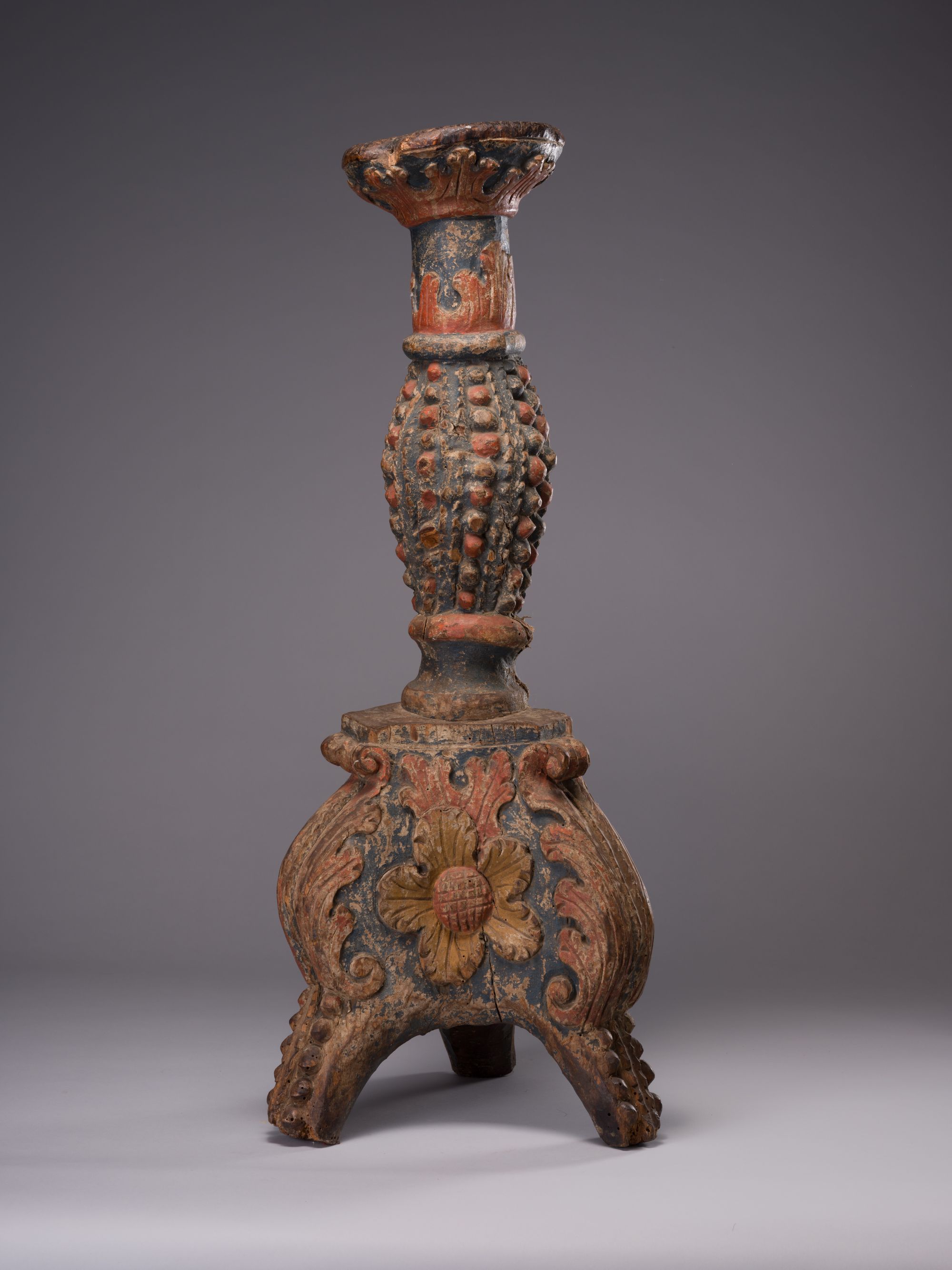
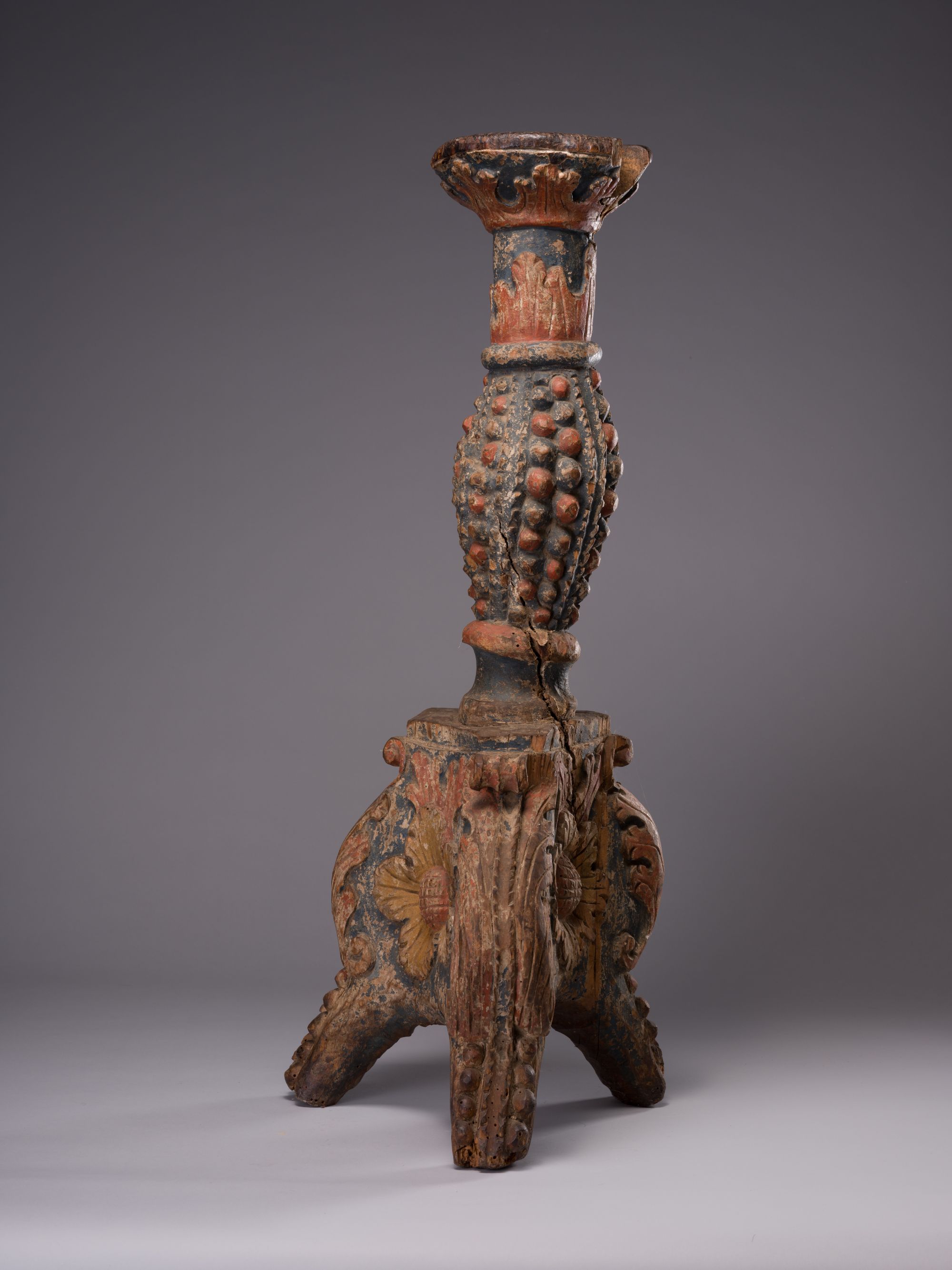
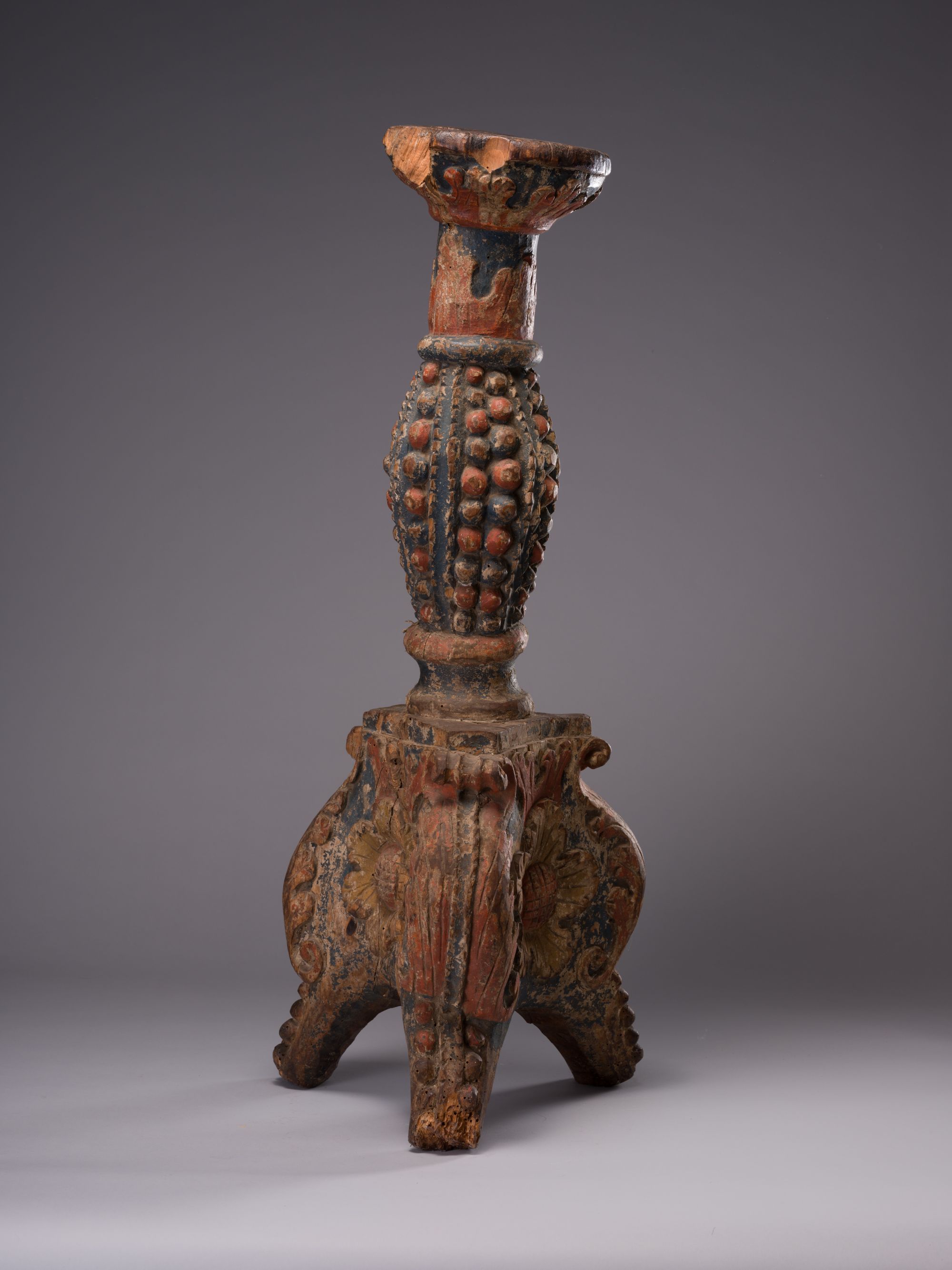
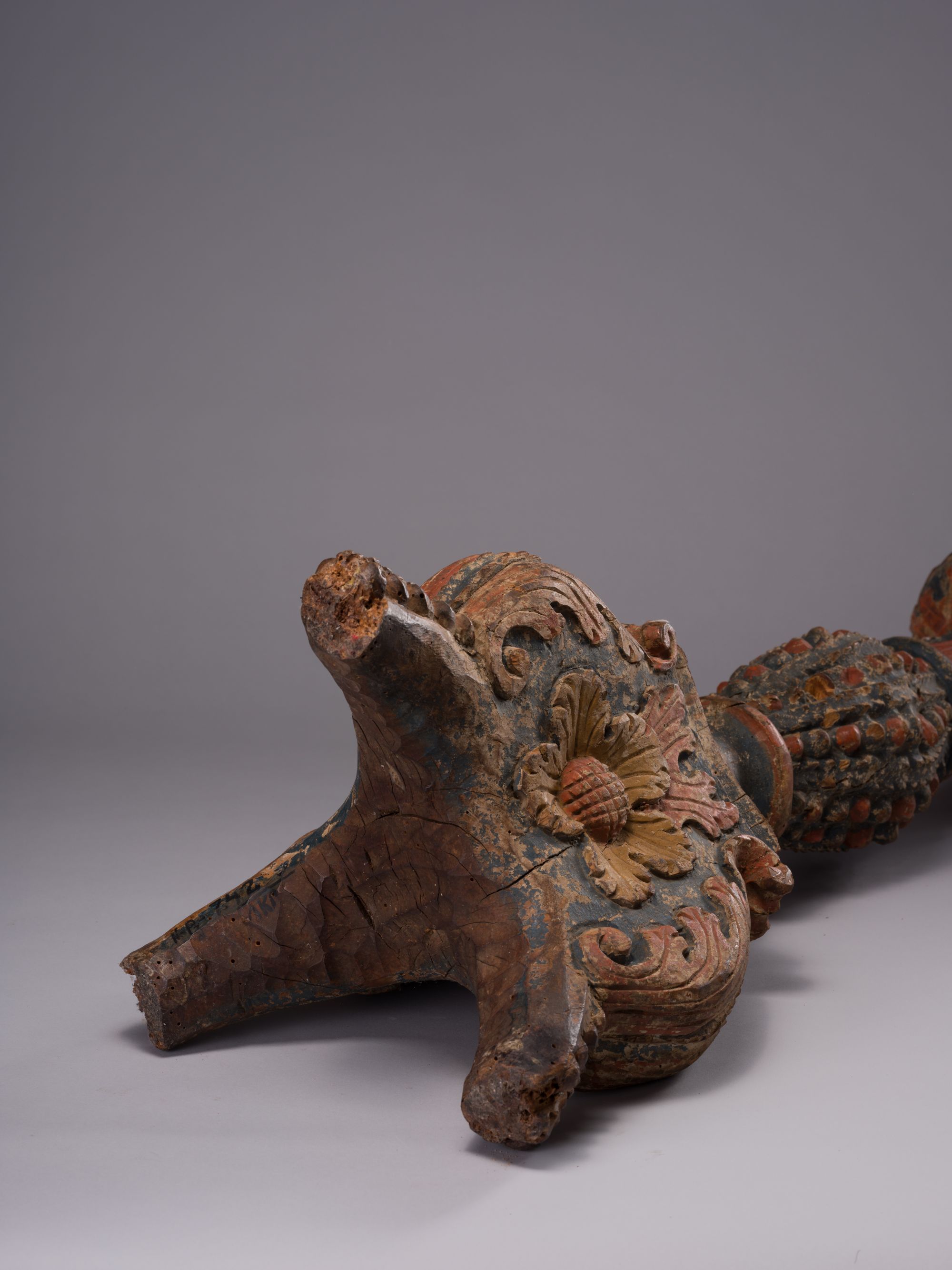
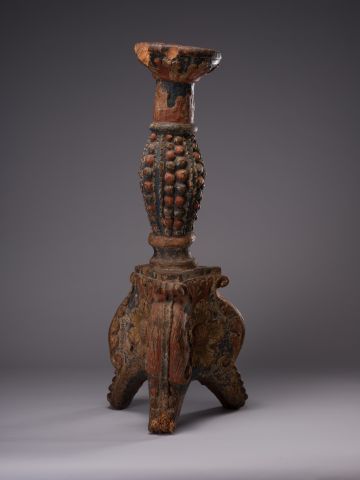
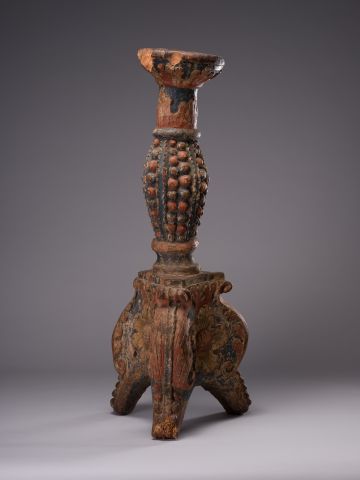
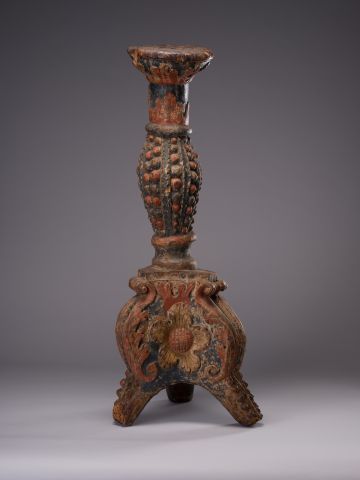
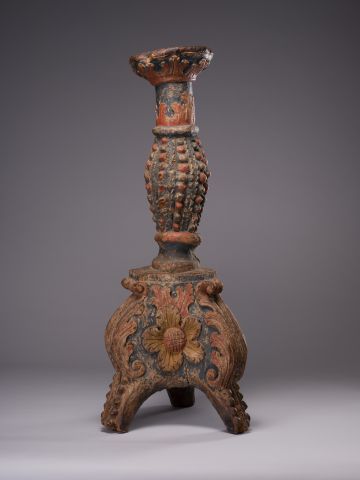
The candlestick was a decorative item of the temple interior, executed in a complex sculptural form that combines functionality with an expressive artistic language. The structural design of the work comprises three parts: a massive lower trilobed base, an elongated central body and a cup-shaped top.
The base of the piece is generously adorned with relief ornament, the decorative motifs of which create a sense of natural movement. The surface is textured, with numerous protrusions and recesses, which enhances the chiaroscuro play and makes the decoration particularly expressive. The central part of the candlestick is entirely covered with relief elements – bands, beads, prominent circles and zigzags. A small ring-shaped thickening on the elongated body visually divides the composition into tiers.
In its artistic solution, the work gives the impression of a solemn, somewhat fantastical decorative object. The ornamental decoration of the candlestick enlivens the rigid symmetry of the form, transforming this object into a combination of architecture, sculpture and decorative applied art. The work demonstrates the master's affection for complex form and relief, ornamentality and the contrast of shapes.
The single-branched floor candlestick is perceived not as a utilitarian object, but as a work of art in which the practical purpose is subordinate to the desire to create an impression of splendour, sophistication and decorative grandeur.
Legal regulation
Borys Voznytskyi Lviv National Art Gallery