Angel with Outstretched Arms
unknown folk craftsman
Basic information
- ID
- С-I-1287
- Author
- unknown folk craftsman
- Name
- Angel with Outstretched Arms
- Date of creation
- 19th c.
- Country
- Ukraine
- Culture
- Folk
- Technique
- carving polychromy
- Material
- wood
- Dimensions
- 33 x 28 x 10 cm (height x width x depth)
Additionally
- Type
- sculpture
- Genre
- religious
- Plot
- Angel
- Provenance
- Zhydachiv district
Information about author
Object description
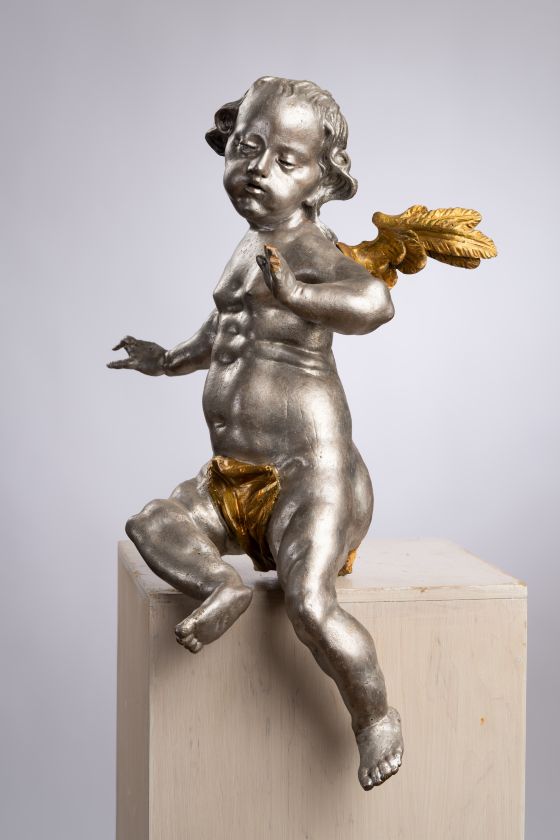
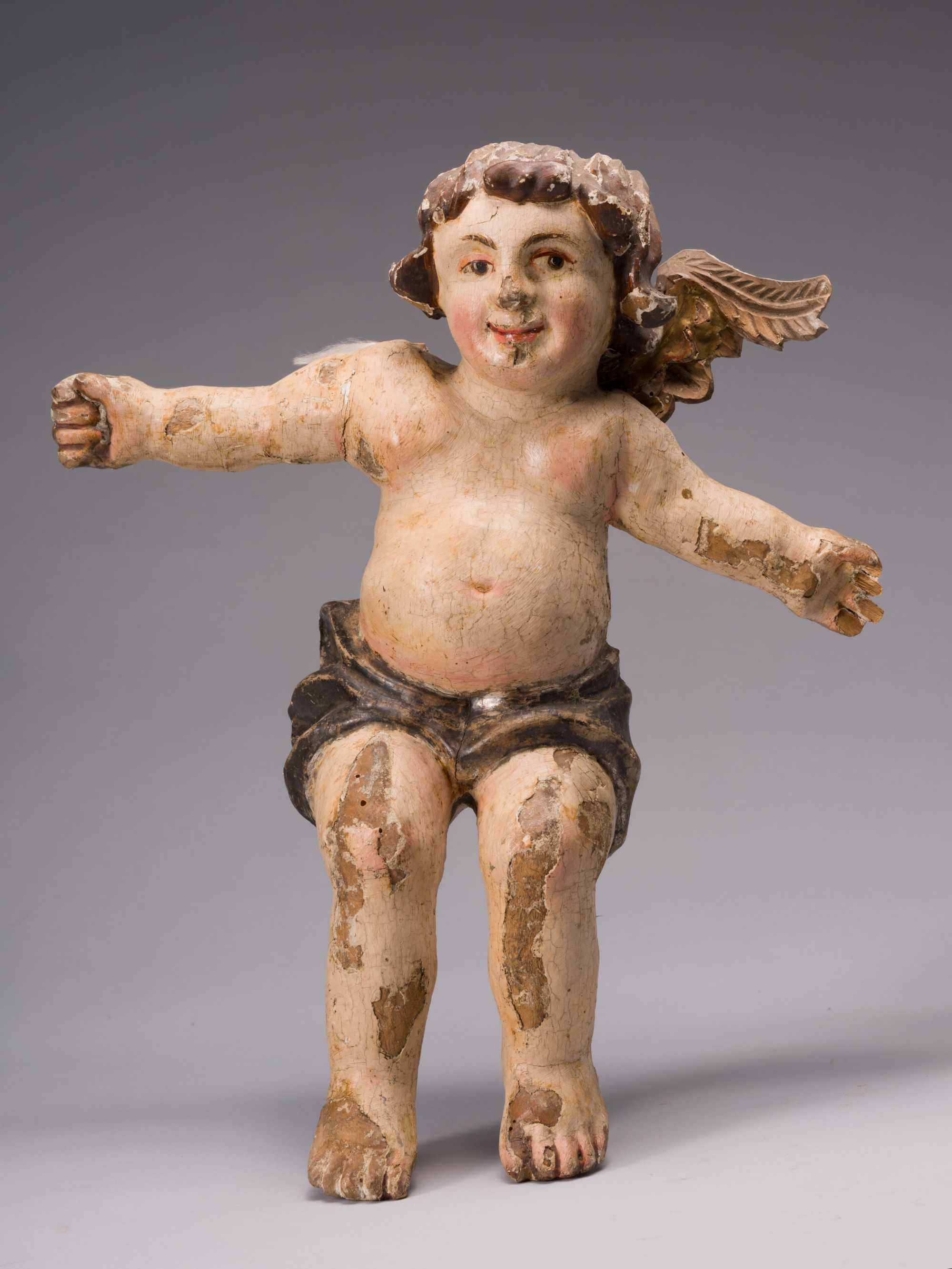
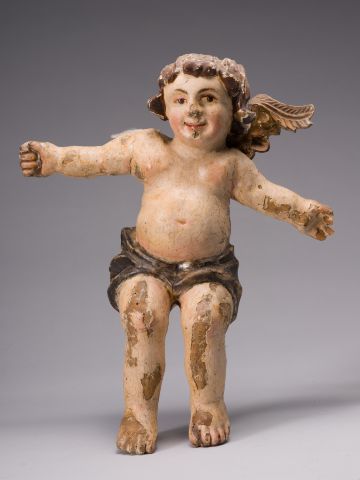
The sculptural representation presents the image of a putto angel, which was an organic part of temple decoration in Ukrainian folk art of the 19th century. They were most frequently used to decorate altars and iconostases.
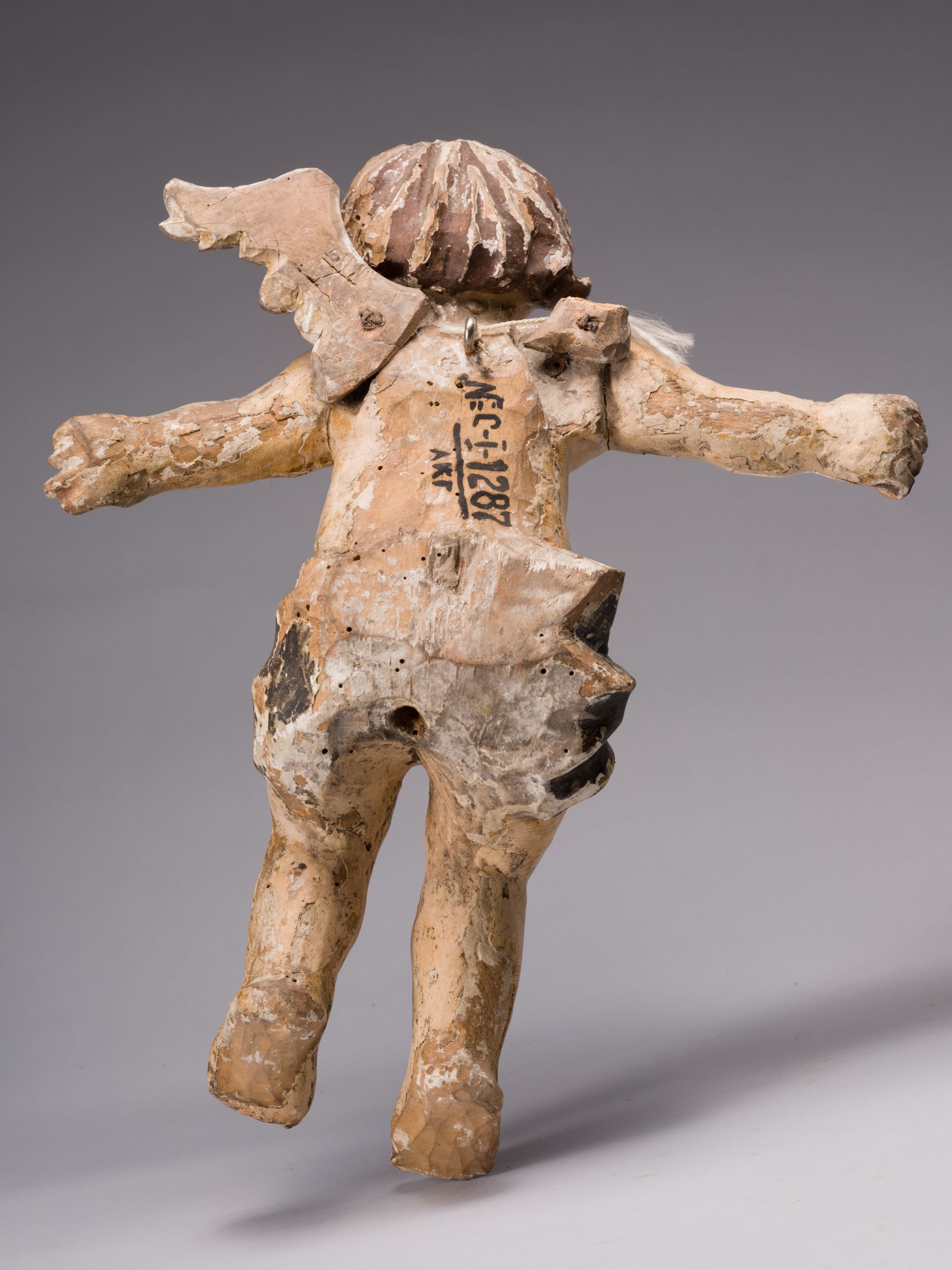
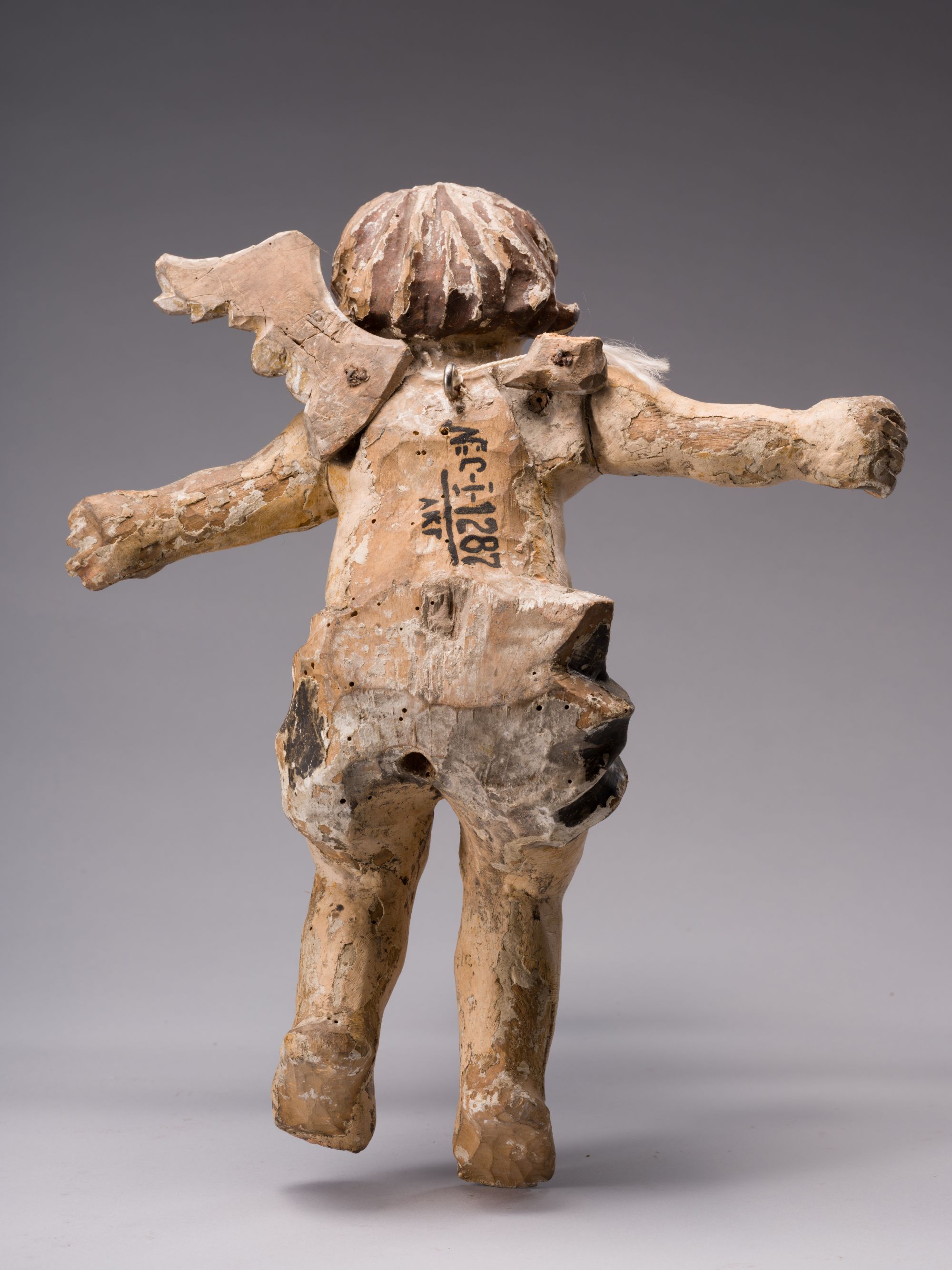
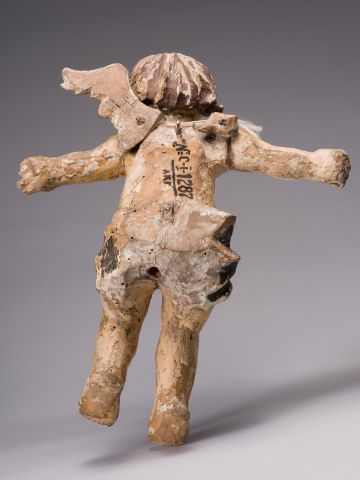
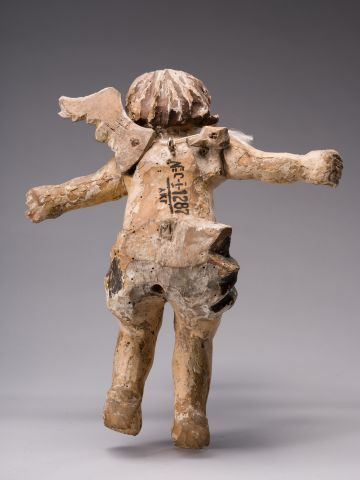
The figure of the angel is carved in a dynamic pose with outstretched arms and legs slightly bent at the knees, as if frozen in a moment of movement. A small wing with remnants of gilding can be seen behind the back. The full-length figure is depicted somewhat generally, without striving for anatomical fidelity. It is precisely this simplicity that lends the image a special expressiveness and sincerity. The angel appears as a messenger from heaven, yet his appearance is devoid of detached grandeur.
The expressive, rounded face is carved with exceptional warmth – large dark eyes, finely defined eyebrows, and slightly upturned corners of the mouth form an expression of a quiet, dreamy smile, characteristic of the angelic image in the tradition of folk masters. The angel's expression is full of inner concentration and benevolence. The angel is not a menacing messenger, but a small child who embodies purity and innocence. In the interpretation of gestures, facial expressions and pose, one can feel the master's desire to make the sacred as close and understandable to ordinary people as possible.
The compositional solution of the sculpture is distinguished by a sculptural silhouette and the absence of complex spatial perspective. The master carves the figure of the angel not according to academic canons, but according to an inner perception of the sacred image, inherent to folk craftsmen who learned the trade within a guild or family tradition without formal artistic education. It is precisely this naivety of form, combined with the sincerity of the facial expression, that constitutes the primary artistic value of the work.
Legal regulation
Borys Voznytskyi Lviv National Art Gallery