Pricket Candlestick
unknown
Basic information
- ID
- Рз-327
- Author
- unknown
- Name
- Pricket Candlestick
- Date of creation
- 18th c.
- Country
- Ukraine
- Technique
- carving polychromy
- Material
- wood
- Dimensions
- 79 x 18 x 18 cm (height x width x depth)
Additionally
- Type
- decorative and applied arts
- Genre
- religious
- Provenance
- Pidhirtsi village, Brody district, Lviv region
Information about author
Object description
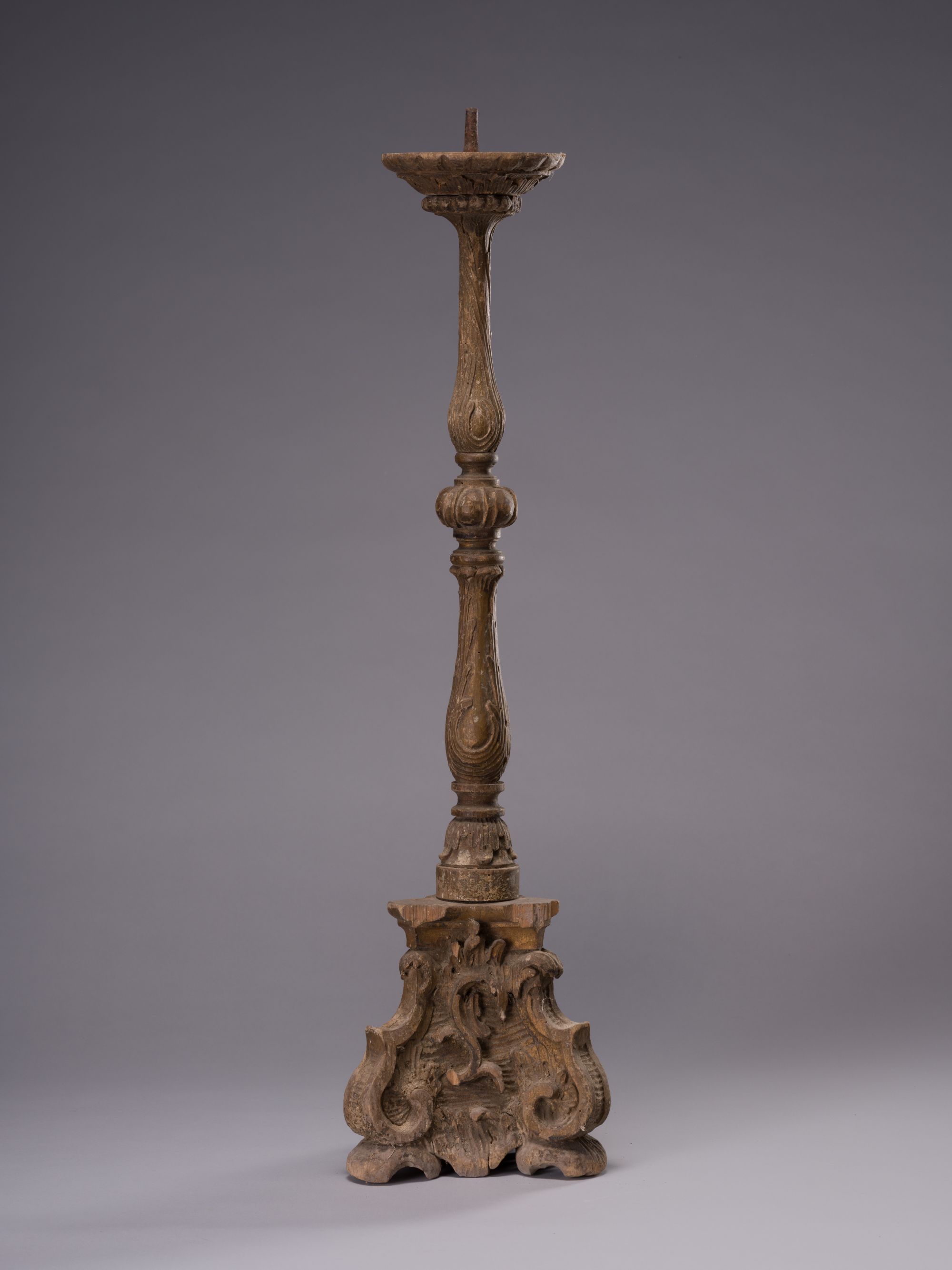
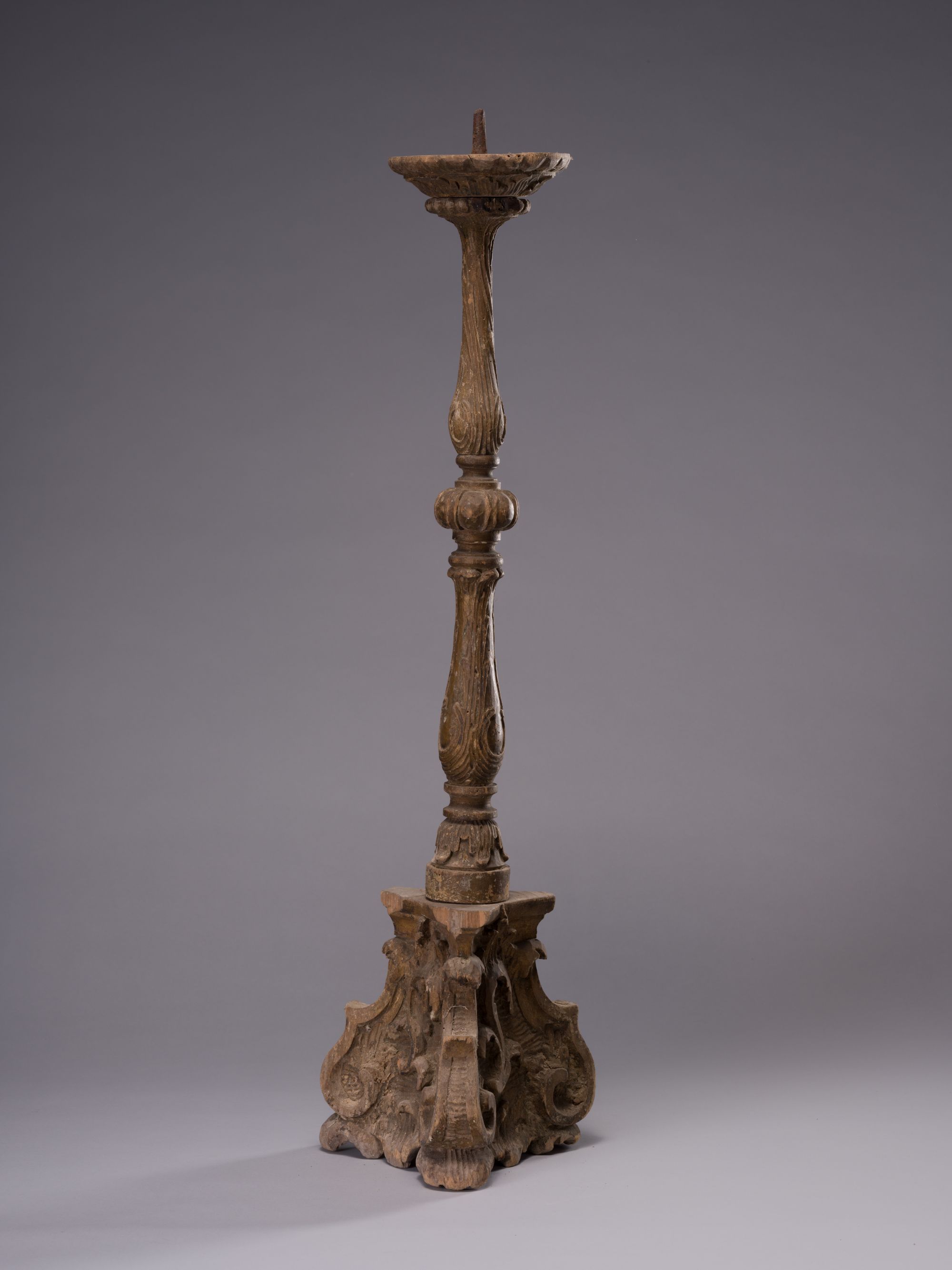
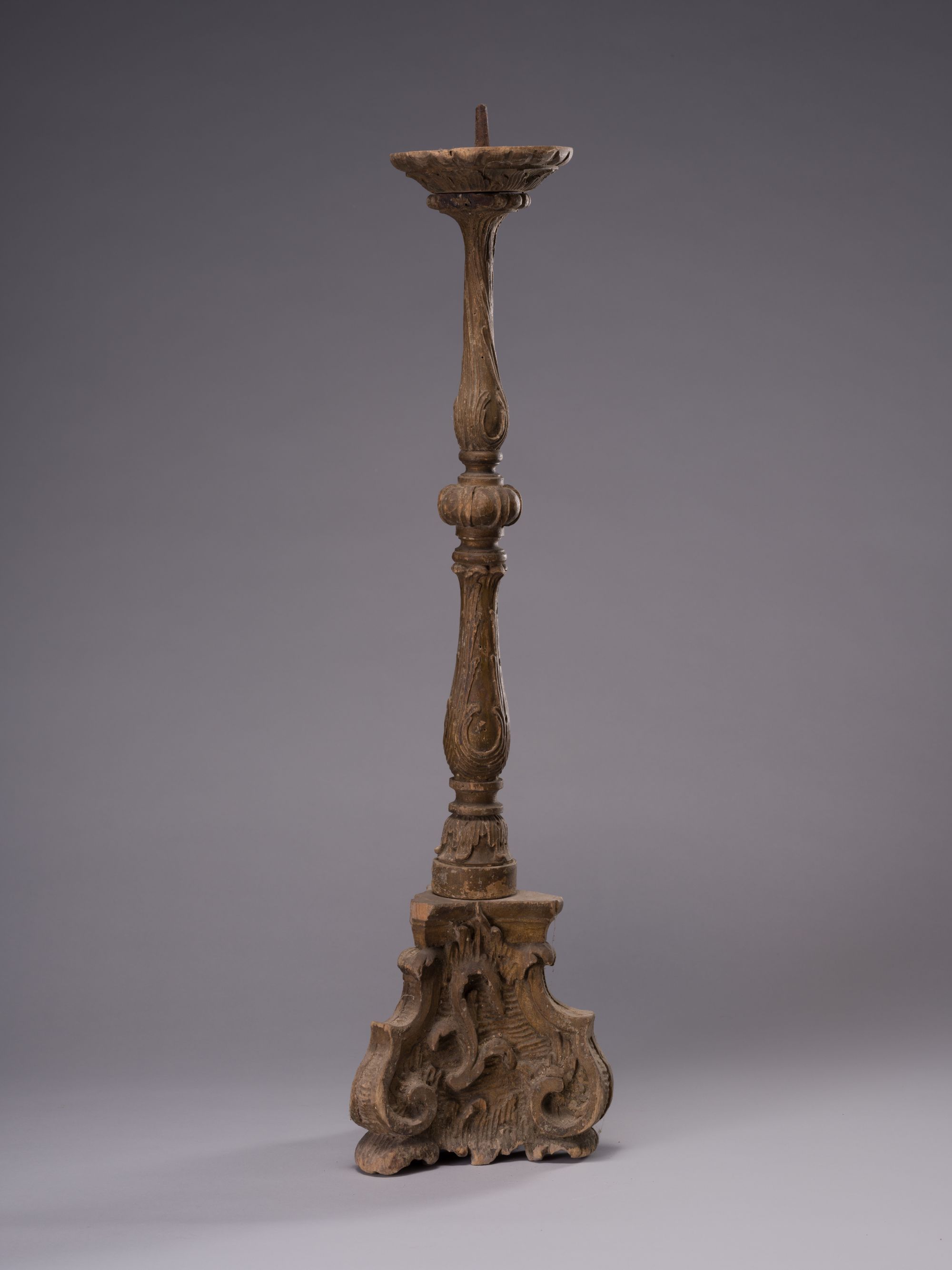
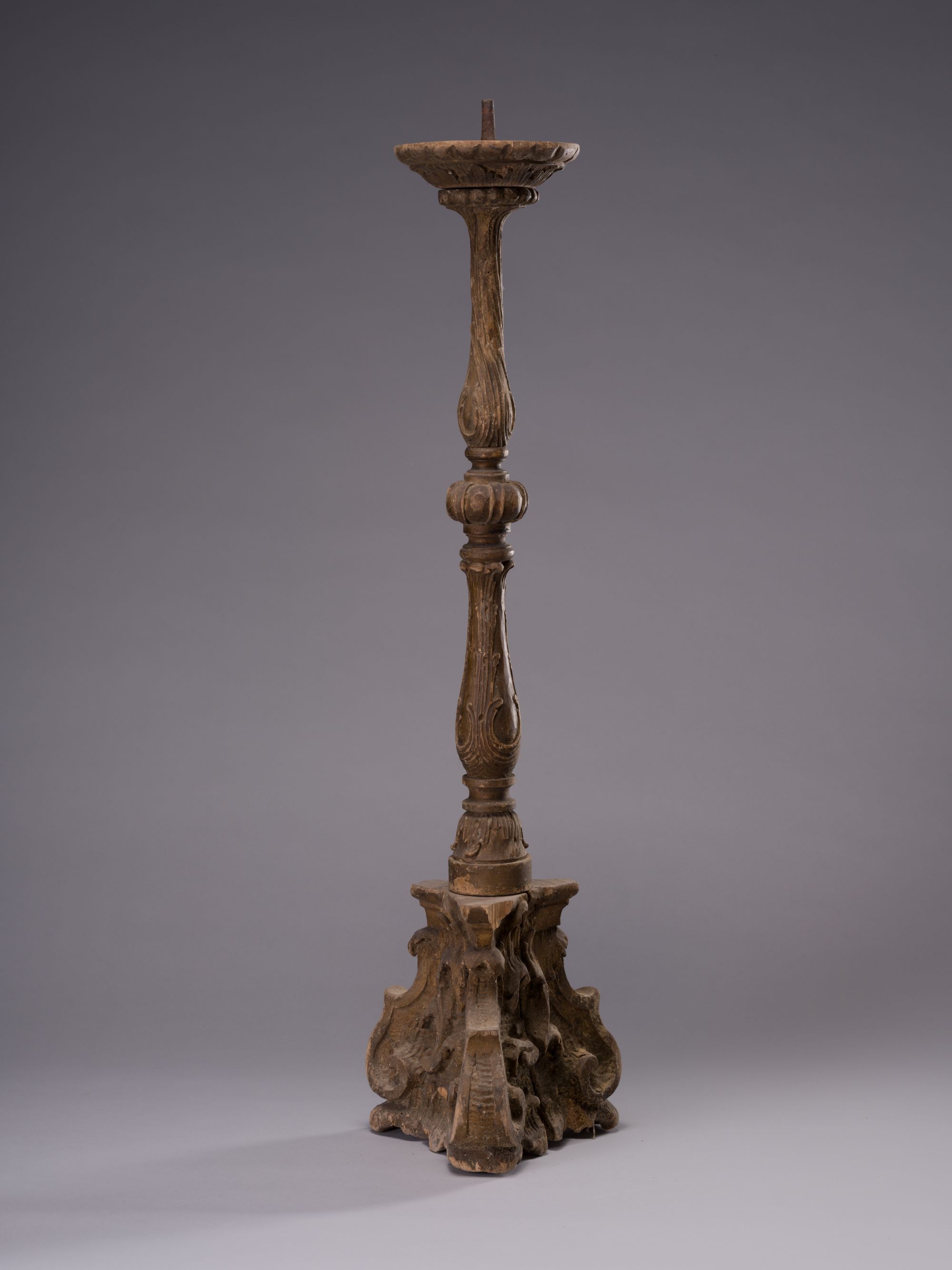
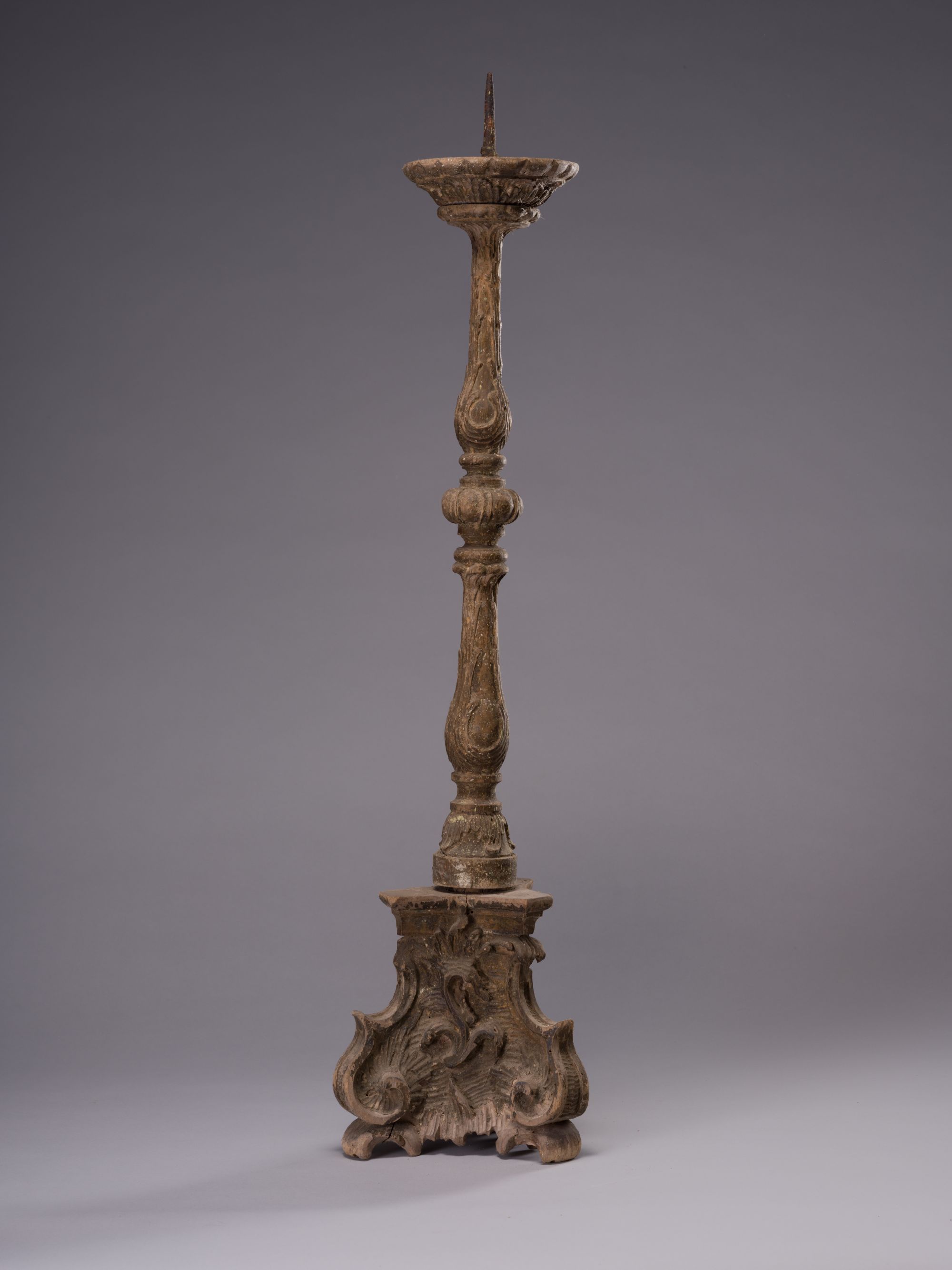
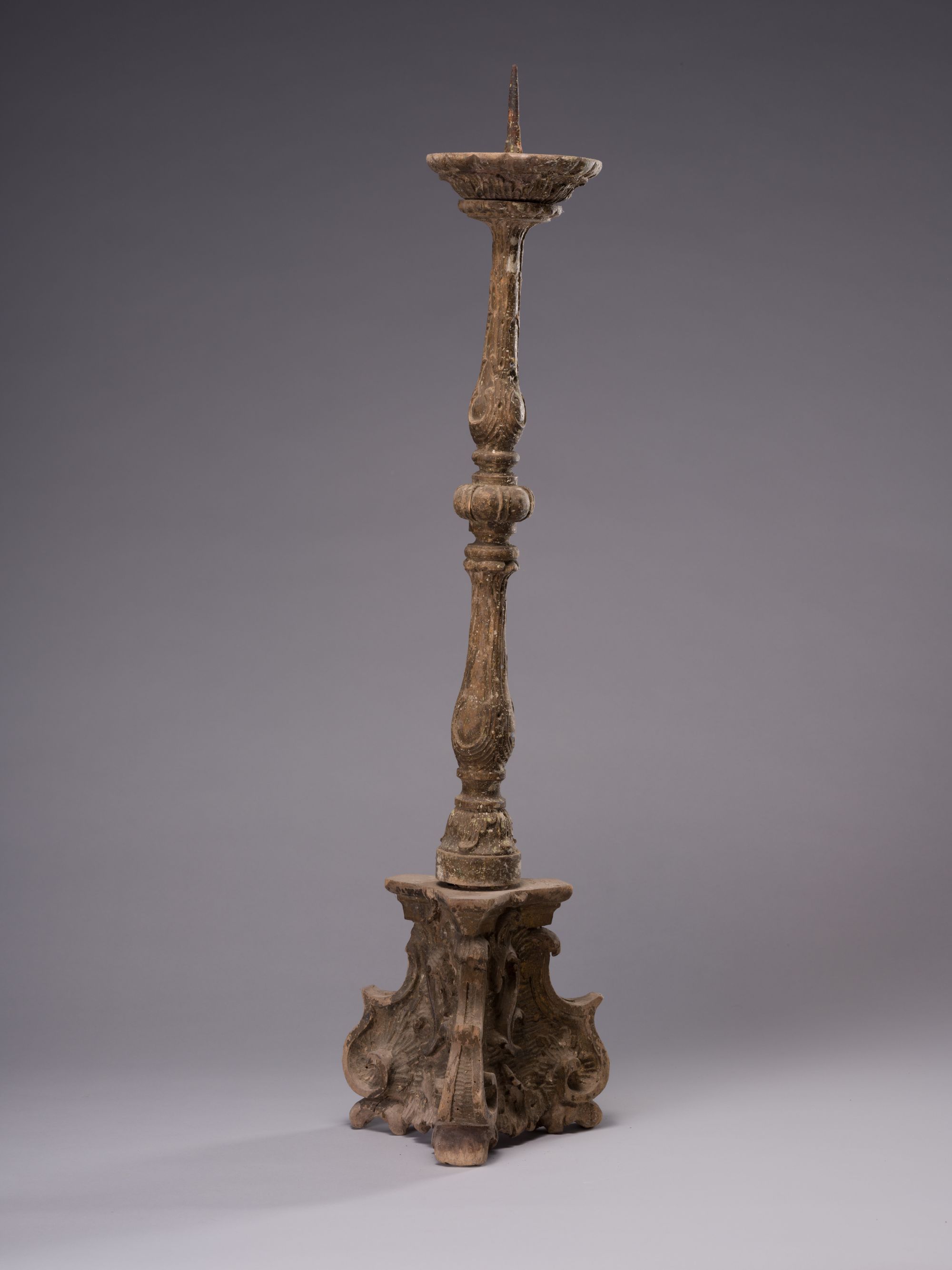
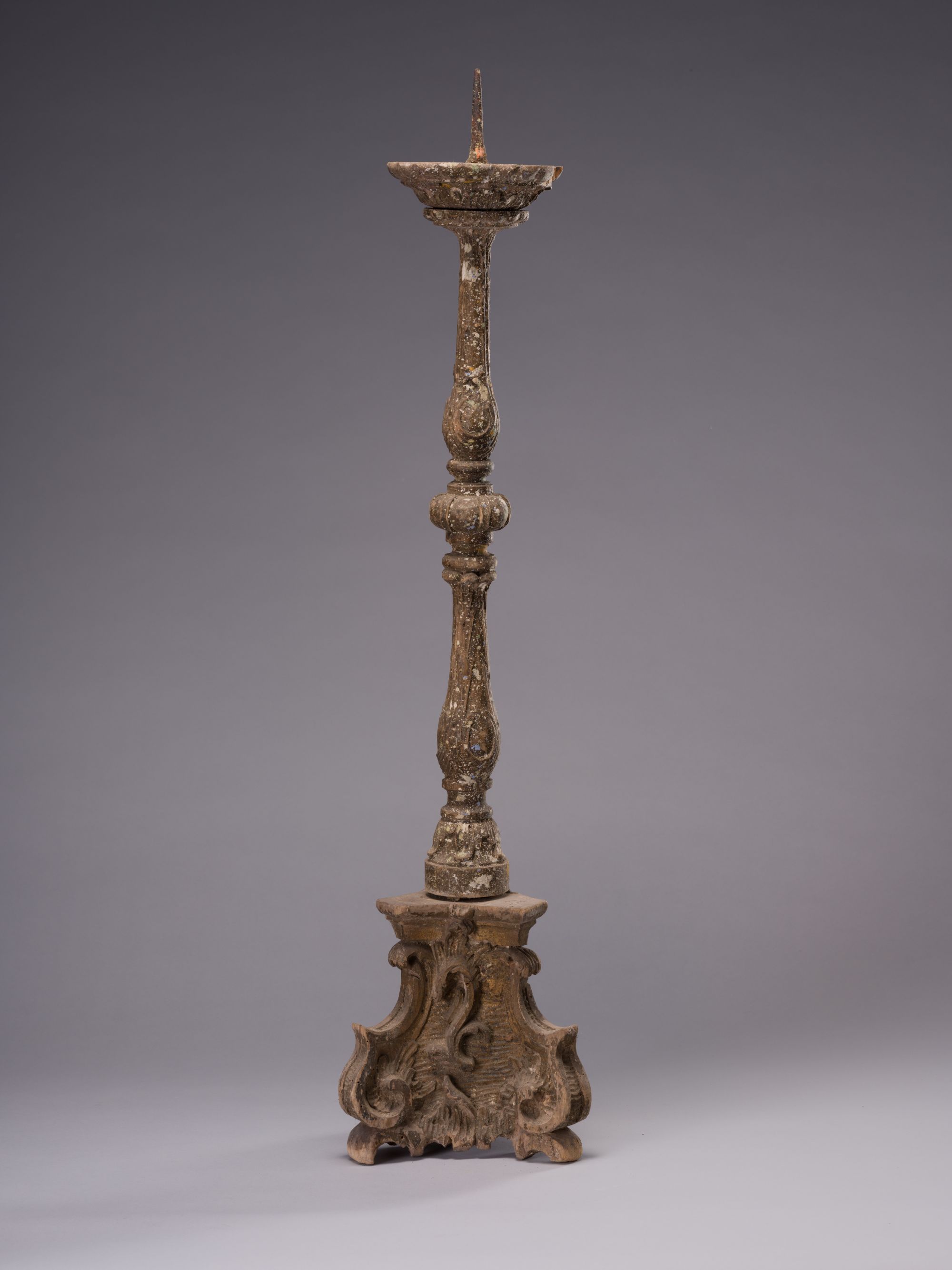
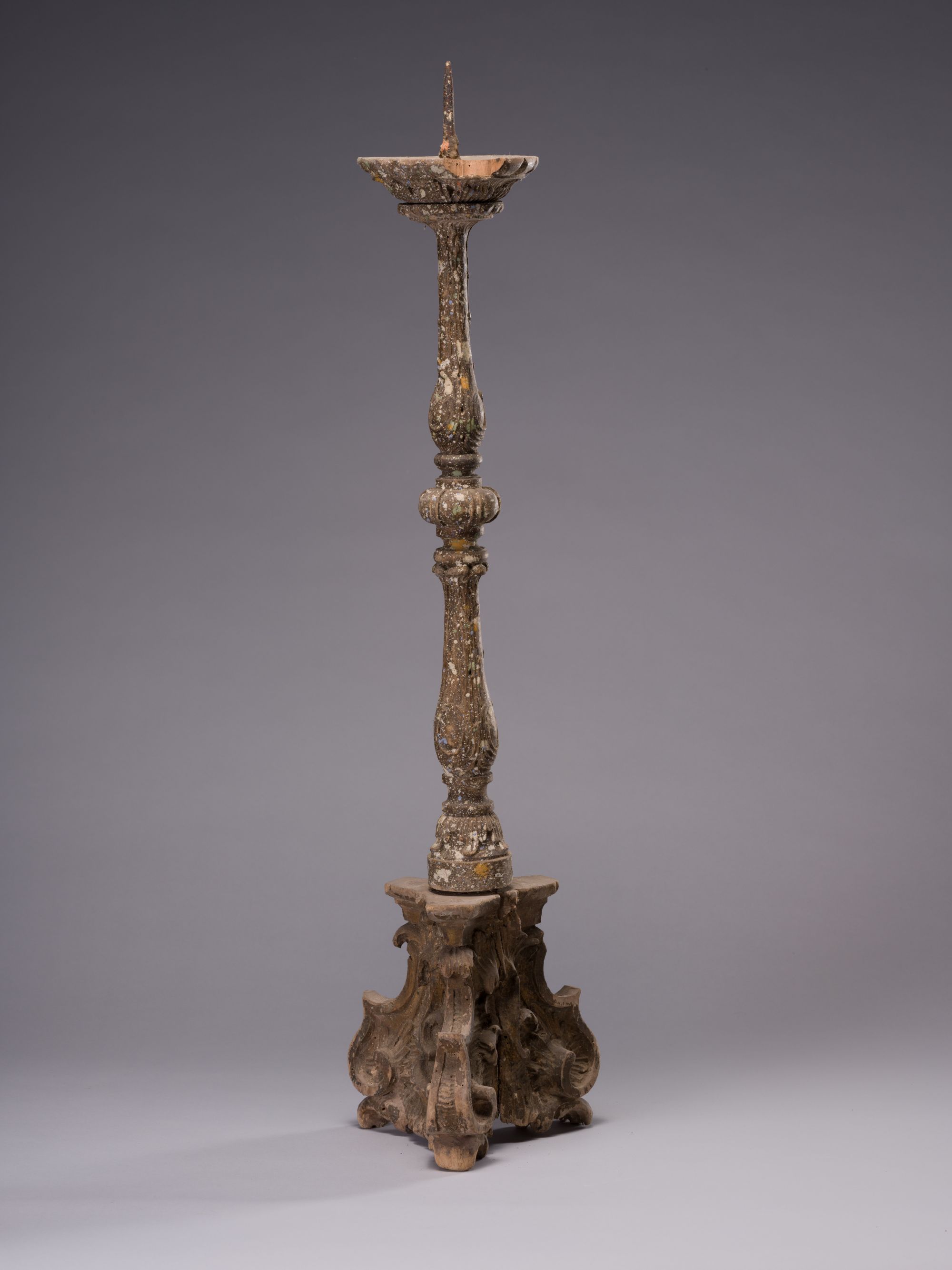
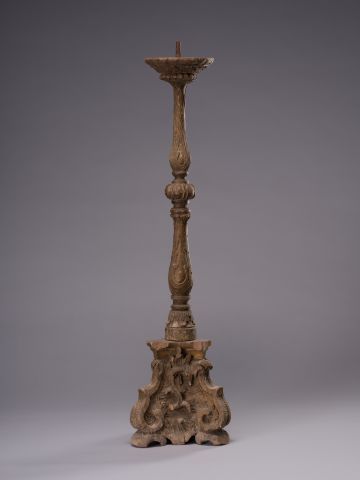
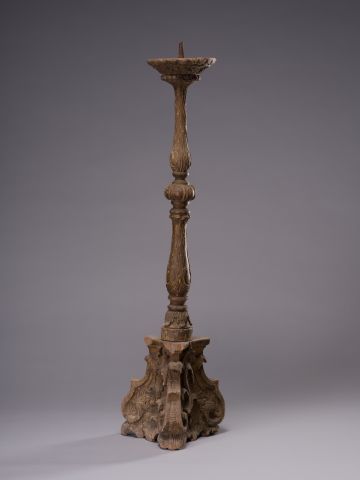
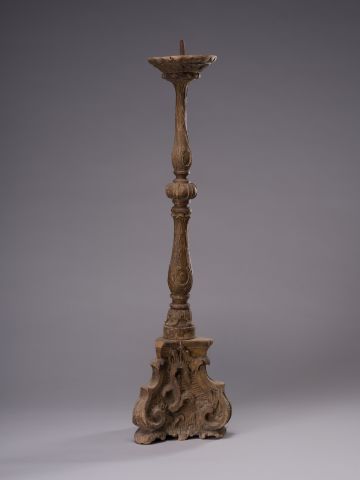
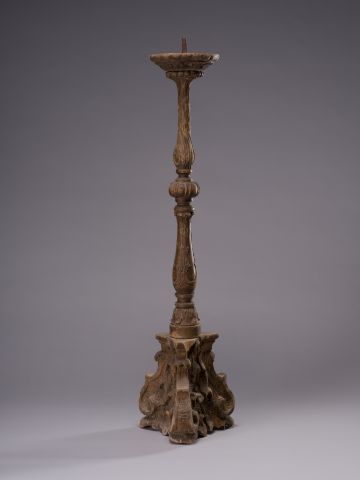
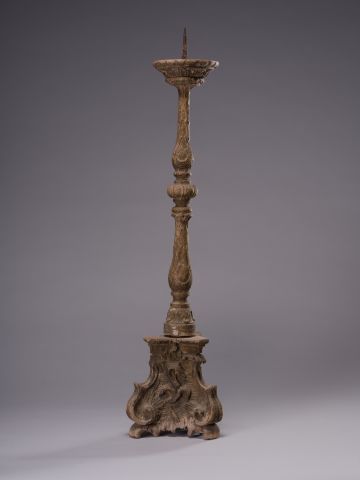
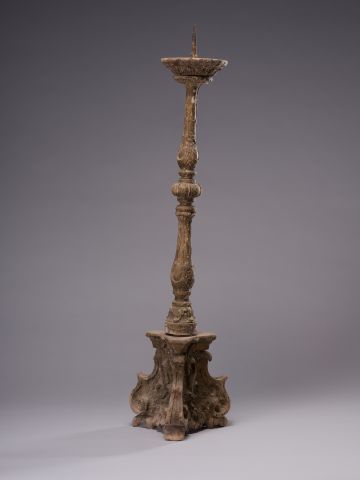
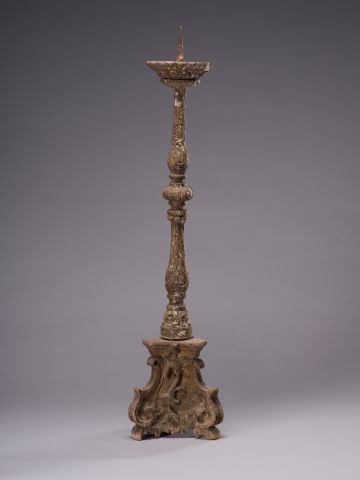
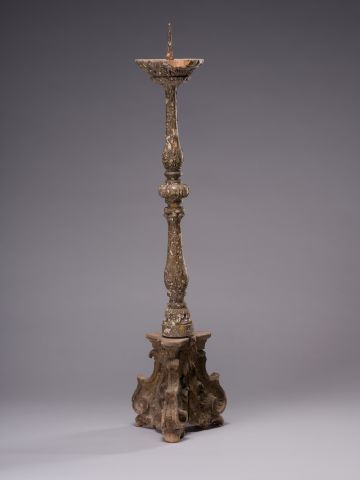
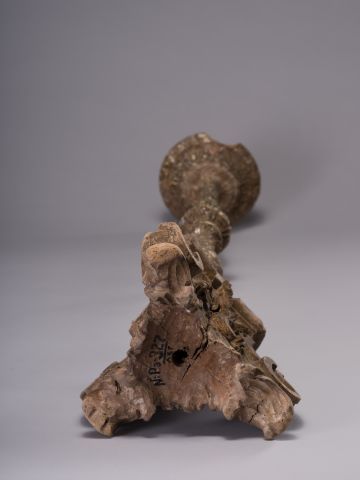
The widespread use of artificial illumination within temples fostered the emergence of fixtures diverse in both typology and design. In church tradition, these are conventionally divided into "portable" and "stationary" light. The presented single-branched wooden floor pricket candlestick typologically belongs specifically to the category of "stationary light". This object is not merely a piece of liturgical utility intended to hold a candle – through its artistic expression, it symbolically directs the viewer's gaze towards the sacred. The candlestick is carved using a three-tiered compositional layout traditional to the Baroque and Rococo eras: a massive shaped lower base, an elegant shaft, and a cup-shaped terminal at the top.
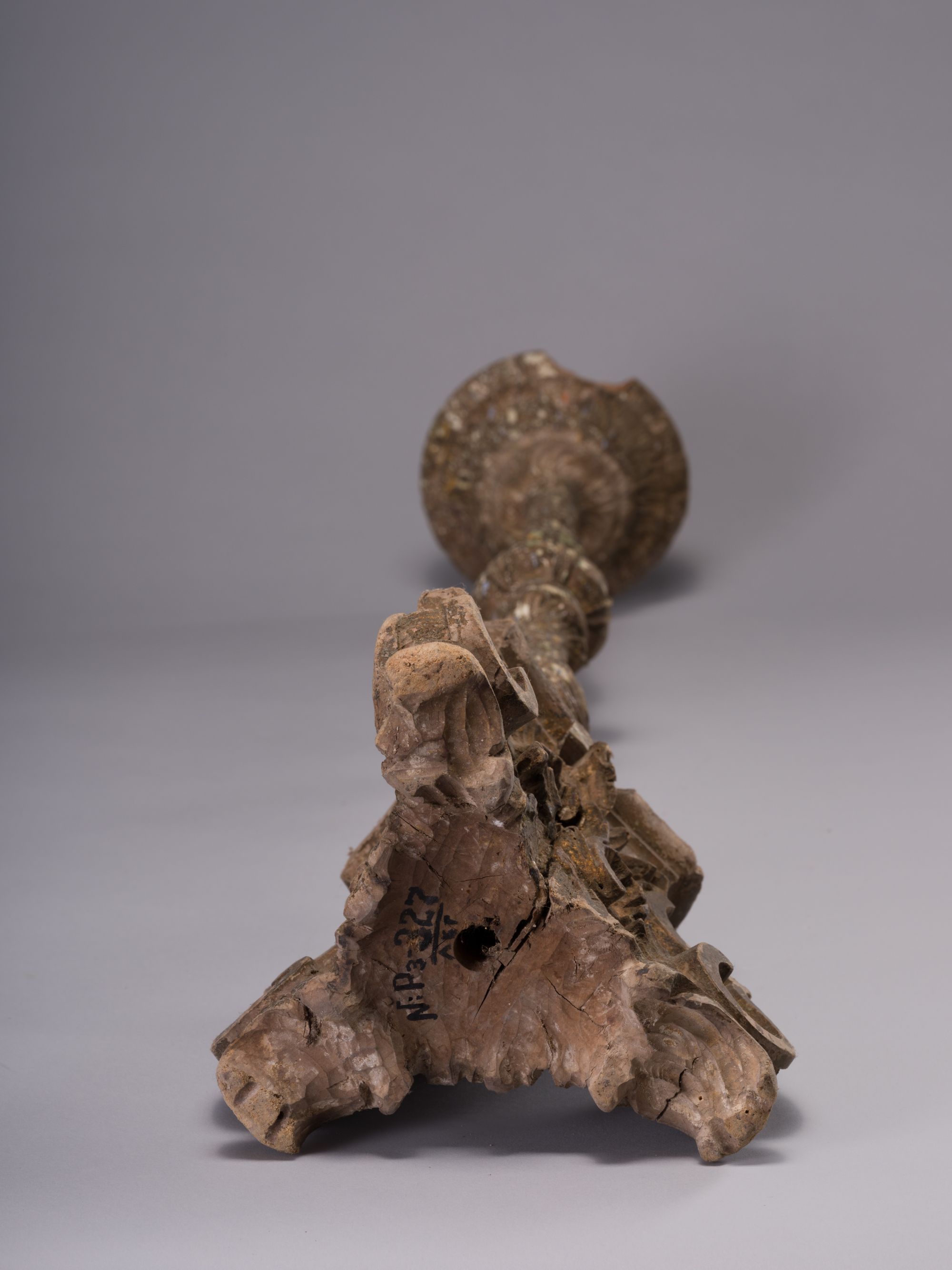
The base of the candlestick consists of a three-lobed plinth with undulating, smoothly carved edges, its surfaces decorated with a stylised floral ornament of leaves and scrolls. The craftsman treats the surface of the base as a living, plastically fluid form. Dynamic curves succeed one another, creating a soft, wavy lacework. Three small feet provide structural stability, their plastic decor evoking the shape of volutes. In the center of the base rises a short, profiled socle serving as a transition to the vertical shaft. The tall shaft is designed as a sequence of turned, carved elements. It takes the form of an elongated pear-shaped baluster intercepted by profiled rings, which transitions into an extended teardrop shape with a slender ring-like swelling in the middle, imitating the silhouette of an elegant vase. The rhythmic alternation of convex and concave elements imparts a fluidity characteristic of Baroque and Rococo plastic art to the shaft. The shaft terminates in a wide, profiled wax pan with a shaped rim, featuring a metal pricket secured in its center for impaling the candle.
In the artistic treatment of the candlestick, the master creatively reinterpreted European Rococo models, lending them greater massiveness, a softer provincial plasticity, and an emphasised decorative, ornamental handling of form. The piece represents a harmonious synthesis of a refined Rococo silhouette and the palpable warmth of hand carving.
Legal regulation
Borys Voznytskyi Lviv National Art Gallery