Depiction of Prophets Moses and Aaron
unknown
Basic information
Additionally
- Type
- decorative and applied arts
- Genre
- religious
- Provenance
- Zaraiske village, Sambir district, Lviv region
Information about author
Object description
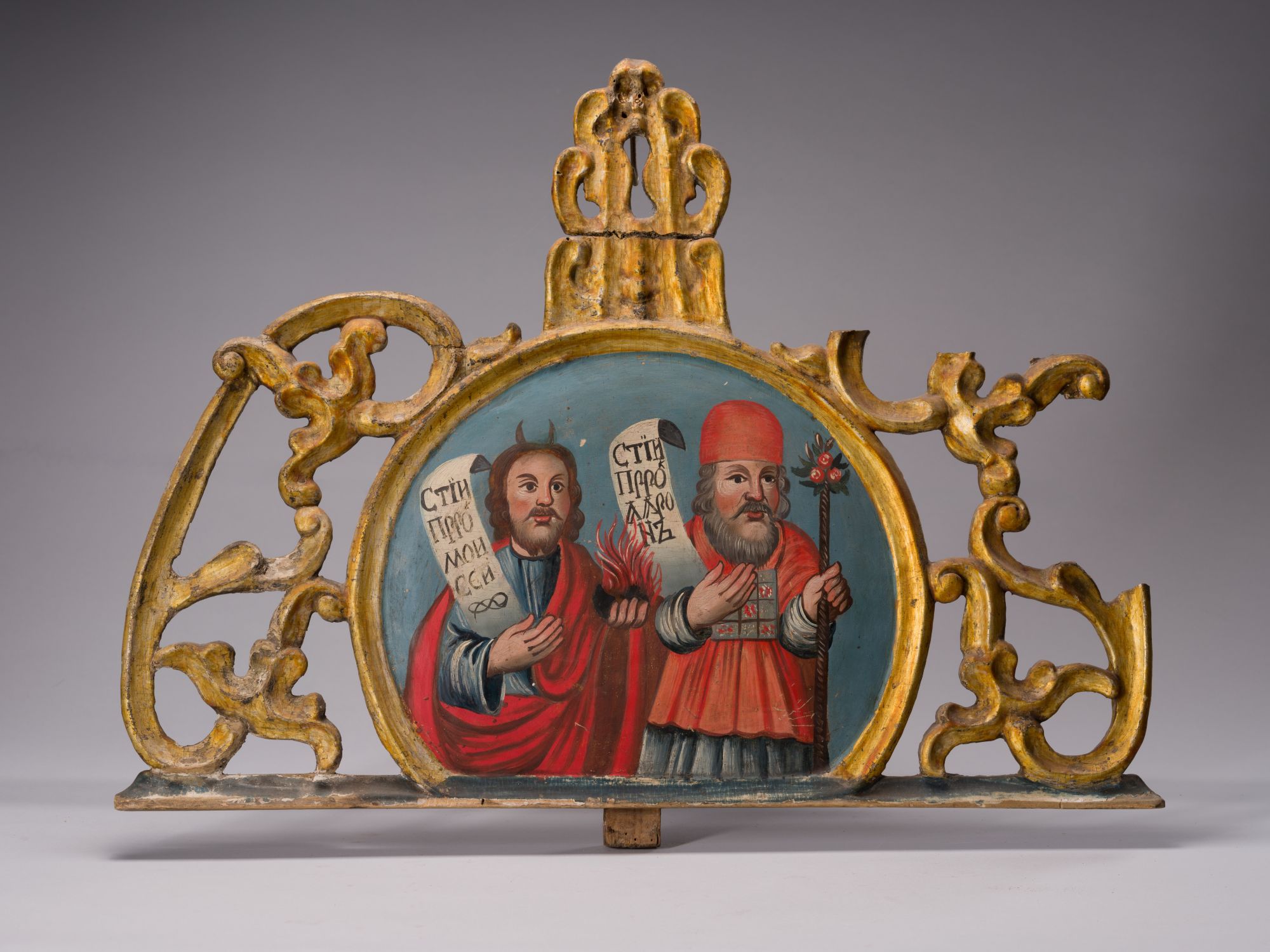
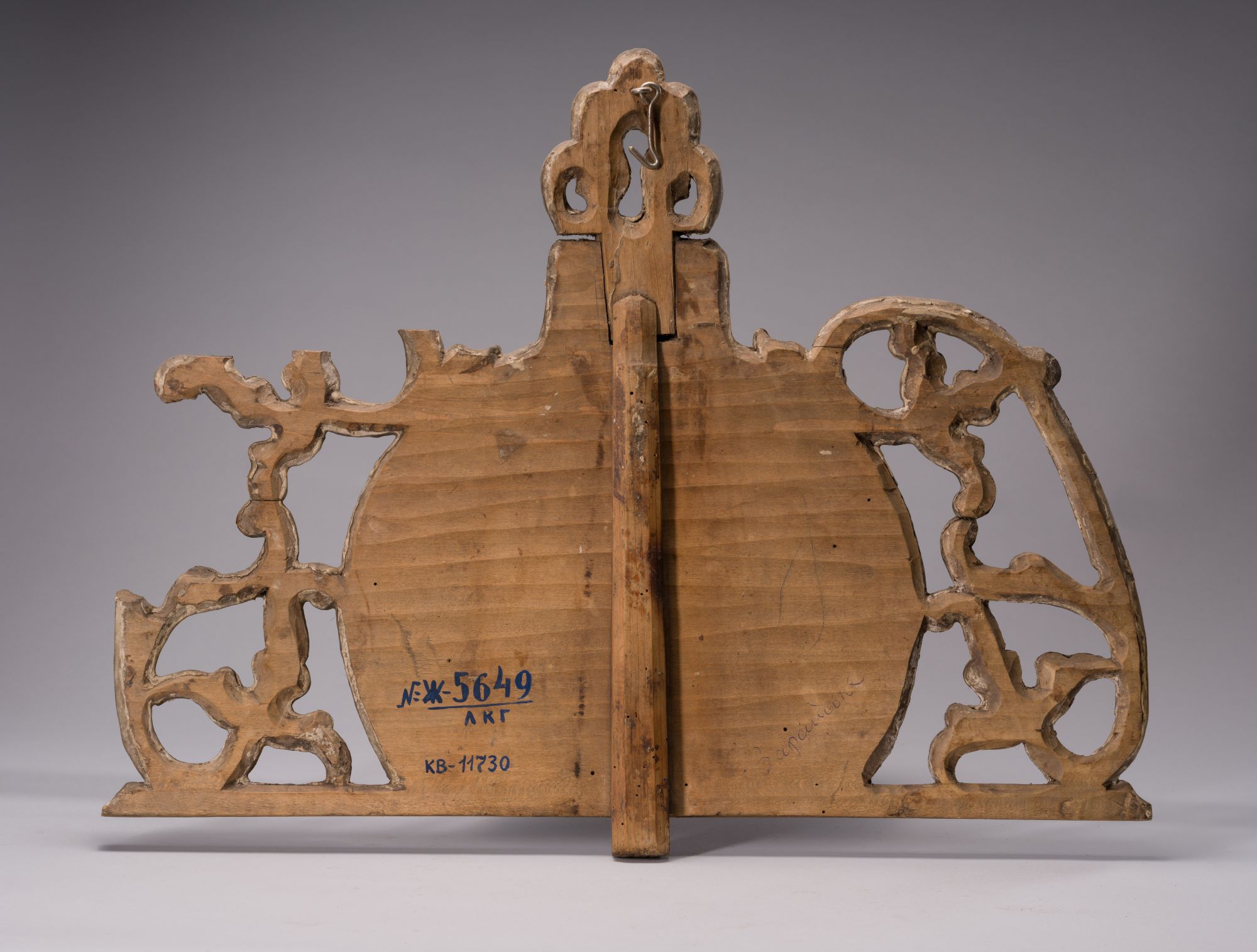
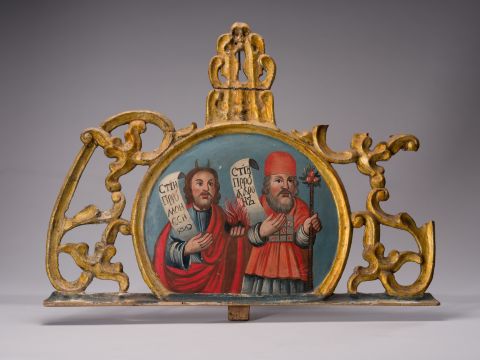
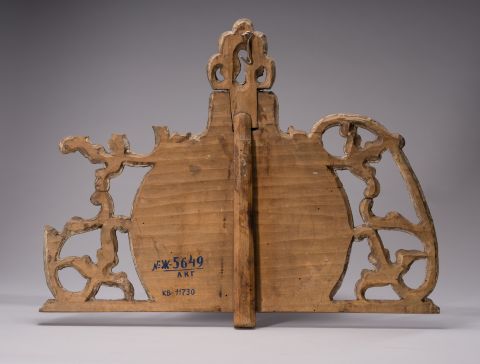
This painted medallion with a two-figure composition, set within a gilded openwork carved frame, was originally part of a complex iconographic ensemble.
The compositional centre of the work is a circular medallion depicting the Prophets Moses and Aaron, as evidenced by the inscriptions on their unfurled scrolls. Set against a blue background, the half-length figures of the saints are presented in static, slightly turned frontal poses, creating an impression of dialogue and solemnity. On the left is Moses, identifiable by his characteristic saintly features and the attributes held in his hands. His visual canon developed over centuries, splitting into Eastern Christian and Western European traditions.
In the Ukrainian iconographic tradition, Moses was frequently depicted as an elder with long hair and a beard, clad in garments of blue and red tones. A unique feature of certain depictions is the presence of so-called "horns" on Moses' head, resembling upturned tufts of hair, which can be observed in the painted medallion from the village of Zaraiske. This tradition originated from Saint Jerome's erroneous Latin translation of the Bible, where the Hebrew word qaran – meaning "ray of light" – was misinterpreted as "horn". Although the error was subsequently corrected, depictions of this type persisted in Western Ukrainian art. From the mid-17th century onwards, they influenced the Ukrainian iconography of the prophet, where these tufts were interpreted as sharp rays of light. In the painting, Moses holds one of his attributes in his hand – the "Burning Bush" (the blazing bush in which the Lord first appeared to Moses on Mount Horeb).
To the right is his brother Aaron, the first High Priest, whose figure is distinguished by his rich vestments. The saint is depicted as a grey-bearded elder wearing a long, light-coloured tunic beneath a shorter red one, with a headpiece of the same colour. In Christian tradition, the colour of the saint's garments also bears symbolic significance: red signifies the shed blood of Christ and the voluntary sacrifice on the cross for the salvation of mankind. A prominent element of Aaron's attire is the square breastplate (the Choshen, or Breastplate of Judgement) adorned with 12 precious stones representing the tribes of Israel. The High Priest bore the names of his people upon his chest, symbolising love and remembrance. In his hand, Aaron holds the budding rod – the quickening of a dry staff that symbolises rebirth and the victory of life over death.
The colour palette of the icon is built upon pure local colours: rich red, blue, and white, which create a distinctive decorative effect against the blue background. The modelling of the faces and hands is concise, featuring a light blush on the cheeks and a soft, graphic delineation of features. The drapery folds are rendered flatly. The expressive, somewhat naive countenances of the prophets imbue the images with sincerity and immediacy.
The medallion is adorned with openwork carving consisting of scrolls, volutes, and floral elements. Thanks to the gilding, it appears light and festive, harmonising beautifully with the pictorial execution of the imagery. The dynamic quality of the exquisite decor balances the stasis of the two figures, creating a cohesive ensemble. This iconographic depiction of the prophets demonstrates the high skill of local masters and attests to the popularity and enduring vitality of ancient iconographic traditions in 18th-century folk art.
Legal regulation
Borys Voznytskyi Lviv National Art Gallery