Prophet
unknown
Basic information
Additionally
- Type
- decorative and applied arts
- Genre
- religious
- Plot
- Prophet
- Provenance
- Ivanivtsi village, Stryi district, Lviv region
Information about author
Object description
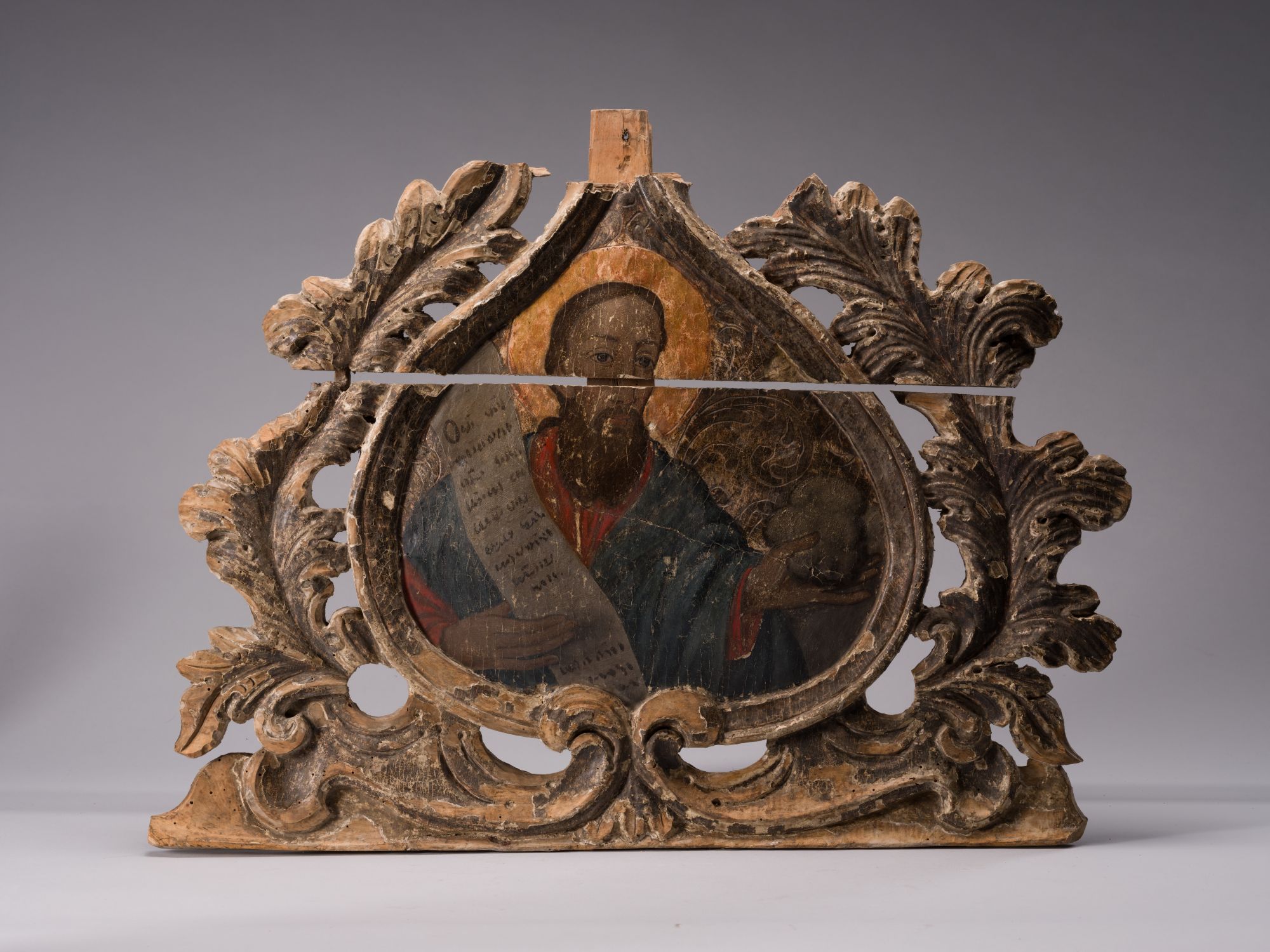
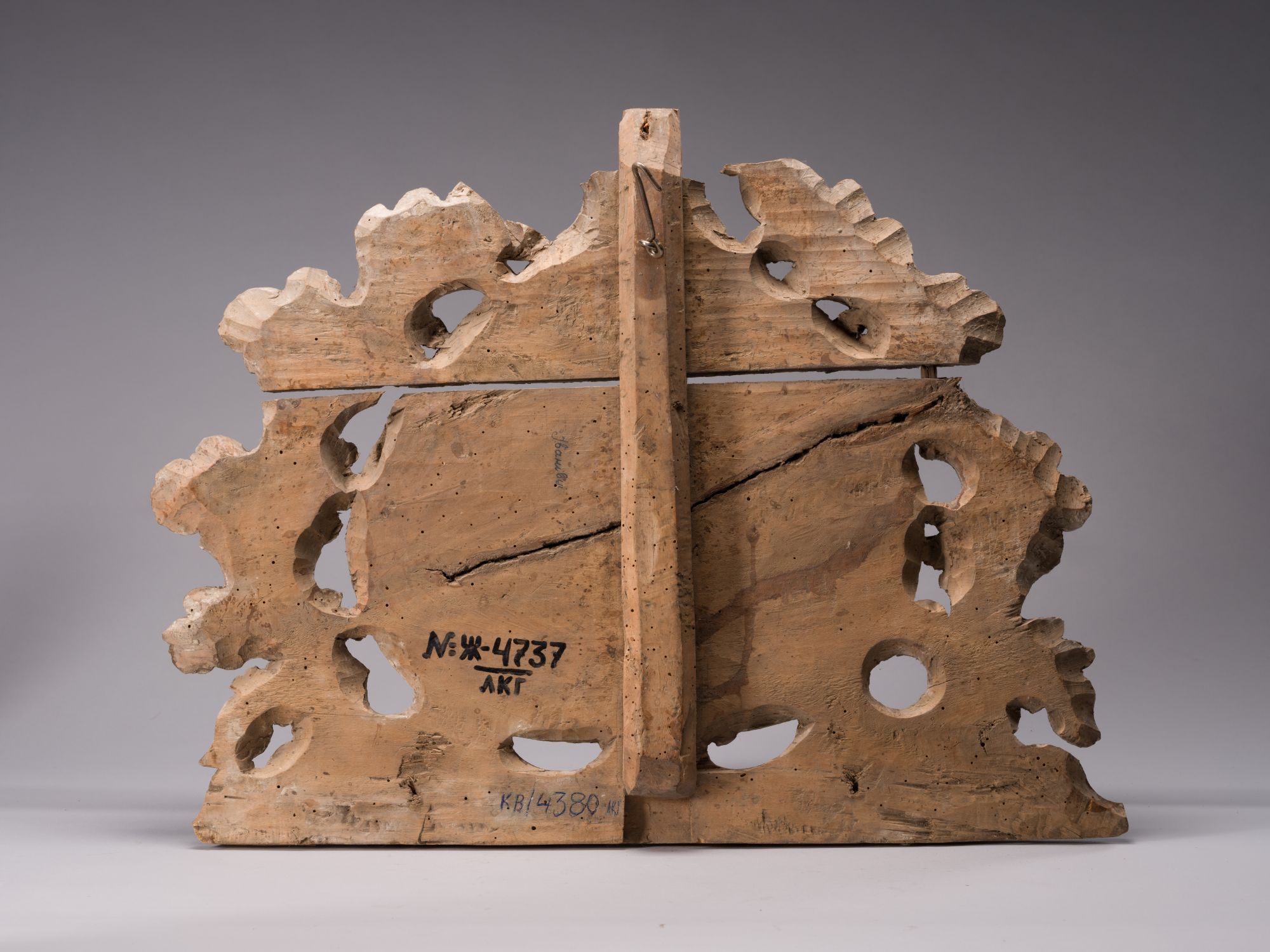
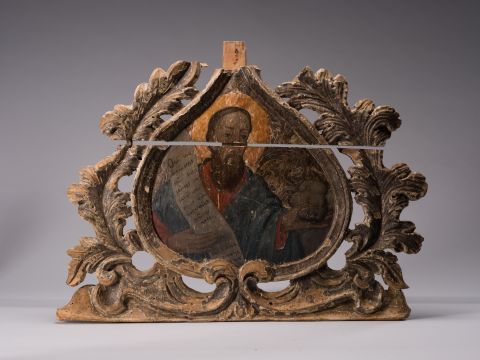
This depiction of a prophet is presented in an oval medallion with a pear-shaped taper at the top, set within a carved relief frame.
In its shape, size, and decorative design, the work was originally part of the prophetic tier of a Baroque iconostasis, where such depictions formed a rhythmic row above the main tiers. The half-length male figure in a frontal pose fills nearly the entire space of the medallion, creating an impression of monumentality combined with intimacy. A high forehead and graphically rendered, expressive almond-shaped eyes characterise the ascetic image of the prophet, who possesses a long beard and a solemn, focused gaze. Against the darkened background, a circular golden halo is clearly discernible. The saint's garments are built upon a contrast of two colours: a red chiton covered by a dark-blue himation with heavy, concisely modelled folds. An unfurled inscribed scroll held in the saint's hand serves as an accentuating bright highlight. The pictorial modelling of the face and hands is restrained, and the colour palette is deep, based on a combination of red, blue, and gold. This manner is characteristic of Ukrainian icon painting of the Baroque era, which was rooted in Byzantine traditions while gradually absorbing Western European influences.
The carved framing functions as an independent artistic element. The pictorial image is enveloped by an openwork composition of carved acanthus, scrolls, and volutes that diverge symmetrically from the sides and transition into a well-developed base. The pierced openings impart lightness to the structure and enrich the play of light and shadow. The carving is deep, featuring meticulously rendered leaves with a ribbed texture. The decorative ornamentation and the painted image form a cohesive ensemble, wherein the fluid, rich plasticity of the carving contrasts with the calm stasis of the figure.
The work serves as an interesting example of the organic integration of painting and carving typical of 18th-century Ukrainian iconostases. It demonstrates the ability of provincial masters to harmonise Eastern Christian iconography with exquisite carved decor.
Legal regulation
Borys Voznytskyi Lviv National Art Gallery