Our Lady of the Sign
unknown
Basic information
- ID
- С-II-857
- Author
- unknown
- Name
- Our Lady of the Sign
- Date of creation
- 18th c.
- Country
- Ukraine
- Technique
- carving polychromy tempera painting
- Material
- wood tempera
- Dimensions
- 55.5 x 95 cm (height x width)
Additionally
- Type
- painting
- Genre
- religious
- Plot
- Our Lady of the Sign
- Provenance
- Radelychi village, Mykolaiv district, Lviv region
Information about author
Object description
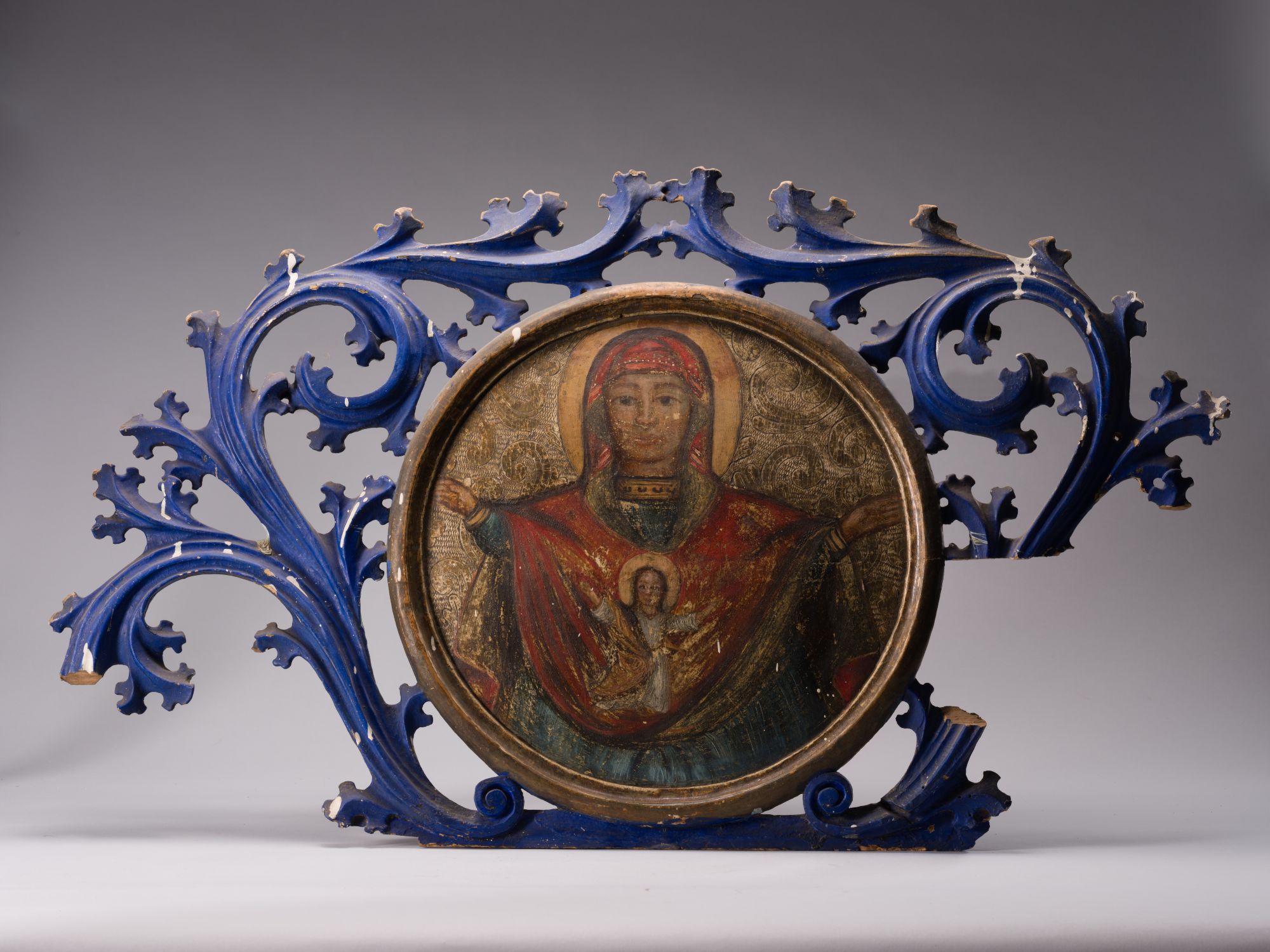
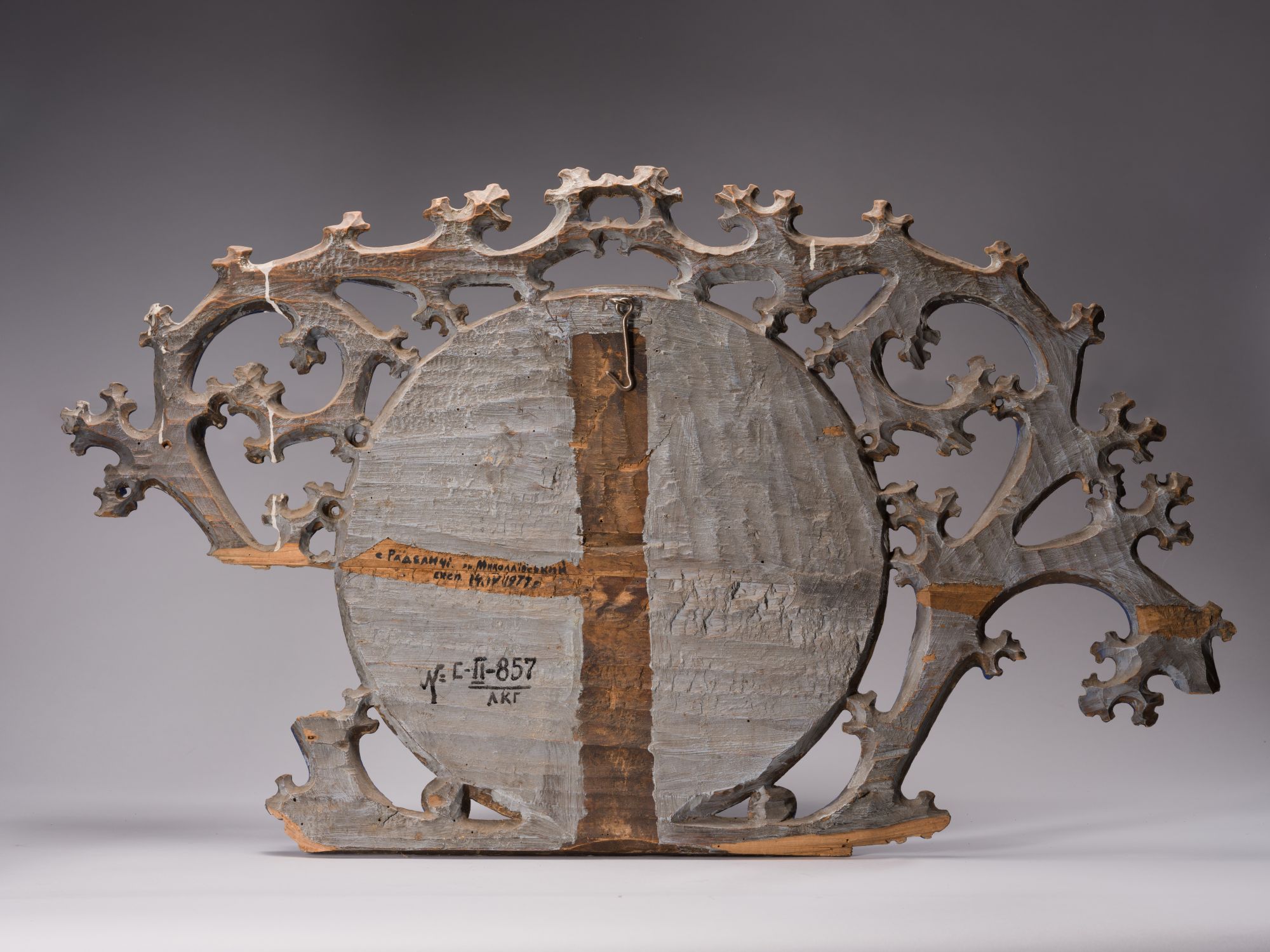
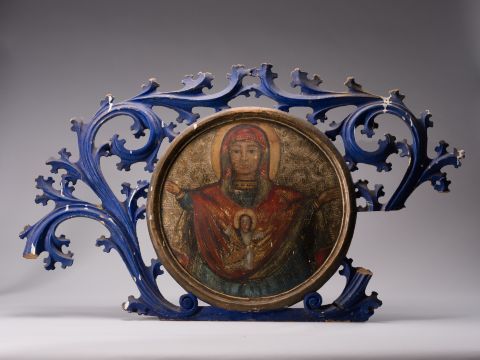
Mother of God of the Sign belongs to the oldest and most theologically profound types of Marian imagery. The half-length figure of the Mother of God stands frontally with her hands raised in prayer and her palms open. This gesture is an ancient symbol of intercessory prayer. On her chest, within a halo, Christ Emmanuel blesses with both hands. The title "Sign" refers to the most crucial event in Christianity – the conception and birth of the Saviour, referencing Isaiah's prophecy of the Sign: "Behold, the virgin shall conceive and bear a Son, and shall call His name Immanuel". This image symbolises the incarnation of the Son of God, the intercession of the Mother of God for the whole world, and her continuous prayer for humanity. In the Ukrainian iconographic tradition, this type was widespread and associated with protection over a town or community.
The compositional solution of the image is strictly symmetrical. The central axis is occupied by the figure of the Mother of God, which emphasizes her monumentality and immutability. The infant Christ upon her bosom serves as the conceptual and visual centre, where the viewer's attention is focused. A generalised, somewhat simplified manner of rendering the image is traceable in the graphically sharp drawing during the modelling of drapery folds and the depiction of the holy faces. The space around the figure is laconic, which is characteristic of the iconographic canon and enhances the sense of prayerful concentration. Polychromy lends colouristic expressiveness to the image. The painter utilised red, blue, and gold colours traditional for iconographic symbolism. The pictorial expressiveness of the work is enhanced by the blue openwork carved design framing the circular medallion.
The iconographic image of the Mother of God combines the Byzantine canon, preserved in the schema, with Baroque decorativeness, which can be seen in the treatment of clothing, decor, and colour. The generalised forms, clear outline, and expressive silhouette link the work to a local tradition, folk in spirit, where painters creatively interpreted established models. The work is characterised by emotional expressiveness and the sincerity of the image.
Legal regulation
Borys Voznytskyi Lviv National Art Gallery