Candlestick with Two Female Figures
unknown
Basic information
Additionally
Information about author
Object description
Porcelain is a noble and the most refined type of ceramics. It is fashioned from a blend of various clay varieties, primarily composed of kaolin. The body is either coated with a transparent glaze or left unglazed, which is known as biscuit porcelain. The wares undergo at least two main stages of thermal treatment and are fired at exceptionally high temperatures. Fine ceramic objects are characterised by their white colour, resonance, strength, and translucency. Two fundamentally different decoration methods are employed in its production: relief modelling and painting.
Porcelain originated in China around the 6th–7th centuries, where the secret of its manufacture was closely guarded. Chinese porcelain items reached Europe during the Middle Ages and were valued more highly than gold, which later earned them the moniker "white gold". For centuries, European masters attempted to replicate this material, creating only fragile, soft imitations instead. The secret of the Chinese craftsmen was finally unlocked only at the beginning of the 18th century in Saxony.
The first manufacture in Europe to produce hard-paste porcelain was founded in 1710 by the Saxon Elector and King of Poland, Augustus II the Strong, near Dresden in the town of Meissen. Its establishment followed the development of kaolin clay mines and the invention of the porcelain paste recipe in 1709 by the alchemist Johann Friedrich Böttger. Throughout the 18th century, the Meissen manufacture experienced its most illustrious period of flourish, shaped by the work of such prominent masters as Johann Gregor Höroldt, Johann Gottlieb Kirchner, Johann Joachim Kändler, Michel Victor Acier, and others. This was an era of bold experimentation, technological refinement, and the creation of iconic models.
Apart from the world-renowned Meissen Porcelain Manufactory, numerous other porcelain factories operated throughout Germany. Chief among these was the Royal Porcelain Factory in Berlin (KPM). No less popular was the production of the enterprises in Dresden, Nymphenburg, Volkstedt, Ludwigsburg, Frankenthal, and Selb.
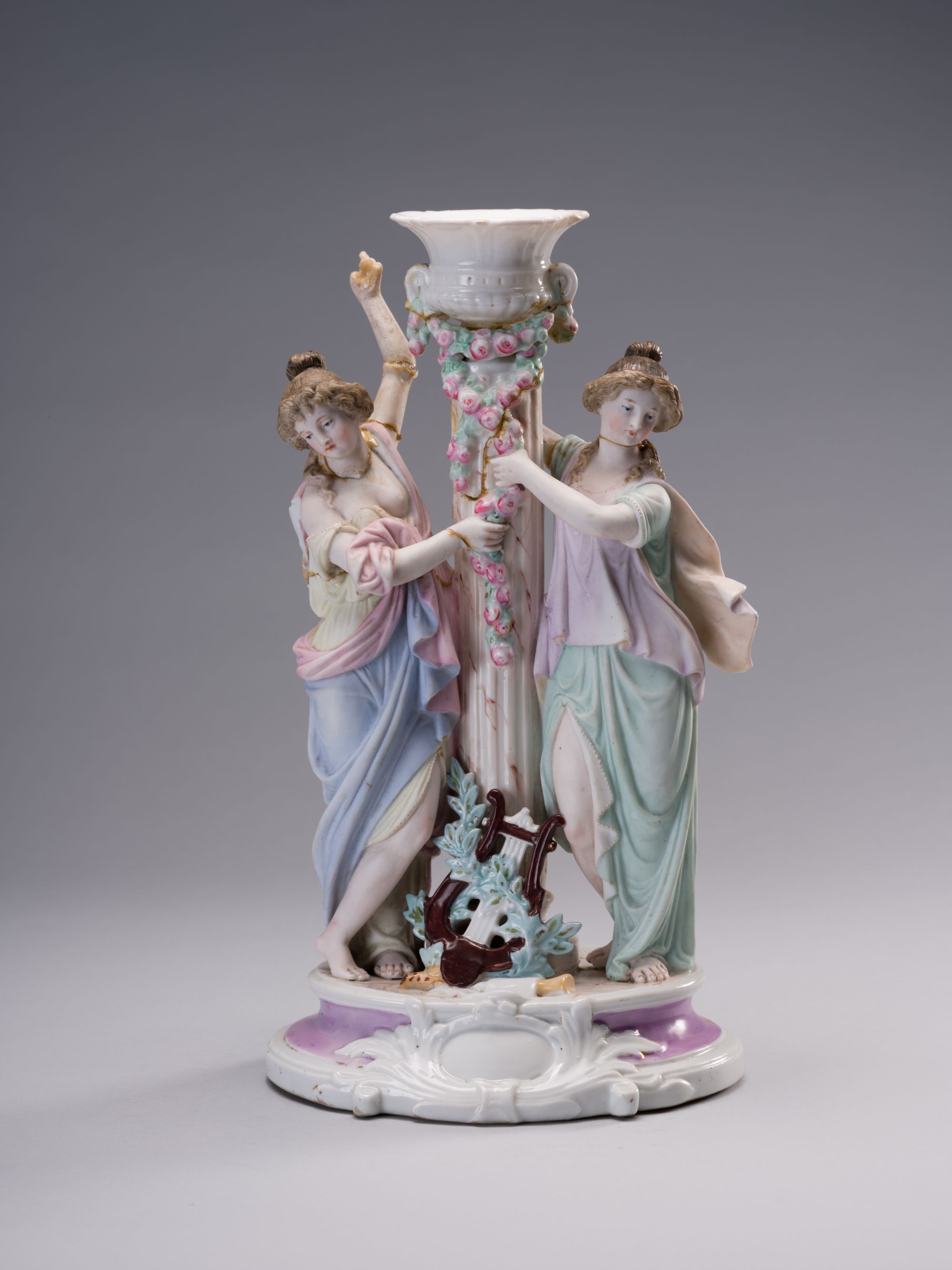
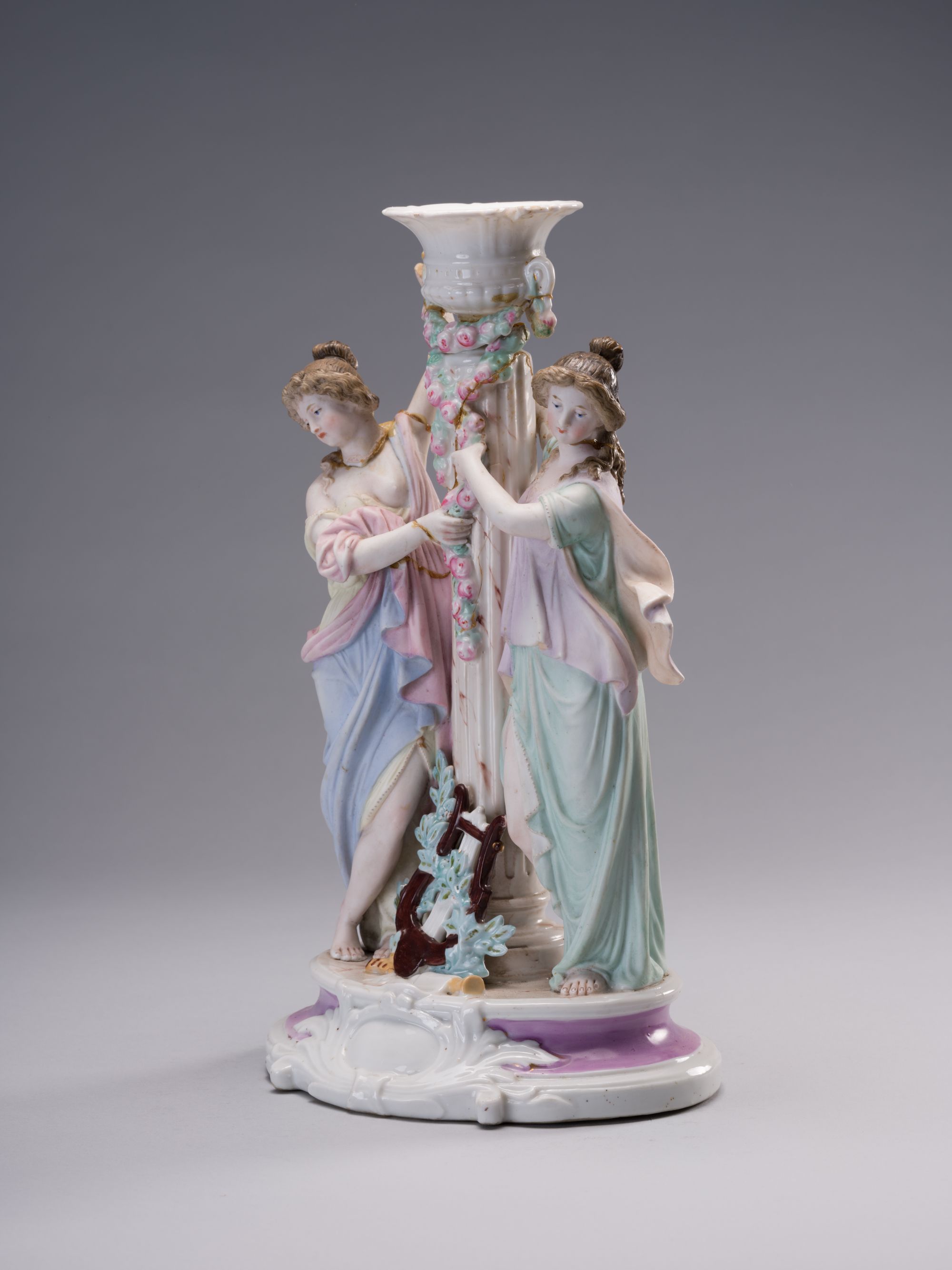
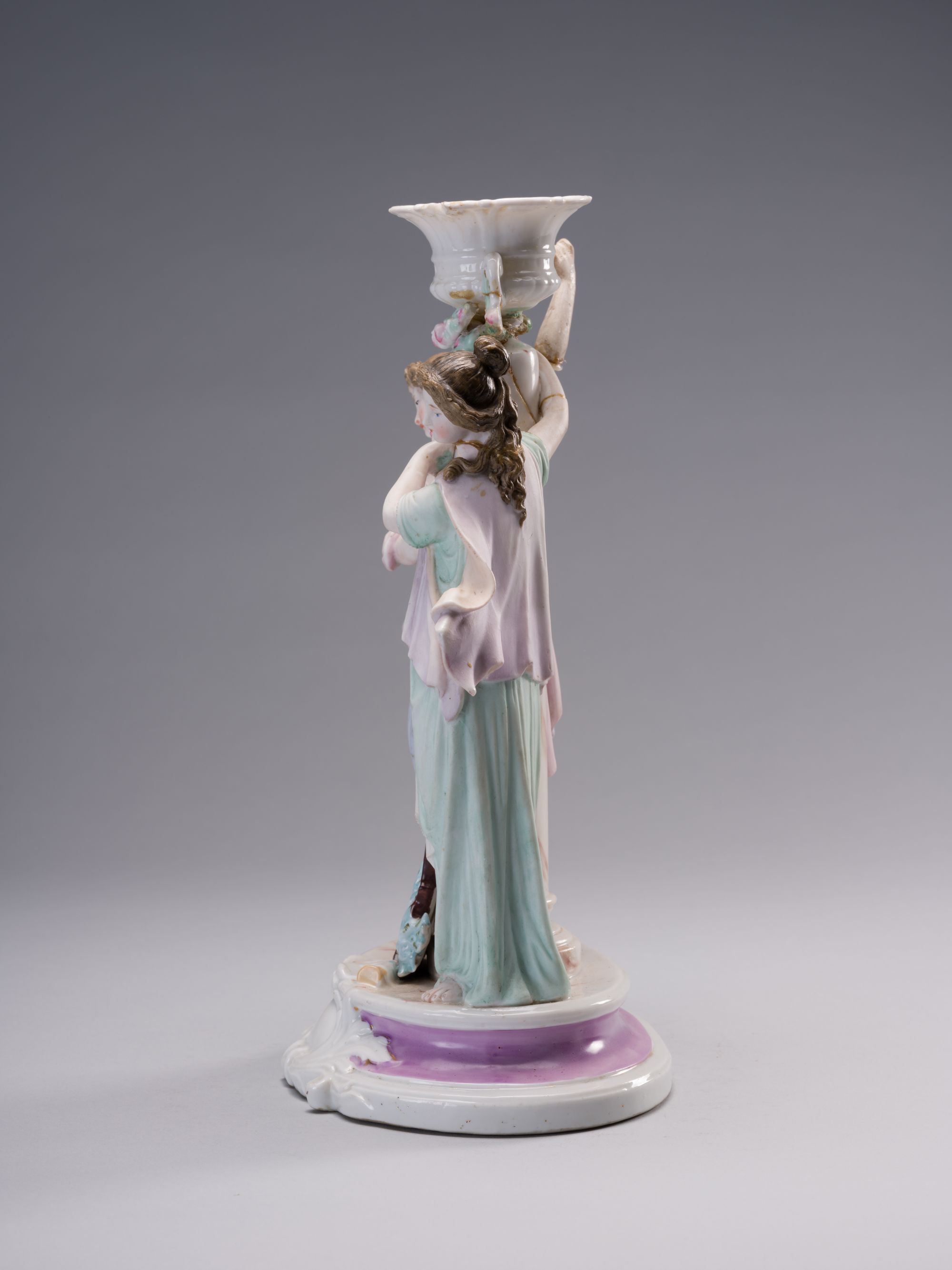
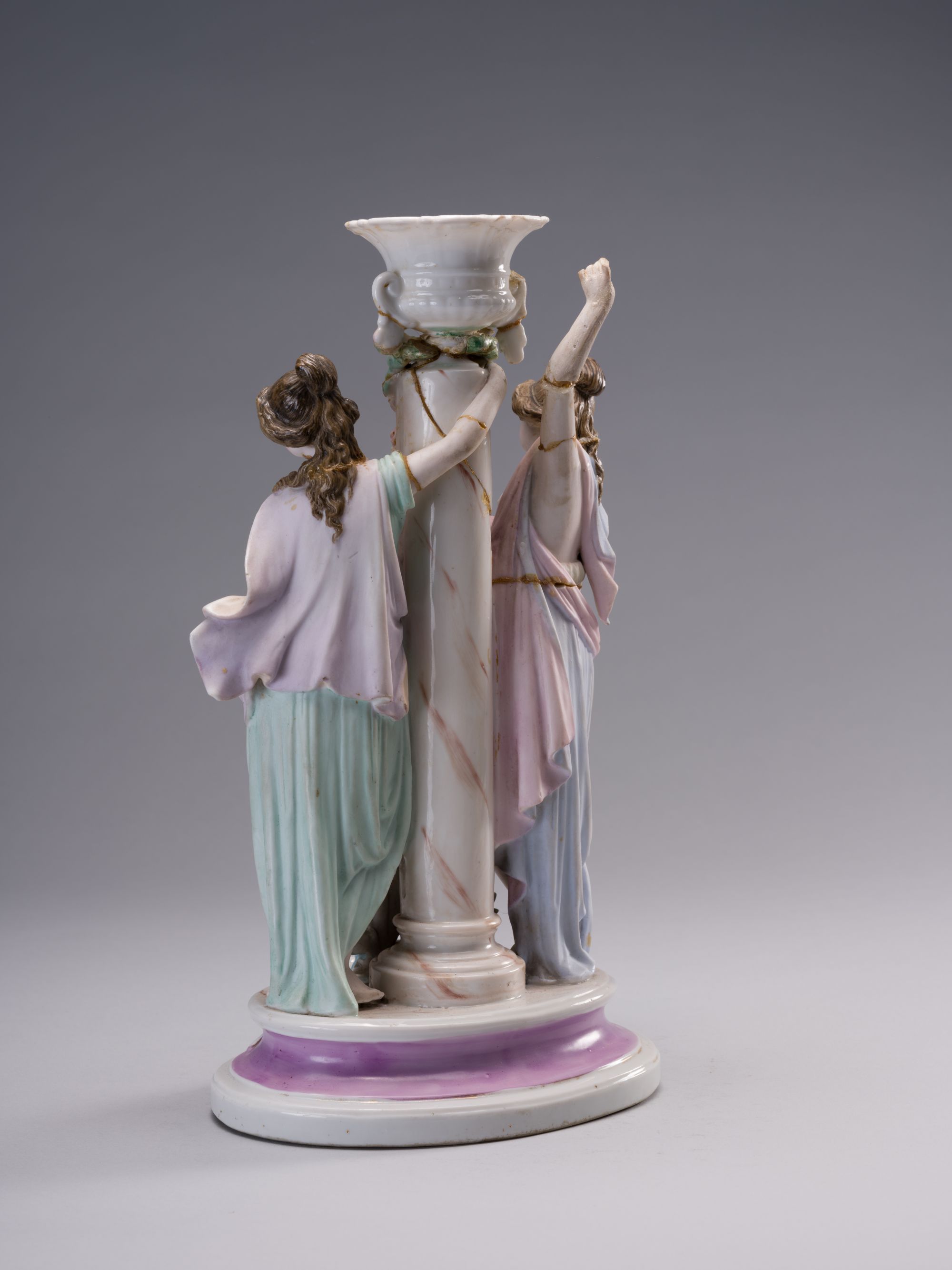
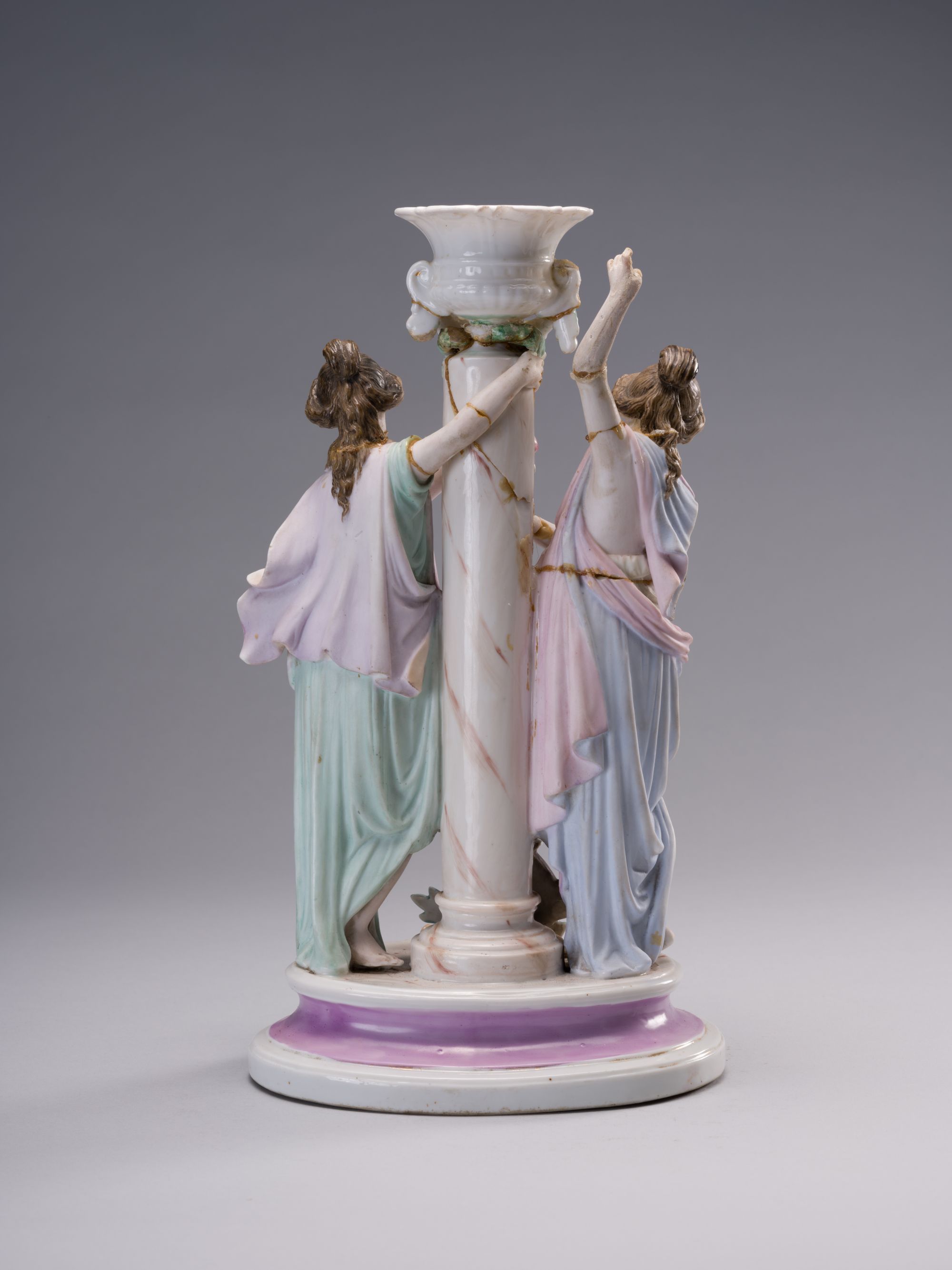
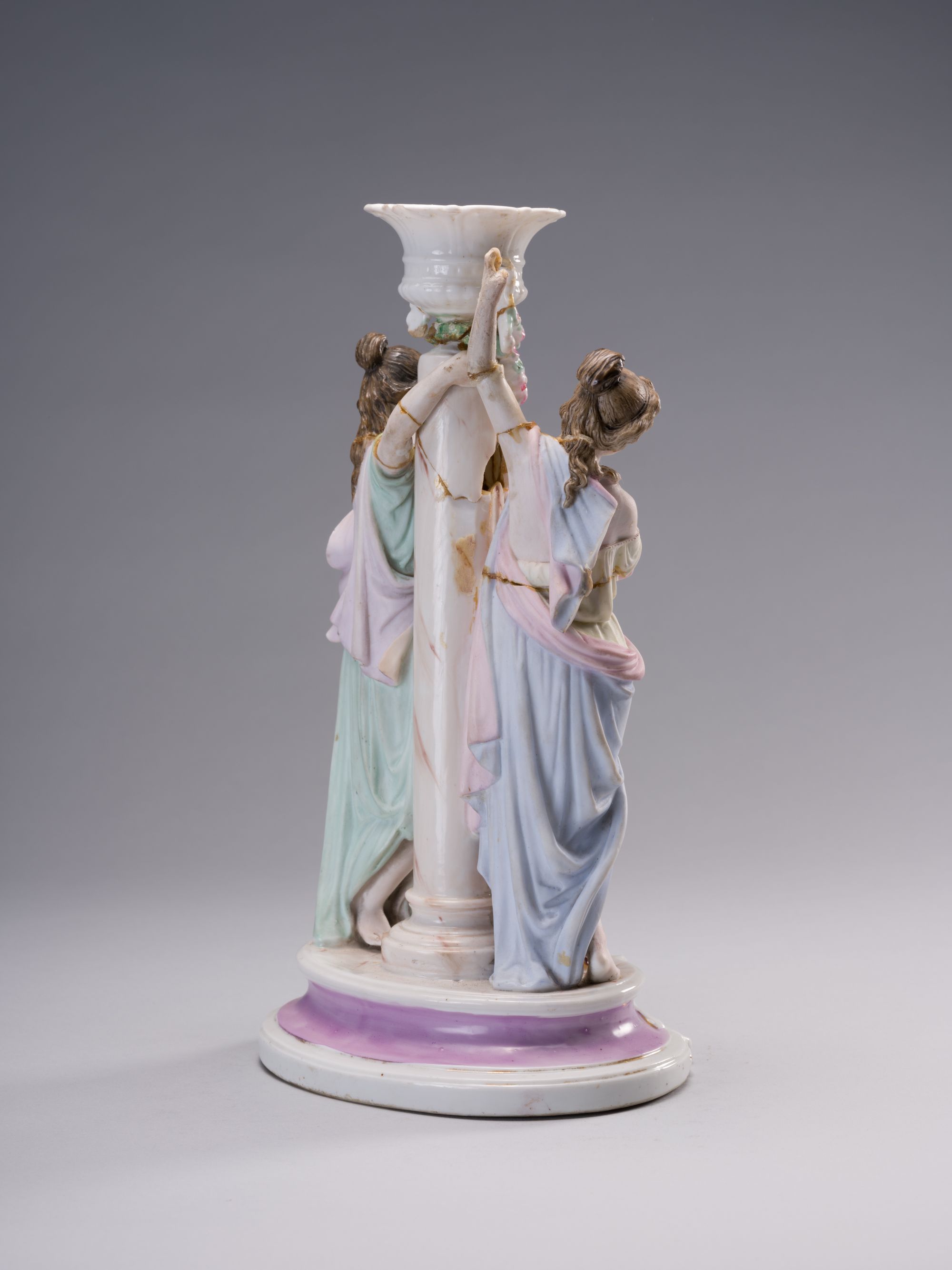
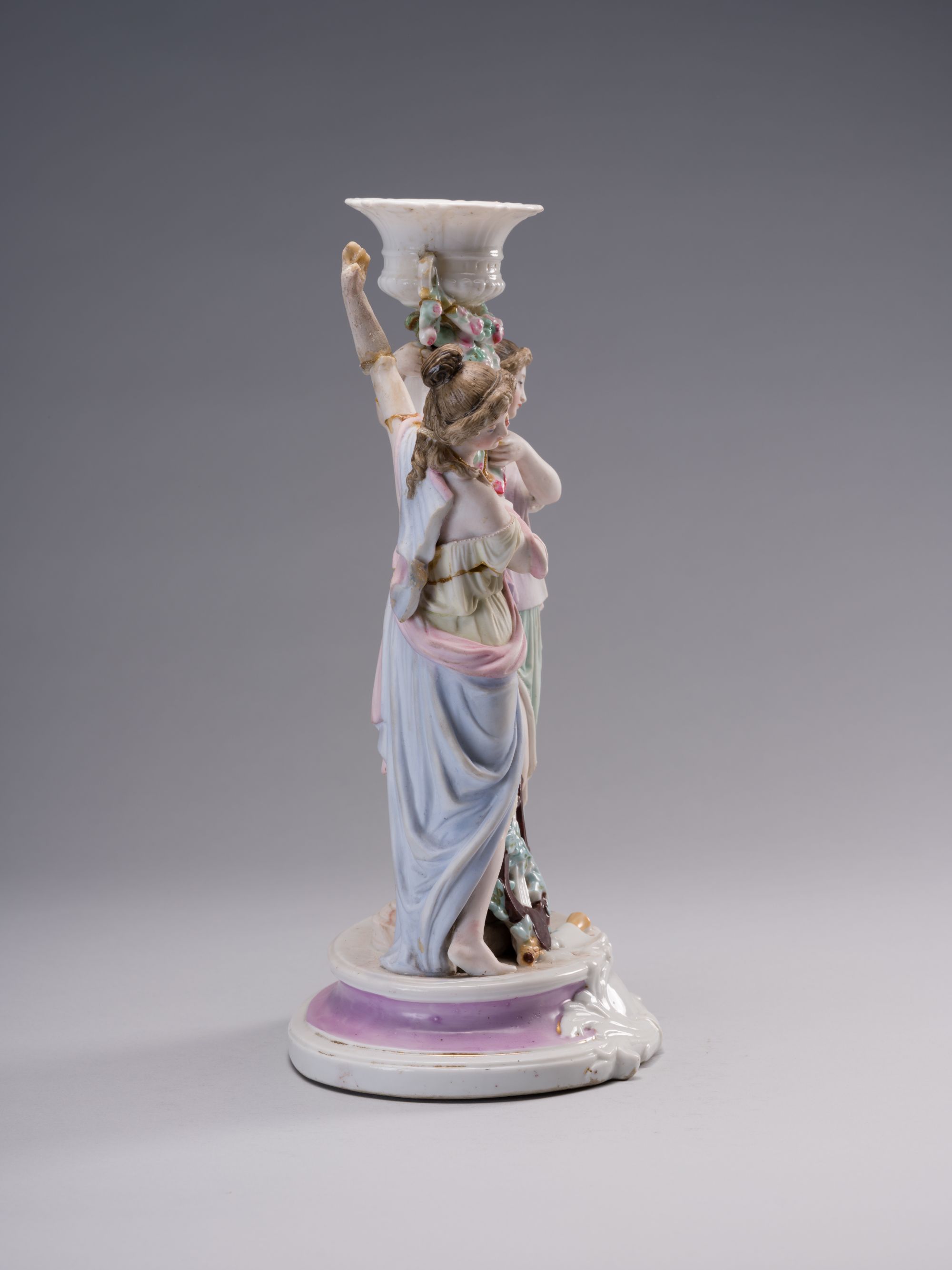
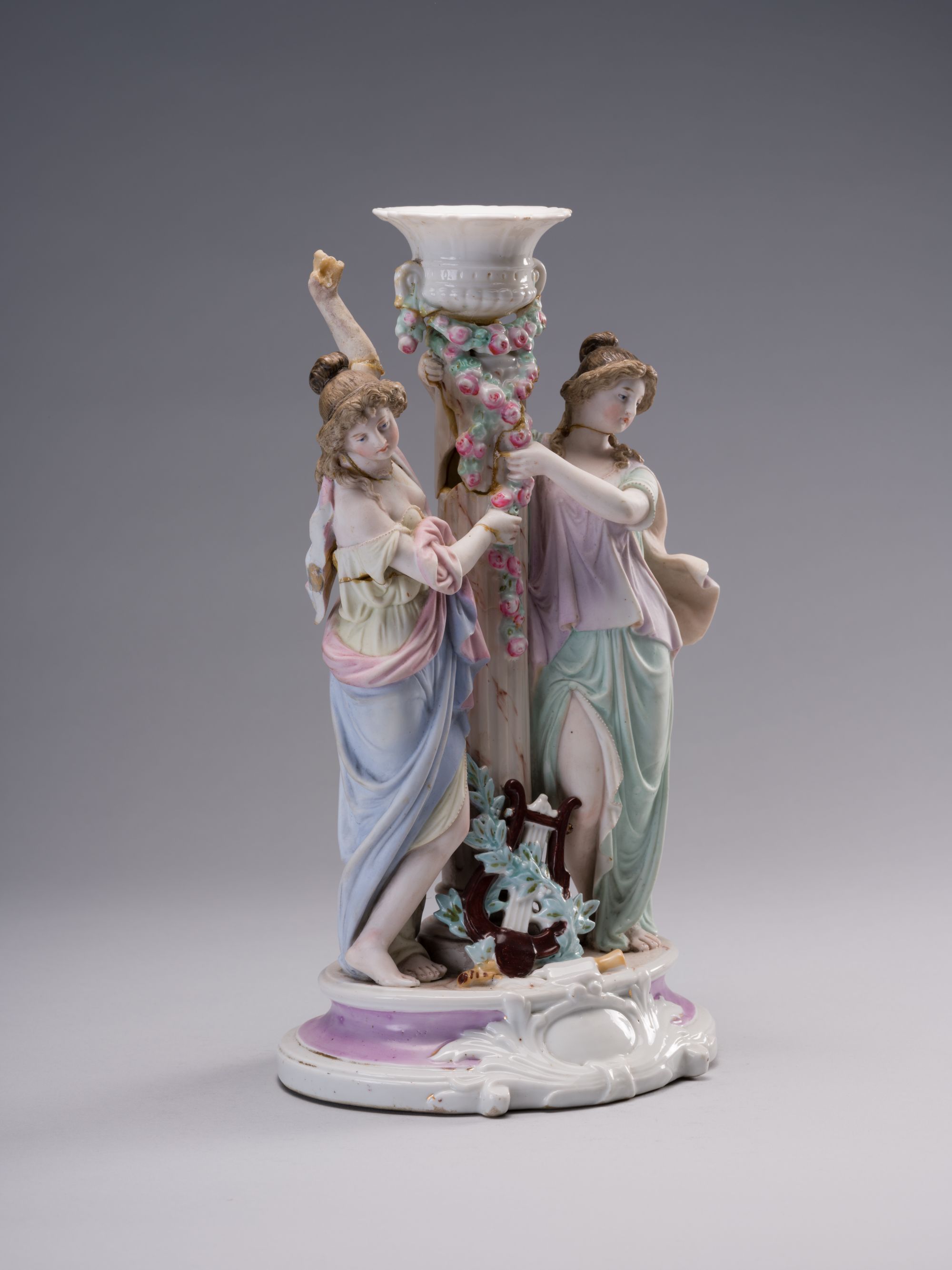
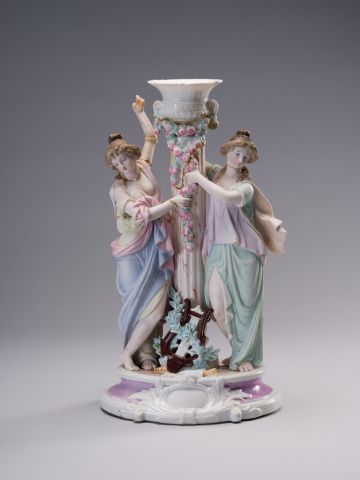
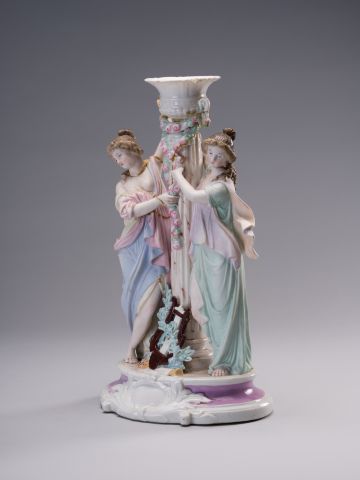
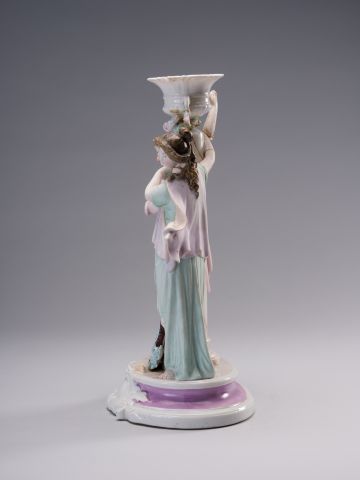
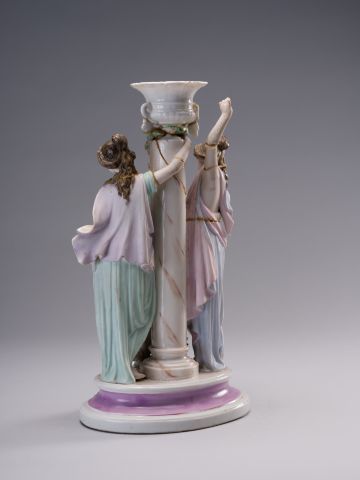
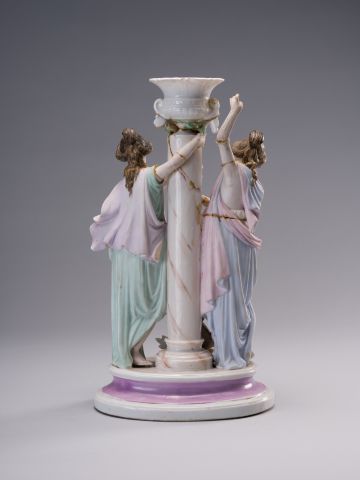
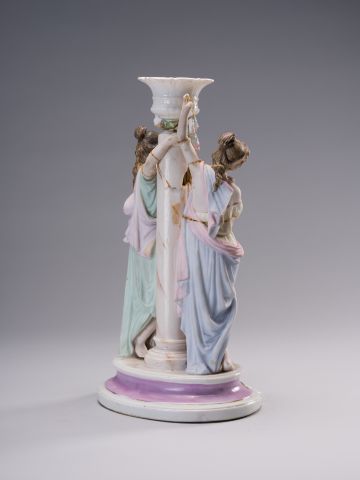
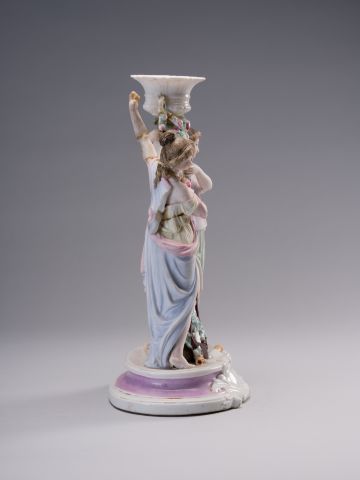
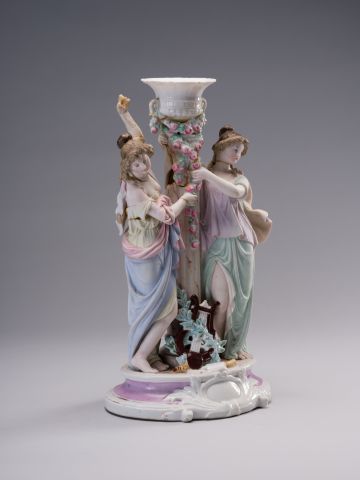
The plastic rendering of the piece represents the era of Historicism, reflecting the revival of Classical artistic traditions typical of 19th-century European porcelain manufactories. The compositional core of the candlestick consists of a central shaft shaped as a fluted column of the Corinthian or Composite order, topped with a profiled candle nozzle. The column is entwined with a lush, three-dimensionally modelled garland of small roses, enhancing the decorative refinement of the object.
Two female figures representing the ancient Greek Graces (Charites) are symmetrically positioned on either side, gently embracing the shaft. Their movements and poses are imbued with Classical elegance: the figure on the left is depicted with a raised arm, injecting dynamic movement into the composition, while the one on the right rests in a balanced, serene posture. The master delicately captures the intricate folds of Classical chitons and himations in a soft pastel palette – a harmonious blend of pale blue, pink, lilac, and light green tones. Special attention is paid to the soft modelling of anatomical forms and the meticulous treatment of Greek-style hairstyles.
At the base of the column, attributes of art and harmony are placed – a lyre entwined with a laurel branch and floral decor. The sculptural group is raised on a shaped base of complex rocailles contour, adorned with delicate white relief scrolls and a broad coloured band of a rose-purple hue. Subtle gilding along the border of the architectural and sculptural elements adds a touch of restrained luxury.
Legal regulation
Borys Voznytskyi Lviv National Art Gallery