Houses Overlooking the Port of Livorno. From the "Views of the Port of Livorno" Series
Stefano della Bella
Basic information
- ID
- Г-IV-942
- Author
- Stefano della Bella
- Name
- Houses Overlooking the Port of Livorno. From the "Views of the Port of Livorno" Series
- Country
- Italy
- Technique
- etching
- Material
- paper
- Dimensions
- 25.2 x 35.5 cm (height x width)
Additionally
- Type
- graphic art
- Genre
- marine painting architectural landscape
- Provenance
- Received from the Lviv Historical Museum, 1954
Information about author
Object description
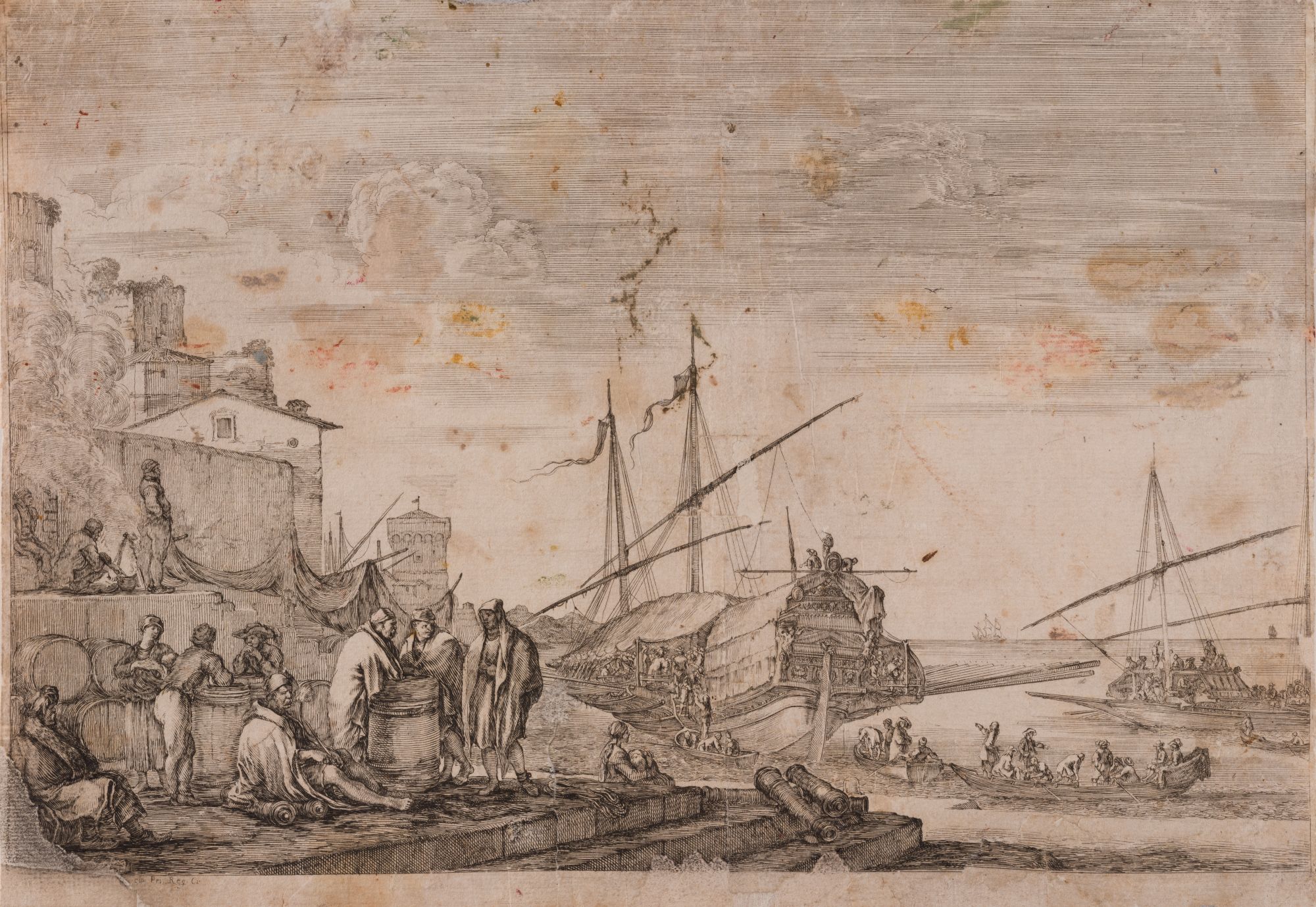
The foreground depicts the bustling life on the quay of the old harbour, the so-called Darsena, where Tuscan galleys moored, and merchants and workers engaged in unloading and trade. Port labourers, merchants, and sailors, dressed in attire characteristic of the seventeenth century, are resting, conversing near large barrels, or attending to their business. In the centre, detailed gun barrels are represented on stone steps. In the background on the left, a watchtower is visible, which forms part of the defensive system of the old port (the Old Fortress – Fortezza Vecchia).
The central visual element of the composition is a large, meticulously rendered galley moored by the shore. Its quarterdeck is covered with an awning. On the right, the calm waters of the port are shown with people in boats, while the masts of another vessel and the marine expanse are visible in the distance.
The work is distinguished by a virtuoso stroke characteristic of Baroque graphics. Through fine lines, the artist masterfully conveys the texture of the cloudy sky, gentle ripples on the water, and the intricate structures of ship rigging. This print is executed on antique laid paper. Along the corners and margins of the sheet, signs of paper ageing are noticeable – patina and foxing.
Inscriptions
At the bottom left, beneath the platemark, an engraved inscription is visible: "Cum Privilegio Regis Chri". At the bottom of the backing cardboard, there are numbered pencil marks and a sticker with the stamp and inventory numbers of the Lviv Historical Museum.
Legal regulation
Borys Voznytskyi Lviv National Art Gallery