Adoration of the Magi
Pieter Coecke van Aelst (the workshop)


Basic information
- ID
- Ж-764
- Author
- Pieter Coecke van Aelst (the workshop)
- Name
- Adoration of the Magi
- Date of creation
- c.1530s
- Technique
- oil painting
- Material
- wood oil
Additionally
- Type
- painting
- Genre
- religious
- Plot
- Adoration of the Magi
- Provenance
- Collection of Lviv City Gallery
- Exposition
- Potocki Palace
Information about author
Object description
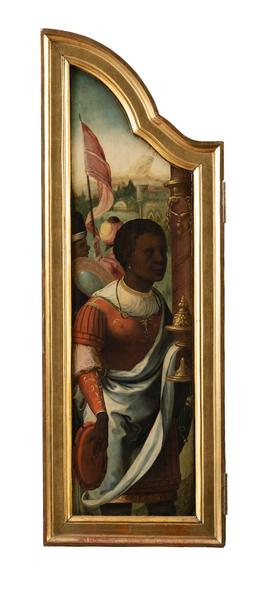
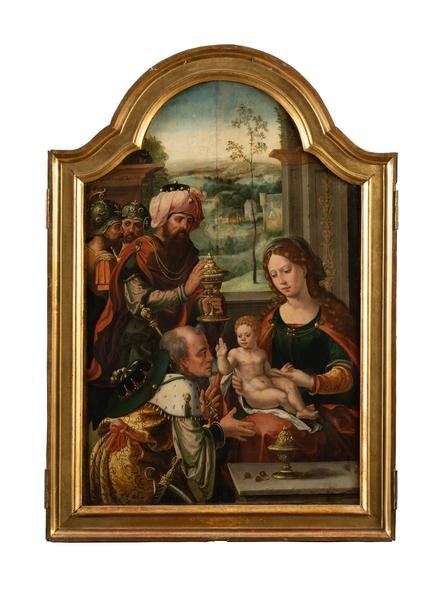
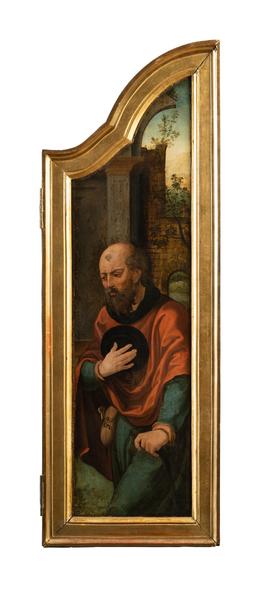
The development of the Netherlands in the 16th century was marked by the economic flourishing and integration of Renaissance humanist achievements, particularly in painting, within traditional genre differentiation and iconographic schemes. Religious paintings and altars in the form of diptychs and triptychs remained dominant in Renaissance Dutch painting. Borys Voznytskyi Lviv National Art Gallery houses an example of such work. It is "Adoration of the Magi" or "Adoration of the Three Kings" by a representative of the workshop of Pieter Coecke van Aelst. The composition is based on the well-known Gospel story (Matthew 2:10-11), which was extremely popular in early 16th-century Antwerp painting. When the wise men saw a star in the sky, they recognised it as a sign and travelled from the East to worship the baby Jesus and bring gifts to Him. According to biblical legend, the star moved from east to west across the sky and stopped over the place where the divine child was. The appearance of the Star of Bethlehem fulfilled Balaam's prophecy from the Book of Numbers of the Old Testament. Each gift brought to the baby Jesus was symbolic and related to Christ's mission. Thus, gold, a symbol of earthly kingship, indicated that Jesus was a man born to become a King; frankincense, a symbol of godliness, meant that Jesus would become the new Teacher and High Priest; and myrrh, a symbol of death, which was used in ancient Israel for embalming the bodies of the dead and was also applied to anoint Christ's feet, symbolised His future sacrifice. Blessed Augustine and John Chrysostom mentioned the twelve Magi. However, there are three of them in the later tradition, beginning from Origen. The names of the Magi vary, but the most well-known are Caspar, Balthasar, and Melchior. There are legends about the fourth one, who was called Artabanus. During the Age of Discovery of the 15th–16th centuries, the Magi personified the three sides of the world – Europe, Asia, and Africa, three human races – white, black, and yellow, and three age states, demonstrating the relevance of Christian teaching for all mankind. The iconography of the "Adoration of the Magi", which differentiated and became more complicated over time, has a strong tradition that dates back to the 4th-century catacomb painting. The work from the Gallery's collection is a copy of one of Pieter Coecke van Aelst's "Adoration of the Magi" compositions, a theme to which the master repeatedly returned. The incorporation of Renaissance artistic achievements into traditional iconography, the representation of a new vision of the world and new artistic forms within its limits, particularly images of architecture from a linear perspective and Italianate landscapes, are common features of his works. "Adoration of the Magi" (1530s–1540s) by Pieter Coecke van Aelst from "The Phoebus Foundation" (Antwerp) is one of the closest works to the triptych from the collection of Borys Voznytskyi Lviv National Art Gallery (92 х 56.5; 92 х 24.5; 92 х 24.5 cm). This work from the early 1530s is kept in a private collection and is almost identical to the one in Lviv, although slightly smaller. The typical features of the compositions are the figurative generalisation of the plot, compositional solution, life-affirming tonality, warmth and sincerity of the manifestation of feelings, play of light and shadow, warm saturated colour, and special sublime mood. Attention is paid to the thorough reproduction of the elements of reality, such as exotic fabrics, jewellery, and precious objects. The triptych from the Gallery's collection, like the work from "The Phoebus Foundation," depicts the Virgin Mary with the baby Jesus behind a stone altar with the symbols of the Garden of Eden – an apple and a cherry in Pieter Coecke van Aelst's work, and cherries in his follower's composition. The successful combination of the Italianate style and "folk" Mannerism, typical of Pieter Coecke van Aelst and his followers, is a distinguishing feature of the work.
Legal regulation
Borys Voznytskyi Lviv National Art Gallery