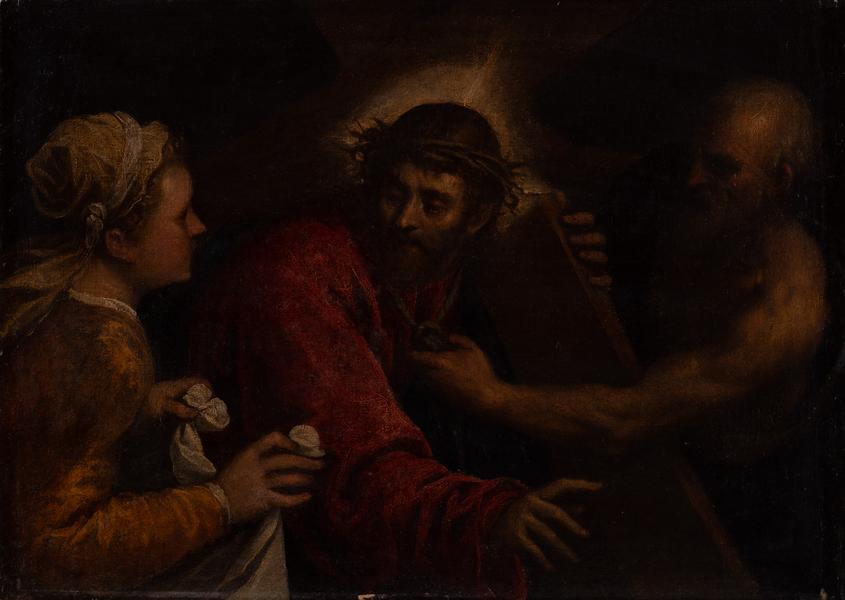
Christ and Saint Veronica
Jacopo Palma il Giovane


Basic information
- ID
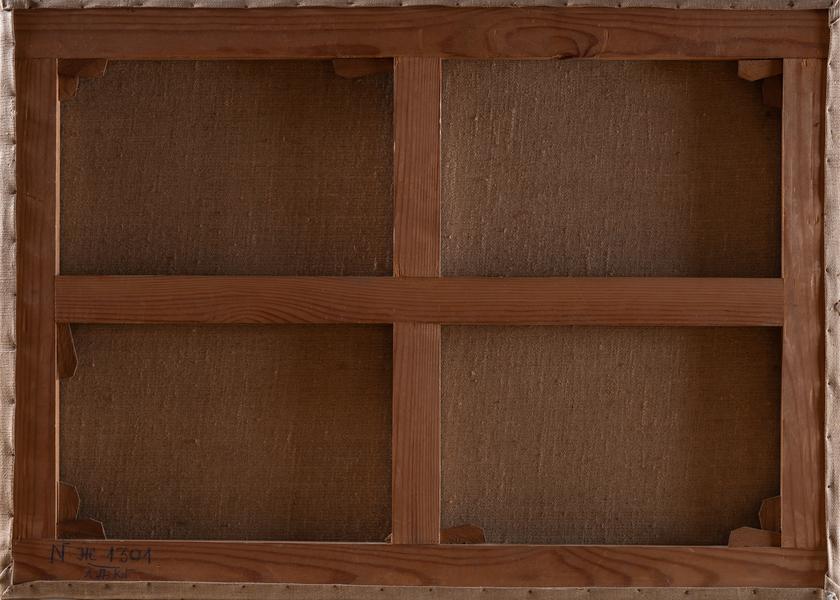
- Ж-1301
- Author
- Jacopo Palma il Giovane
- Name
- Christ and Saint Veronica
- Country
- Italy
- Technique
- oil painting
- Material
- canvas oil
- Dimensions (height x width, cm)
- 50.2 x 71
Additionally
- Type
- painting
- Genre
- religious
- Plot
- Christ and Veronica Veil of Veronica Station of the Cross: "Veronica wipes the face of Jesus"
- Provenance
- the Lubomirski collection
- Exposition
- Potocki Palace
Information about author
Object description
The painting depicts Jesus Christ carrying a cross. Jesus is depicted wearing a crown of thorns and facing a woman holding a veil. None of the four canonical Gospels mentions Veronica and her veil. However, in the apocryphal Gospel of Nicodemus, the work of Eusebius of Caesarea, "Historia Ecclesiastica", there is a mention of Veronica, a woman from Jerusalem. When she saw Jesus carrying the cross to Golgotha, Veronica felt pity for him and offered her veil to wipe the blood and sweat from his face. The image of his face was imprinted on the veil, and later this relic became known as the "Veil of Veronica". The name Veronica is considered an anagram of the expression "true image" ("icona vera"). The scene illustrates the sixth of the fourteen Stations of the Cross. The Stations of the Cross tradition originated in the fifteenth century among the Franciscans and became widely practised by the Catholic Church. The rite involves people stopping at each of the fourteen images for prayer. Many artists have depicted the Stations of the Cross theme. The subject of Christ and Veronica is also found in the works of Titian, the teacher of Palma il Giovane.
Legal regulation
Borys Voznytskyi Lviv National Art Gallery