Evicted (Poverty)
Julia Smolkowna


Basic information
- ID
- С-I-1978
- Author
- Julia Smolkowna
- Name
- Evicted (Poverty)
- Date of creation
- 1918
- Country
- Austro-Hungarian Empire Poland
- Culture
- Contemporary times
- Technique
- moulding
- Material
- plaster
- Dimensions (height x width x depth, cm)
- 28 x 17.7 x 28
Information about author
Object description
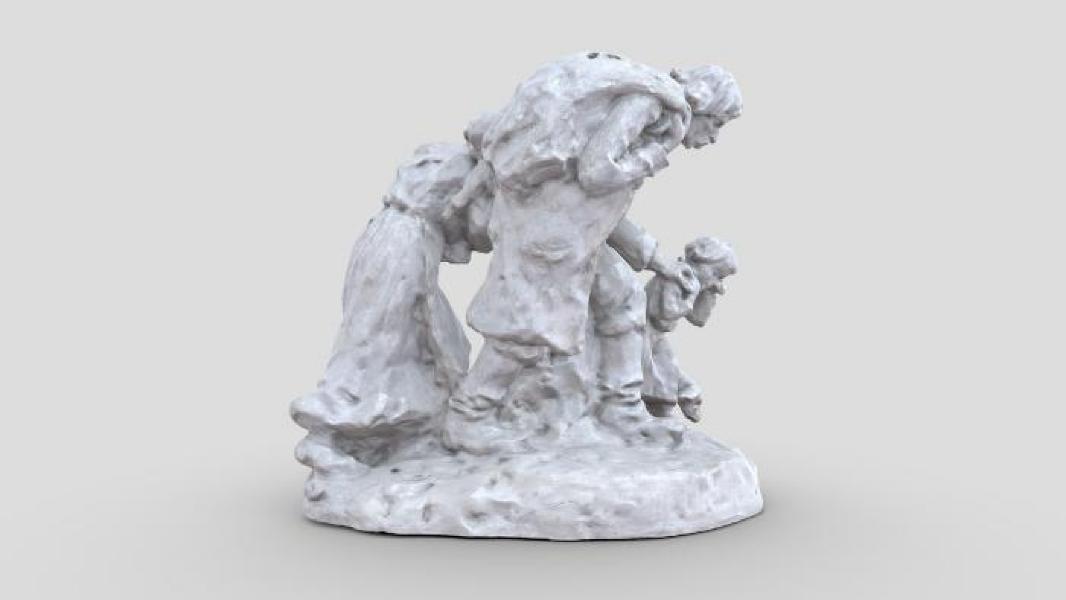
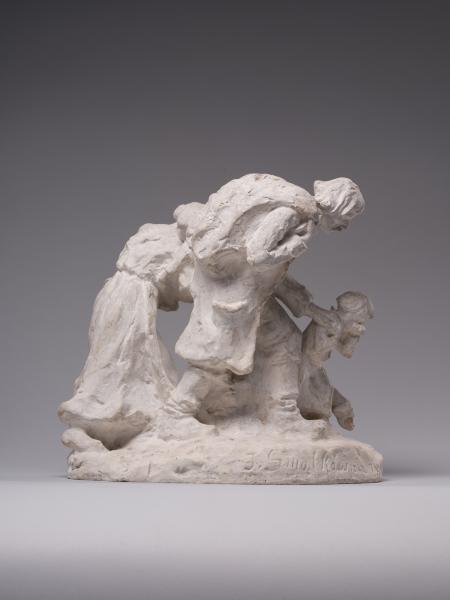
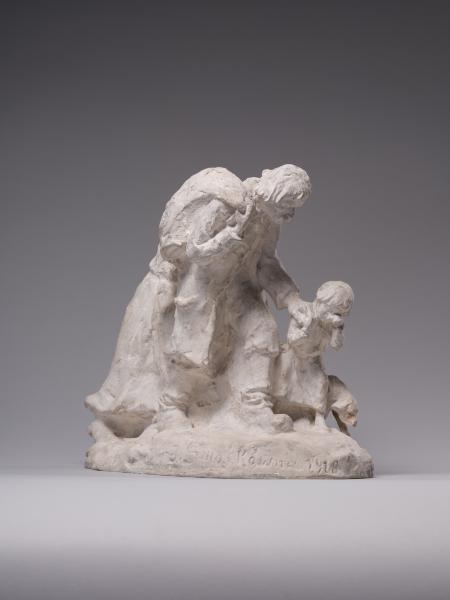
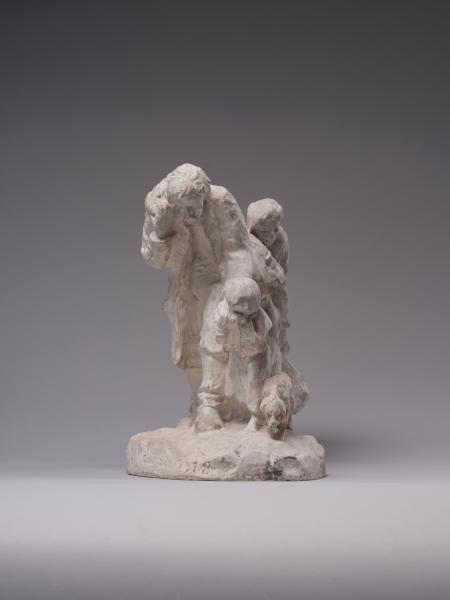
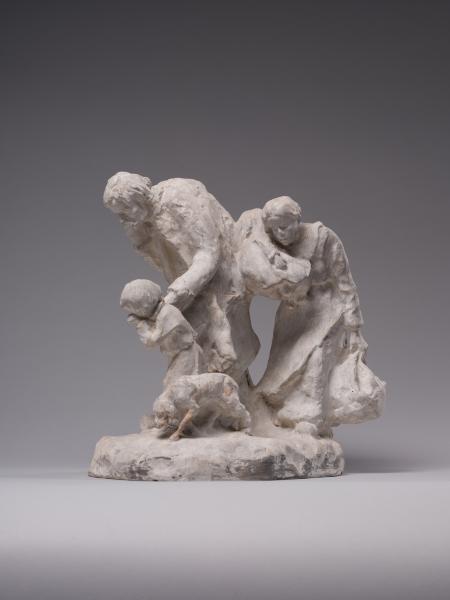
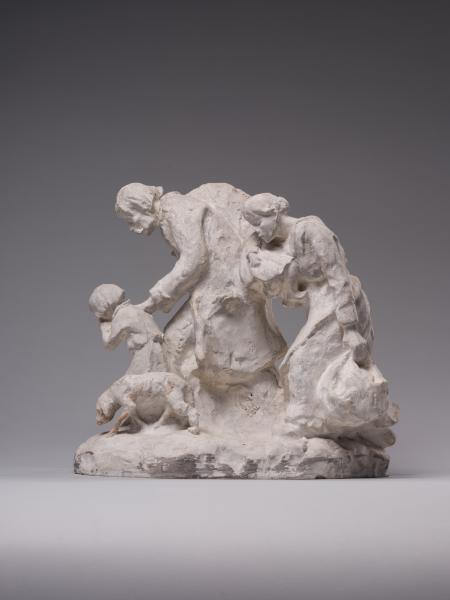
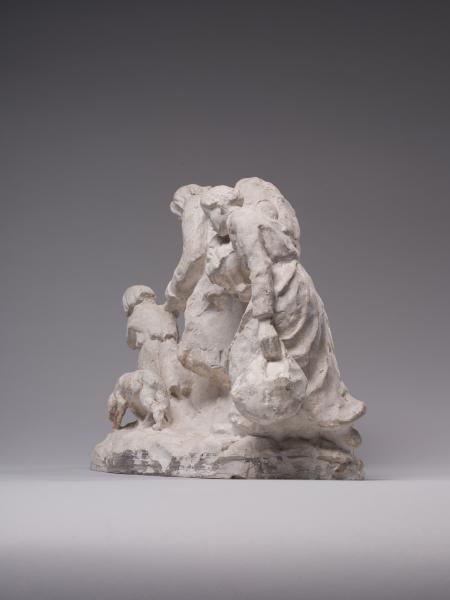
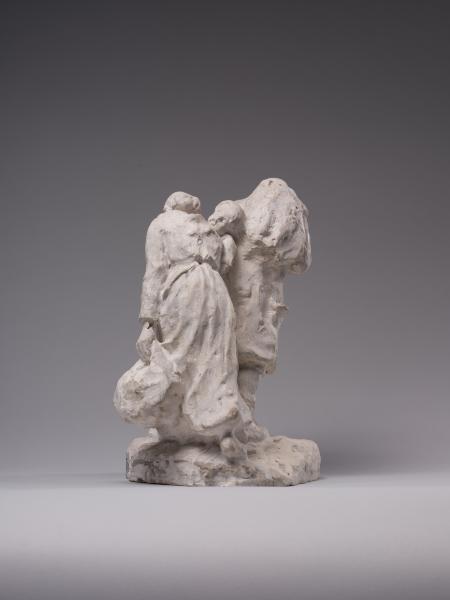
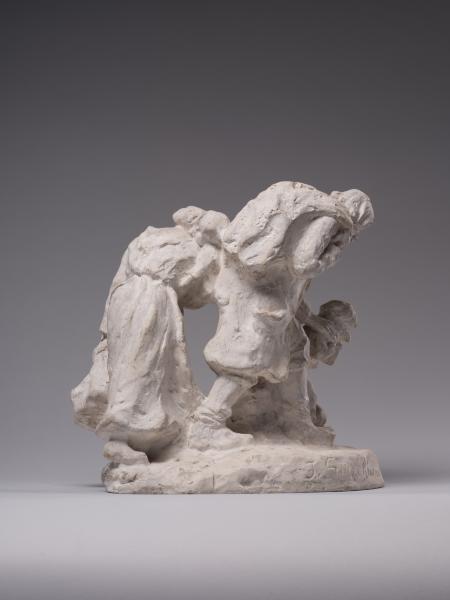
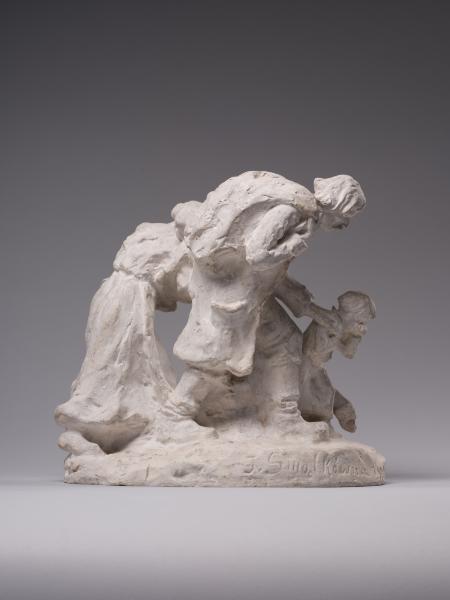
The action scenes embody the "realistic genre" tendencies in Julia Smolkowna's work, which received favourable reviews from art critics. For example, in the "Lvivska Gazeta" pages, V. Zhyla stated, "Smolkowna's small figures are very mobile as if they were constantly enveloped in air, surrounded by trembling, vibrating energy". In the opinion of S. Makhnievych, who reviewed the IV Lviv Artists' Exhibition in 1921, "Smolkowna is rooted in modern French sculpture (Rodin), has a lot of courage, scope, and a sense of volume". The "perfection of plasticity and movement" of the action groups created by J. Smolkowna was noted by J. Tomicka in her review of the VI Exhibition of the Association of Polish Women Artists in Lviv. One of J. Smolkowna's best works is the genre group "Evicted (Poverty)" (1918), in which pain, depression and unbearable life are reflected in depersonalised male, female and child figures, fused together and bent under the weight of misfortune. The sense of unconquerable adversity is reinforced by the movement from right to left, against the active horizontal, and by the monotonous, uniform rhythm. The dramatic nature of the image is emphasised by the repetition of the fate of the poor through the generations. The impression of the "closed circle of poverty", "poverty as a trap", is created by the hemispherical outline of the figures. The play of light and shadow on the protrusions of the vibrating surface and the active impressionistic modelling of the forms give the work a plastic expressiveness.
Inscriptions
On the base on the left is a signature and date: "J. Smolkówna, 1918".
Legal regulation
Borys Voznytskyi Lviv National Art Gallery