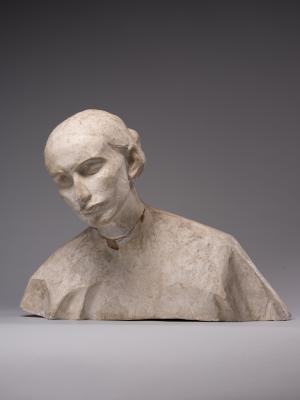
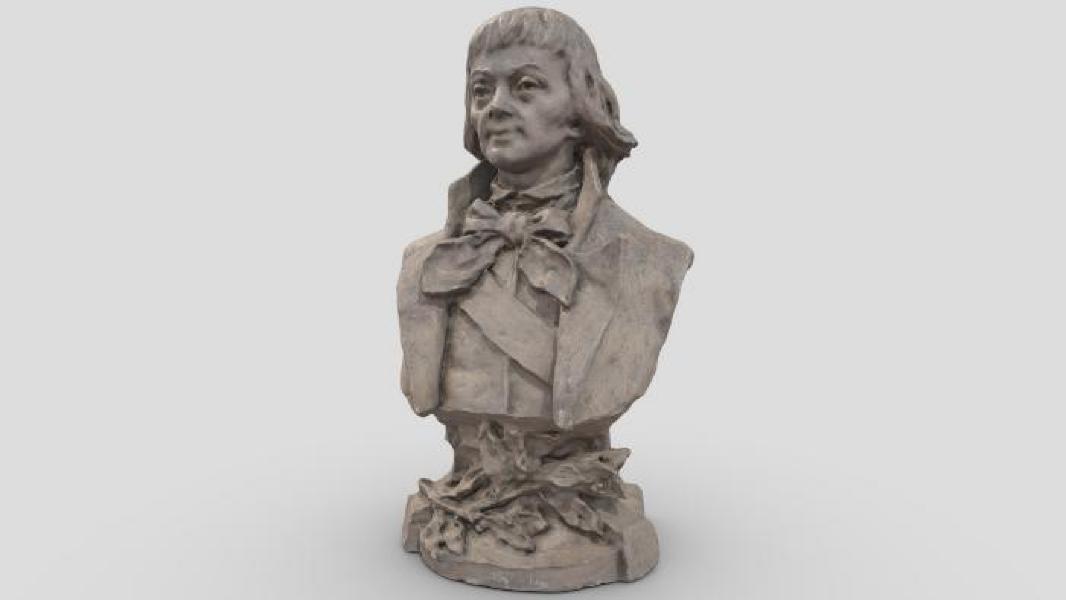
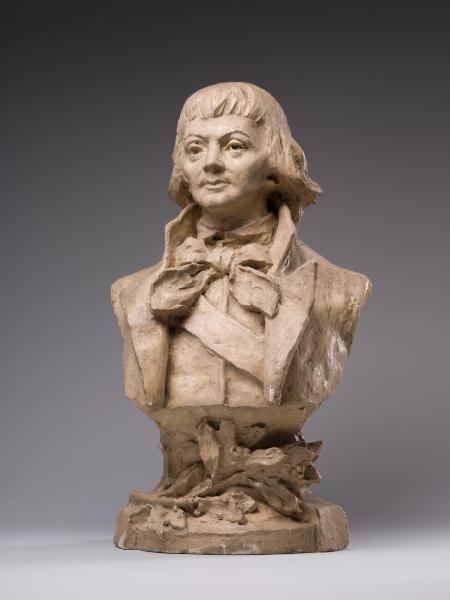
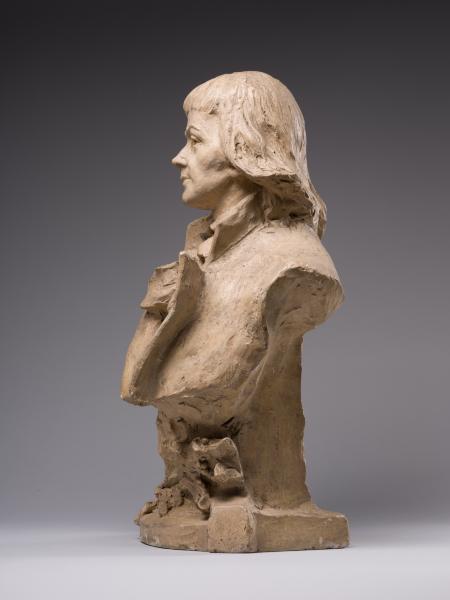
Bust of Tadeusz Kosciuszko
Tadeusz Baracz


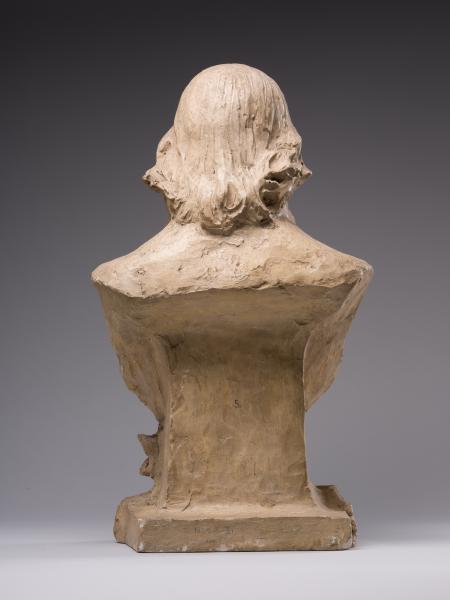
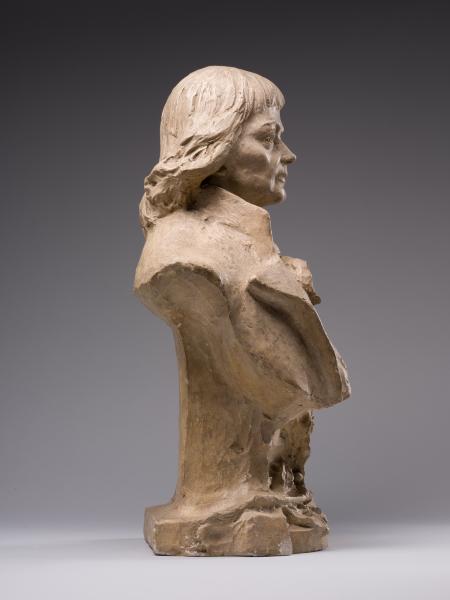
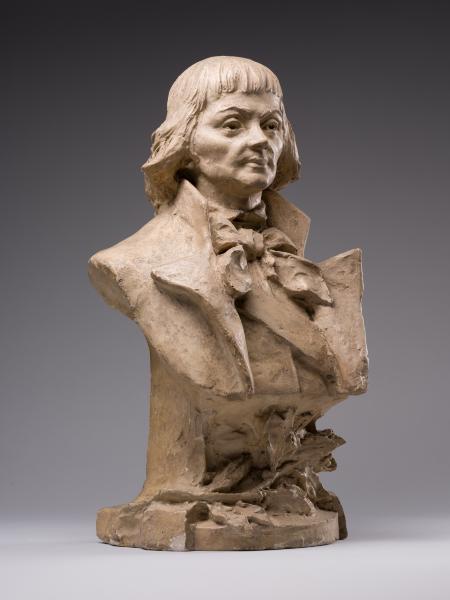
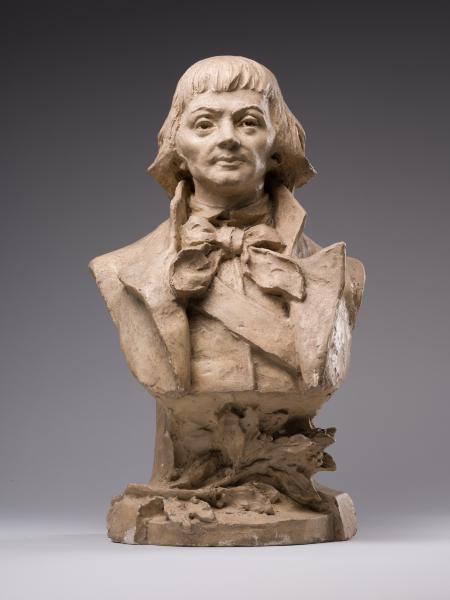
Basic information
- ID
- С-I-31
- Author
- Tadeusz Baracz
- Name
- Bust of Tadeusz Kosciuszko
- Date of creation
- 1893
- Country
- Austro-Hungarian Empire
- Culture
- Modern times
- Technique
- moulding
- Material
- plaster
- Dimensions (height x width x depth, cm)
- 48.5 x 28.5 x 20
Additionally
- Type
- sculpture 3D
- Genre
- portraiture
- Plot
- Portrait bust
- Provenance
- National Gallery of Lviv (until 1940)
Information about author
Object description
"Bust of Tadeusz Kosciuszko" (1893) is an example of the combination of Romanticism, neo-Baroque form, objectivity in reproducing details and individual features of the portrait in T. Baracz's work. Thus, one of the projects for a monument in Chicago to a military and political figure, a participant in the American War of Independence, the leader of the Polish Insurrection of 1794 and the generalissimo of the Polish-Lithuanian Commonwealth Army, visualises the concept of a national hero, a national messiah, and a rebellious and outstanding personality. The features of the project are the sublimity of the image, the plastic embodiment of the aesthetic categories of the majestic and the heroic, and the modelling of a "historical-epic chronotope" in which the subject of the portrait "stands before" the fatherland, the nation, the future, and the "addressee history". The openness of the face, the inclination of the head, and the distant gaze embody this idea. The heroic tone of the picture is contrasted by the careful modelling of the face, without idealisation, in the fullness of age-related features. The energetic modelling of volume, the slicked-back hair and the expressive folds of the elements of the sitter's costume are reminiscent of the neo-Baroque style. The image of a laurel branch, a symbol of immortality, triumph and victory, is in keeping with the traditions of representative portraiture. T. Baracz later turned to the artistic interpretation of Kosciuszko's image in an unrealised project of a monument for Lviv (1904) from the collection of Borys Voznytskyi Lviv National Art Gallery (inventory no. C-I-24).
Inscriptions
On the base at the back: "5 / К 348".
Portrayed person
- The name of the person portrayed
- Tadeusz Kosciuszko
- Lifetime of the person portrayed
- 1746–1817
Legal regulation
Borys Voznytskyi Lviv National Art Gallery