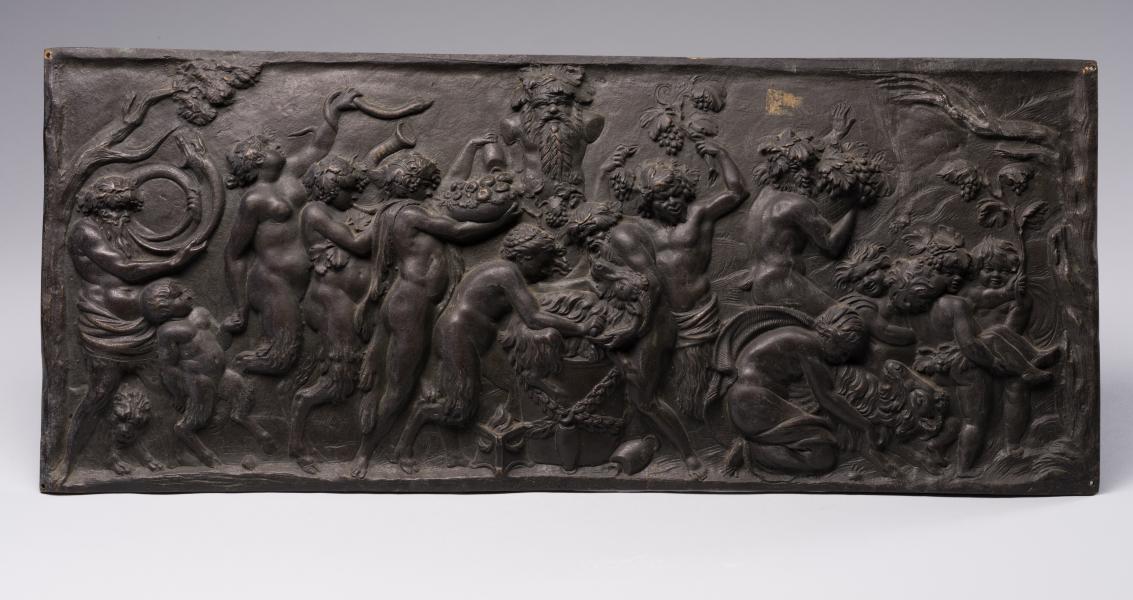
Mythological Scene. Sacrifice of a Goat
Claude Michel (Clodion)


Basic information
- ID
- С-II-116
- Author
- Claude Michel (Clodion)
- Name
- Mythological Scene. Sacrifice of a Goat
- Date of creation
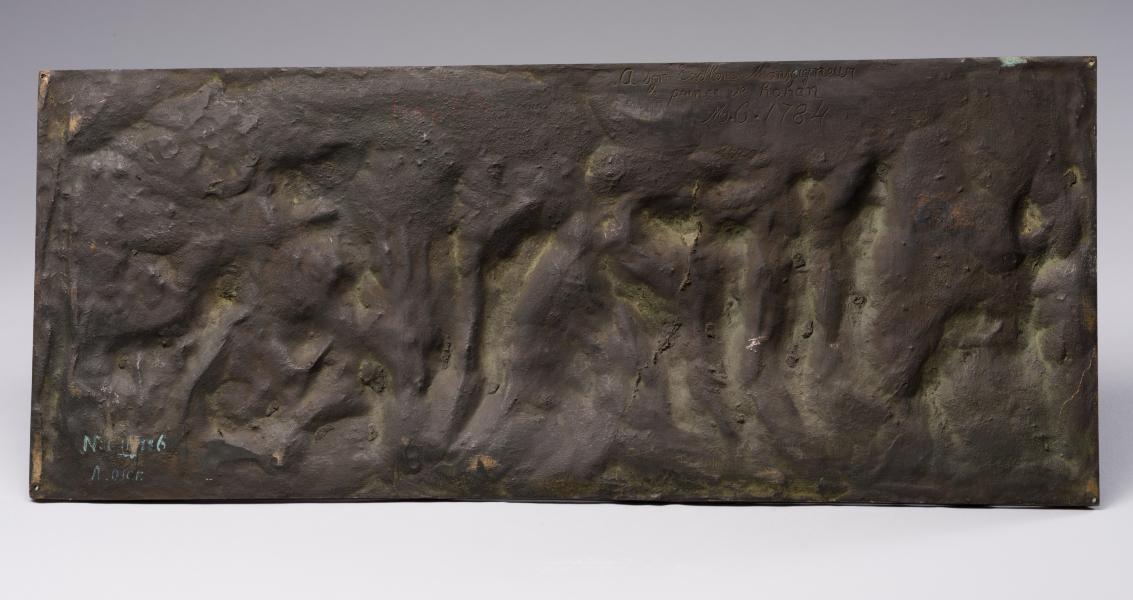
- 1784
- Country
- France
- Culture
- Modern times
- Technique
- casting
- Material
- bronze
- Dimensions (height x width, cm)
- 21 x 50.5
Additionally
- Type
- sculpture (relief) sculpture (plaquette)
- Genre
- mythological painting
- Plot
- Dionysia. Sacrifice of a goat
- Provenance
- Collection of Lviv City Gallery
Information about author
Object description
The bronze plaque, made by Clodion in 1784 at the height of his career, depicts a goat sacrifice during the Dionysia. The Dionysia (Great, Little, Lenaea) was one of the most important festivals in ancient Greece in honour of Dionysus, the god of wine and the productive forces of nature, the patron saint of the theatre, religious ecstasy and creative inspiration. Tragedies, comedies, masquerades, phallic processions, poetry contests, feasts and goat sacrifice accompanied the celebrations. The peculiarity of the French master's interpretation of the plot is a combination of Neoclassical architectonics with playfulness, plasticity, and Rococo sophistication. Thus, the composition is organised by a precise, almost musical rhythm, initiated by a "crescendo" of monotonous, reproduced in profile figures of fauns with horns and baskets of ripe fruit. The culmination of the action and the rhythmic pause is the image of the frontal face of Dionysus in the centre, in its upper part, and the sacrifice of a goat below. The composition is completed by a scene of violent merriment in a circular motion, reflecting the merger with the forces of nature and the whirlpool of natural elements.
Legal regulation
Borys Voznytskyi Lviv National Art Gallery