Mary Magdalene
unknown (Florentine School)


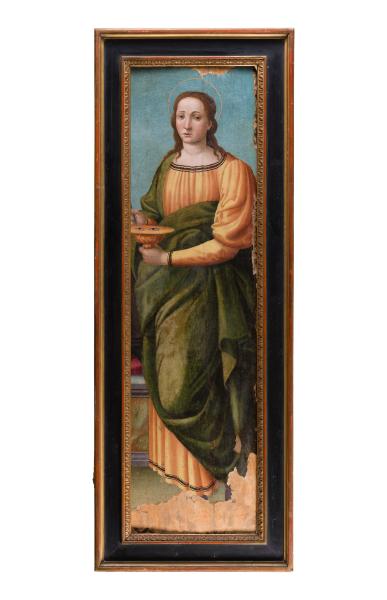
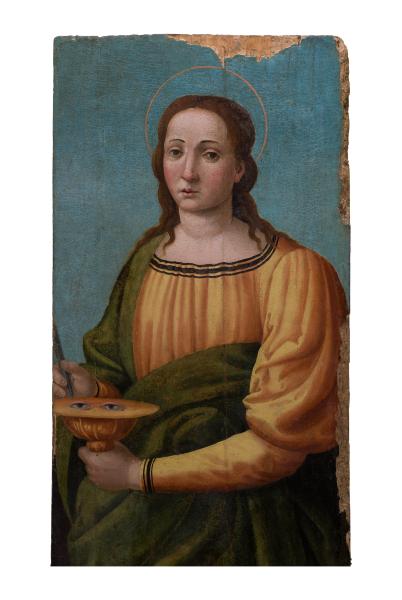
Basic information
- ID
- Ж-2128
- Author
- unknown (Florentine School)
- Name
- Mary Magdalene
- Date of creation
- 1st half of the 16th c.
- Technique
- oil painting
- Material
- wood oil
- Dimensions (height x width, cm)
- 137 x 39
Additionally
- Type
- painting
- Genre
- religious
- Plot
- Mary Magdalene
- Exposition
- Potocki Palace
Information about author
Object description
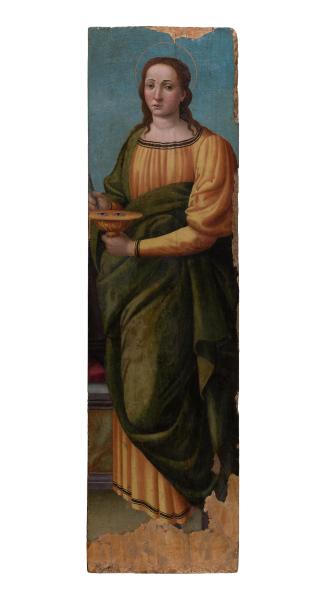
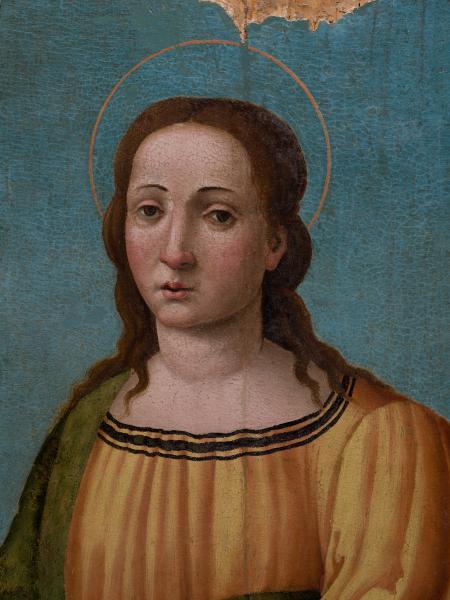
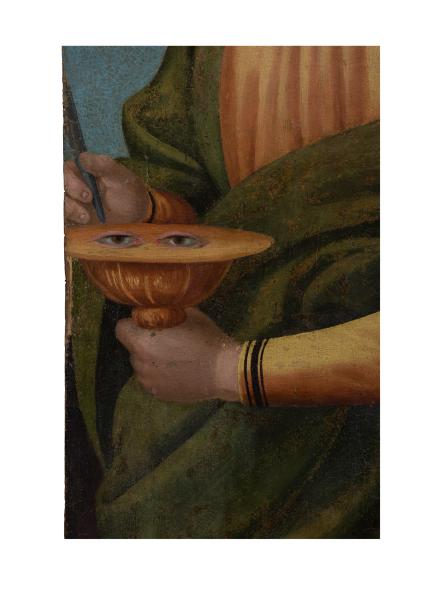
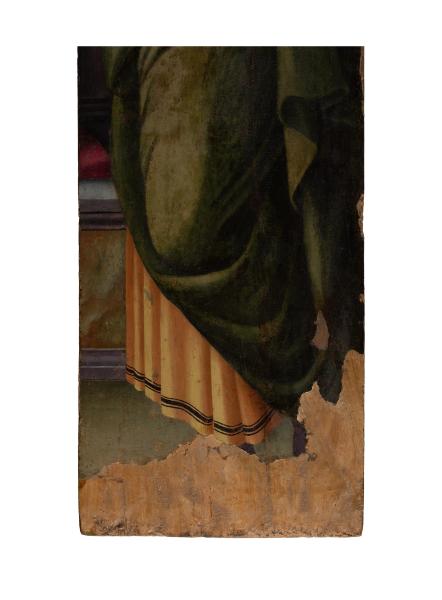
Mary Magdalene is depicted against a blue background in a gentle turn to the left. This image belongs to the Florentine painting of the early 16th century. The Gallery's collection includes two side altarpieces – "Saint Mary Magdalene" and "Saint Lucia", created around 1510–1520. These works reflect an essential trend in Tuscan painting of the early 16th century. The painting shows a departure from the system of naturalism and the presence of stylistic features of Mannerism. The iconography of the altarpiece, where two side figures depicting saints flank the central composition, was a common type of composition in Italian painting in the first half of the 16th century. The iconography of the altarpiece, where two side figures depicting saints flank the central composition, was a common type of composition in Italian painting in the first half of the 16th century. Saint Mary Magdalene appears in several biblical passages, although the most notable mention of her is in the account of the Resurrection of Jesus in the Gospel of John. In his commentary on the Gospel, Saint Thomas Aquinas asserts that she had the privilege of being a prophetess because she was worthy to see angels. She became the apostle to the apostles, as her task was to announce the Resurrection of the Lord to the disciples. Mary Magdalene was the first witness of the resurrected Christ and, therefore, the first to testify about Him to the apostles.
Legal regulation
Borys Voznytskyi Lviv National Art Gallery