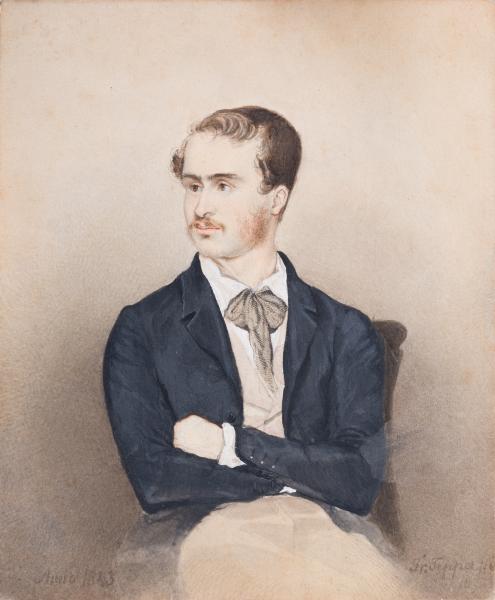
Портрет Кароля Відмана
Францішек Тепа



Основна інформація
- ID
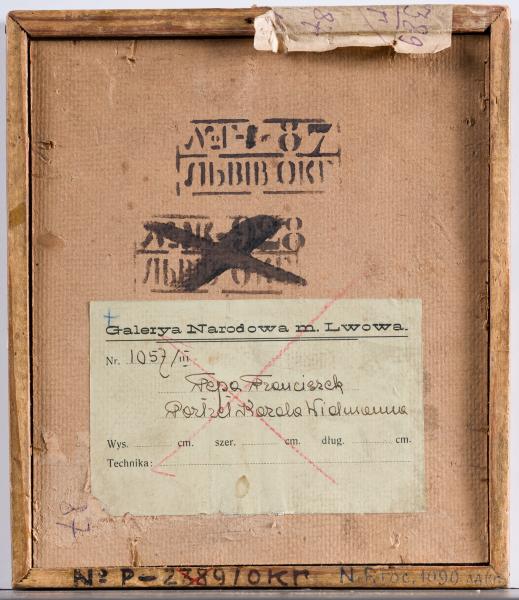
- Г-I-87
- Автор
- Францішек Тепа
- Назва
- Портрет Кароля Відмана
- Дата створення
- 1843
- Техніка
- акварель
- Матеріал
- папір акварель гуаш
- Розміри (висота x ширина, см)
- 18.1 x 15.5
Додатково
- Вид
- графіка
- Жанр
- портретний
- Сюжет
- Портрет
- Провенанс
- Збірка Львівської міської галереї
Інформація про автора
Опис роботи
Півфігурне зображення чоловіка зі складеними руками, що сидить на кріслі. У нього темне волосся, рідкі вуса і бакенбарди. Одягнений портретований у світлі штани та чорний сюртук, з-під якого видно світлий жилет, білу сорочку і сіру краватку в бант. З-під рукава видно білий манжет. Портретований Кароль Відман був адвокатом, літератором, архівістом, журналістом, знаним громадсько-політичним діячем: порушував питання автономії Галичини, ліквідації панщини, відстоював права поляків у Австрійській імперії. Обіймав посаду секретаря 7 відділу Львівського магістрату, керував Міським статистичним управлінням, працював хранителем фондів Міського архіву Львова (1882–1891). Досліджував історію Львова, був автором праці «Archiwum miasta Lwowa». Складав інвентар дипломів, збирав копії актів, які стосувалися військової історії Львова (описи арсеналів, донесення про битви тощо). Ця збірка нараховувала 250 позицій під назвою «Acta militaria». Досліджував біографію Францішека Смольки, від якого отримав частину документів. Опублікував документи з історії галицьких шкіл (1891), статті про костели Марії Сніжної та Латинську катедру, облогу Львова 1648 р., склав картковий каталог рахункових (так званих лонгерських) книг. Кароль Відман був засновником і першим секретарем Крайового археологічного товариства (1875), редактором його органу «Przegląd Archeologiczny». 1885 року разом із В. Дідушицьким та І. Шараневичем організував польсько-українську археологічну виставку, яка зібрала українсько-польські археологічні пам’ятки з усієї Галичини.
[Круковський О. Відман Кароль. Українські архівісти (XIX–XX ст.): Біобібліографічний довідник / упоряд.: І. Матяш, С. Зворський, Л. Приходько. Київ, 2007. С. 112.]
[Круковський О. Відман Кароль. Українські архівісти (XIX–XX ст.): Біобібліографічний довідник / упоряд.: І. Матяш, С. Зворський, Л. Приходько. Київ, 2007. С. 112.]
Надписи та символи
Справа внизу авторський підпис: «Fr. Tepa», далі – нечітко. Зліва внизу напис: «Anno 1843».
Портретована особа
- Ім'я портретованого
- Кароль Відман
- Роки життя портретованого
- 1821–1891
Правове регулювання
Львівська національна галерея мистецтв імені Б.Г. Возницького