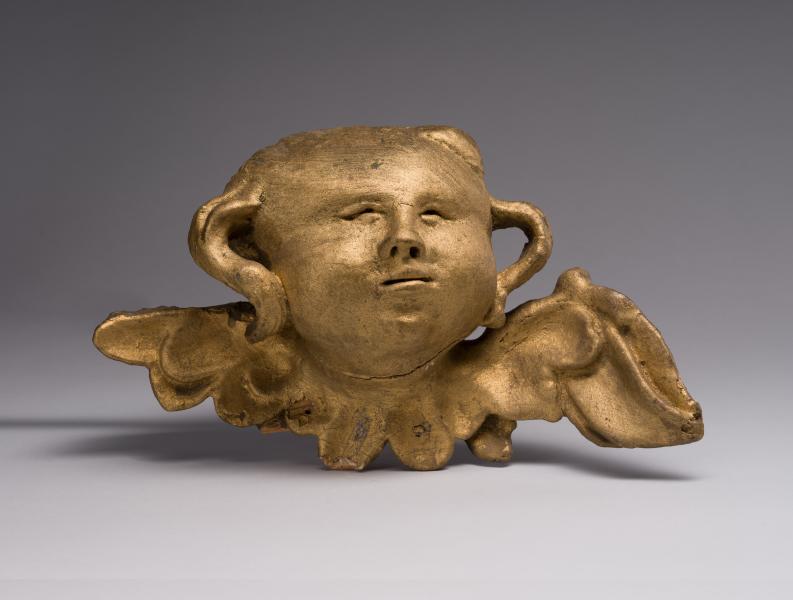
Angel’s Head
unknown


Basic information
- ID
- С-I-1820
- Author
- unknown
- Name
- Angel’s Head
- Date of creation
- 18th c.
- Country
- Ukraine
- Technique
- carving
- Material
- wood bronze paint
- Dimensions (height x width x depth, cm)
- 18.5 x 33.5 x 12
Additionally
- Type
- sculpture
- Genre
- religious
- Plot
- Cherub
- Provenance
- Verbliany village, Lviv region
Information about author
Object description
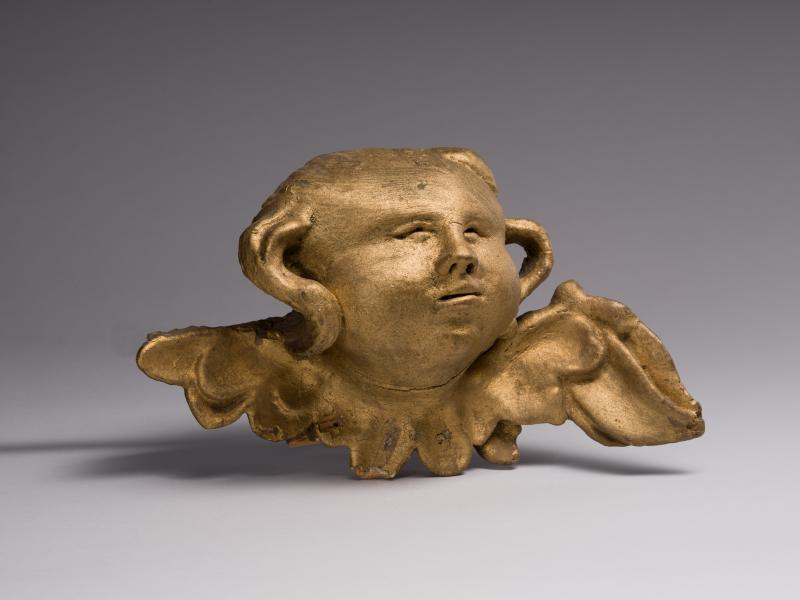
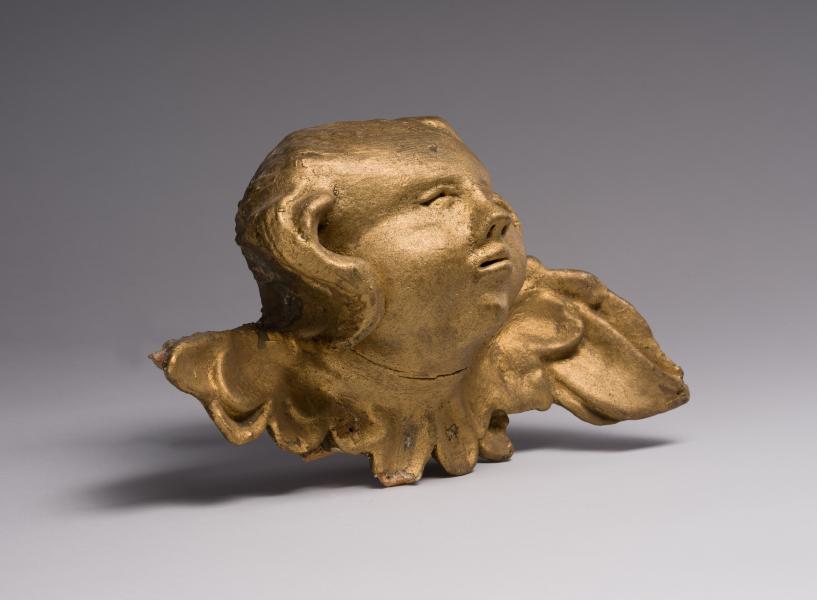
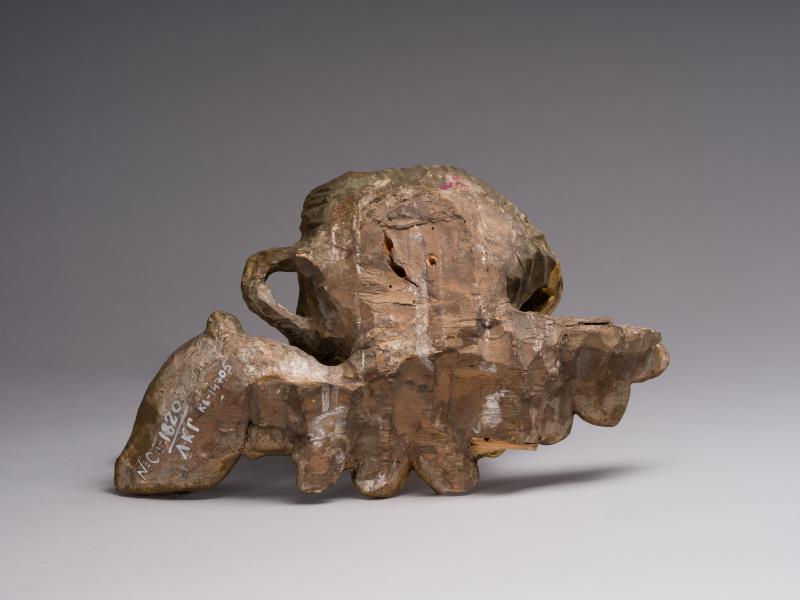
The image of the cherub appears in the form of a decorative, somewhat massive angel's head with spread wings, carved in the traditions of sacred art. The face has rounded, almost childlike features: plump cheeks, a clearly defined chin, small, close-set eyes, and small, slightly smiling lips. The generalised interpretation suggests that the master's preference lies in decorativeness and symbolism rather than realism. The gentle expression gives the cherub an air of heavenly purity and tranquillity, while its barely defined eyes create an impression of dreaminess. On both sides of the head, wings are carved, framing the face and forming a halo of heavenly protection. The stylised relief form of the wings is emphasised by chiaroscuro. The bronze toning of the work enhances the decorative effect, making the image majestic. Cherubs symbolised heavenly forces, purity, and the protection of sacred space, while also lending a sense of grandeur to the interior.
Legal regulation
Borys Voznytskyi Lviv National Art Gallery