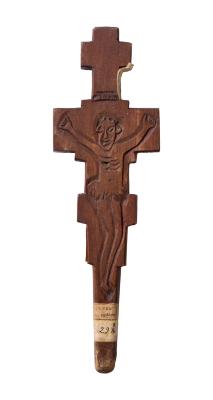
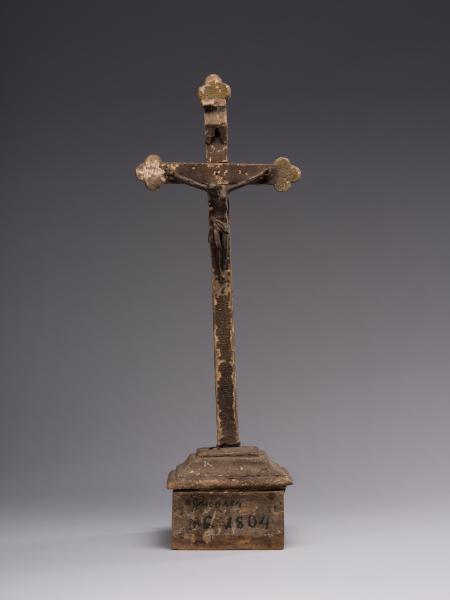
Altar Crucifix
unknown


Basic information
- ID
- С-І-2074
- Author
- unknown
- Name
- Altar Crucifix
- Date of creation
- 18th c.
- Technique
- carving polychromy
- Material
- wood metal
- Dimensions (height x width x depth, cm)
- 46 x 16.5 x 11
Additionally
- Type
- decorative and applied arts
- Genre
- religious
- Plot
- Crucifixion
- Provenance
- Lviv region
Information about author
Object description
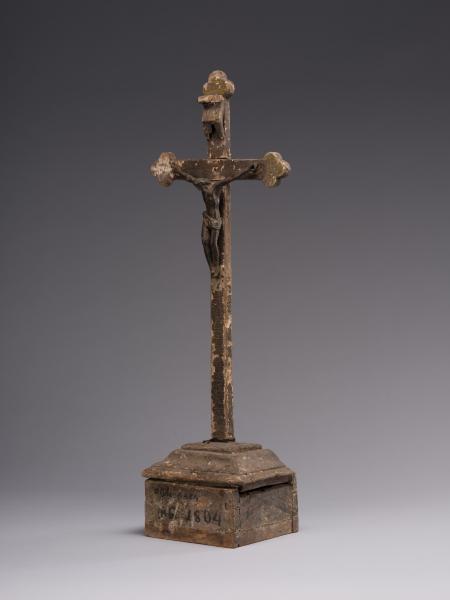
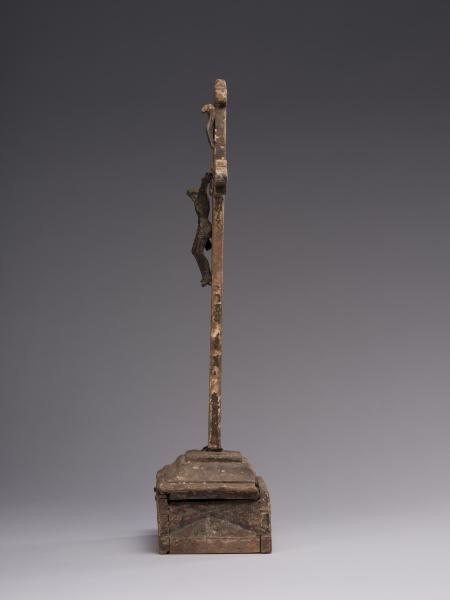
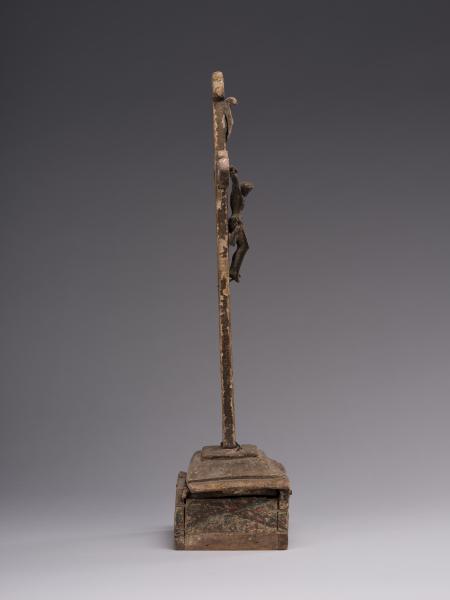
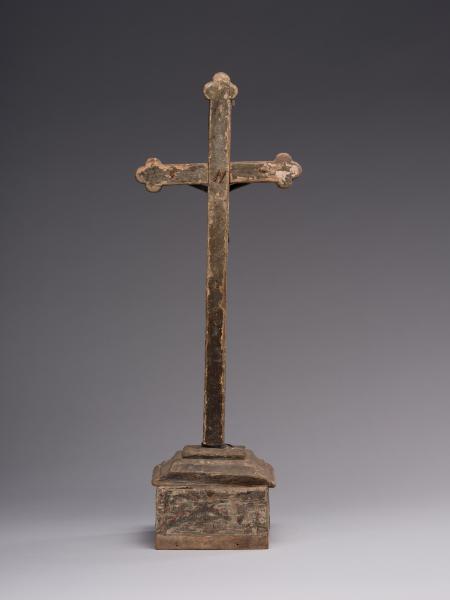
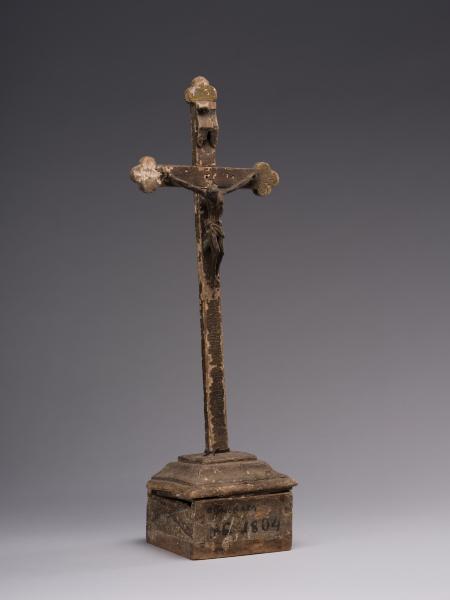
The wooden cross with a Crucifix is presented on a carved square base. The three ends of the cross terminate in rounded leaves – a form widely used in Ukraine, particularly on altar crosses. The triple termination symbolises unity, harmony, and perfection, associated with the Holy Trinity. On the horizontal beam, the sculptural figure of Christ is fixed, executed in traditional Western iconography: outstretched arms nailed to the cross with closed palms, legs crossed with one foot placed over the other, head tilted to the right, and crowned with a crown of thorns. The body of the Saviour is modelled with a pronounced emphasis on anatomical accuracy, with clearly defined ribs, abdomen, and musculature of the arms and legs. A significant feature of the sculptural representation is the slenderness of Christ’s figure. The polychrome base is of interest not so much for its original painting as for the inscription, which indicates that the altar cross was restored in 1864. The work combines naivety and simplicity of execution with profound spiritual content characteristic of folk craftsmen.
Legal regulation
Borys Voznytskyi Lviv National Art Gallery