Flowers and Butterflies
Jan van Kessel I


Basic information
- ID
- Ж-892
- Author
- Jan van Kessel I
- Name
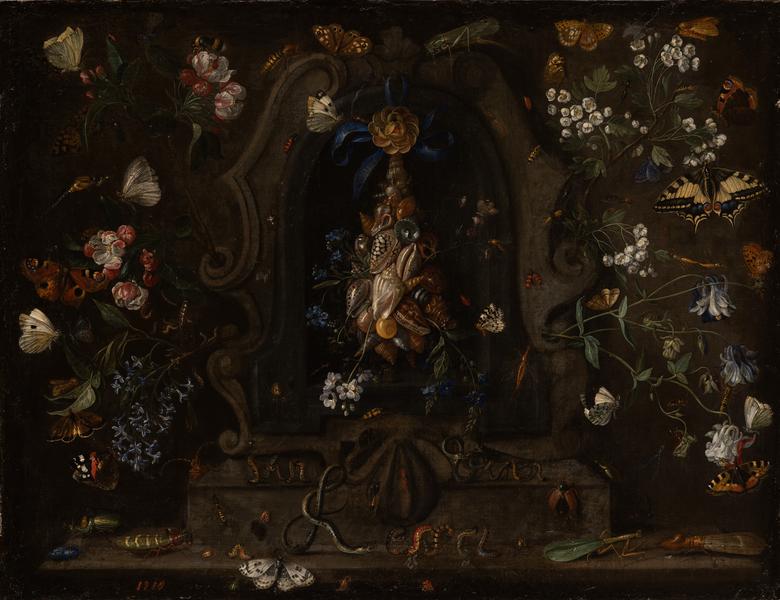
- Flowers and Butterflies
- Date of creation
- 17th c.
- Country
- Flanders
- Technique
- oil painting
- Material
- canvas oil
- Dimensions (height x width, cm)
- 49 x 63
Additionally
- Type
- painting
- Genre
- still life
- Provenance
- Collection of Lviv Museum of Ukrainian Art
- Exposition
- Potocki Palace
Information about author
Object description
Jan van Kessel the Elder was one of the pioneers of Flemish still life, showing flower garlands. This genre was formed in the Counter-Reformation atmosphere to spread and propagate Catholic ideas and dogmas. The still life "Flowers and Butterflies" represents the common theme of "vanity of vanities" with a distinct sacred subtext. A decorative composition of seashells hangs in a carved stone niche decorated with various flowers. Butterflies, beetles, praying mantises, caterpillars, grubs, and snakes are represented all over the painting. Such detailed images of plants and insects appeared in the art of Flanders and Holland under the influence of a growing interest in natural history. However, Kessel's painting not only accurately reproduces nature but also has a deep symbolic meaning, understandable to the viewer of that time. Shells represent death, flowers symbolise the transience of life, butterflies indicate the human soul, caterpillars represent resurrection, and snakes and other reptiles symbolise sinfulness. The content of the work was intended to encourage the viewer to consider the salvation of the soul as opposed to the perishable earthly existence. The artist skilfully concealed his signature in the painting: the contours of caterpillars and snakes on the niche plinth and the table form the inscription "Jan Van Kessel".
Legal regulation
Borys Voznytskyi Lviv National Art Gallery