Allegorical Figure of the Prisoner
Franciszek Oledzki


Basic information
- ID
- С-I-1101
- Author
- Franciszek Oledzki
- Name
- Allegorical Figure of the Prisoner
- Date of creation
- 1780s
- Country
- Ukraine
- Technique
- carving
- Material
- wood
- Dimensions (height x width x depth, cm)
- 128 x 54 x 42
Additionally
Information about author
Object description
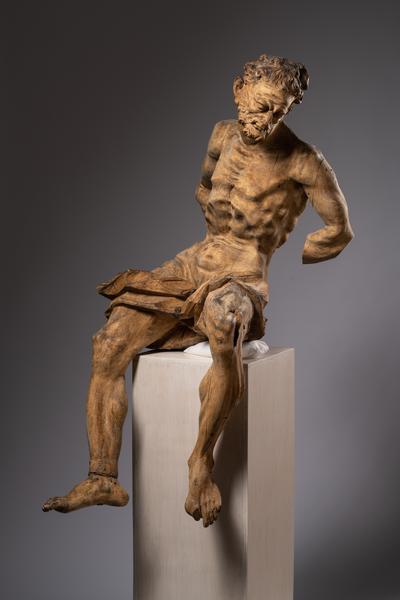
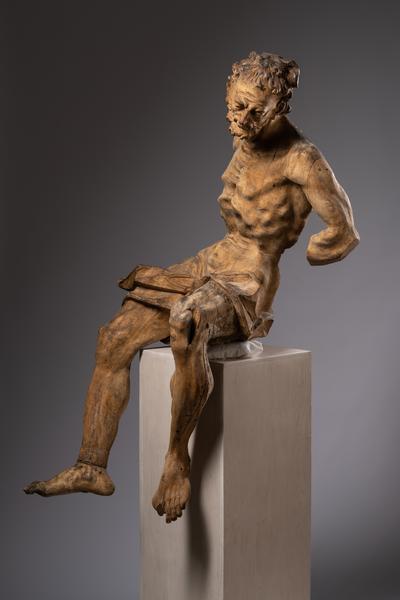
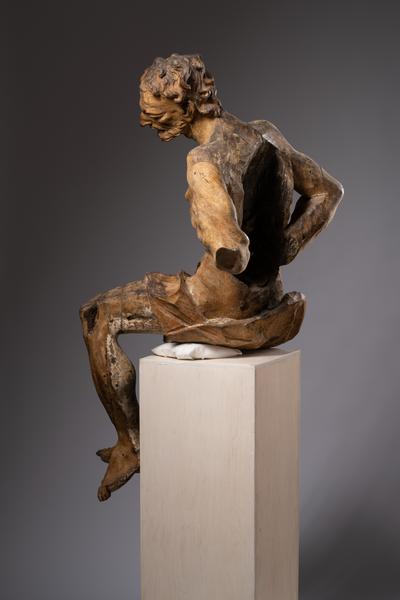
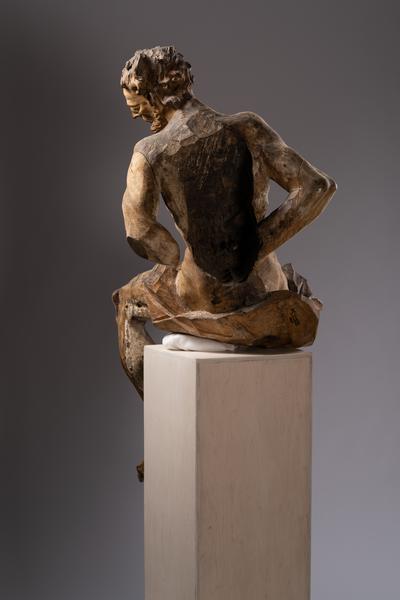
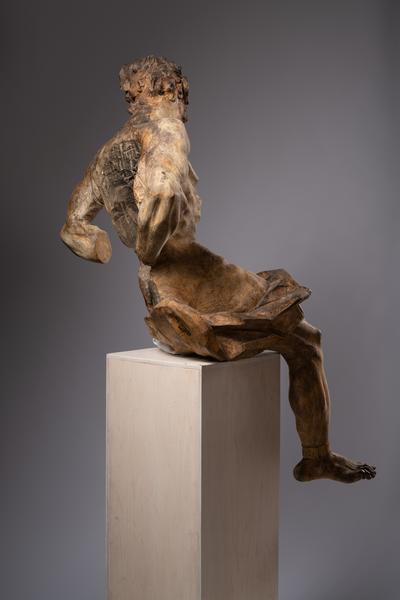
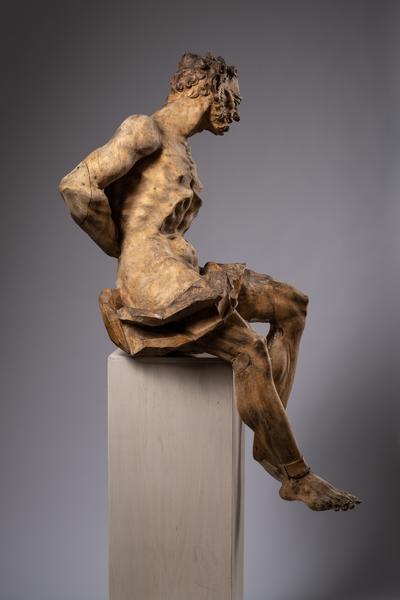
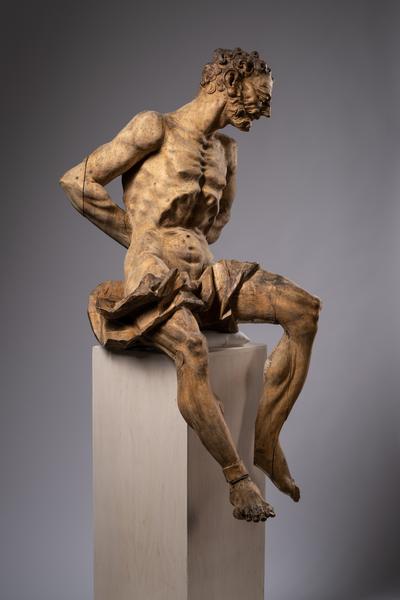
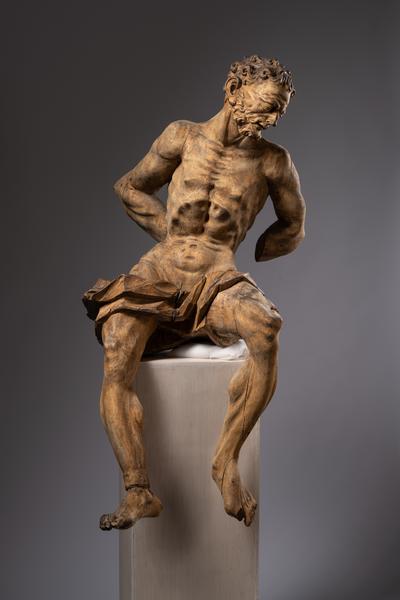
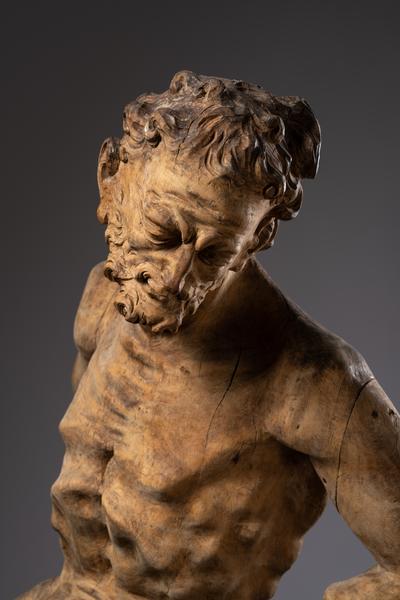
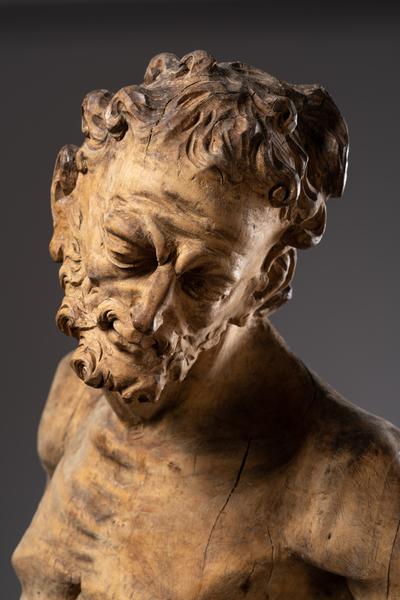
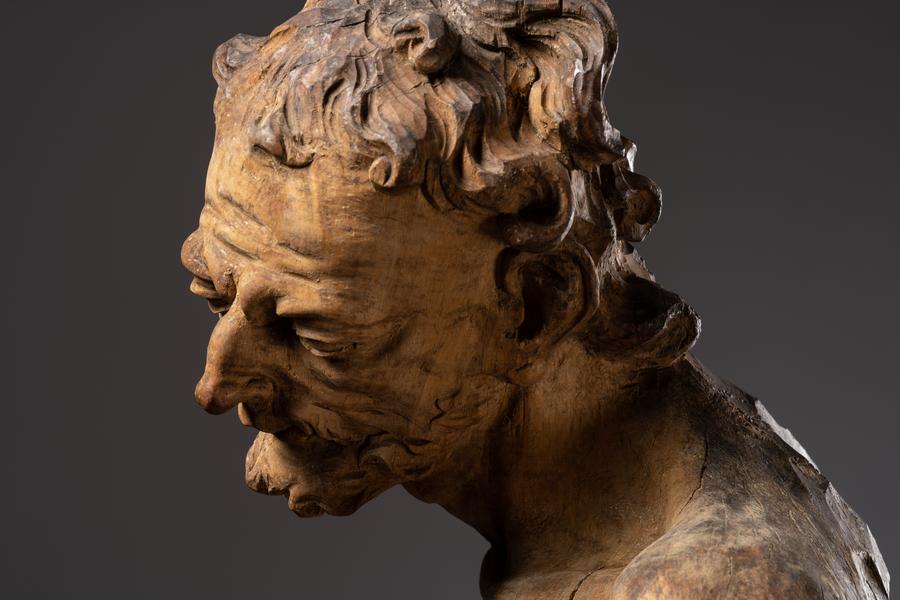
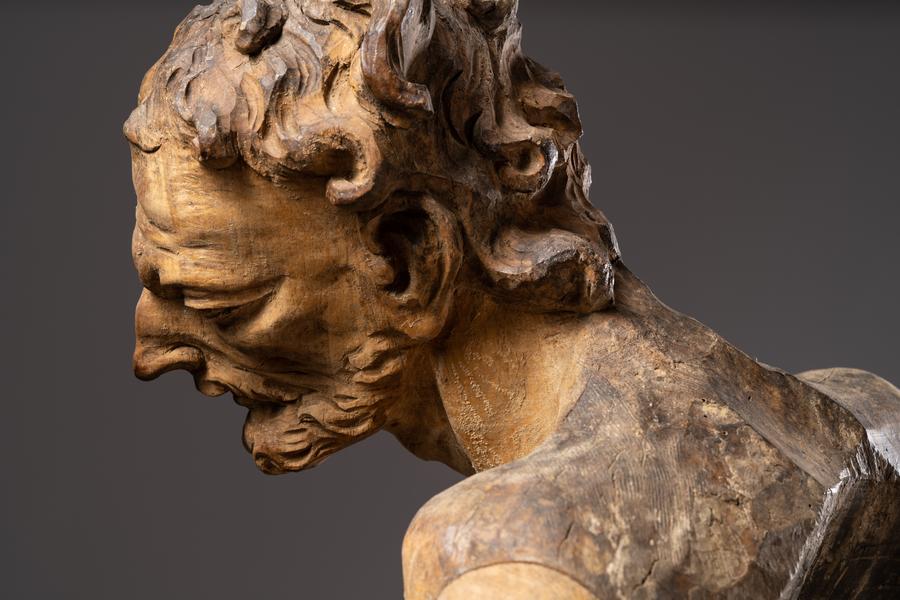
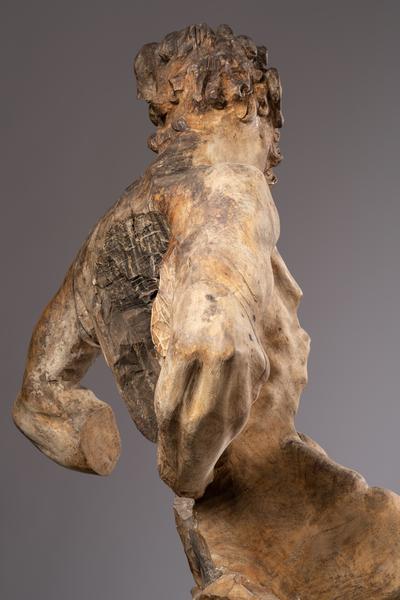
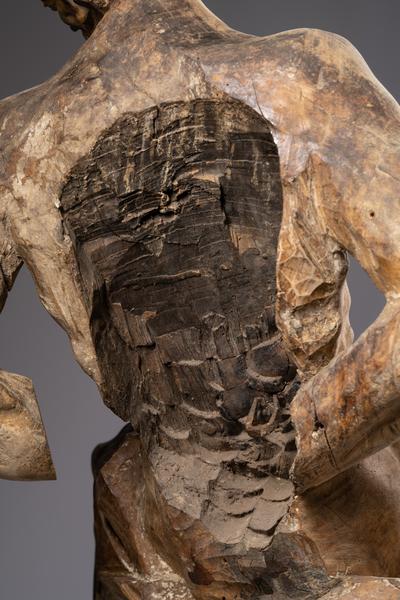
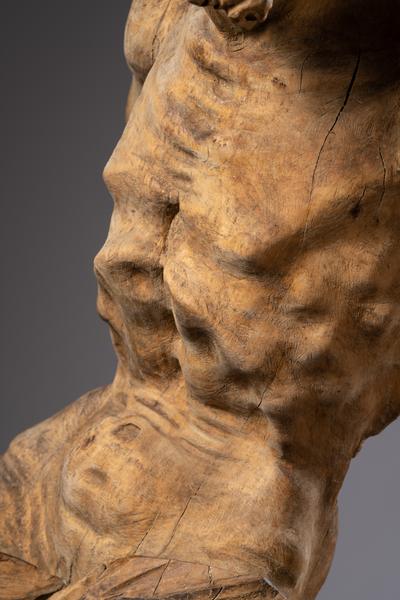
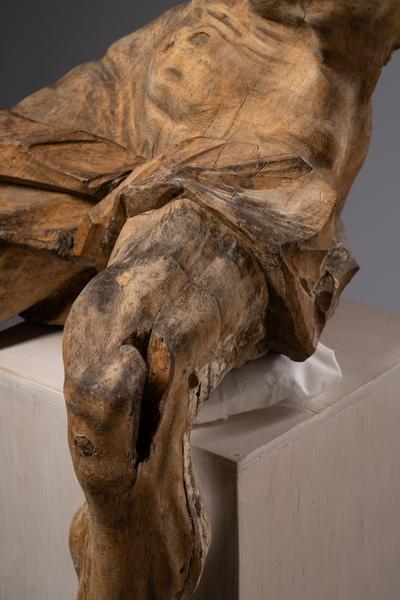
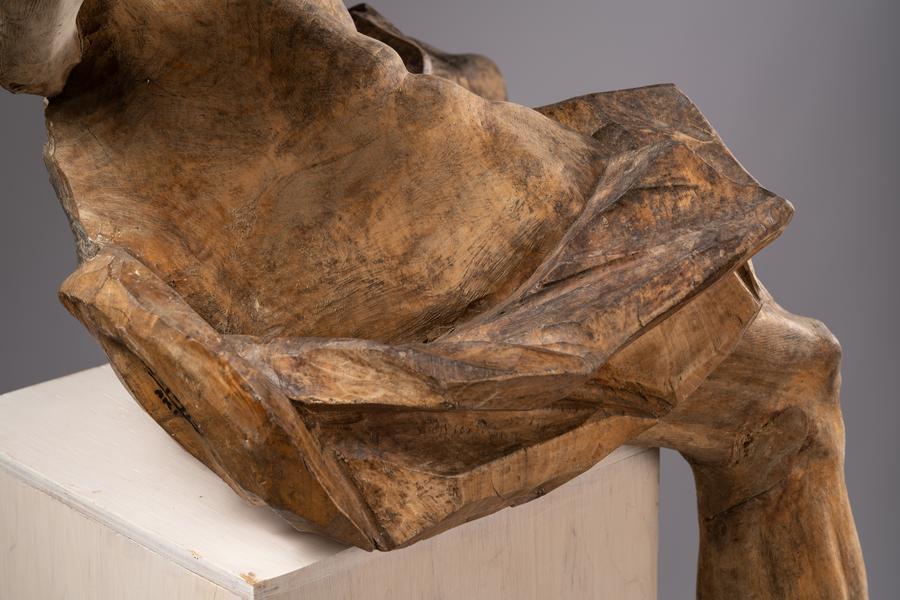
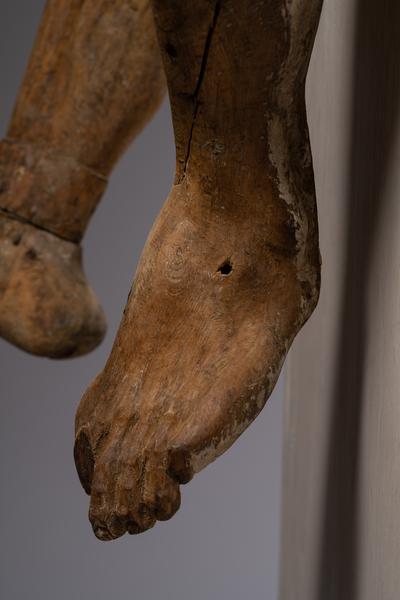
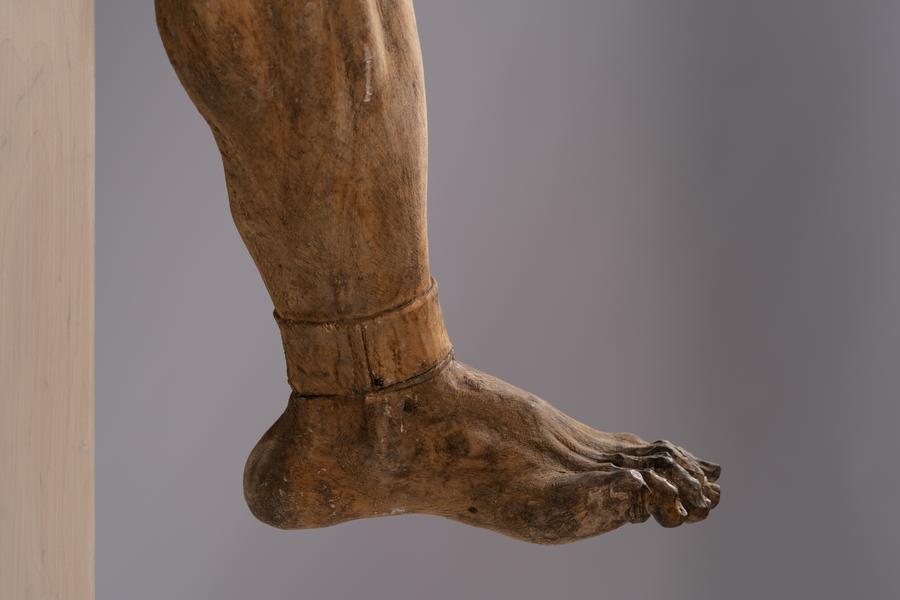
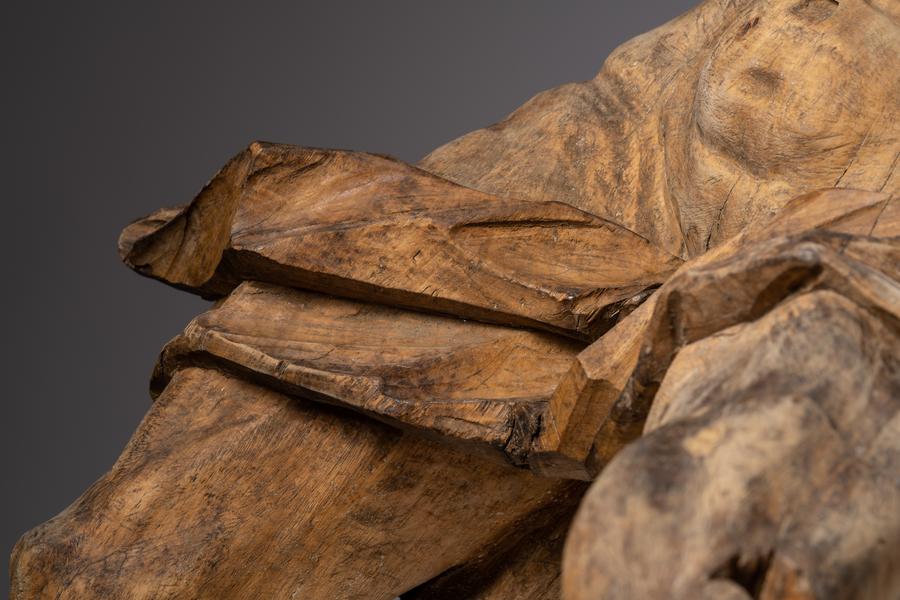
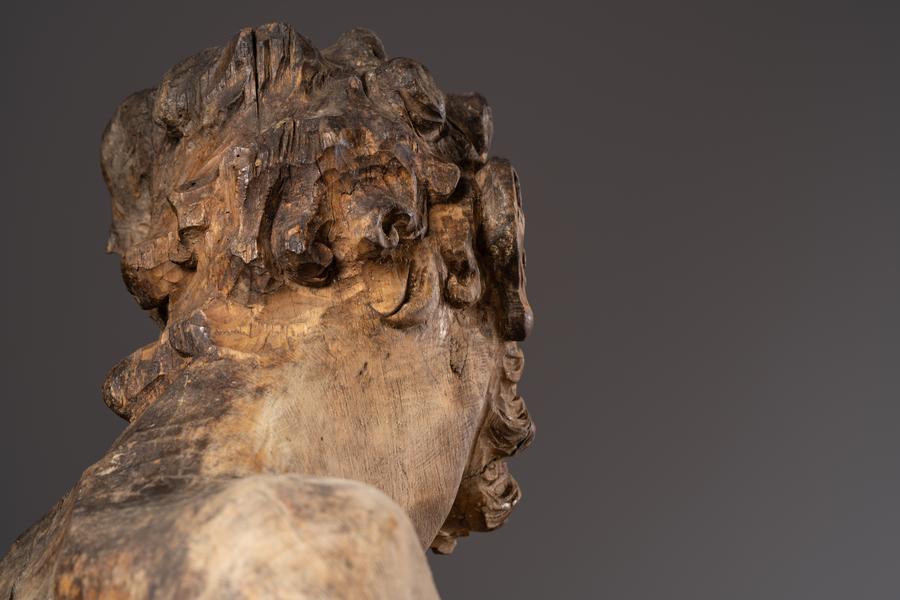
In the 80s of the 18th century, Franciszek Oledzki received an order to make an ensemble of sculptures from two prisoners; they were designed to decorate the upper part of the church's central altar. The artist masterfully reproduced the exhausted body of the prisoner – the tension is felt in every curve. Skilfully using a chisel, the sculptor depicted the man with a protruding chest; the skin outlines his ribs; his arms and legs are muscular, and an abdominal cavity is sunken. The image of pain and suffering froze on the man's face. The prisoner's face is characterised by the typical face form of Oledzki's works; his nose is straight and slightly protruded. In an original manner, the author reproduced hair curls that look dishevelled. The external effect prevails in plasticity, which is felt in the figure's pose and the theatricality of the movement.
Legal regulation
Borys Voznytskyi Lviv National Art Gallery