Autumn Forest with a River (Elizabeth Fountain)
unknown


Basic information
- ID
- Ж-1428
- Author
- unknown
- Name
- Autumn Forest with a River (Elizabeth Fountain)
- Date of creation
- 19th c.
- Technique
- oil painting
- Material
- canvas oil
- Dimensions (height x width, cm)
- 53 x 35.8
Additionally
- Type
- painting
- Genre
- landscape
- Provenance
- Collection of Lviv City Gallery
Information about author
Object description
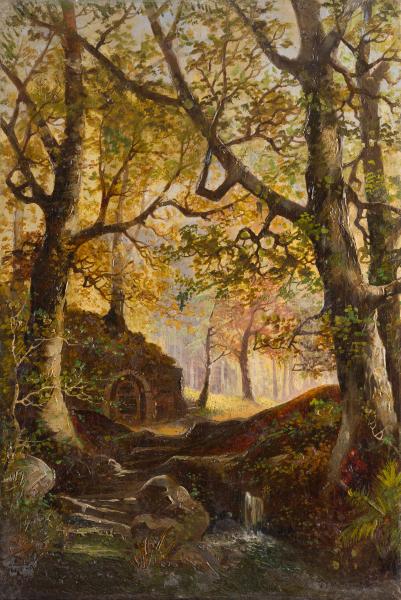
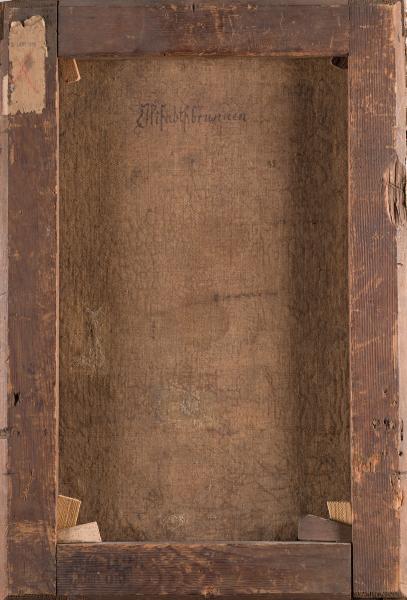
The work shows a picturesque view of an autumn forest on a clear, sunny day. In the foreground, in the shade of two large trees near a small stream, remnants of old stone steps leading to a stone niche, depicted in the background on the left, are visible. The inscription "Elisabethbrűnnen" on the back of the work indicates that the scene is a corner of the Thuringian Forest with the Elisabeth Fountain (spring). The spring is named in honour of Landgravine and Catholic Saint Elizabeth of Thuringia (1207–1231) – a Hungarian princess, daughter of King Andrew II, and wife of Ludwig IV, Landgrave of Thuringia, known for her charity and good works. Saint Elizabeth was the aunt of Queen Constance of Hungary, whose husband was Lev Danylovych (Leo I of Galicia). The modern Elisabeth Fountain is a version of the medieval spring located on the main accessway to Wartburg Castle, near the city of Eisenach in the Thuringian Forest (Germany).
Inscriptions
On the back of the canvas is an inscription: "Elisabethbrűnnen".
Legal regulation
Borys Voznytskyi Lviv National Art Gallery