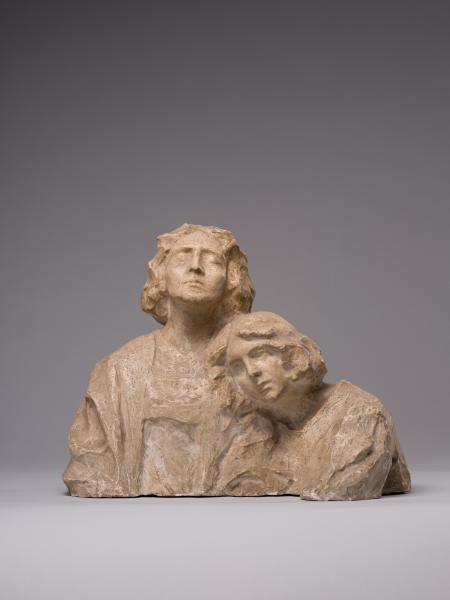
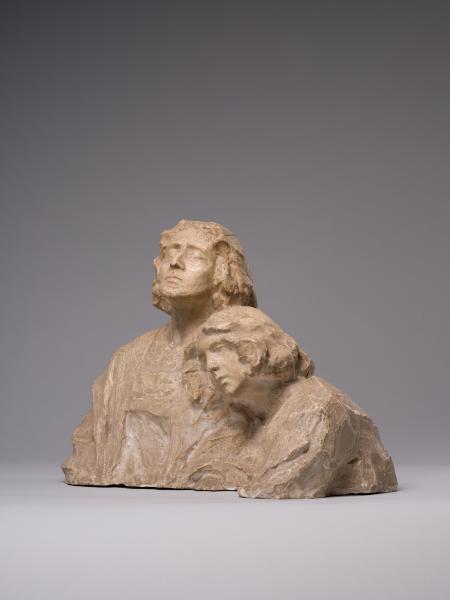
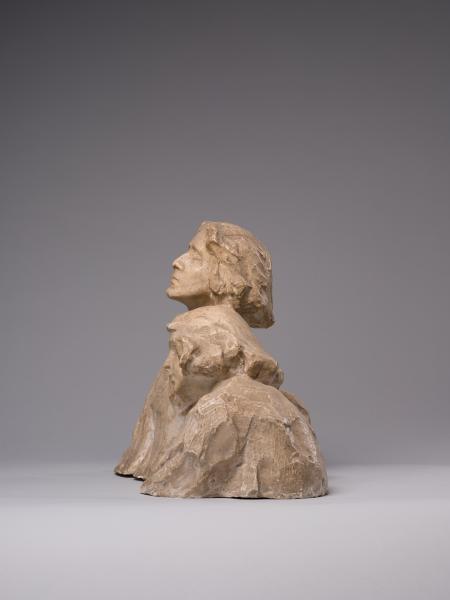
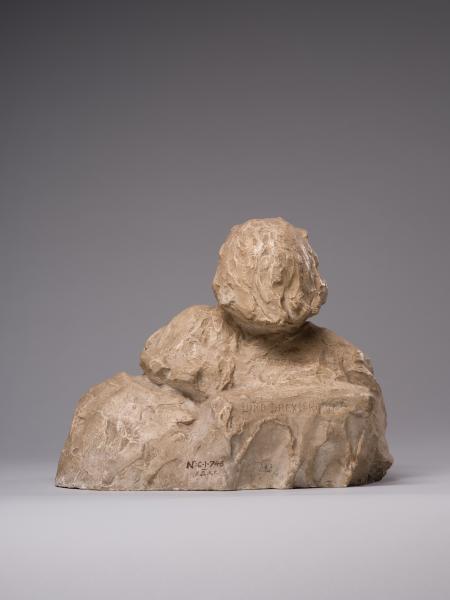
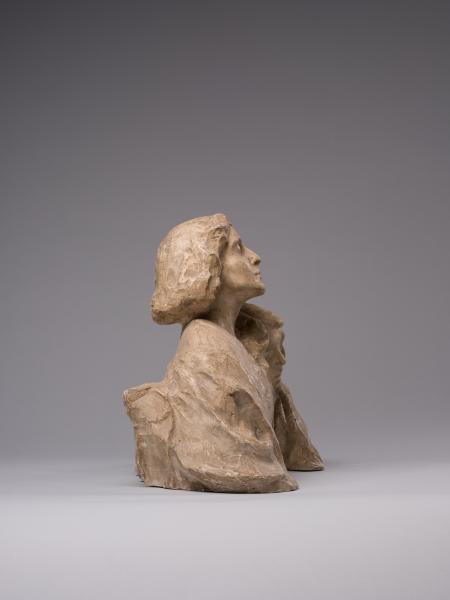
Largo (Mother with Daughter), a miniature model of the upper part of the sculpture
Luna Drexler


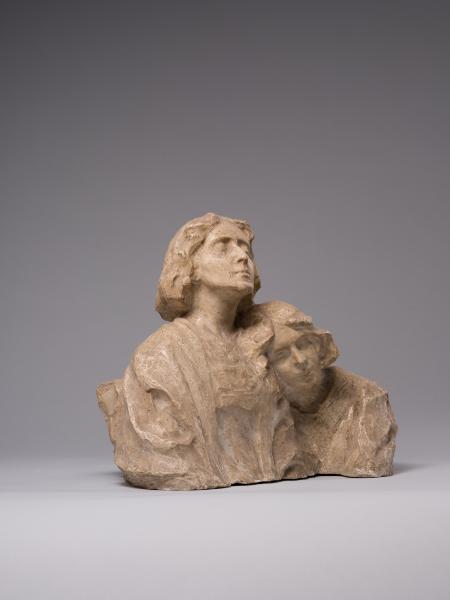
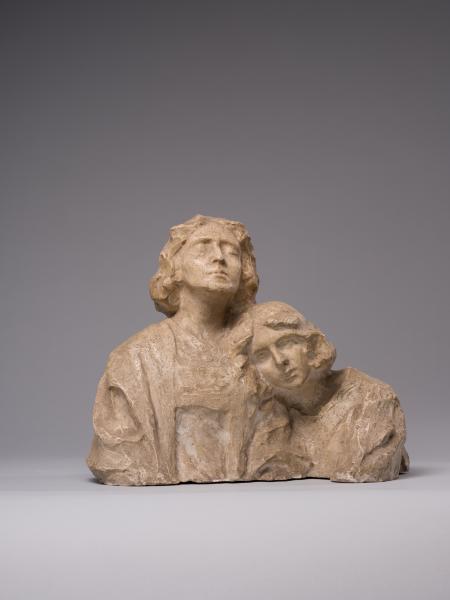
Basic information
- ID
- С-I-746
- Author
- Luna Drexler
- Name
- Largo (Mother with Daughter), a miniature model of the upper part of the sculpture
- Date of creation
- 1912 (?)
- Country
- Austro-Hungarian Empire
- Culture
- Contemporary times
- Technique
- moulding
- Material
- plaster vernix
- Dimensions (height x width x depth, cm)
- 32 x 42 x 22
Additionally
- Type
- sculpture
- Genre
- portraiture
- Plot
- Couple portrait
- Provenance
- Lviv State Museum of Ukrainian Art
Information about author
Object description
The composition "Mother with Daughter" ("Largo") (1912), known in several variations, was recognised by contemporary art critics as one of the best works by Luna Amalia Drexler. A distinctive feature of the sculpture's figurative and plastic execution is visual and sound synthesis, depicting a woman's head tilted back and raised upwards, immersed in musical worlds. The openness of the sculpture to the external space, interpreted as the world of music, the fluid closeness of the outline, and the soft modelling of the faces serve as a means of embodying the artistic idea. The energy of the musical rhythm and the change of musical registers are reproduced by the textured "painterly" impressionistic modelling of the outfit. The subtle differentiation of the individual peculiarities of music perception: elevated meditative – of the mother and dreamy-romantic – of the daughter, adds figurative expressiveness to the work. The semantic "key" to the perception of the sculpture is the name Largo (from the Italian – broadly, extremely slowly, long) – a musical tempo and character similar to adagio, but more strict in performance, differentiated into slow Largo assai di molto, sublime Largo religioso, life-affirming Largo ma non troppo.
Legal regulation
Borys Voznytskyi Lviv National Art Gallery