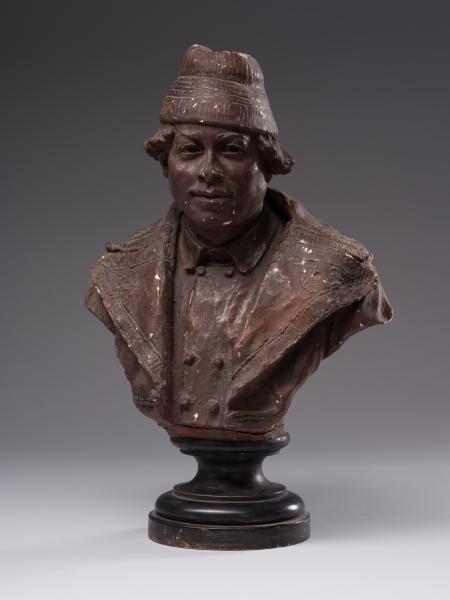
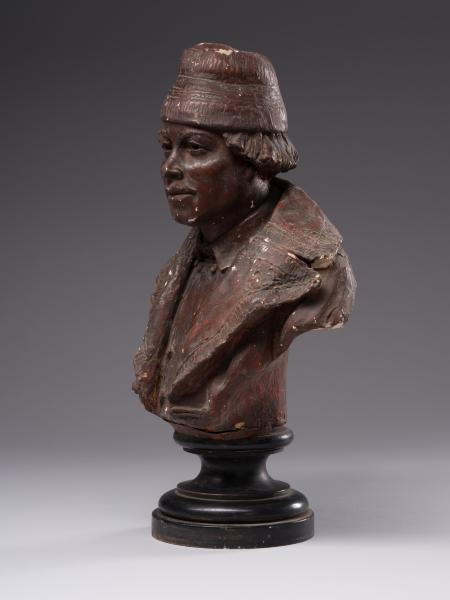
Bust of a Man
Antoni Popiel


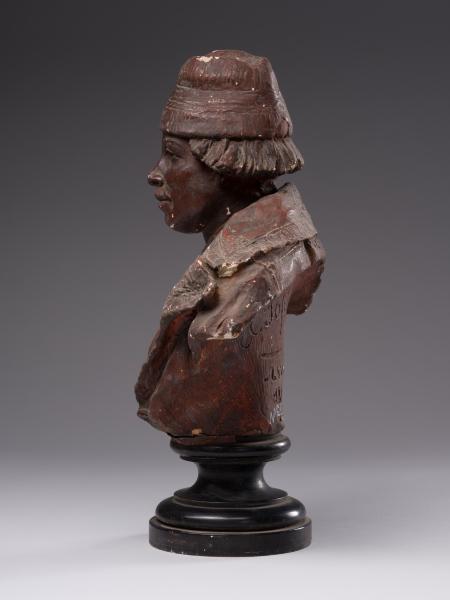
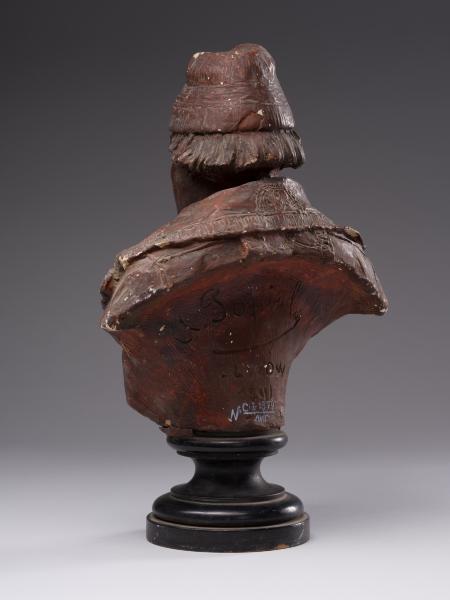
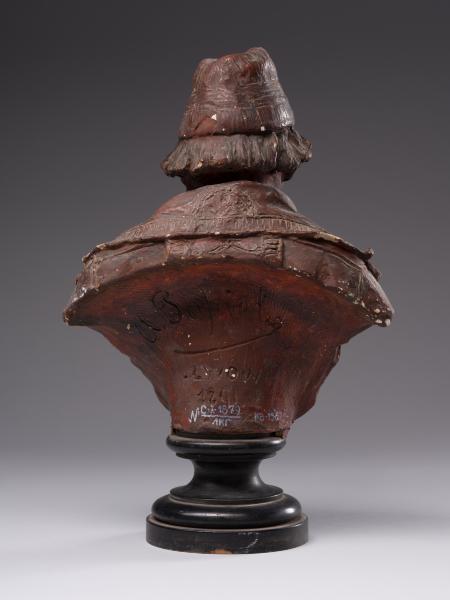
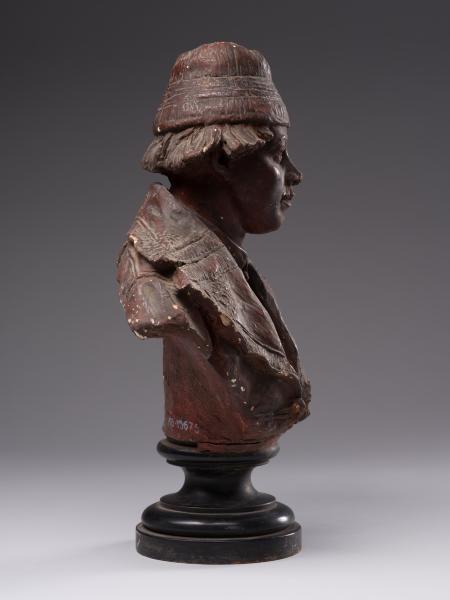
Basic information
- ID
- С-I-1879
- Author
- Antoni Popiel
- Name
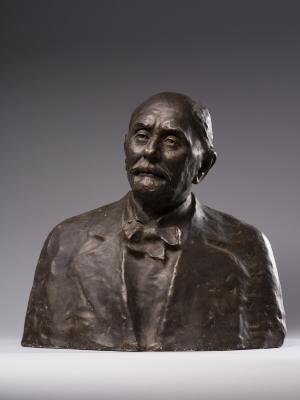
- Bust of a Man
- Date of creation
- 1891
- Country
- Austro-Hungarian Empire
- Culture
- Contemporary times
- Technique
- moulding polychrome
- Material
- plaster
- Dimensions (height x width x depth, cm)
- 37 x 25 x 14.2
Additionally
- Type
- sculpture
- Genre
- portraiture
- Plot
- Portrait bust
- Provenance
- Purchased from a private individual
Information about author
Object description
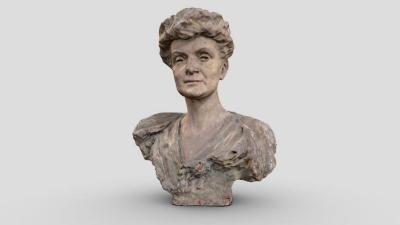
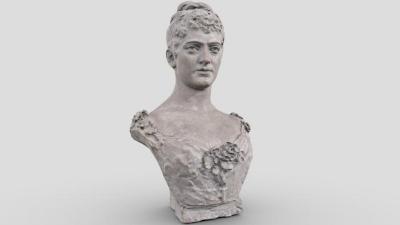
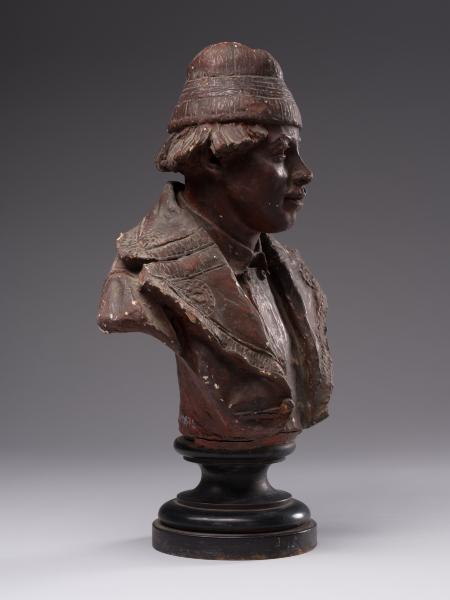
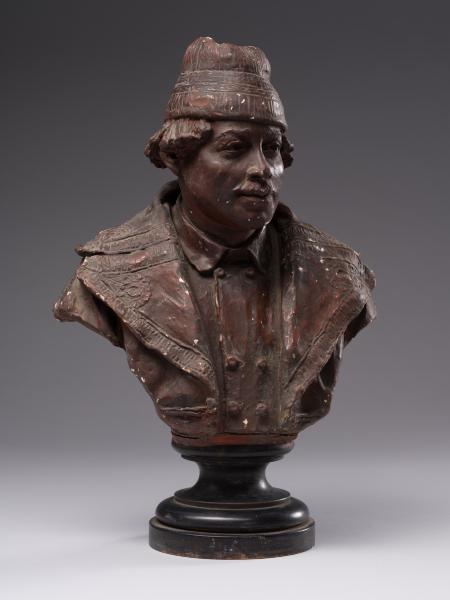
The figurative concept of A. Popiel's "Bust of a Man" (1891) was based on the idea of renewing culture by turning to folk sources and the aestheticisation of the folk, which was characteristic of the turn of the 19th and 20th centuries, and the perception of stories from folk life and folk types as a fascinating artistic theme. The work is full of empathy and respectful attention to the sitter and his individual and typical folk features. A characteristic feature of the figurative solution of the portrait is the assertion of the value of the ordinary folk appearance as a subject of artistic understanding and reproduction. Attention is drawn to the life-affirming image of the peasant – a representative of the infinite energies of folk life. The plastic solution of the work is characterised by the energetic modelling of the face, the details of the folk costume, the picturesque silhouette and textures. The bust is probably paired with the "Bust of a Woman" (1891). It is in line with other works with folk themes in Lviv sculpture at the turn of the 19th and 20th centuries, notably by T. Baracz ("Bust of a Peasant", 1879), W. Brzega ("Man from Verkhovyna", 1901), K. Laszczka ("Bust of a Man from Verkhovyna", 1900) and M. Tarczynowski ("Bust of an Older Man", 1888).
Inscriptions
Signed and dated on the back: "A. Popiel / Lwów 1891".
Legal regulation
Borys Voznytskyi Lviv National Art Gallery