Angel
Tadeusz Baracz


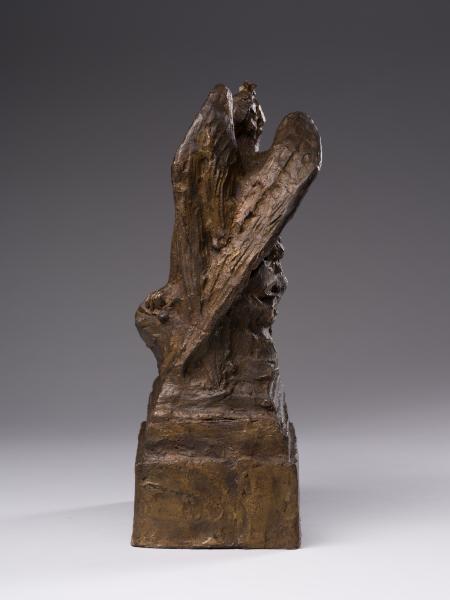
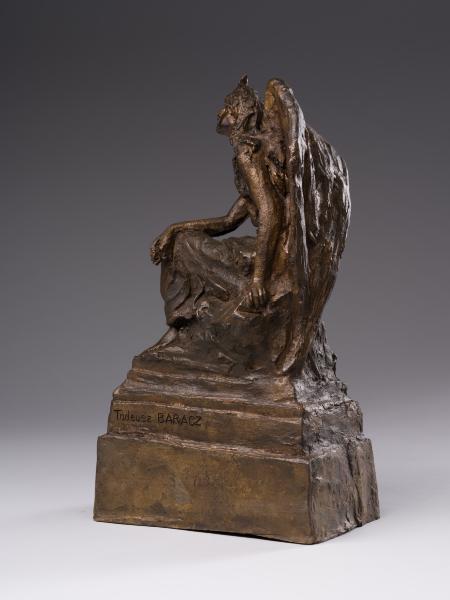
Basic information
- ID
- С-I-175
- Author
- Tadeusz Baracz
- Name
- Angel
- Date of creation
- after 1880
- Country
- Austro-Hungarian Empire
- Culture
- Modern times
- Technique
- casting
- Material
- bronze
- Dimensions (height x width x depth, cm)
- 31.5 x 11 x 16.5
Additionally
- Type
- sculpture
- Genre
- memorial
- Plot
- Allegory
- Provenance
- Acquired from Mieczyslaw Lopuszanski National Gallery of Lviv (until 1940)
Information about author
Object description
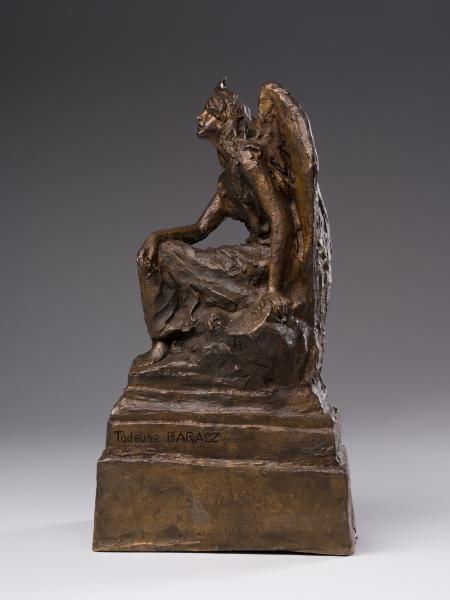
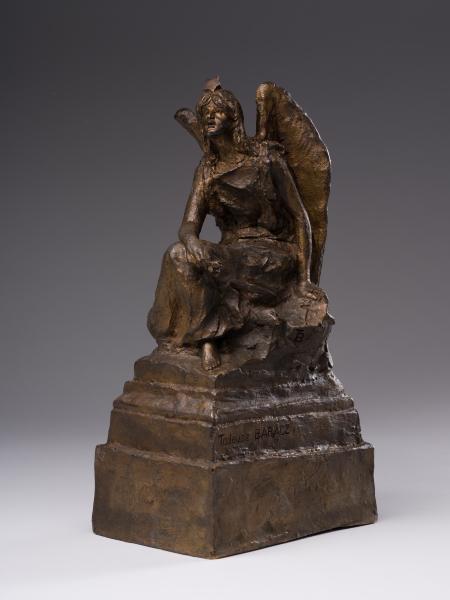
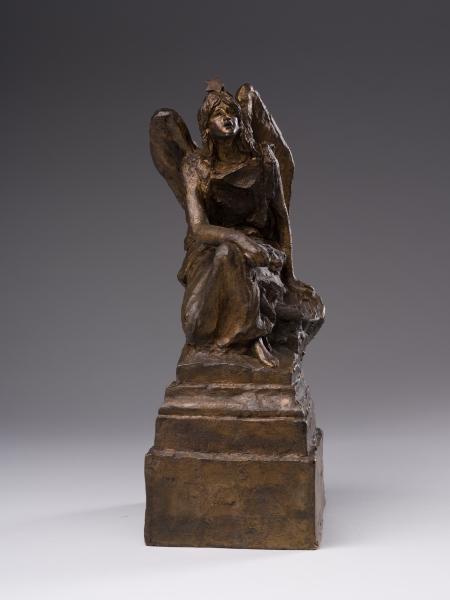
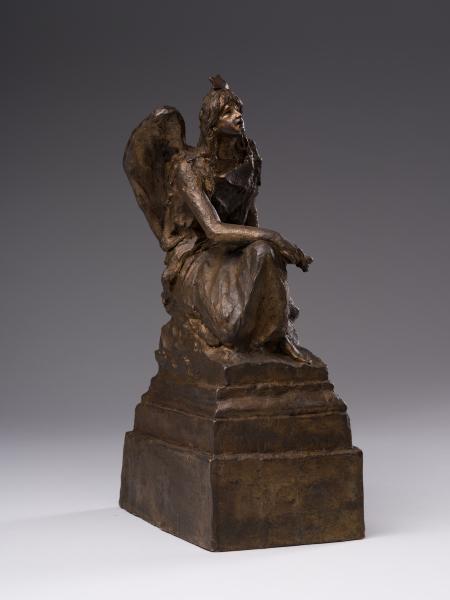
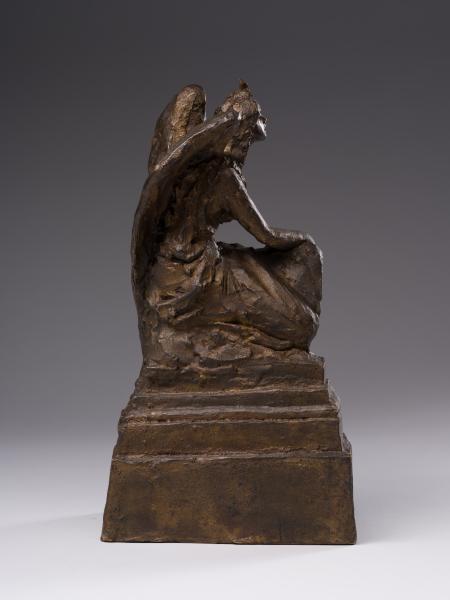
An essential part of Tadeusz Baracz's oeuvre is memorial sculptures, which, together with portraits, brought the artist recognition. The sculptor is best known as the author of tombstones for the Lychakiv cemetery, including the Krowczynski tombstone with an angel from the Borys Voznytskyi Lviv National Art Gallery collection. The crypt of the famous Lviv family contains the graves of Zegota Krowczynska (1848–1893), a doctor, Galician public figure, president of the Sokil Gymnastics Society, Julia Krowczynska (died in 1872), Wojciech Krowczynski (died in 1877), Zdzislawa Krowczynska (1867–1890) and Wlodzimierz Krowczynski (died in 1889). The bronze figure of an angel from the Gallery's collection is a model of the gravestone of Ludwika Krowczynska, the wife of the doctor Ignacy Krowczynski, who died in 1880 at the age of 28 (Biriuliov Y. Lviv Sculpture from Early Classicism to Avant-Garde. Mid-Eighteenth – Mid-Twentieth Century. Lviv : Apriori, 2015. P. 170). The figurative and plastic solution of the work is rooted in the traditional memorial iconography of angels, symbolising purity and heavenly protection, mourning for loved ones, protection of the soul in the afterlife, emphasising the connection with the Almighty, reminding of the immortality of the soul and eternal life. What makes this model special is its inspiration from neo-Baroque forms, reflected in the expressive silhouette and the openness of the sculptural form through the prayerful gaze of the beautiful eyes looking up to the sky. The modelling of the volumes is energetic, creating shimmering effects of light and shadow and reflecting a turbulent state of mind. At the same time, the flowing curved line of the profile silhouette, contrasted with the diagonally upturned head, lends elegance and plastic integrity to the image. The difference between the gallery sketch and the final version of the tombstone (sandstone, 1881) is remarkable: the rhythm of the lines, the balance and the skilful modelling of the naked breast give it a Renaissance 'neo-Florentine' refinement, romantic idealisation and eroticism. The frequency of references to the image of the angel in memorial sculpture at the turn of the 19th and 20th centuries is significant, particularly in the tombstones of F.-H. Richter (1884), L. Chorzewska (1899–1901), A. Kurylowicz (1899–1901) and M. Czemirski (1886) by T. Baracz's contemporary J. Markowski.
Inscriptions
On the right side of the plinth is the signature: "Tadeusz Barącz". Inside the plinth twice: "Hp / 62".
Legal regulation
Borys Voznytskyi Lviv National Art Gallery