Vase (Empire Style)
unknown


Basic information
- ID
- С-I-603
- Author
- unknown
- Name
- Vase (Empire Style)
- Date of creation
- early 19th c.
- Culture
- Modern times
- Technique
- casting
- Material
- bronze
- Dimensions (height x width x depth, cm)
- 28 x 12.5 x 12.5
Additionally
- Type
- sculpture
- Genre
- mythological painting allegory
- Provenance
- National Gallery of Lviv (until 1940)
Information about author
Object description
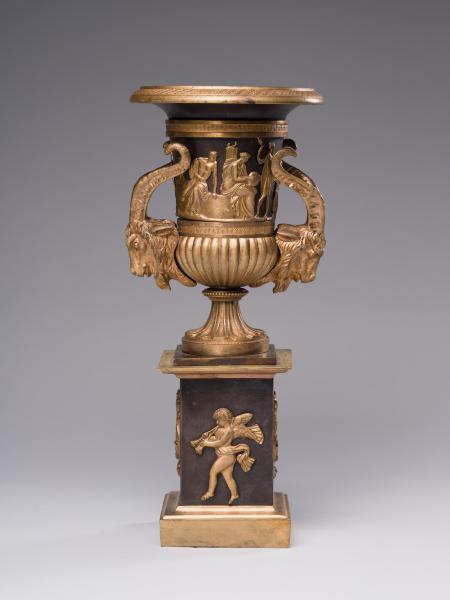
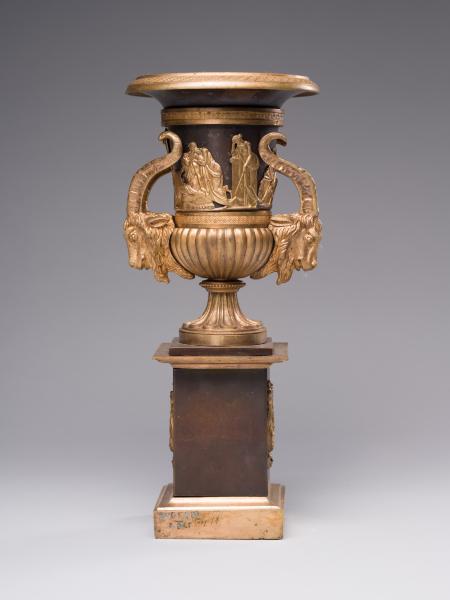
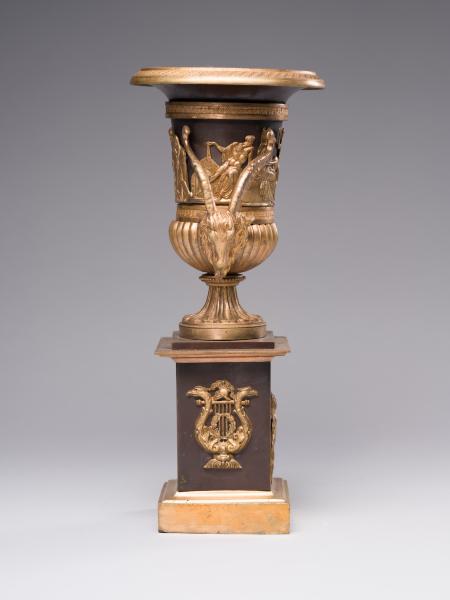
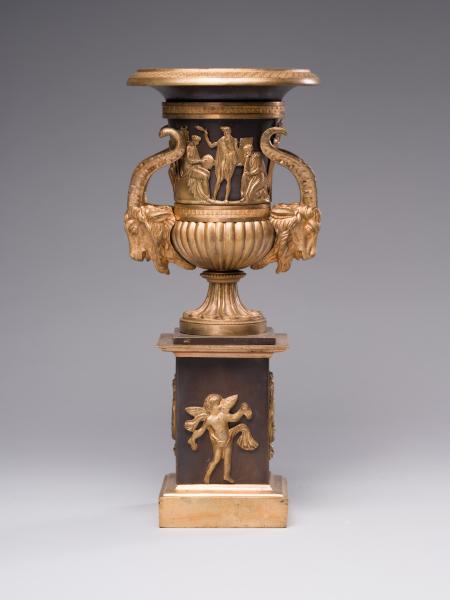
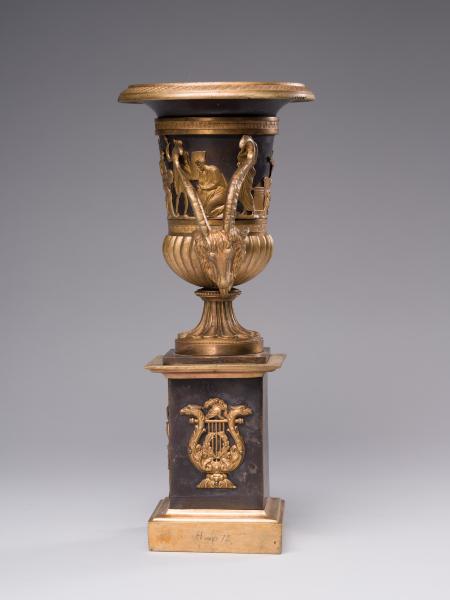
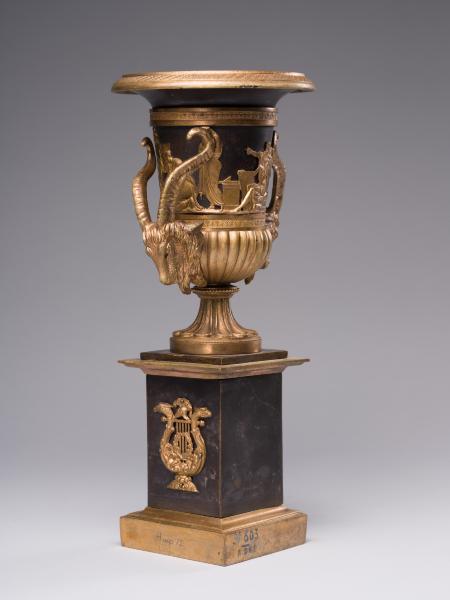
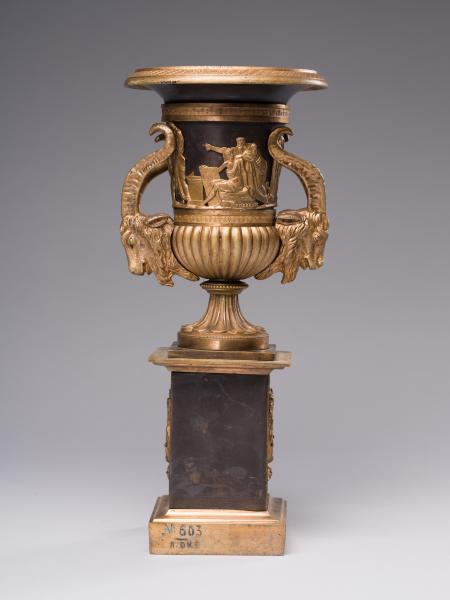
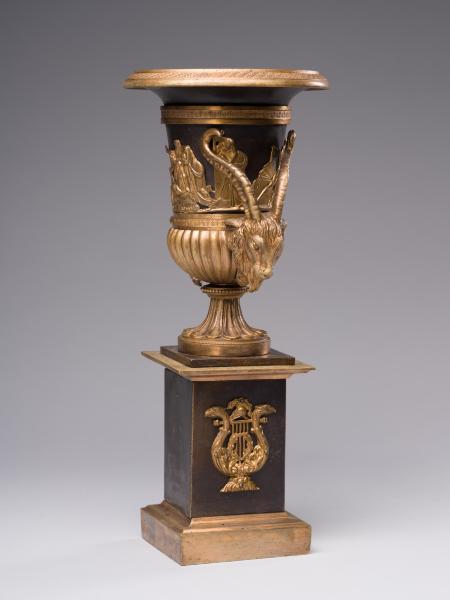
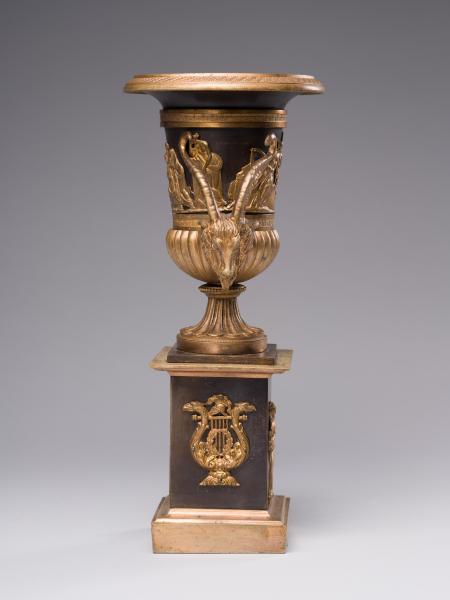
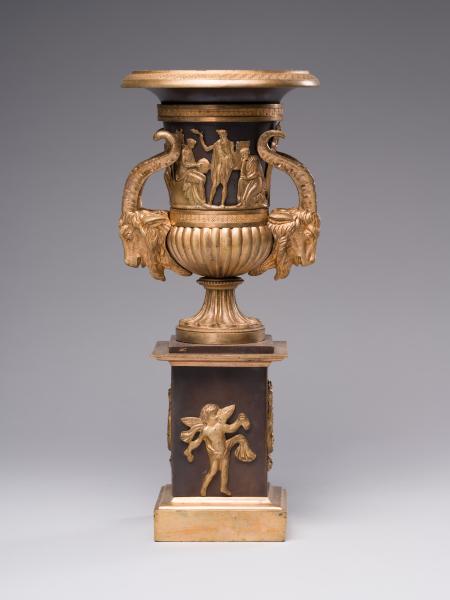
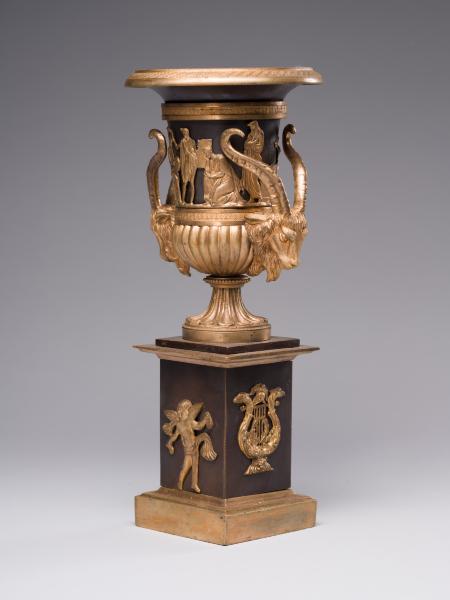
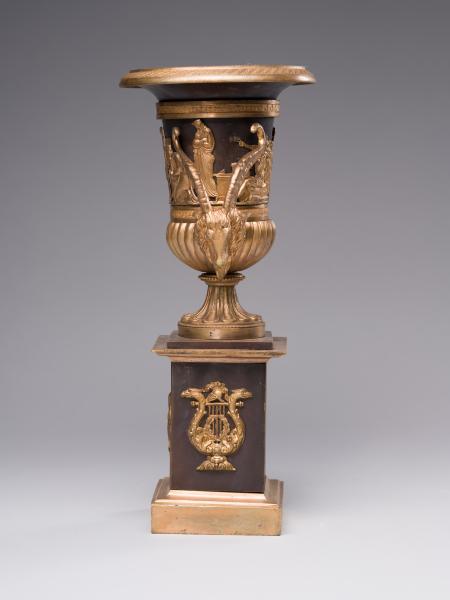
The appeal to antiquity is a characteristic feature of the Renaissance, Classicism, Baroque, and the 18th and 19th centuries culture. Along with architecture, sculpture and painting, reminiscences of antiquity entered the decorative and applied arts at the level of plasticity, proportions and decoration. An example of this is a vase from the Gallery's collection with the characteristic features of the Empire style – lavish decoration, contrast of gold and black bronze, and architectural forms. A golden lyre, an Apollonian attribute, shines against the dark background of the base. The laurel wreath reminds us of Apollo, the god of sciences and arts, peace, victory and triumph. Eagles' heads and an antique helmet symbolise courage, victory and strength. The decorative function is fulfilled by the erots that rhythmically line the surface. The vase's silhouette is formed by massive ears in the shape of golden goat heads, which in heraldic compositions symbolise hard work, unwavering strength, kindness and peacefulness. The figurative composition of male and female figures in ancient garments contrasts the vertical architecture, classically balanced by an undulating horizontal rhythm. Semantically, the images are related to education and refer to the Greek concepts of "paideia" – the cultivation of human nature, which is integral to cultural genesis; "arete" – discipline, virtue, courage; and "kalokagathos" – the unity of inner and outer beauty.
Inscriptions
"F. ROSSNER"
Legal regulation
Borys Voznytskyi Lviv National Art Gallery