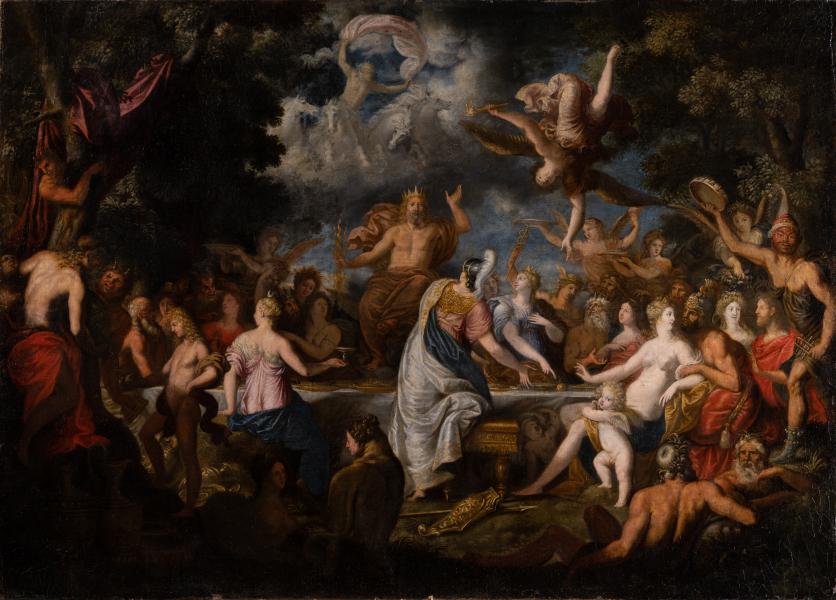
Wedding of Peleus and Thetis
Ottmar Elliger the Younger


Basic information
- ID
- Ж-871
- Author
- Ottmar Elliger the Younger
- Name
- Wedding of Peleus and Thetis
- Country
- Germany
- Technique
- oil painting
- Material
- canvas oil
- Dimensions (height x width, cm)
- 86.5 x 121
Additionally
- Type
- painting
- Genre
- mythological painting
- Provenance
- the Lubomirski collection
Information about author
Object description
The iconography of this theme is typical in European art because it allows for the simultaneous depiction of all the Olympic gods. The nymph Thetis is the daughter of the famous centaur and sage Chiron, the tutor of heroes and gods, while Peleus is the son of Zeus, king of Iolcus. Zeus personally marries Thetis, whom he pursued until he received a prophecy that her son would be stronger than his father. Later, Thetis will give birth to Achilles by Peleus. The painting features (from left to right): Apollo, Marsyas, Paris, Diana, Peleus, Thetis, Zeus, Athena, Hera, Hermes, Poseidon, Amphitrite, Aphrodite, Cupid, Hephaestus, Dionysus, the Erinyes, Helios, and sphinxes. Eris, the goddess of discord, was the only goddess not invited to the wedding. The offended goddess appears uninvited at the banquet and throws a golden apple onto the table with the provocative inscription "To the most beautiful!". The artist depicted this exact moment. A dispute arises between the goddesses Hera, Athena, and Aphrodite over who should rightfully claim the apple. Zeus assigns the task of resolving the matter to the Trojan prince Paris (a story known as "The Judgement of Paris"). As a result of his decision in favour of Aphrodite, who promised him the love of the most beautiful mortal woman – Helen, who was already the wife of King Menelaus at the time – the Trojan War began, leading to the fall of Troy.
Legal regulation
Borys Voznytskyi Lviv National Art Gallery