Crucifixion
unknown


Basic information
- ID
- С-I-1585
- Author
- unknown
- Name
- Crucifixion
- Date of creation
- 18th c.
- Country
- Ukraine
- Technique
- carving polychrome
- Material
- wood
- Dimensions (height x width x depth, cm)
- 65 x 26 x 13
Additionally
- Type
- sculpture
- Genre
- religious
- Plot
- Crucifixion
- Provenance
- Expedition in 1979
Information about author
Object description
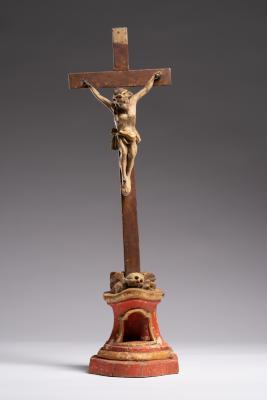
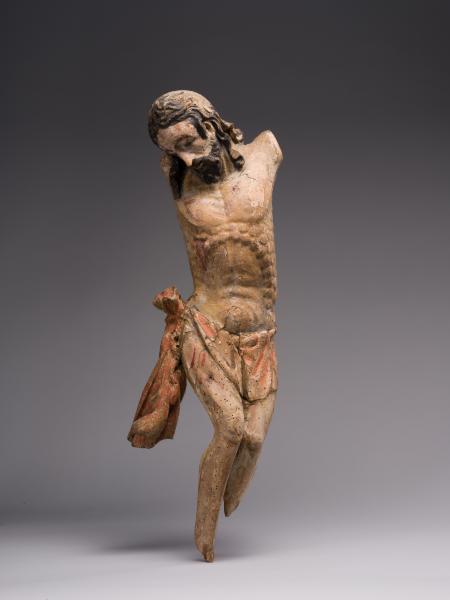
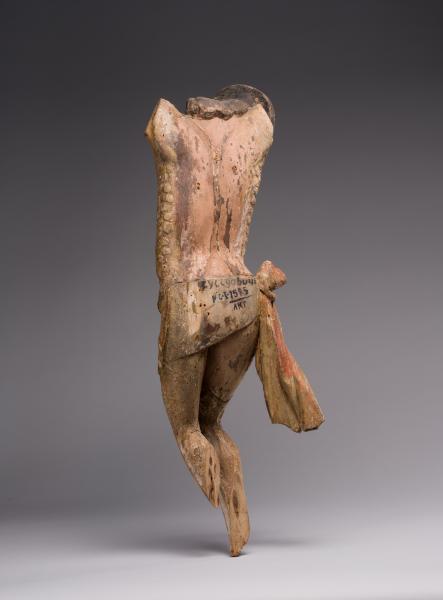
The body of the Saviour is elongated and bent in an expressively dramatic pose, conveying the tension of the final moments of earthly life and, at the same time, the spiritual grandeur of Christ. The figure is curved in a characteristic S-shaped line, which creates dynamism and strain, as though the form still retains movement and suffering. In the plastic rendering of the human body, anatomical plausibility is perceptible. The figure of Christ is depicted with pronounced naturalism, characterised by the carefully carved chest, the muscles of the sunken abdominal cavity, and the legs. Particular attention is given by the master to the texturally detailed face: closed eyes, hollow cheeks with protruding cheekbones, a forehead crossed with furrows of wrinkles, an open mouth – all of which indicate unspeakable pain and suffering. The dark-coloured hair and beard, carved in distinct, lively strands, create an additional rhythm within the image. The naked body of Christ is covered by a distinctly carved perizoma. Its folds form a rhythmic knot on the right side, which balances the composition, imparting a sense of plastic completeness. The sculptural image embodies the theme of suffering, where the language of art serves as an approach to the mystery of Christ’s sacrifice.
Legal regulation
Borys Voznytskyi Lviv National Art Gallery