Crucifixion
Franz Anton Maulbertch


Basic information
- ID
- Ж-329
- Author
- Franz Anton Maulbertch
- Name
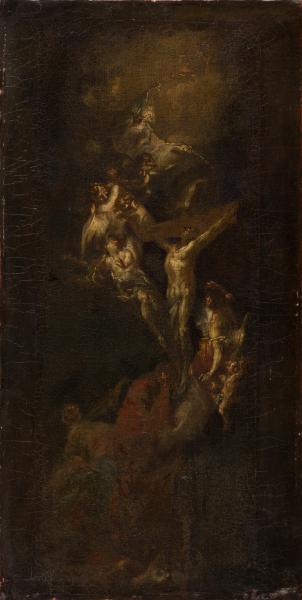
- Crucifixion
- Date of creation
- 18th c.
- Country
- Austria
- Technique
- oil painting
- Material
- canvas oil
- Dimensions (height x width, cm)
- 65 x 33
Additionally
- Type
- painting
- Genre
- religious
- Provenance
- Collection of Lviv City Gallery
- Exposition
- Potocki Palace
Information about author
Object description
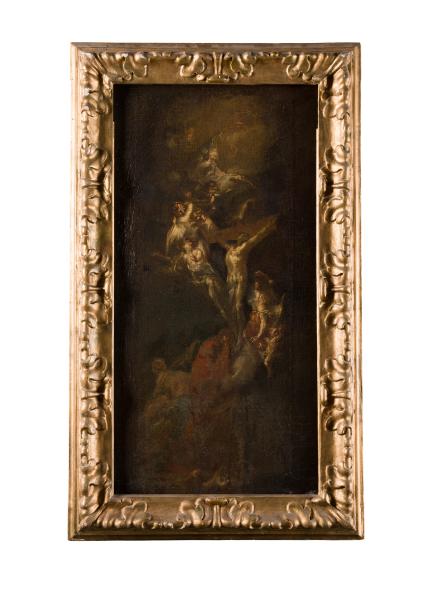
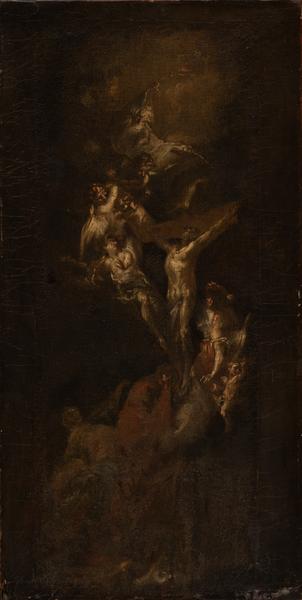
Although Franz Anton Maulbertsch is considered one of the most prominent colourists of the second half of the 18th century, he began to produce monochrome oil sketches in the 1760s. "The Crucifixion" can be attributed to this period. The work represents an allegorical composition about the crucifixion of Christ. A cross with the crucified Saviour is depicted in the centre, on a cloud. He is surrounded by angels and cherubs, whose figures are performed with quick and pastose strokes. God the Father appears in the heavenly light above, among the dark clouds. Franz Anton Maulbertsch created a monochrome composition in this sketch based on the contrast of dark tones and white pasty strokes, allowing him to reproduce the drama of the biblical scene. The work was most likely created as a preparatory sketch for the fresco ensemble or the altar.
Legal regulation
Borys Voznytskyi Lviv National Art Gallery