Sketch for a Mosaic on Public Transport Stop Walls in Dubyna Village, Stryi District, Lviv Region
Vasyl Poliovyi


Basic information
- ID
- Ж-8167_1_2_3
- Author
- Vasyl Poliovyi
- Name
- Sketch for a Mosaic on Public Transport Stop Walls in Dubyna Village, Stryi District, Lviv Region
- Date of creation
- 1974
- Country
- the USSR
- Culture
- Ukrainian art of the Soviet period
- Technique
- original technique
- Material
- cardboard mixed media
- Dimensions (height x width, cm)
- 49.5 x 79.5
Additionally
- Type
- painting
- Genre
- animal painting
- Plot
- Allegory
- Provenance
- Handed over to the museum from Vasyl Poliovyi
Information about author
Object description
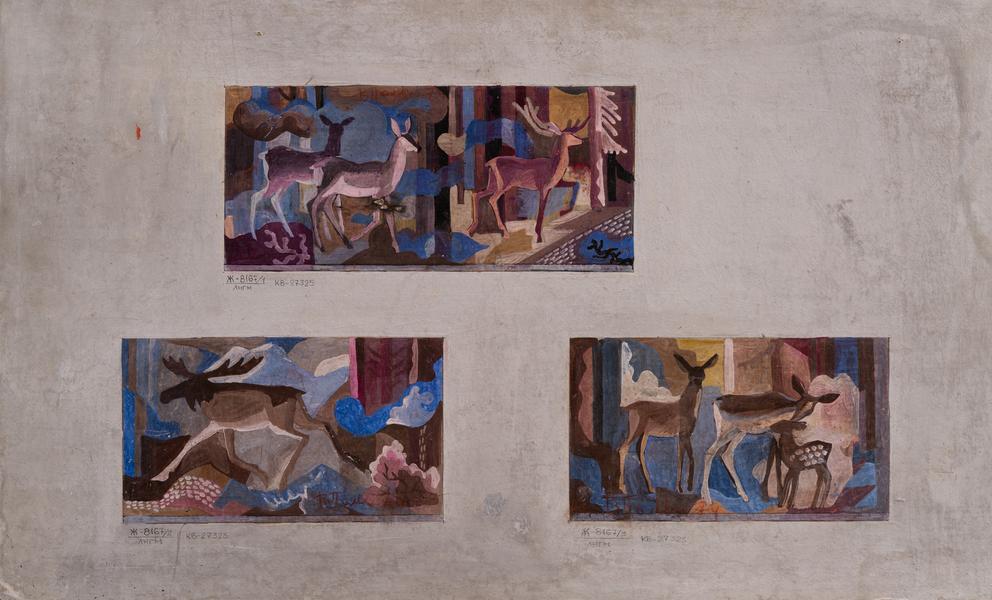
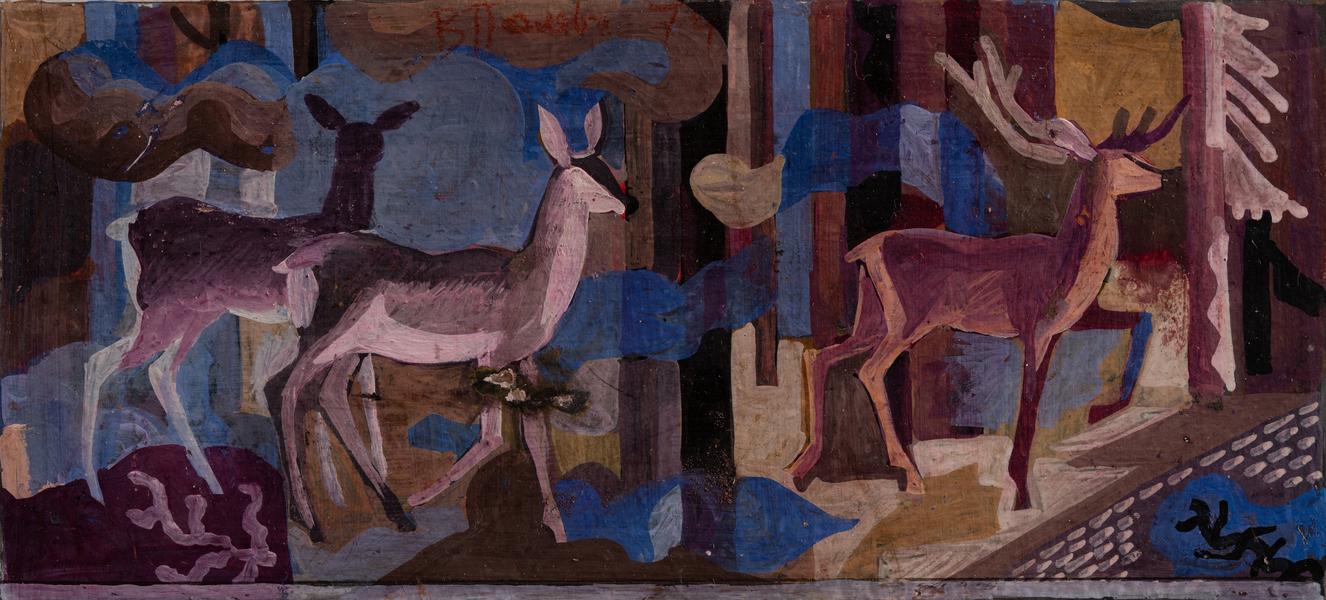
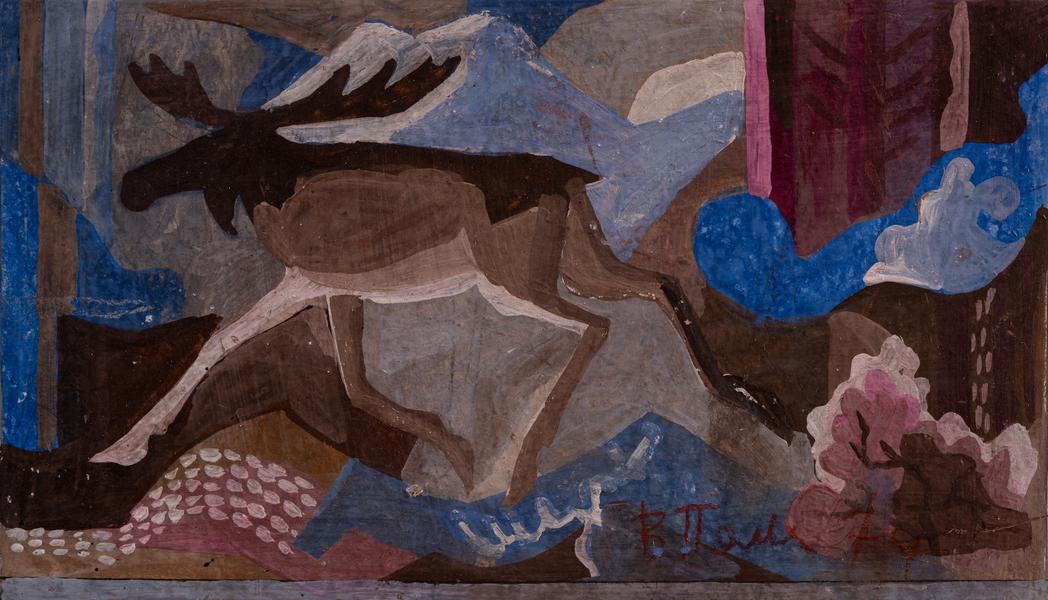
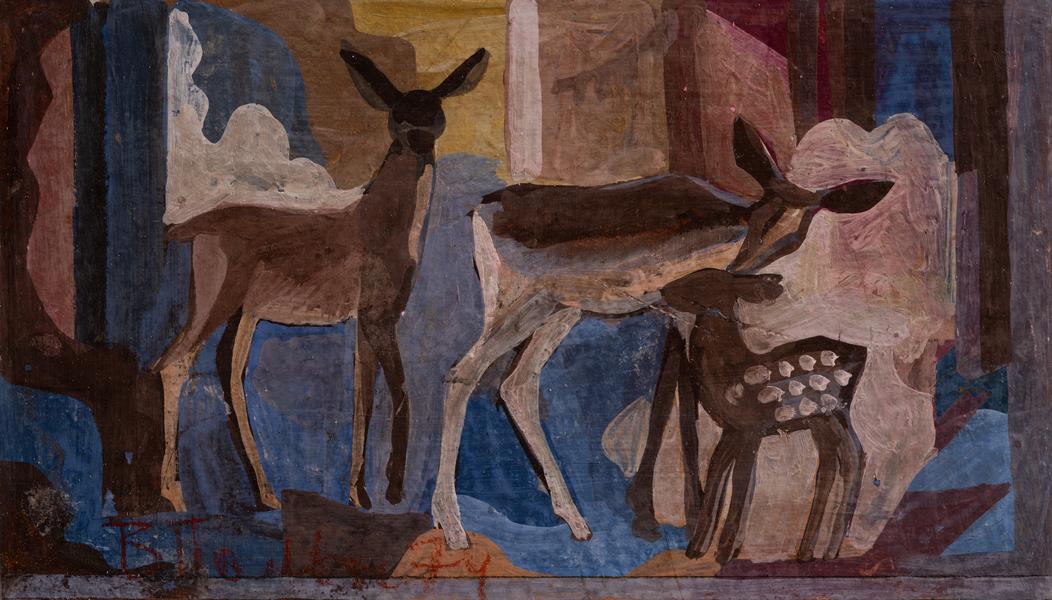
The three horizontal images on cardboard are preliminary sketches for the mosaic design of a public transport stop in the Dubyna village. Unlike the other sketches preserved in the Gallery, this one lacks a correlation between the proportions of the actual object and specific details present in the final sketches and the original mosaic. As for the general characteristics, these are three independent artworks executed in elongated rectangles. One upper composition is positioned almost at the centre with a slight leftward shift (Ж-8167/1, 14.2 х 31 cm) and two lower ones are located beneath it in the centre with a slight shift to the right (Ж-8167/2, 14 х 24.5 cm and Ж-8167/3, 14 х 24.5 cm). The colour scheme of all three images is cool, dominated by madder lake, ultramarine and their shades with tonal gradation and whiting. There are also subtle incorporations of ochre and earthy shades. The colouring significantly differs from the final sketches and the completed artwork. However, certain aspects of the colour exploration, such as the use of ultramarine, are absent from the final sketches but are introduced in the finished work and are essential evidence of the author's search and how the process of the work was carried out at all stages. In composition Ж-8167/1, one can observe the stages of searching for the central part of the mosaic. Against a stylised but recognisable forest background, two figures of ungulates from the deer family are in profile, the head of the first animal on the left facing forward. In the original mosaic, this part was modified, and instead of these animals, there is a group of three horses at different angles against the background of a pasture. Next to the deer in this scene is a version of the image used in a modified form for the finished work. In the subsequent sketch (Ж-8171), instead of depicting a male deer with large antlers, the artist portrayed a female one (deer living in the Skole Beskids National Park shed their antlers in February–March, which does not correspond to the season depicted in the sketch Ж-8171). Vasyl Poliovyi depicted a similar figure of a deer with branching antlers in his mosaic "Nature of North Carolina" (main street of Hendersonville, USA, 1993). The version of the sketch Ж-8167/2 shows a profile figure of an elk running in a stylised mountainous forest landscape. This image is a variation of the sketch Ж-8169, where the animal figure is presented from an angle and is static. Ж-8167/3 is a combined version of the sketches Ж-8178 (left part) and Ж-8170 (right part). Unlike the final versions of the composition, the figure of the deer on the left side is not lying down but standing. In the group of a female deer with a fawn, the latter is larger and stands near the upper part of the mother's body, which touches the back of his head near the ears with her head.
Inscriptions
In the lower right corner of Ж-8167/2, there is an inscription "В. Полев 74". In the lower right corner of Ж-8167/3, there is an inscription "В Полевой 74".
Legal regulation
Borys Voznytskyi Lviv National Art Gallery