Angel
unknown folk sculptor, unknown folk craftsman
Basic information
- ID
- С-I-1862
- Author
- unknown folk sculptor unknown folk craftsman
- Name
- Angel
- Date of creation
- 19th c.
- Country
- Ukraine
- Culture
- Folk
- Technique
- carving
- Material
- wood white paint
- Dimensions
- 87.7 x 80 x 34.3 cm (height x width x depth)
Additionally
- Type
- sculpture
- Genre
- religious
- Plot
- Angel
- Provenance
- Sharpantsi village, Sokal district, Lviv region
- Exposition
- Olesko Castle
Information about author
Information about author
Object description
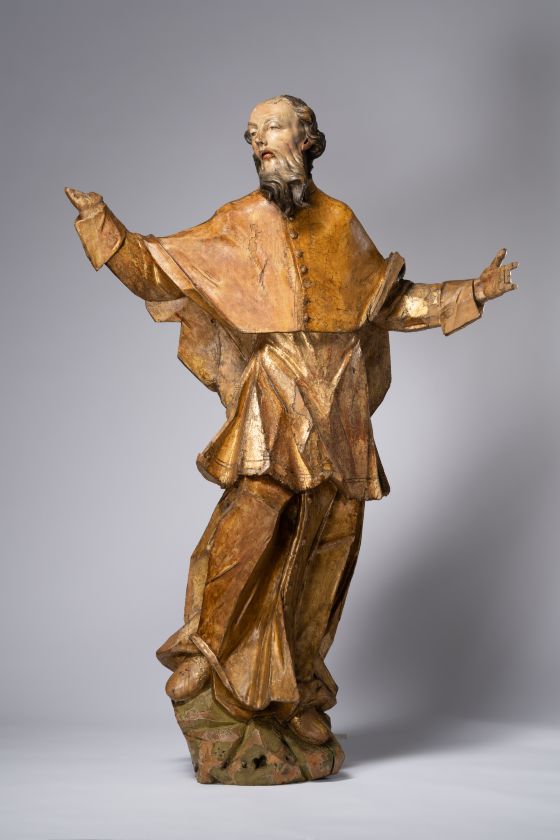
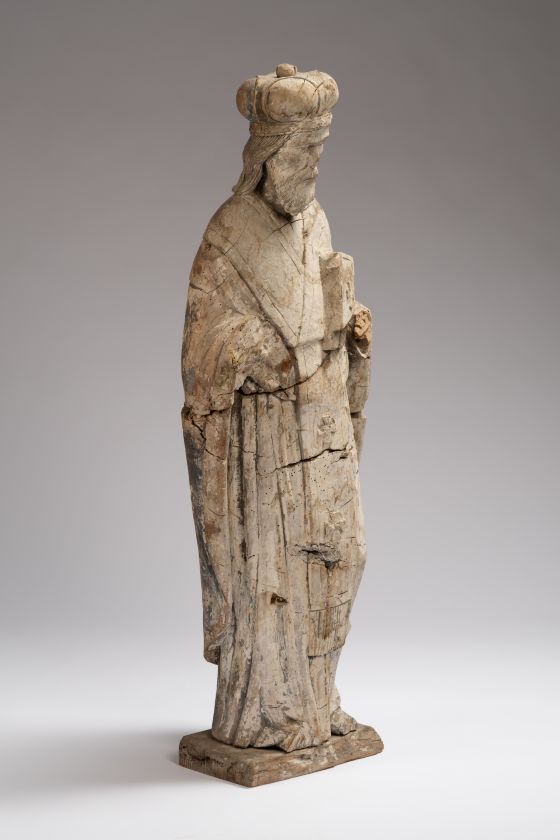
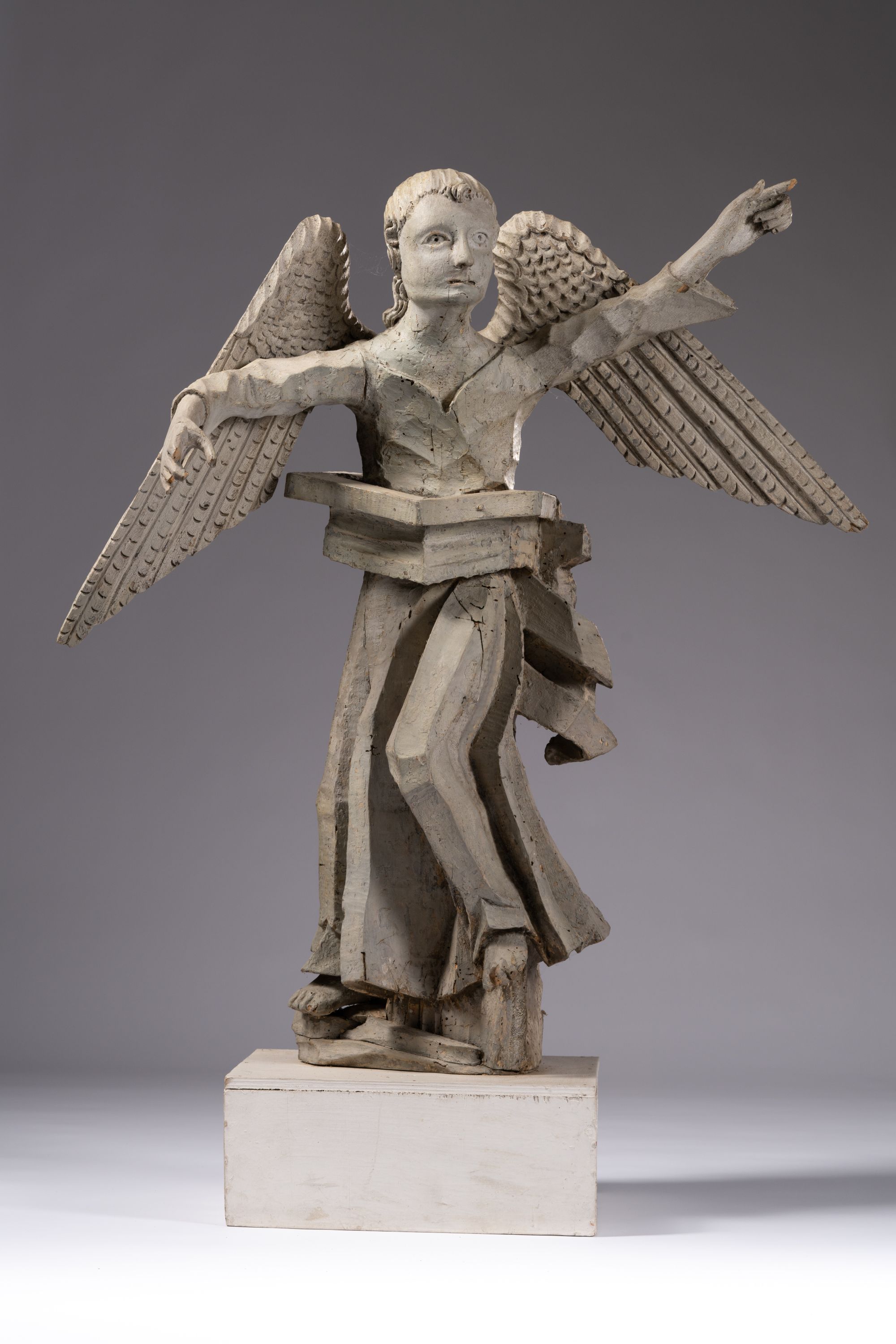
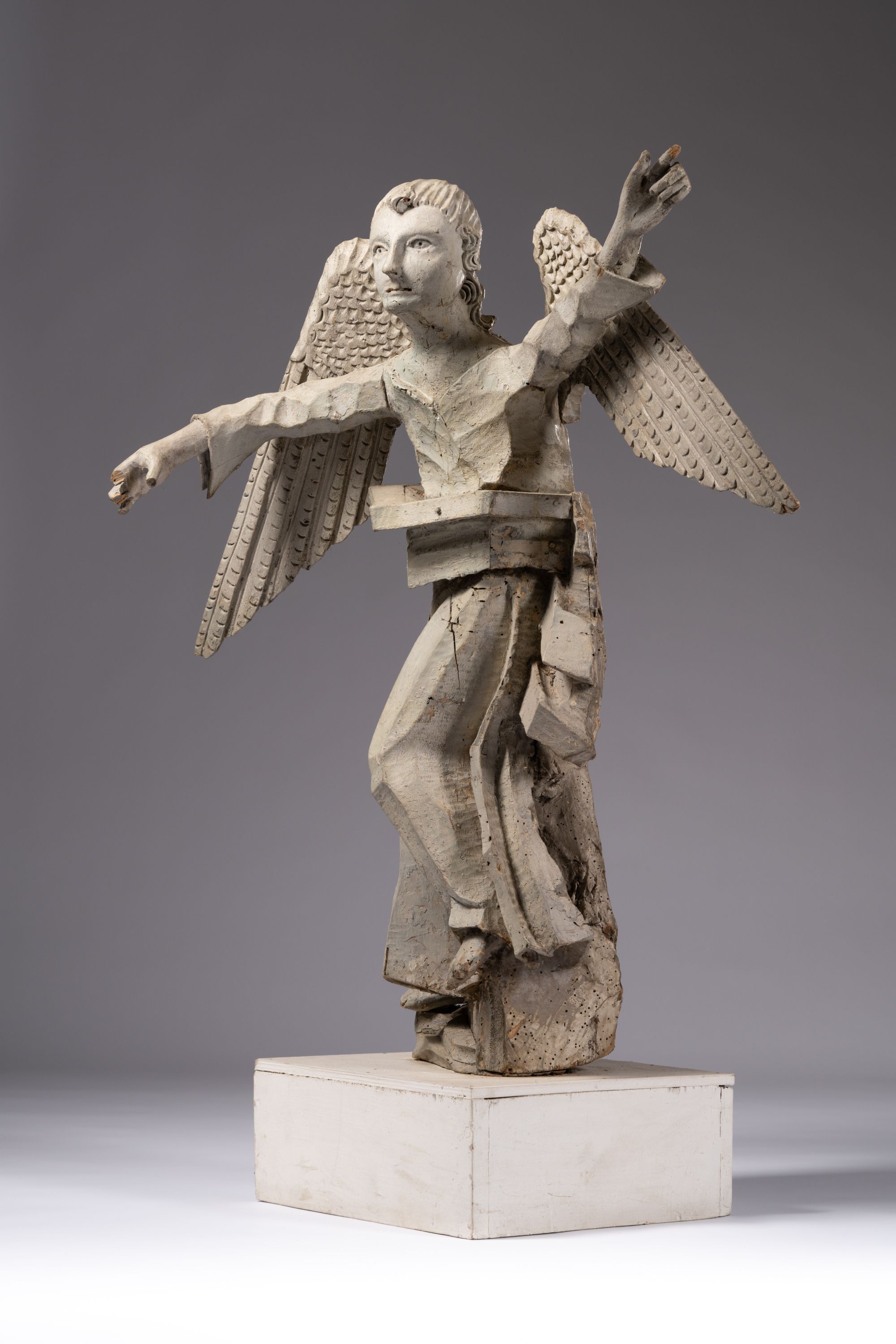
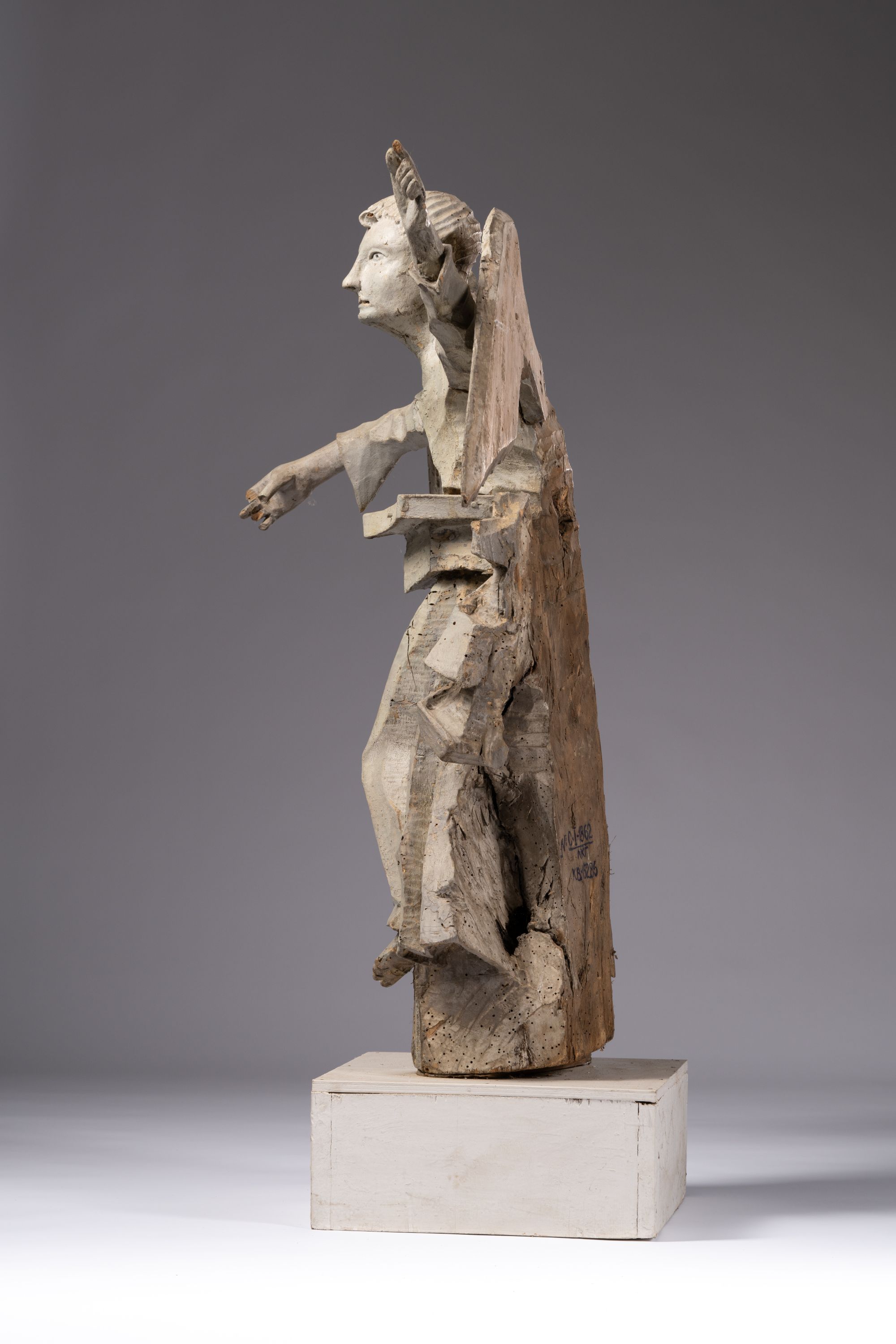
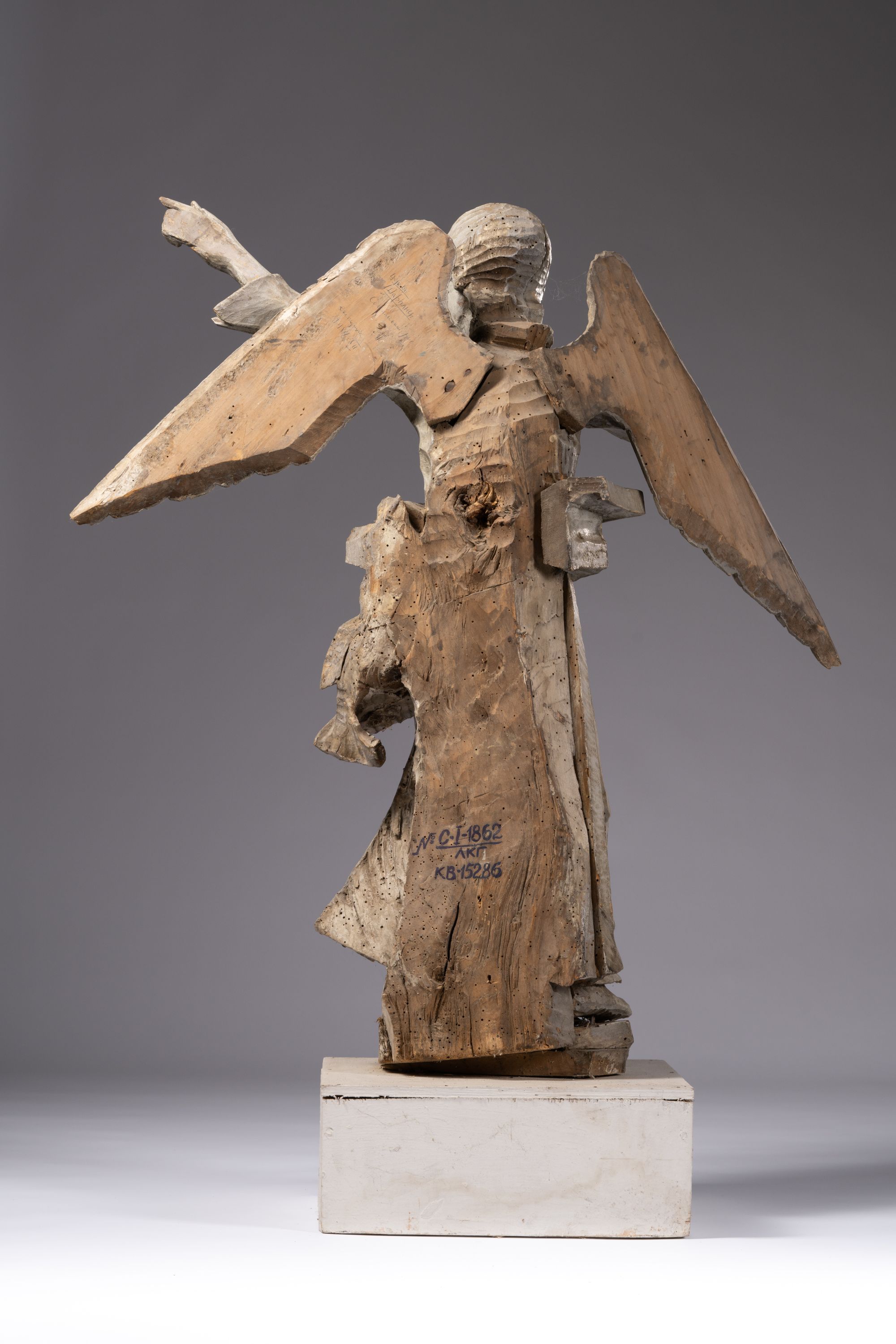
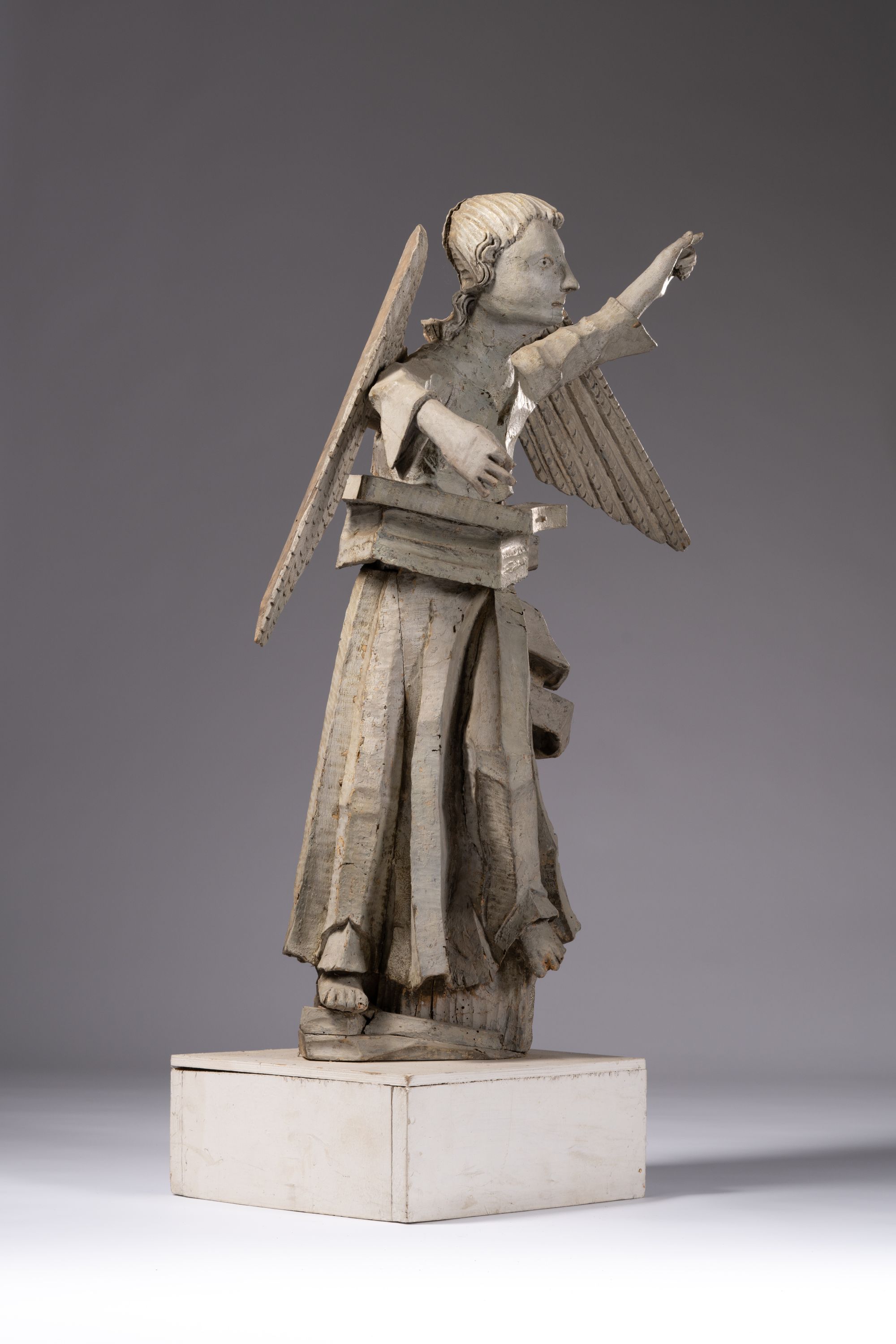
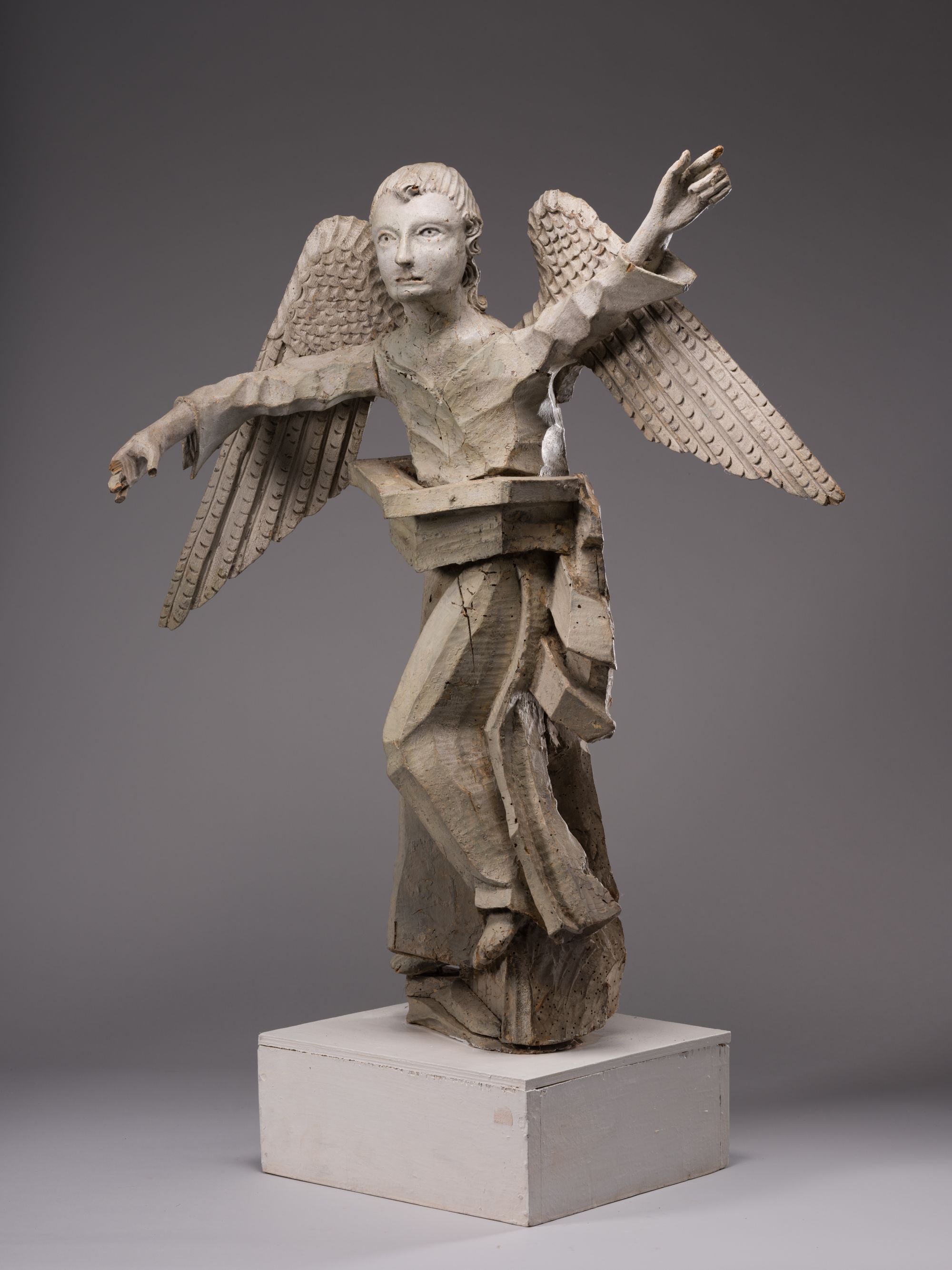
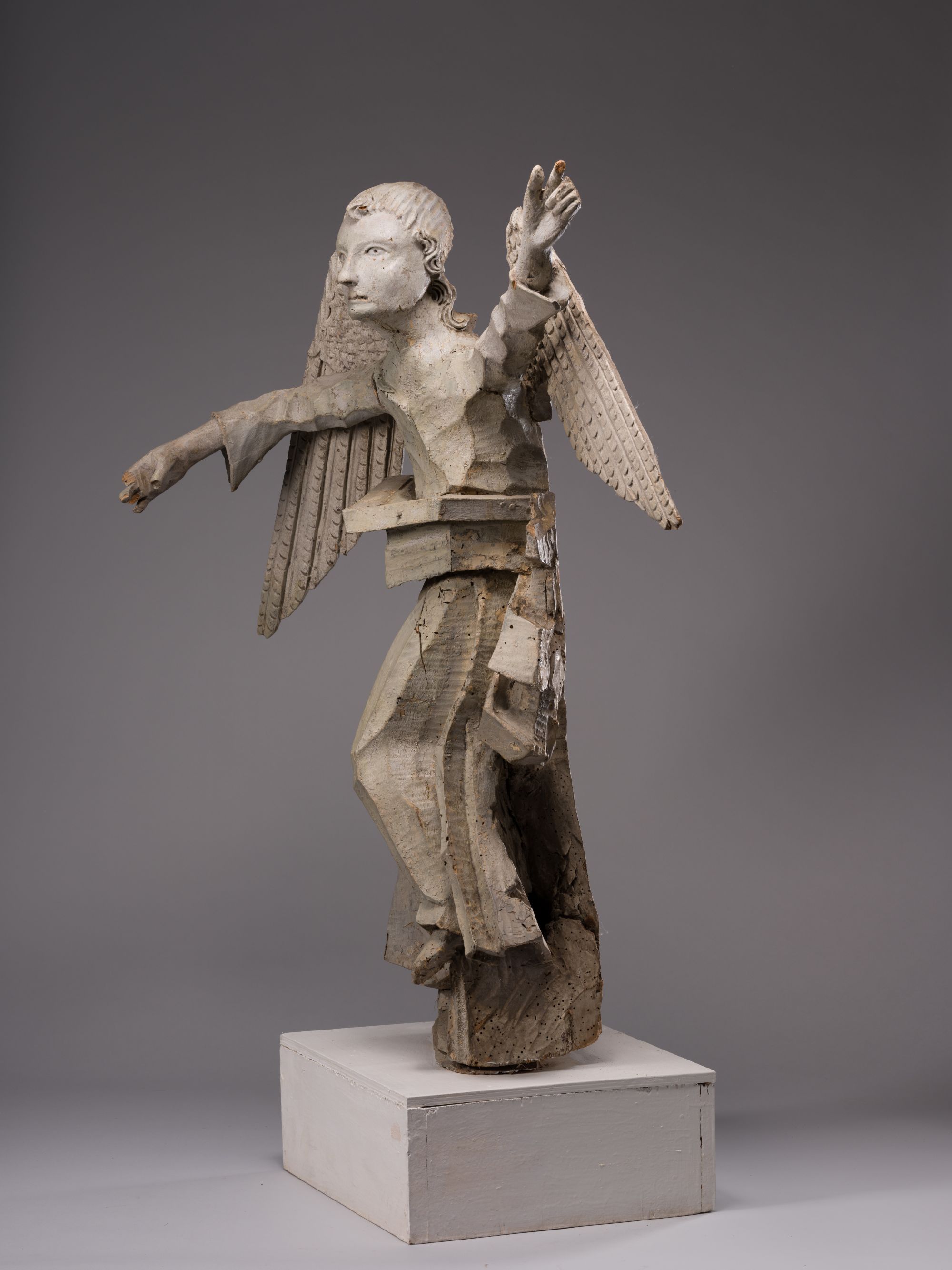
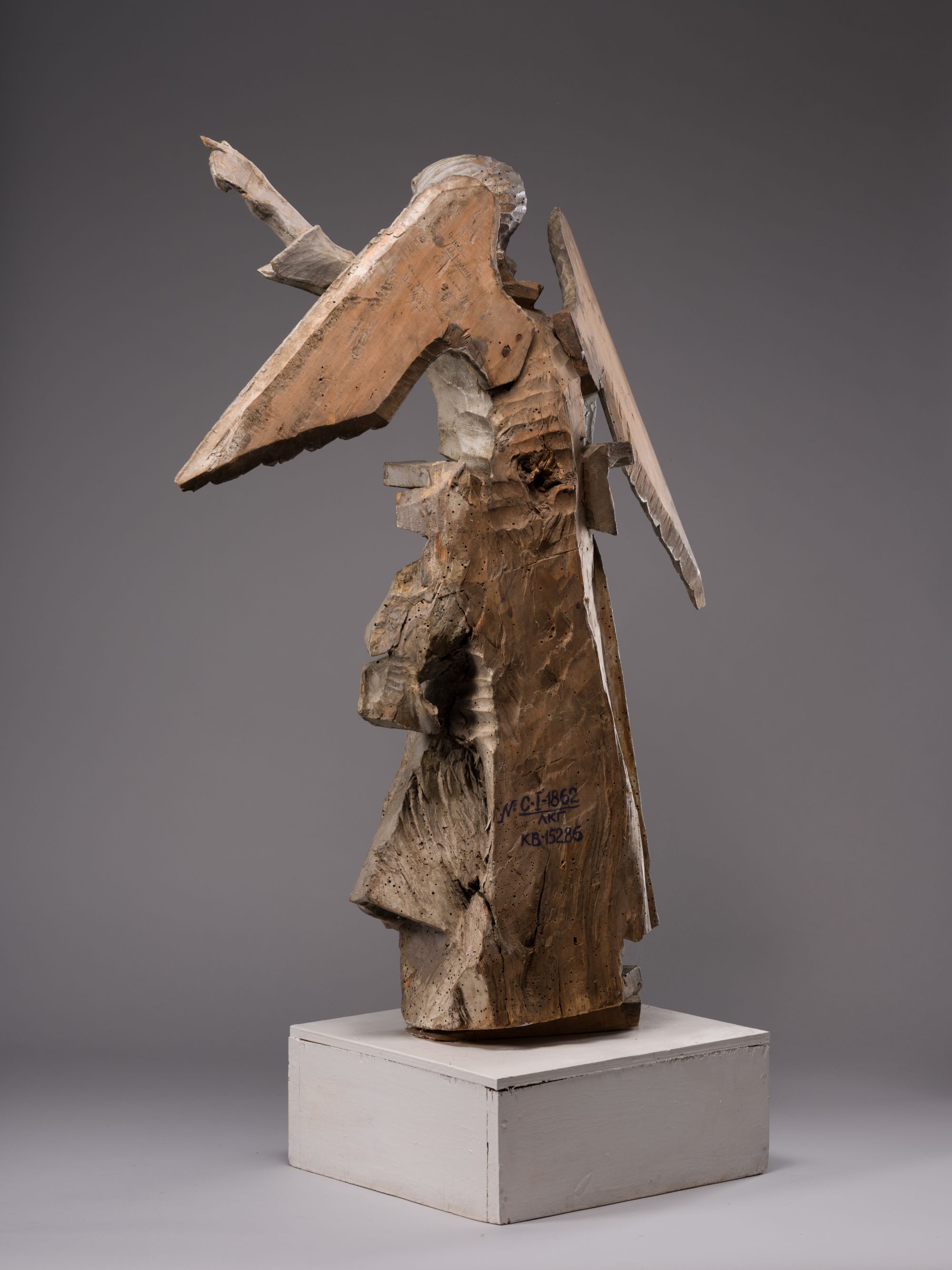
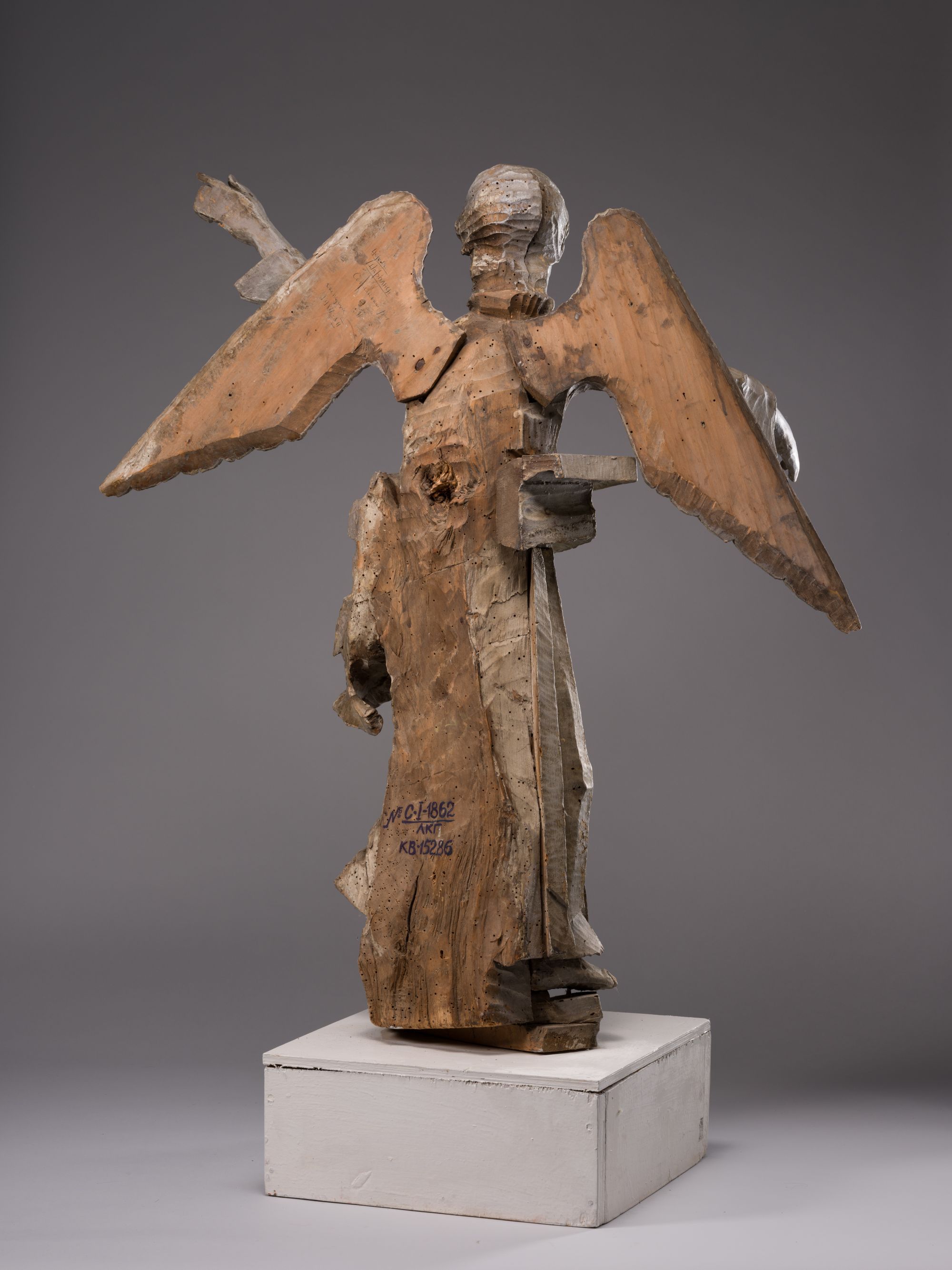
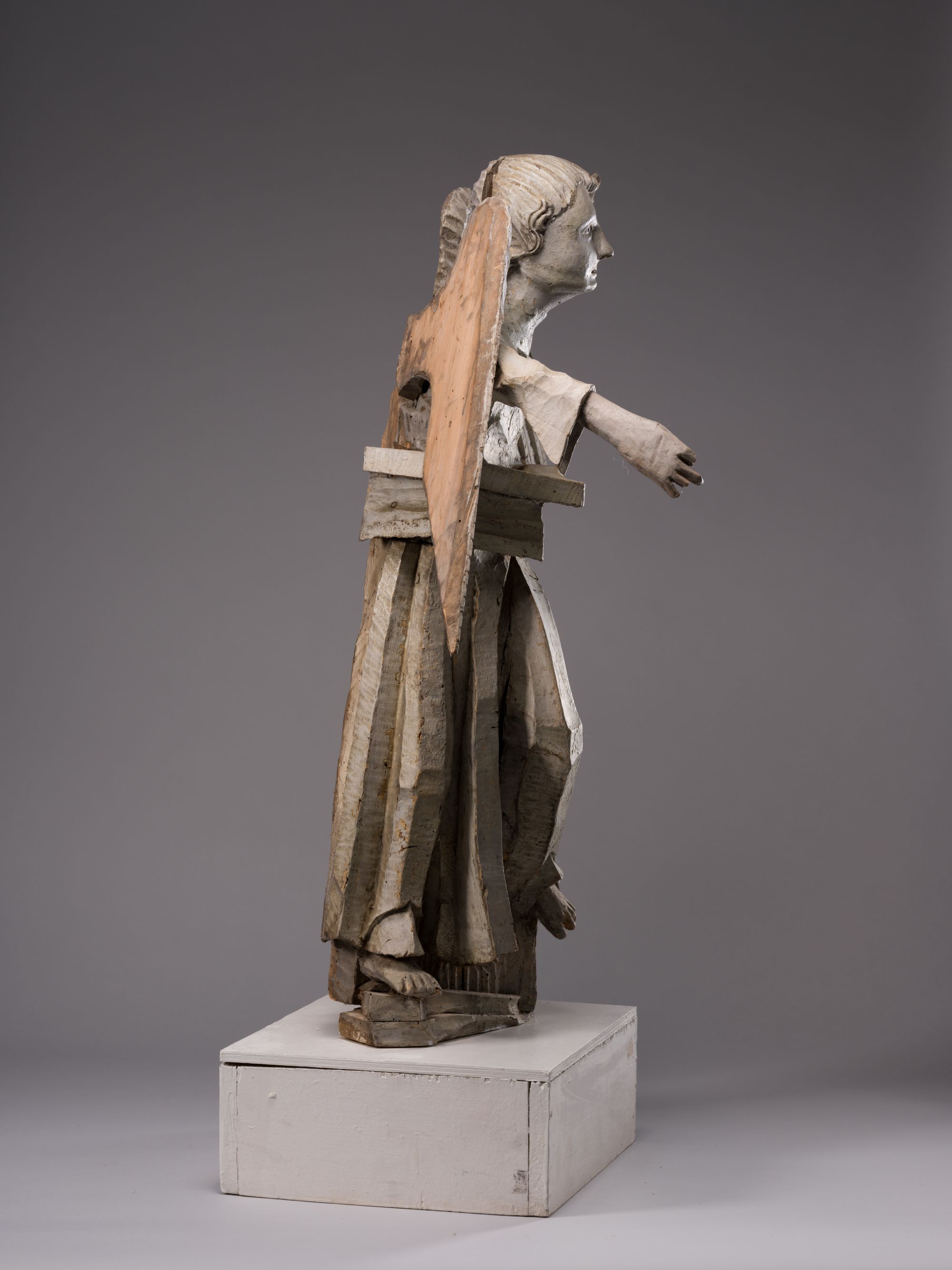
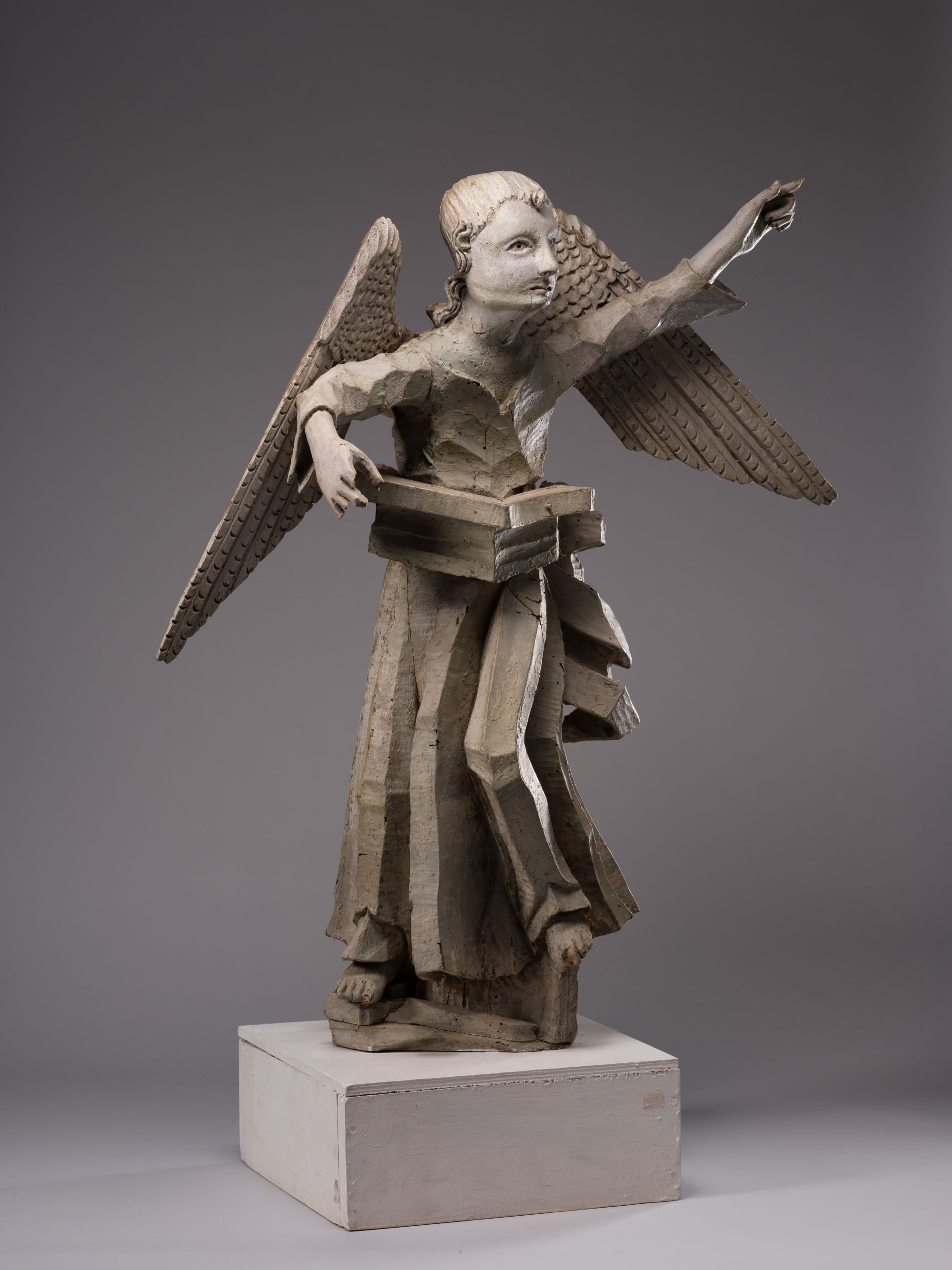
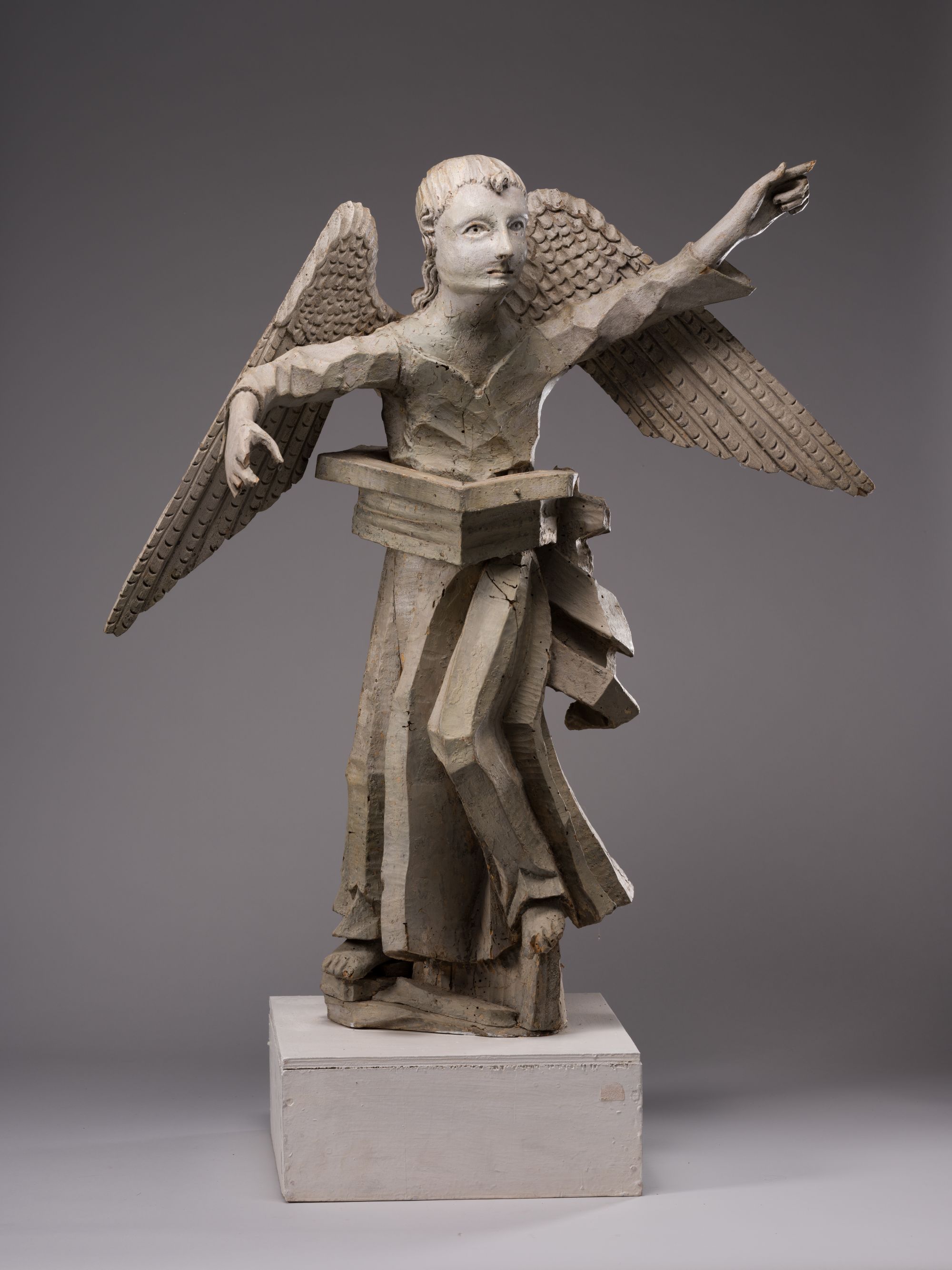
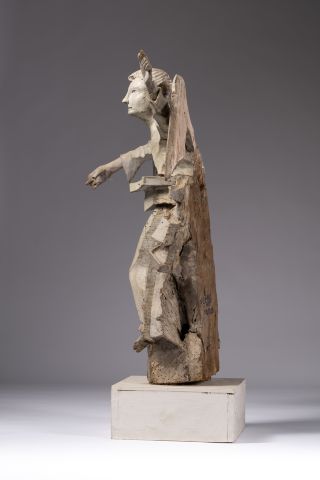
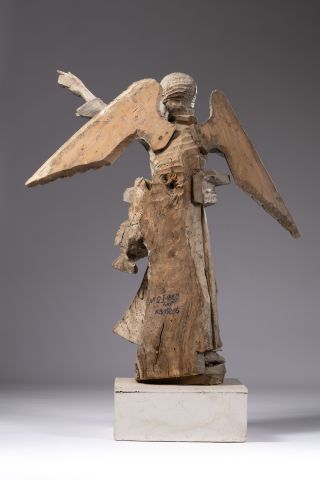
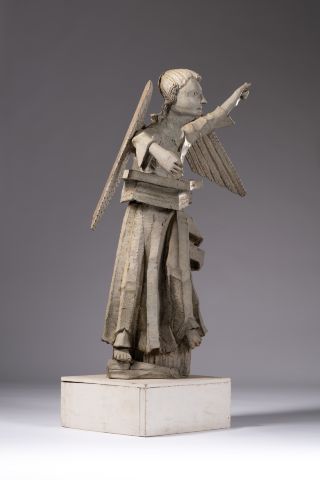
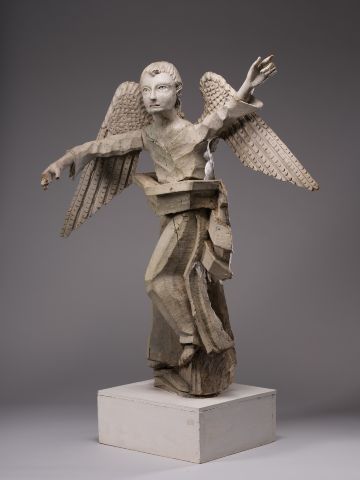
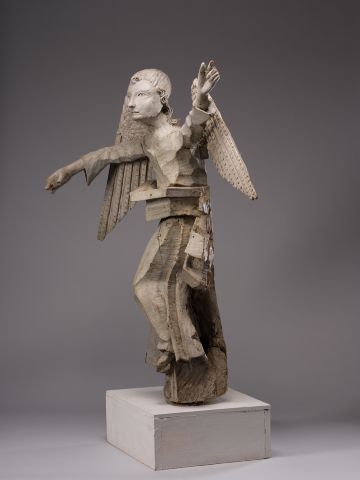
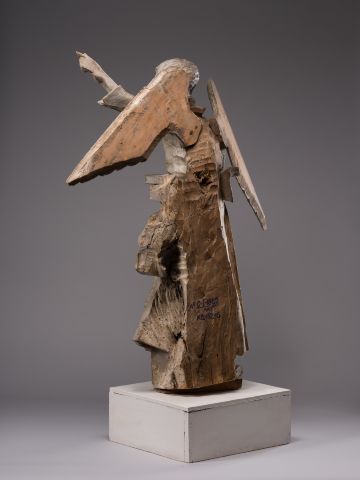
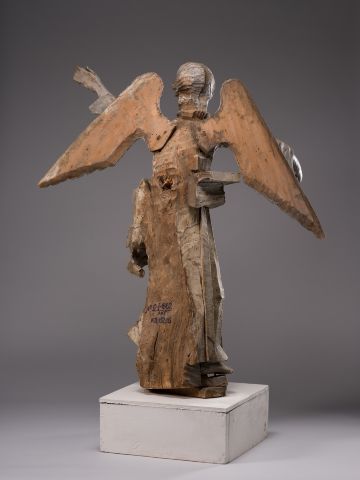
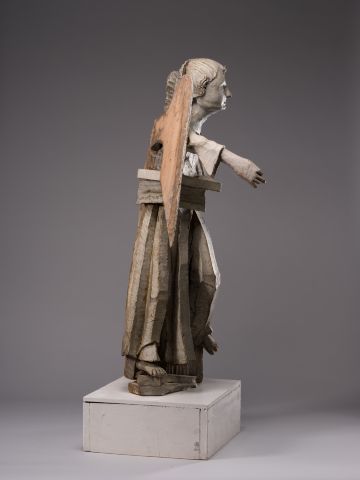
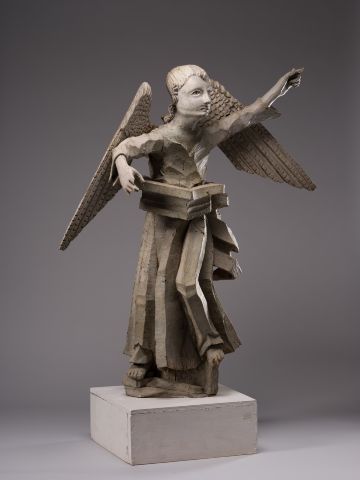
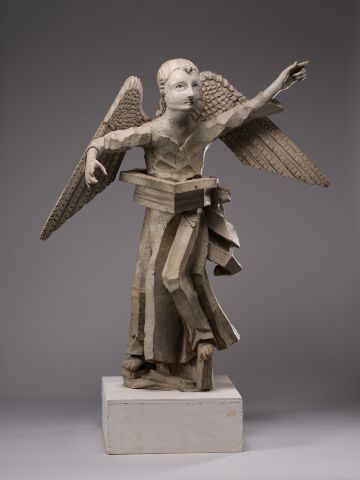
This full-length figure of an angel is presented in a sharp, dynamic pose, captured as if in a moment of rapid movement. The torso is tilted slightly forward, the left leg is bent at the knee, and the arms are widely outspread. This expansively spatial plasticity infuses the figure with expression and drama. Large wings behind the back and a long tunic indicate the sacred purpose of the image. Compositionally, the sculpture of the angel is constructed along a diagonal axis. A defining feature of the work is the character of the carving. The folk craftsman does not strive for naturalistic softness in rendering the figure; instead, he treats the garments, body, and wings through sharp, distinct planes, as if hewn with a chisel. The elongated oval face of the angel – with its high forehead, low brow ridges, clearly defined almond-shaped eyes, and wide mouth – is in a state of contemplation and detachment. Its features are simplified yet retain an expression of focused intensity. The angel's hair is rendered with shallow, rhythmic incised lines, with wavy locks visible only on the forehead and shoulders, conveying a sense of movement. The hands are depicted in a generalised manner: the hands are sharply outlined with conventionally indicated fingers in an expressive gesture that reinforces the figure's momentum. The angel wears a long tunic that covers almost the entire body. The geometricised folds of the clothing enveloping the figure cascade to the ground in heavy vertical layers. The draperies feature prismatic, broken forms with sharp transitions of light and shadow. Such plasticity in rendering a sacred image creates an impression of internal tension and crystalline integrity of form. This is characteristic of Galician folk carving, where local tradition transformed European models into a laconic, generalised idiom. This sculptural depiction of an angel demonstrates a synthesis – characteristic of folk masters – of a canonical image with a distinct local language of forms. The sharp edges, dynamic silhouette, and decoratively rendered feathers create a striking sacred image that stands as a unique creation of religious art.
Legal regulation
Borys Voznytskyi Lviv National Art Gallery