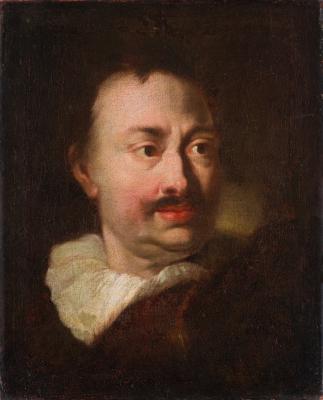
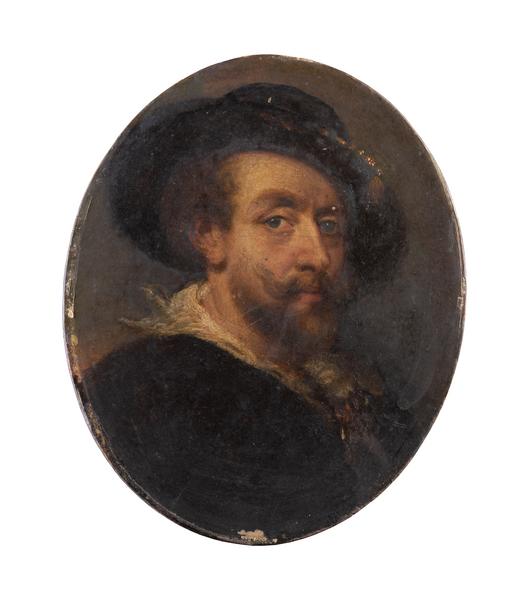
Portrait of Rubens
unknown (German School)


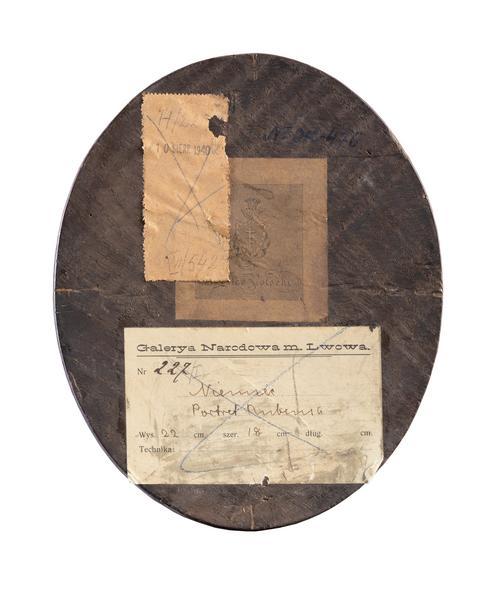
Basic information
- ID
- Ж-476
- Author
- unknown (German School)
- Name
- Portrait of Rubens
- Technique
- oil painting
- Material
- wood oil
- Dimensions (height x width, cm)
- 21.5 x 17.5
Additionally
- Type
- painting
- Genre
- portraiture
- Plot
- Portrait
- Provenance
- Collection of Lviv City Gallery
- Exposition
- Potocki Palace
Information about author
Object description
Against an oval olive background, a man turned three-quarters to the right with a beard and moustache twisted upwards is depicted. His gaze is directed toward the viewer. The man is dressed in dark attire with a white collar and a wide black hat. Pieter Paul Rubens, one of the greatest Flemish artists of the seventeenth century, was an outstanding figure in the royal courts and artistic centres of the Netherlands and a successful diplomat and scholar. He specialised in creating altarpieces, historical paintings, portraits, and landscapes. The artist's unique style embodied the aesthetics of the Baroque era. While studying in Antwerp, Rubens travelled to Italy in 1600, where he discovered the works of Italian artists such as Raphael, Leonardo, Michelangelo, Correggio, Tintoretto, Caravaggio, and Annibale Carracci. Rubens was an extremely expressive, inventive, and capable artist – he established a large studio with apprentices and students, creating numerous religious and historical paintings, mythological scenes, and portraits. Throughout the centuries, Rubens' work influenced many young artists. The self-portrait of the artist, created in 1623, was often replicated by his followers and students, striving to attain the level of the great master of portraiture. Rubens created this artwork for Charles, Prince of Wales (future Charles I). The canvas is still preserved in the Royal Collection.
Portrayed person
- The name of the person portrayed
- Peter Paul Rubens
- Lifetime of the person portrayed
- 1577–1640
Legal regulation
Borys Voznytskyi Lviv National Art Gallery