Back

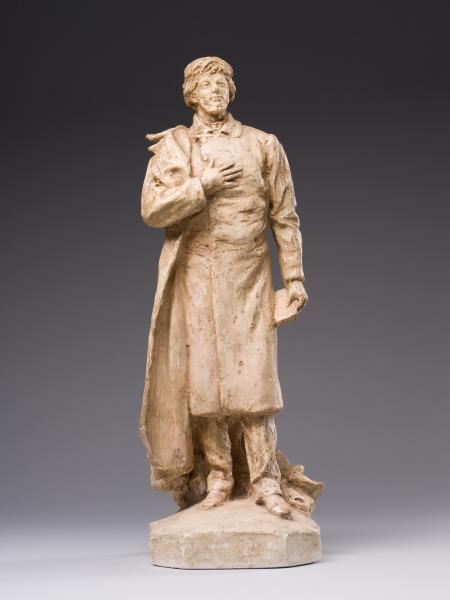
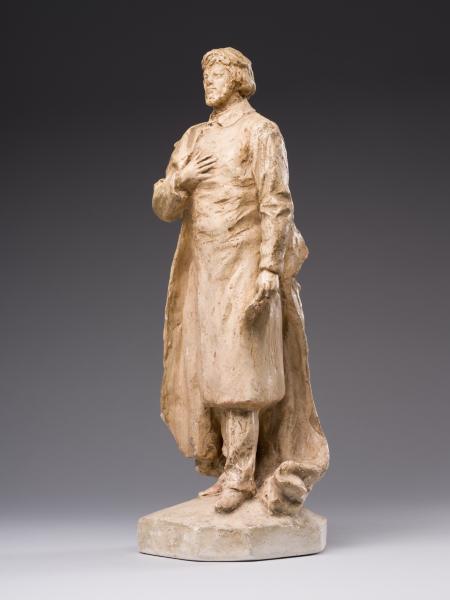
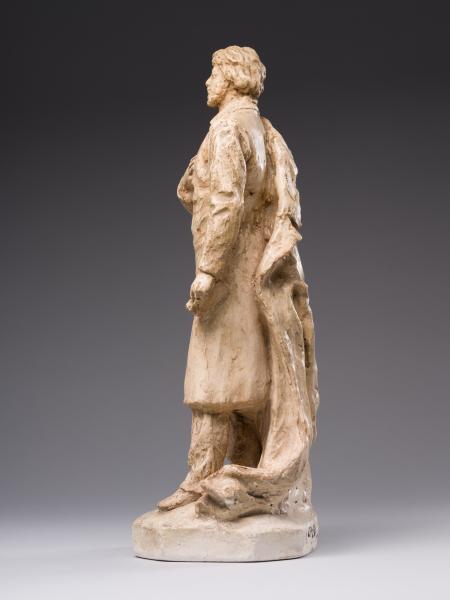
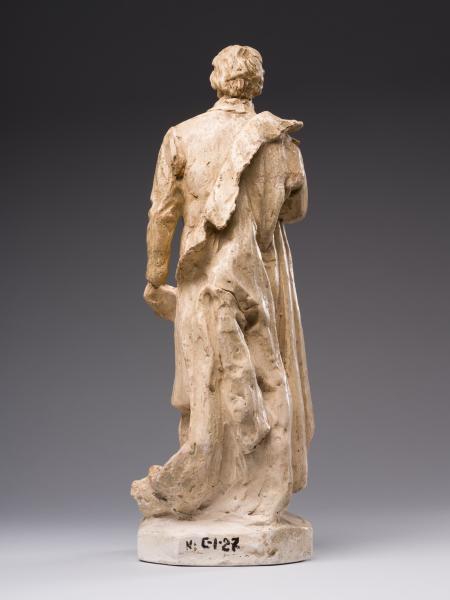
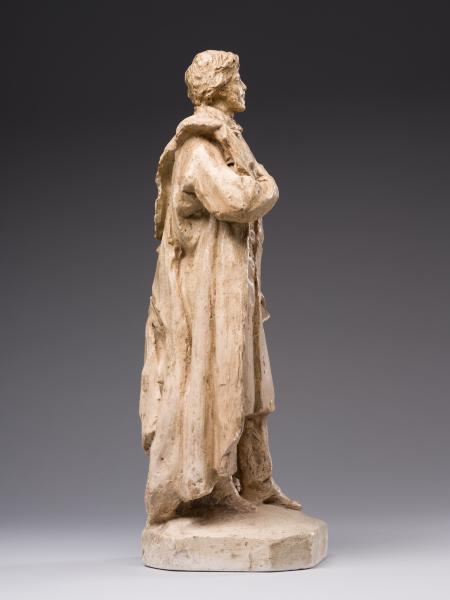
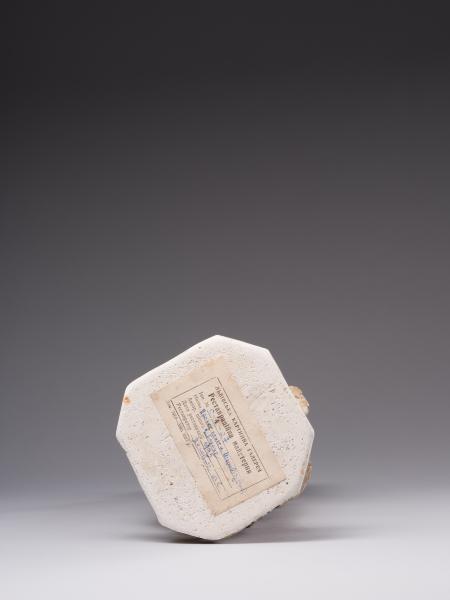
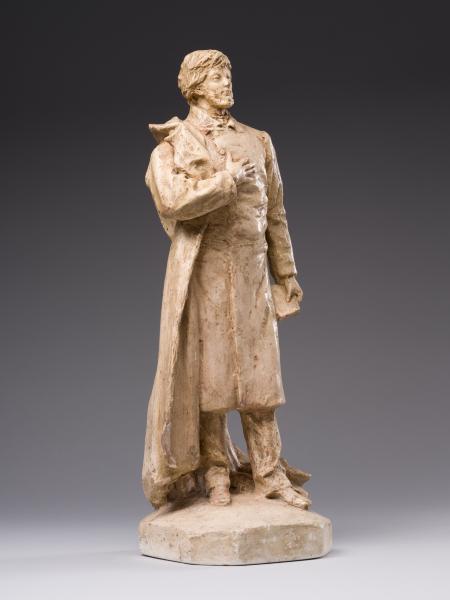
Model of the Monument to Adam Mickiewicz

Tadeusz Baracz

  • Model of the Monument to Adam Mickiewicz 2
  • Model of the Monument to Adam Mickiewicz 3
  • Model of the Monument to Adam Mickiewicz 4
  • Model of the Monument to Adam Mickiewicz 5
  • Model of the Monument to Adam Mickiewicz 6
  • Model of the Monument to Adam Mickiewicz 7
  • Model of the Monument to Adam Mickiewicz 8
Basic information
ID
С-I-27
Author
Tadeusz Baracz
Name
Model of the Monument to Adam Mickiewicz
Date of creation
before 1894
Country
Austro-Hungarian Empire
Culture
Modern times
Technique
moulding
Material
plaster vernix
Dimensions (height x width x depth, cm)
38.5 x 12.5 x 12.5
Information about author
Author
Tadeusz Baracz
Artist's lifetime
1849–1905
Country
Austrian Empire, Austro-Hungarian Empire
Biography
Tadeusz Baracz (24 March 1849, Lviv – 12 March 1905, Lviv) was a Polish sculptor of Armenian origin, one of the most famous sculptors in Lviv in the second half of the 19th century. He was the son of Jakub Baracz, the owner of the Krakow Hotel, and Teresa of the Truchlinski family. He studied at a cadet school in the Austrian town of Hainburg as his father planned a career in the army for his son. He later graduated from a real school in Lviv. He began his artistic training in 1868–1869 at the Krakow School of Fine Arts under Wladyslaw Luszkiewicz and Henryk Kosowski. He studied at the Munich Academy of Arts in the studio of Max Windmann (1869–1871). He continued his training in Florence in the studio of Augusto Rivalto (1872–1875). At the beginning of 1876, he returned to Lviv. The sculptor's studio in the "Krakow" Hotel on Bernardynska Square (now Soborna Square) became a meeting place for photography enthusiasts. On 27 March 1891, a meeting of photography enthusiasts was held, which marked the beginning of the institutionalisation of their activities. Baracz's early works (until 1875) were in the late Romantic style, while his later works were realistic, neo-Renaissance and neo-Baroque. The artist's works show a synthesis of the traditions of the Munich and Viennese schools of sculpture, the latter having been integrated into Lviv thanks to a trip to Vienna in the second half of the 1870s and collaboration with the sculpture company of Julian Markowski, one of the brightest representatives of the Viennese school of sculpture. He began to exhibit his works in Lviv while studying at the Munich Academy of Art. He participated in the annual exhibitions of the Society of Fine Arts (Towarzystwo przyjaciół sztuk pięknych we Lwowie – TPSP) (1874–1904). In 1891, he was awarded a prize at the International Exhibition in Berlin for his work "The Head of an Old Man". In 1893, he exhibited his works in Chicago (USA). In January 1895, he joined the "Committee of Experts" of the TPSP with S. Batowski, S. Dembicki, T. Popiel and J. Styka. In 1897–1900, he participated in the sculptural decoration of the Great City Theatre in Lviv (now Solomiia Krushelnytska Lviv State Academic Theatre of Opera and Ballet), several Lviv buildings, created many monumental monuments, portraits and tombstones, mostly in the Lychakiv cemetery. He also tried his hand at animal painting: in 1929, he exhibited his "Dog's Head" at one of the Lviv exhibitions. Famous are the heraldic lions created by T. Baracz: at the entrance to the Town Hall and on the grave of Konstanty Ordon in the Lychakiv cemetery. The sculptor died in Lviv at the age of 56 after a long illness and was buried in the Lychakiv cemetery (Field 59). In 1905, a posthumous exhibition of Baracz's works was held, presenting 120 reliefs, sculptural groups, and busts. After Baracz's death, his brother Roman donated the sculptor's works to the City Gallery and Ossolineum Library. In 1940, during the nationalisation of private art collections, the Ossolinski collection was transferred to the Lviv Art Gallery (now Borys Voznytskyi Lviv National Art Gallery). The works by Tadeusz Baracz are kept in the National Museum in Krakow and the Tarnow Museum in Poland.
Object description
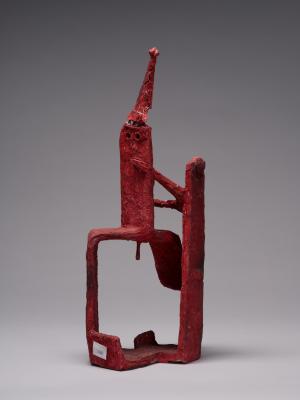
The statue is a plaster model of the monument to Adam Mickiewicz erected in Drohobych in 1894 and destroyed in 1918. The monument is a late work by T. Baracz, which testifies to the diversity of his oeuvre, in which allegorical, dynamic neo-Baroque images can be found alongside sculptures of classical clarity and majestic serenity. Thus, the memorial and glorification representative image of the outstanding Polish poet, writer, activist of the Polish national liberation movement, the founder of Romanticism in Polish literature and the beginner of Polish romantic drama is created by the straight posture of the figure, the inspiringly tilted head, the hand pressed to the chest, the gaze directed into the distance. The perception of A. Mickiewicz as a national hero and prophet in the Polish cultural context reflects the association of the depicted action with a fervent, inspired sermon: to contemporaries, to the addressee of history, and the line of future generations. The painting's roots in the classicist tradition can be seen in its clear architecture, balance, laconic and expressive contours and perfect modelling of forms. A similar solemn, sublime, static and majestic figurative and plastic solution can be seen in the busts of A. Mickiewicz by T. Baracz in Karlovy Vary (1897–1898, destroyed in 1938) and in Truskavets (1900). Close in the manner of performance to the Mickiewicz monument in Drohobych are the stone figures of K. Szajnocha, A. Fredr and other Lviv writers in the halls of the Literary and Artistic Circle in the City Casino (which existed until 1939), created by the sculptor in 1888.
Portrayed person
The name of the person portrayed
Adam Mickiewicz
Lifetime of the person portrayed
1798–1855
Legal regulation
Borys Voznytskyi Lviv National Art Gallery