Diptych (left: Male Portrait; right: Portrait of Three Women in Prayer)
Frans Pourbus the Younger




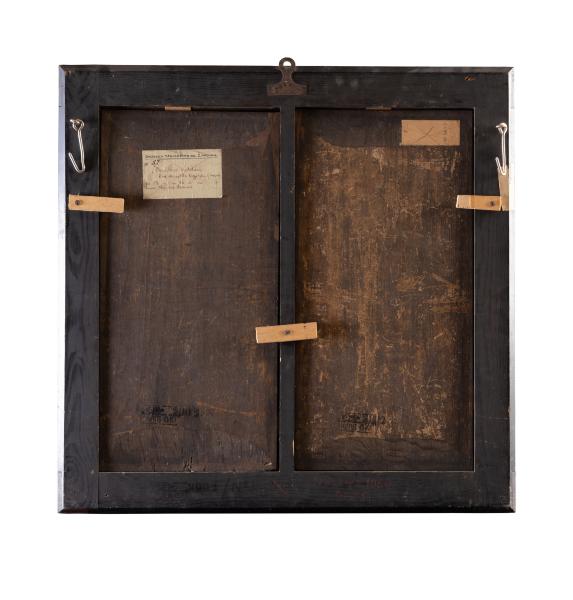
Basic information
- ID
- Ж-2002
- Author
- Frans Pourbus the Younger
- Name
- Diptych (left: Male Portrait; right: Portrait of Three Women in Prayer)
- Technique
- oil painting
- Material
- wood oil
- Dimensions (height x width, cm)
- 52.5 x 26
Additionally
- Type
- painting
- Genre
- portraiture
- Plot
- Portrait
- Provenance
- Collection of Lviv City Gallery
- Exposition
- Potocki Palace
Information about author
Object description
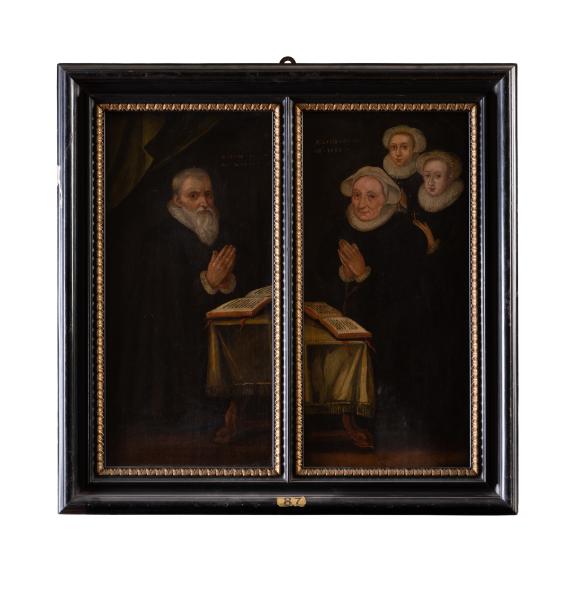
The diptych is a typical example of a family prayer portrait from the early 17th century, executed in the traditions of the Flemish school of art. The compositions of both leaves are symmetrical. Framed by a green curtain against a black background, a kneeling man and three women are depicted. The characters are turned towards each other, and their gazes are directed at the viewer.
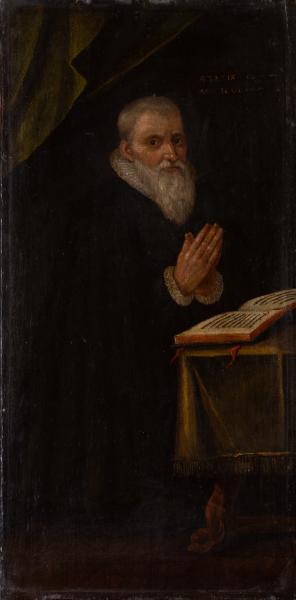
The left leaf depicts a grey-haired man with a long white beard, turned to the right. His hands are folded in a prayer gesture before an open prayer book or Bible. The book rests on a lectern covered with a light green fringed cloth. To the right above his head is the inscription: "ÆTATIS. 61. ANº 1601" (aged 61, the year 1601).
The right leaf depicts an elderly woman in a white cap, turned to the left. Her hands are also folded in prayer before an open book. Behind her back stand two young girls – her daughters, holding small crosses in their hands. In the upper left corner is the inscription: "ÆTATIS. 67. ANº 1601" (aged 67, the year 1601).
All characters are dressed in austere black attire with white corrugated ruff collars – "millstone ruffs", which corresponds to the conservative bourgeois fashion of Flanders at the time. The work is imbued with a spirit of prayerful concentration, piety, and family traditions.
The left leaf depicts a grey-haired man with a long white beard, turned to the right. His hands are folded in a prayer gesture before an open prayer book or Bible. The book rests on a lectern covered with a light green fringed cloth. To the right above his head is the inscription: "ÆTATIS. 61. ANº 1601" (aged 61, the year 1601).
The right leaf depicts an elderly woman in a white cap, turned to the left. Her hands are also folded in prayer before an open book. Behind her back stand two young girls – her daughters, holding small crosses in their hands. In the upper left corner is the inscription: "ÆTATIS. 67. ANº 1601" (aged 67, the year 1601).
All characters are dressed in austere black attire with white corrugated ruff collars – "millstone ruffs", which corresponds to the conservative bourgeois fashion of Flanders at the time. The work is imbued with a spirit of prayerful concentration, piety, and family traditions.
Legal regulation
Borys Voznytskyi Lviv National Art Gallery