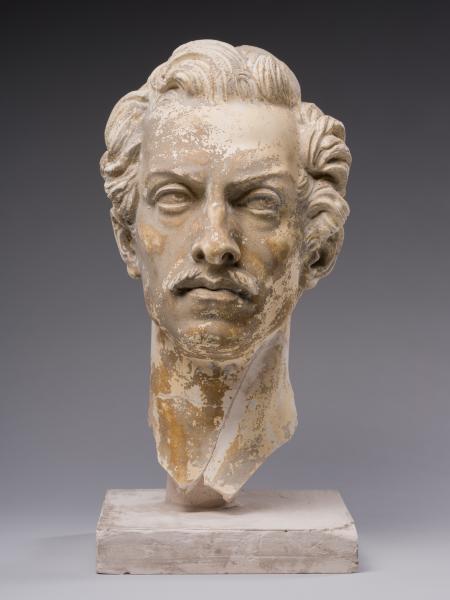
Head of Juliusz Slowacki
unknown


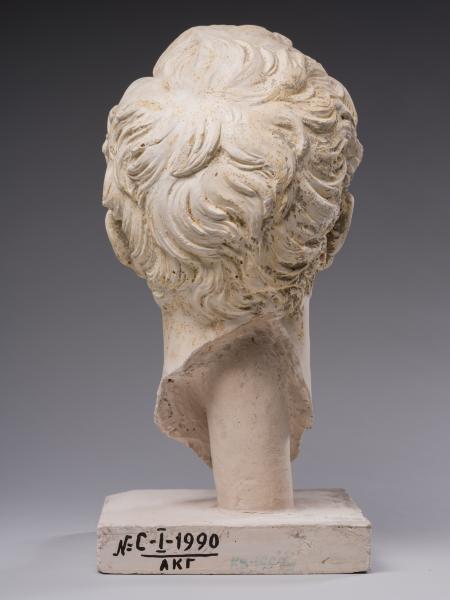
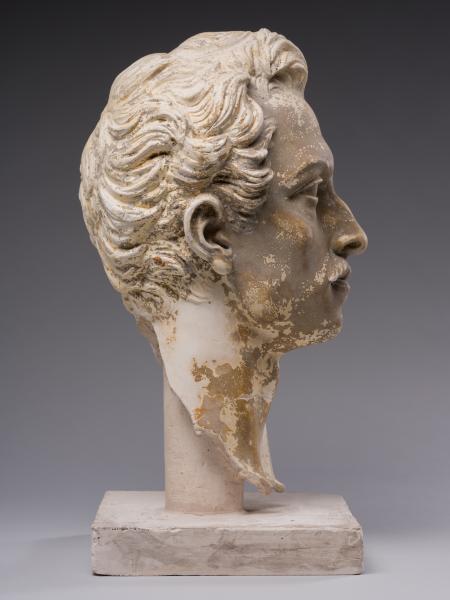
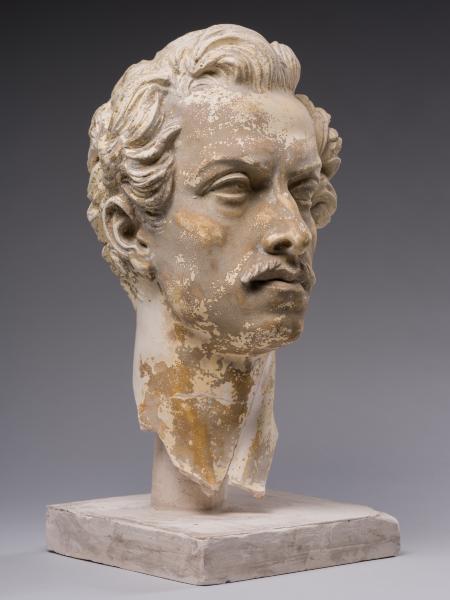
Basic information
- ID
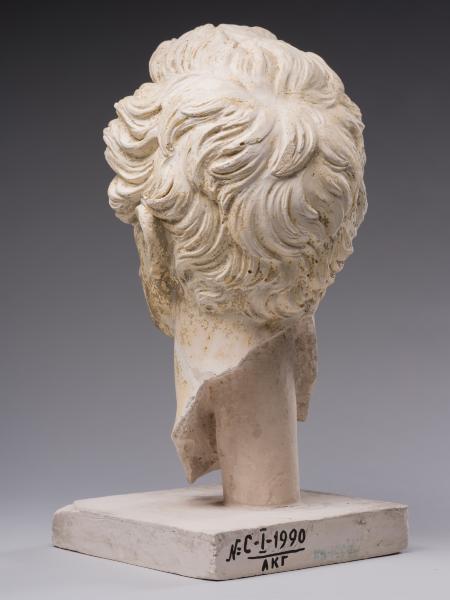
- С-I-1990
- Author
- unknown
- Name
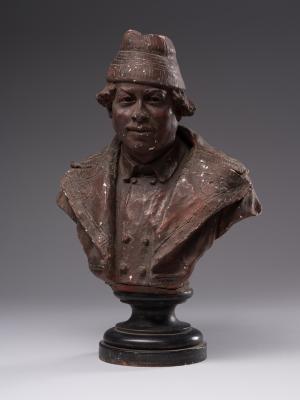
- Head of Juliusz Slowacki
- Date of creation
- 3rd quarter of the 19th c.
- Culture
- Modern times
- Technique
- moulding polychromy
- Material
- plaster
- Dimensions (height x width x depth, cm)
- 44 x 21 x 20.6
Additionally
- Type
- sculpture
- Genre
- portraiture
- Plot
- Portrait bust
- Provenance
- Vasyl Stefanyk Scientific Library of Ukraine in Lviv
Information about author
Object description
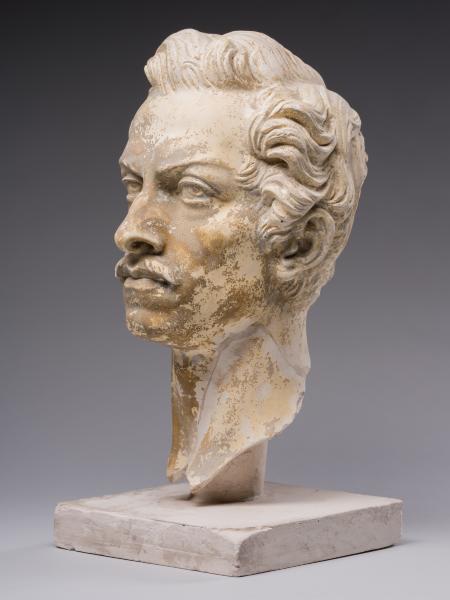
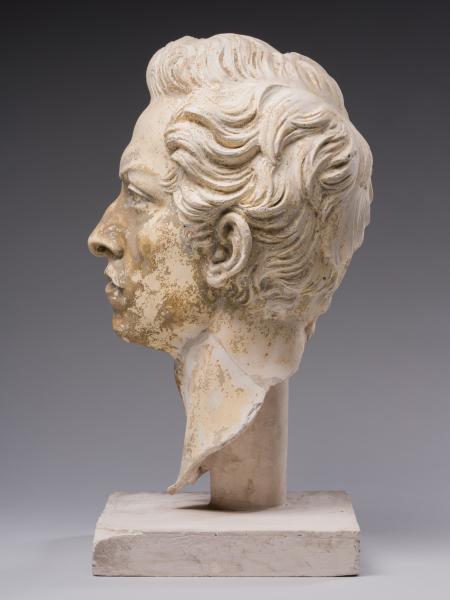
The work by an unknown sculptor from the last third of the 19th century created a memorial and glorifying image of Juliusz Slowacki, a Polish Romantic poet, playwright, and one of the "national prophets" along with Adam Mickiewicz and Zygmunt Krasinski. The works of J. Slowacki touch upon important issues related to the national liberation struggle, the past of the Polish people and its future. The themes of patriotism, revolutionary resilience and devotion to the Fatherland dominate his poetry. Many works are dedicated to the defeat of the November Uprising in 1831, the fate of emigrants and Polish exiles. As a lyricist, J. Slowacki is known for his songs with Eastern motifs, which are inspired by folk art and are full of mysticism. Stylistically, the work belongs to the "realistic academicism" widespread in Lviv sculpture in the last third of the 19th century. It is characterised by a combination of sublimity, idealisation, and majesty in the poet's image, with an authenticity inspired by the aesthetics of ancient Roman busts. Romantic reminiscences, consistent with Juliusz Slowacki's work, can be seen in the sculpture's spirituality and sublimity and in the subject's involvement in the spiritual levels of life. The cultural and historical significance of the figure of the poet-citizen is emphasised by the modelling of the "historical-epic chronotope", in which the sitter "stands before" the homeland, the nation, the future, the "addressee history". The idea is embodied by an inspired facial expression, a head held high, and a gaze directed into the distance. The peculiarity of the work is a combination of plasticity and graphic nature, namely skilfully modelled volumes and linear expressiveness of eyes, eyebrows, and hair.
Portrayed person
- The name of the person portrayed
- Juliusz Slowacki
- Lifetime of the person portrayed
- 1809–1849
Legal regulation
Borys Voznytskyi Lviv National Art Gallery