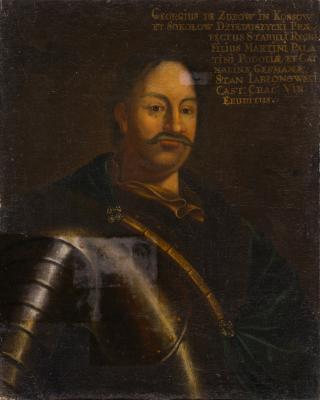
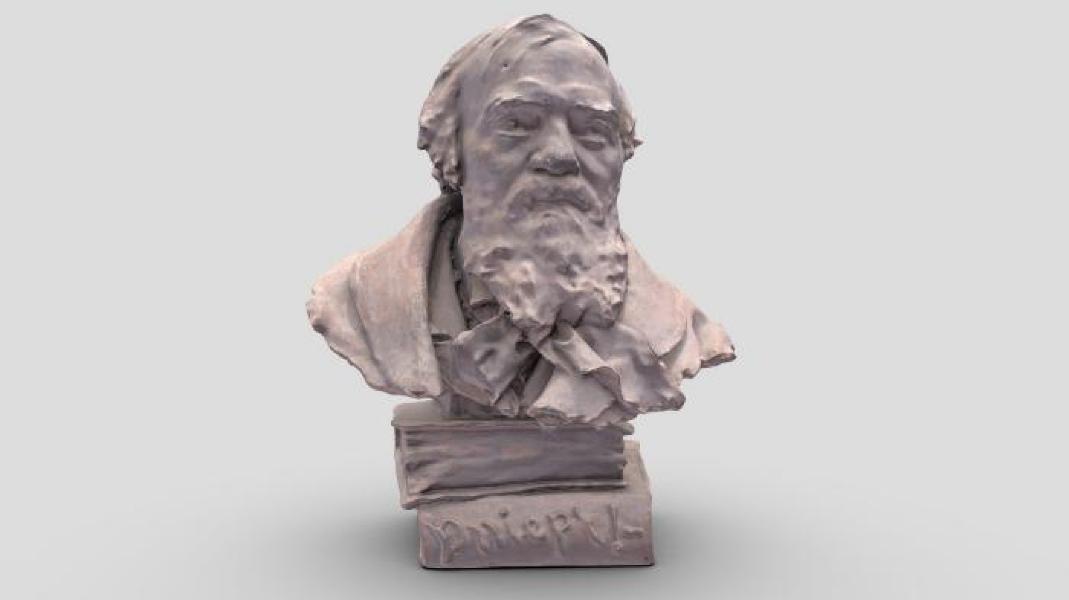
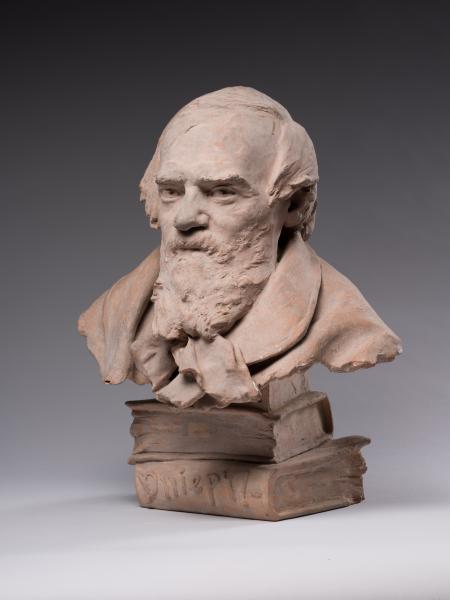
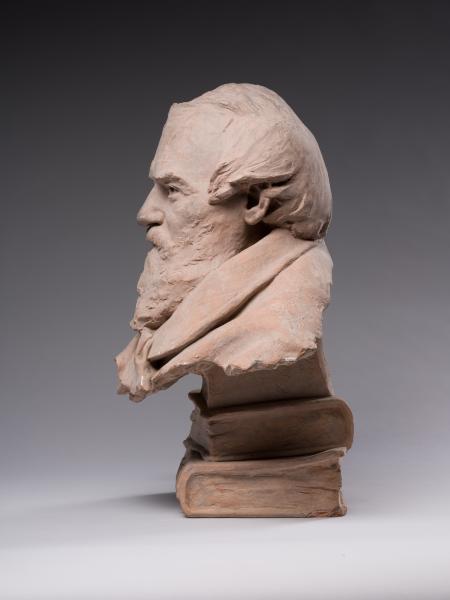
Bust of Franciszek Henryk Duchinski
Wladyslaw Pelczarski


Basic information
- ID
- С-I-1152
- Author
- Wladyslaw Pelczarski
- Name
- Bust of Franciszek Henryk Duchinski
- Date of creation
- 1889
- Country
- Austro-Hungarian Empire
- Culture
- Modern times
- Technique
- modeling firing
- Material
- terracotta
- Dimensions (height x width x depth, cm)
- 47 x 39 x 25
Additionally
- Type
- sculpture 3D
- Genre
- portraiture
- Plot
- Portrait bust
- Provenance
- Museum of the Lubomirski Princes in Lviv Vasyl Stefanyk Scientific Library of Ukraine in Lviv
Information about author
Object description
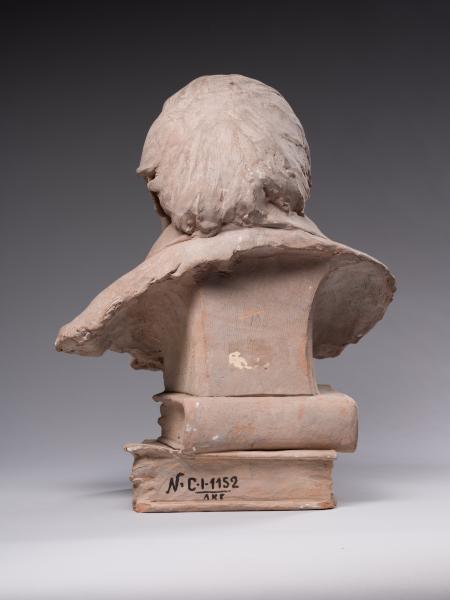
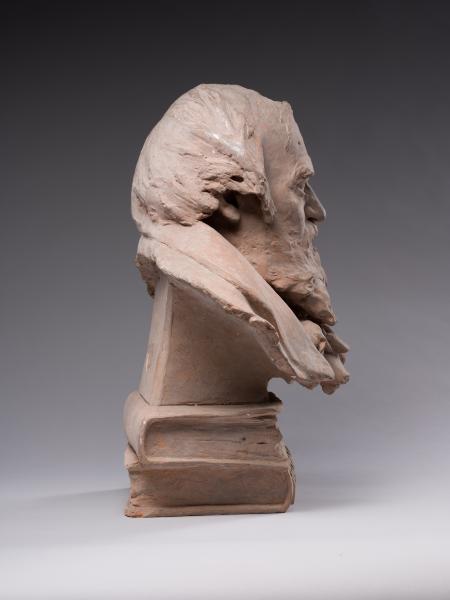
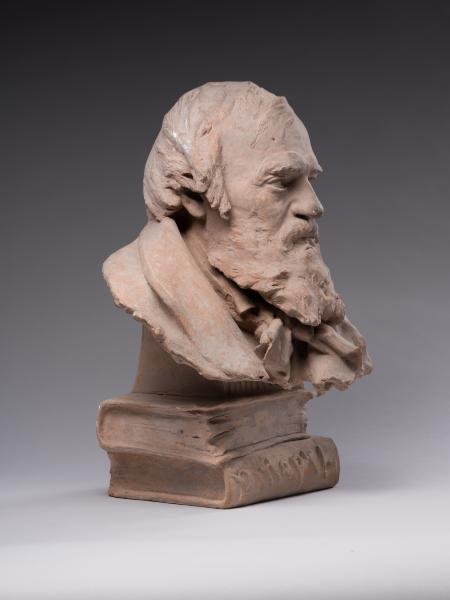
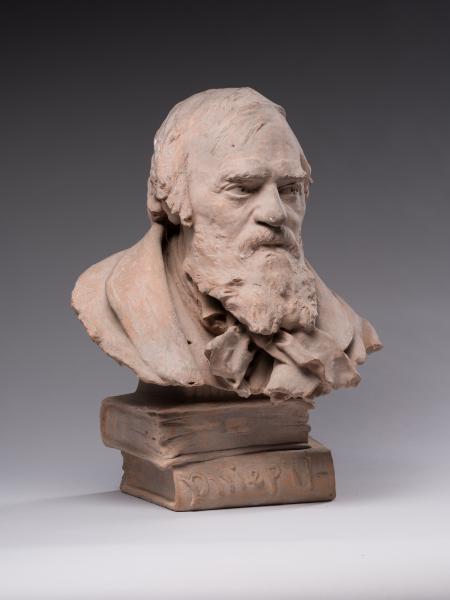
"The Bust of Franciszek Henryk Duchinski" was created by 27-year-old Wladyslaw Pielczarski in 1889 while he was studying in Paris. The sitter came from an impoverished noble family. He graduated from the Carmelite school in Berdychiv and later studied at the Imperial University of St. Volodymyr in Kyiv. In 1846, he emigrated to Paris to escape police persecution. He was supported by Prince Adam Jerzy Czartoryski, who promoted the publication of Duchinski's studies in emigrant journals. He supported the idea of the chosenness of the Polish people. He argued that the russians or "Muscovites" did not belong to the Slavic or Aryan tribes but were a branch of the Turkic tribe, along with the Mongols. He spread his ideas through the Literary and Historical Society. During the "Spring of Nations" in 1848, he joined the Italian Legion of Wladyslaw Zamoyski. In 1849, he founded the Italian-Slavic Society in Turin. He published numerous articles in French publications. With W. Zamoyski, he travelled to Turkey, where he continued his propaganda work, hoping for an imminent outbreak of the russo-Turkish war. During the Crimean War, he delivered a series of speeches to French, British and Turkish soldiers on the long civilisational struggle of Poland and russia against the Moscow state. In Istanbul, he published a series of treatises arguing for the non-Slavic origins of the russians. From Turkey, he moved to London, where he published "Poles in Turkey". Between 1860 and 1864, he lived in Paris, where he began his journalistic activity, denying Pan-Slavism. He was vice president of the French Ethnographic Society and a member of the French anthropological, Asian and geographical scientific communities. He taught history in a Polish school. As a result of growing relations between France and russia, he was forced to settle in Switzerland in 1871, where he edited the Historical, Ethnographic and Statistical Review, one of the world's most authoritative ethnographic publications. In 1872, he was appointed curator of the National Polish Museum in Rapperswil. He travelled twice to Galicia. In 1875, he founded the Ethnographic Review in Krakow. He returned to Paris in 1882. He died in France and was buried in the Montparnasse cemetery. W. Pelczarski's work as F. Duchinski's secretary helped to complete the image of the Polish historian, publicist, and public figure. The architectural and psychological expressiveness of the bust is based on the principles of "academic realism", in which classical balance was combined with psychology and the reproduction of individual features. Neo-Romantic echoes can be found in the dynamism and psychological versatility of the image, the "openness" of the silhouette, the pedestal of books, the expression of the hair, and the folds of clothes. F.Р. Duchinski's complex, impulsive character is reflected in the energetic modelling of the form, the masterly recreation of the liveliness of the face and the piercing look of the clever, cunning eyes.
Inscriptions
Signed and dated on the base: "W. Pelczarski / Paris 1889".
Portrayed person
- The name of the person portrayed
- Franciszek Henryk Duchinski
- Lifetime of the person portrayed
- 1816–1893
Legal regulation
Borys Voznytskyi Lviv National Art Gallery