Ессе Homo
unknown (South German School)

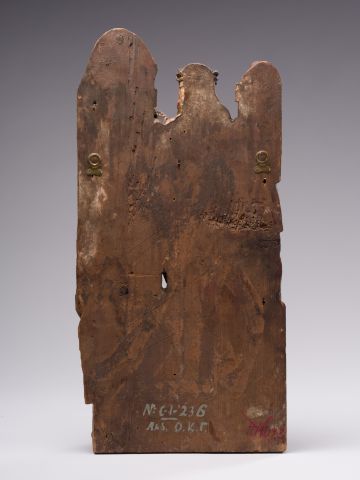
Basic information
- ID
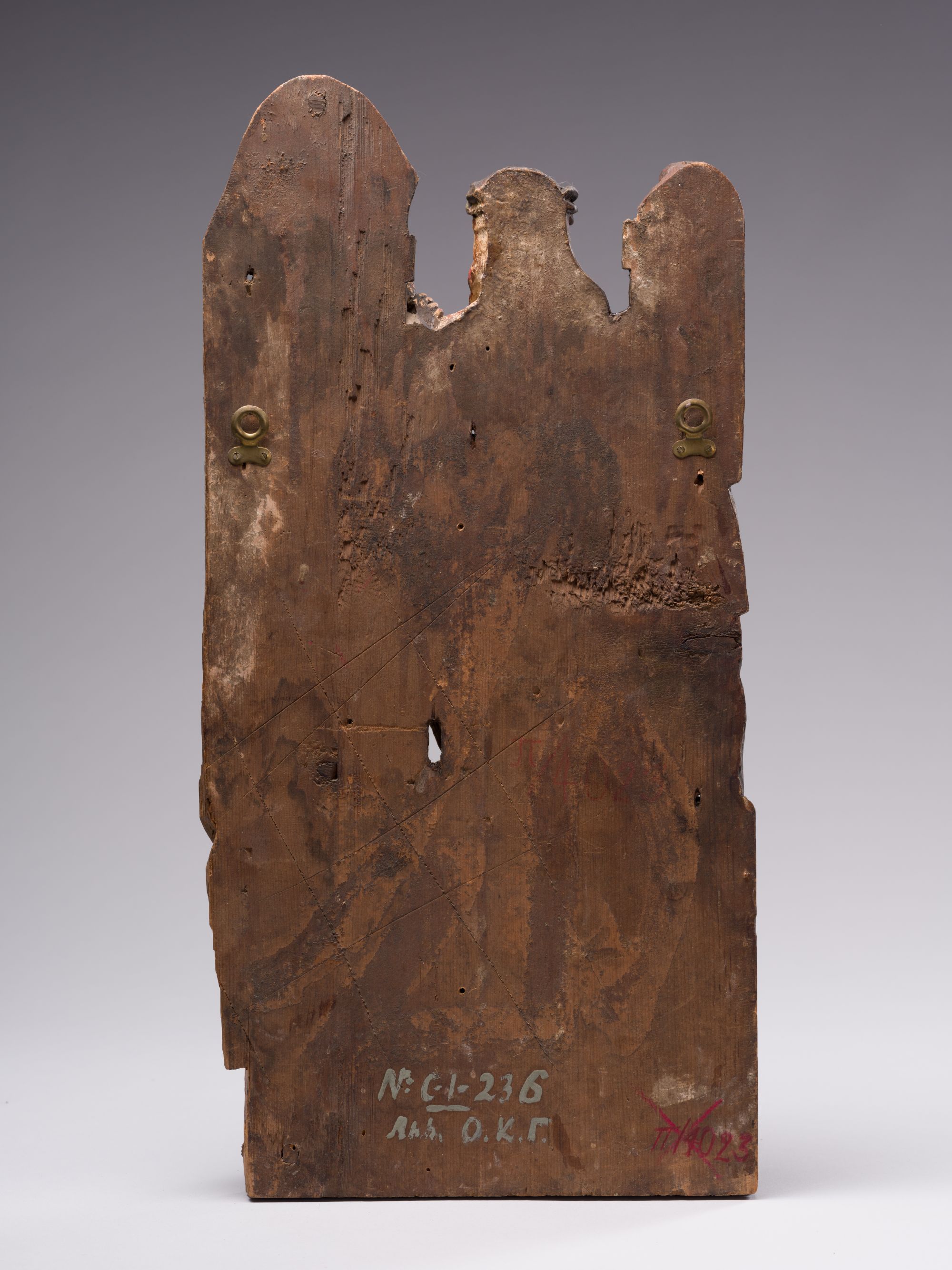
- С-I-236
- Author
- unknown (South German School)
- Name
- Ессе Homo
- Date of creation
- early 16th c.
- Country
- Germany
- Culture
- Late Renaissance
- Technique
- carving polychromy
- Material
- wood
- Dimensions
- 44 x 35 cm (height x width)
Additionally
- Type
- sculpture sculpture (relief) 3D
- Genre
- religious
- Plot
- Ecce homo The Passion of Christ
- Provenance
- Collection of Leon Pininski
Information about author
Object description
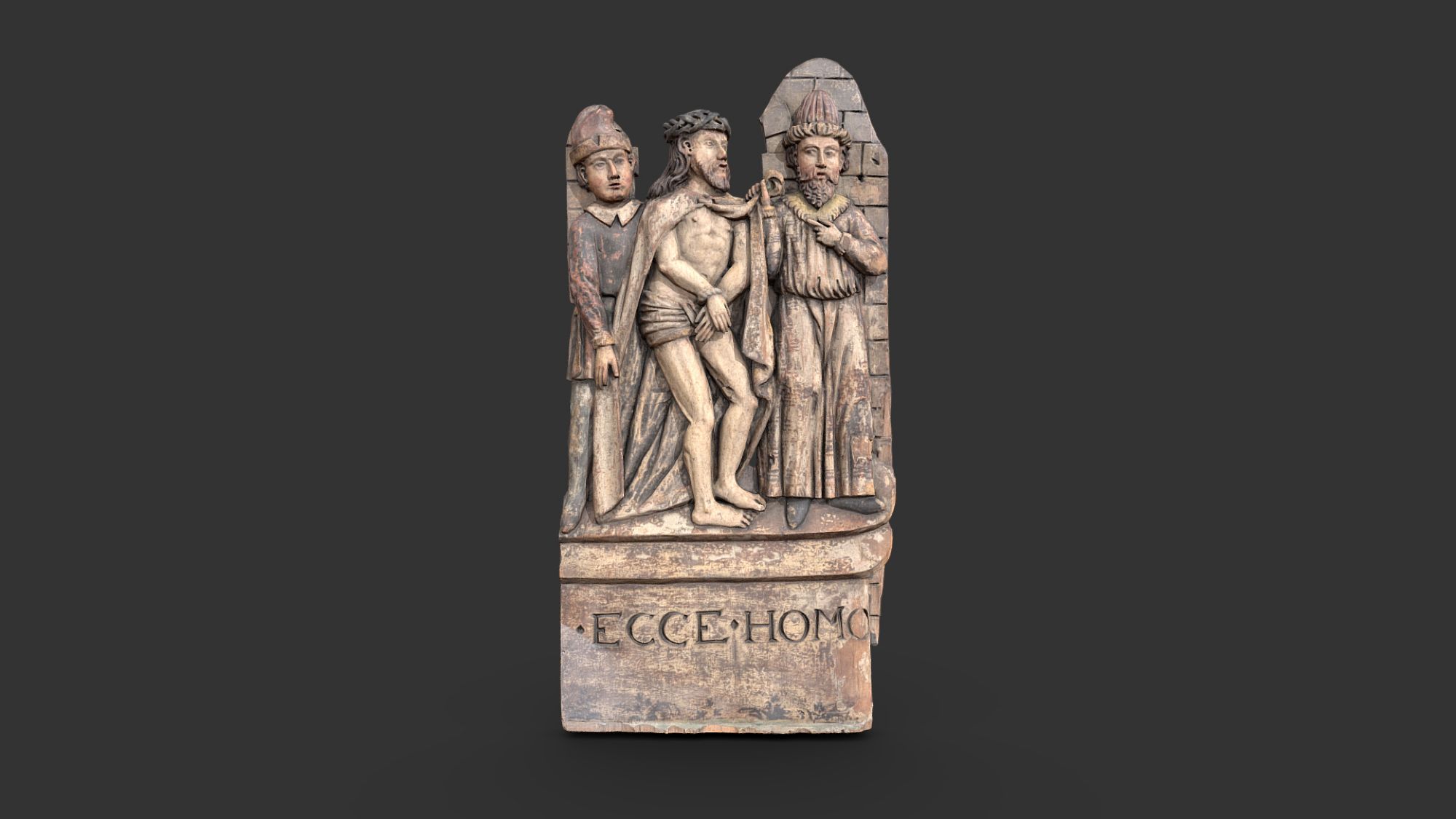
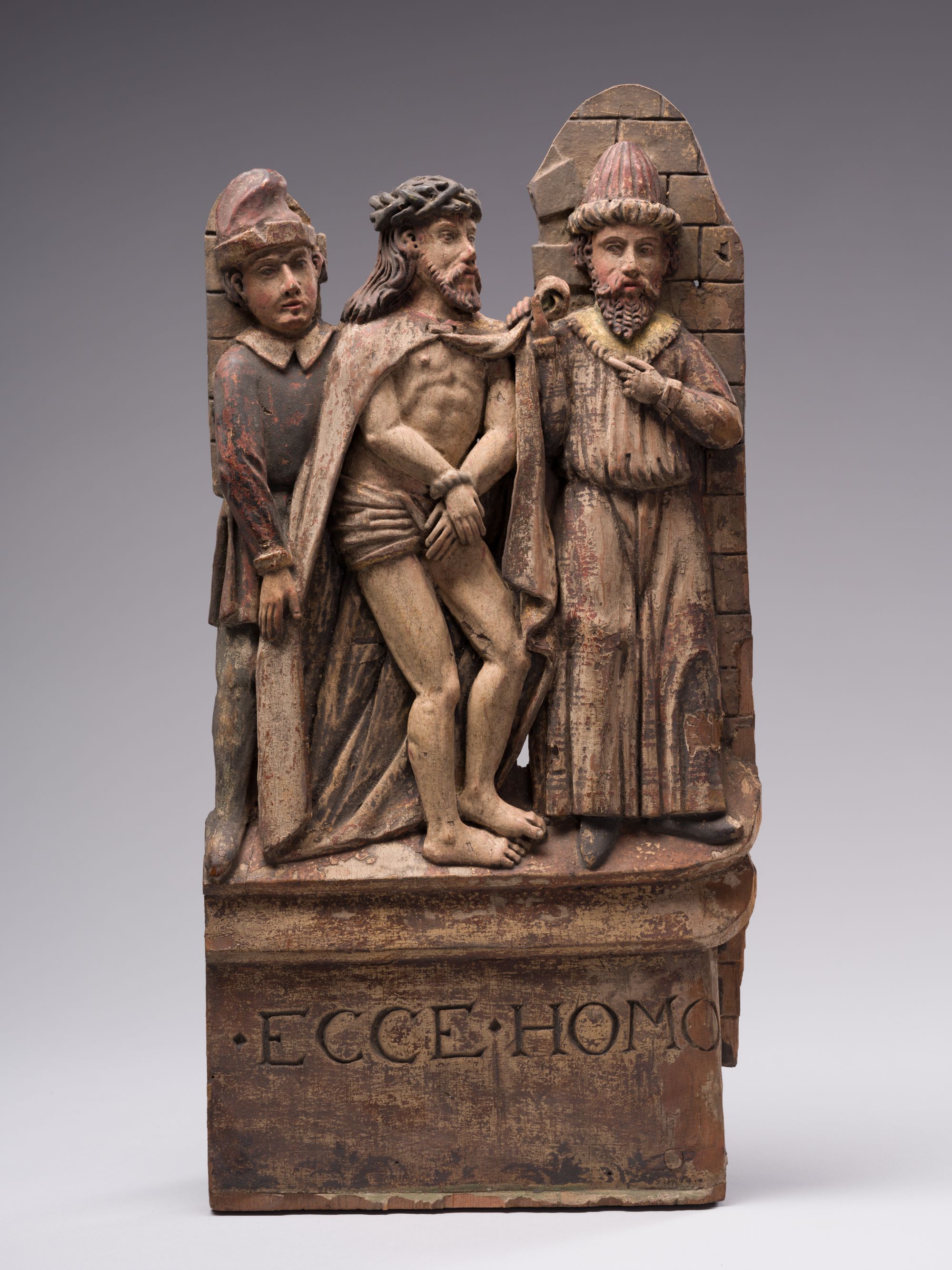
This piece belongs to a Gospel cycle that once adorned the interior of a provincial church in the South German region (Swabia – Bavaria – Tyrol). The series was executed by at least two carvers and a polychromist (Faßmaler). They were all members of the same workshop, which initially focused on church construction before shifting to interior decoration. Among the carvers was a more experienced master, who primarily crafted compositions featuring saints. The second hand was an artisan-carver whose work was less refined. This particular relief was executed by this second, less experienced master.
The scene from the Passion of Christ cycle presents an isocephalic composition in which the master carver projects the sacred history onto his contemporary milieu. Three figures are depicted on a high podium bearing the Latin inscription "ECCE HOMO". On the right is a man dressed in a so-called cotte, a medieval overgarment. On his head, he wears a fur hat with a brim. This figure personifies the Procurator Pontius Pilate. He points a finger at Christ, who is placed at the centre of the composition, and holds Him by the scarlet robe. This gesture and the words "Behold the Man!" were – in the Procurator's view – intended to move the crowd and thereby save Jesus from a terrible punishment. Pilate's figure is depicted against a vertical wall, which diversifies the work's composition.
The Saviour is presented in a calm pose, turned a quarter-turn to the right towards the figure of Pilate. The author has intricately carved Jesus' face, beard and hair, as well as the crown of thorns on His head. Christ's hands are bound with twine and crossed below the waist. He looks at His judge, and this gaze appears ironic. However, the master carver does not possess a perfect mastery of human anatomical proportions, so both of Christ's bare legs are rendered in a simplified manner. To the left stands another character against the background of a wall, which is barely visible behind his head. This young, beardless man is, presumably, Pilate's attendant. He is also dressed in medieval attire with a chaperon-style headdress on his head. Standing behind Christ's back, he holds His scarlet cloak. The work is executed in the traditions of late Gothic folk sculpture, influenced by the latest Renaissance tendencies in plastic modelling.
Legal regulation
Borys Voznytskyi Lviv National Art Gallery