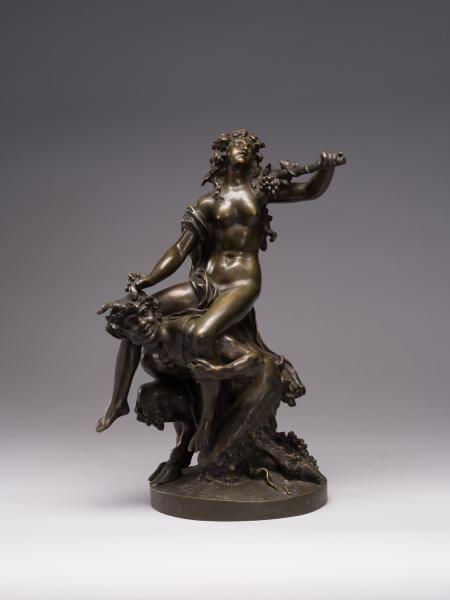
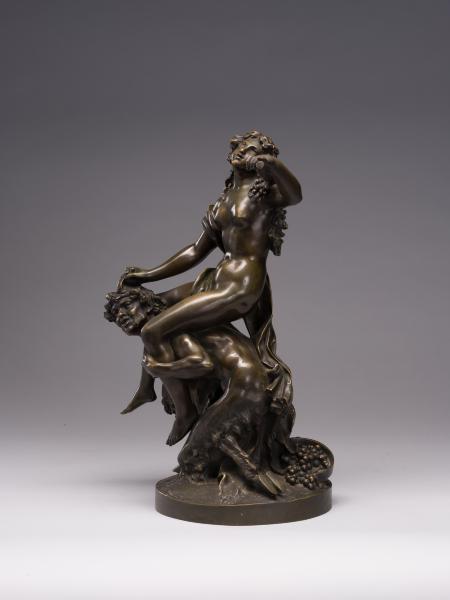
Satyr and Bacchante
Claude Michel (Clodion)


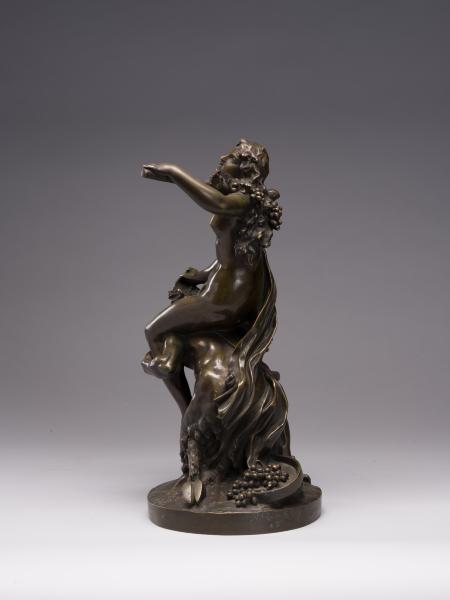
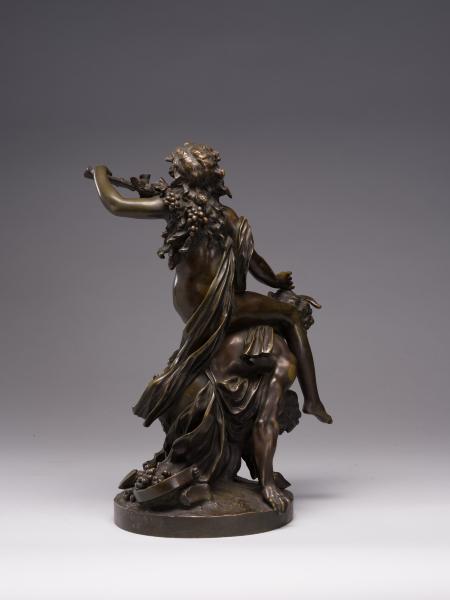
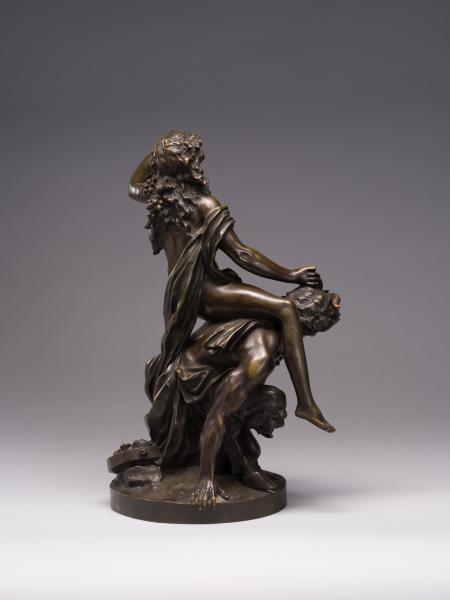
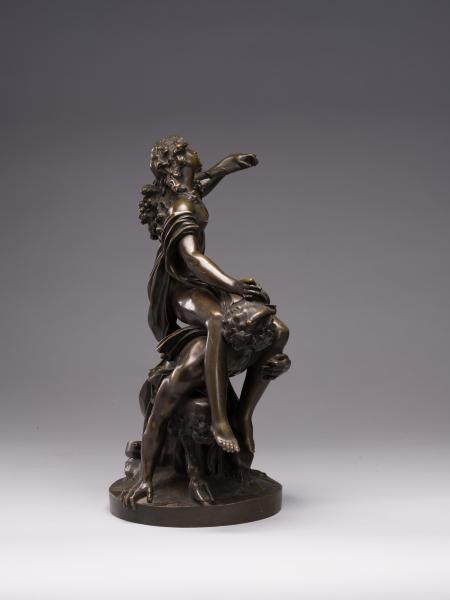
Basic information
- ID
- С-I-609
- Author
- Claude Michel (Clodion)
- Name
- Satyr and Bacchante
- Date of creation
- 2nd half of the 18th c.
- Country
- France
- Technique
- moulding
- Material
- bronze
- Dimensions (height x width x depth, cm)
- 38 x 24 x 24
Additionally
- Type
- sculpture
- Genre
- mythological painting
- Provenance
- Collection of Agenor Goluchowski
Information about author
Object description
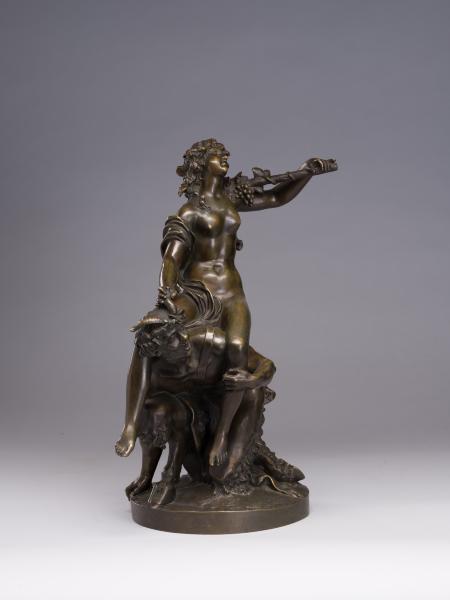
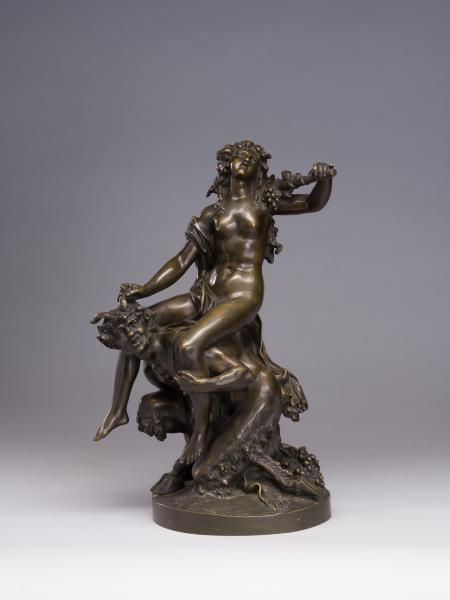
Based on Clodion's original work, this casting was made in the last third of the 19th century, when the Rococo style, in which the sculptor worked, was regaining popularity. The technological capabilities of the new era made it possible to reproduce the bronze originals of the previous century with high quality. The scene depicts a naked young woman, a nymph-bacchante (maenad), sitting astride a horned satyr with goat legs. He is bent under his load, holding the bacchante under her knee with his left hand and leaning with his right hand on a round bronze base, part of the sculptural composition. The woman holds the satyr by the horn with her right hand, and he, satisfied, turns his curly-haired young face to the right. The head of the young woman with loose, wavy hair and a plump face is turned upward to the right, and with her left hand stretched forward, she holds a thyrsus, the staff of Bacchus, entwined with a grapevine. Wavy drapery falls from the bacchante's right shoulder downwards, covering her lap. Drapery also envelops her figure from behind, as well as the satyr's body. Between the satyr's hooves is a tambourine with grapevines. On the base to the left, near the satyr's hand, is an inscription: "Clodion".
Inscriptions
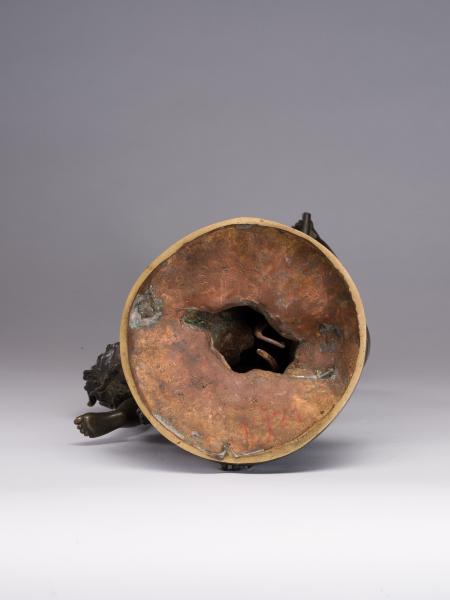
On the base on the left, near the satyr's hand, there is an inscription: "Clodion". On the bottom of the base there is a red inscription: "Г-171". On the edge of the podium there is an inscription in white: "С-І-609/ Л.ОКГ" (difficult to read).
Legal regulation
Borys Voznytskyi Lviv National Art Gallery